De novo design of transmembrane fluorescence-activating proteins @Nature
1. This study reports the de novo design of highly efficient ligand-binding transmembrane proteins using a combination of deep learning and energy-based methods, focusing on fluorescence-activating proteins (FAPs).
2. The design process begins with creating water-soluble fluorescence-activating proteins (wFAPs) with specific ligand-binding pockets, which are then transformed into membrane-embedded forms (tmFAPs) by adjusting their surface residues to allow transmembrane insertion.
3. The researchers integrated deep neural networks such as AlphaFold2 and Rosetta to refine protein structures, ensuring pre-organized ligand-binding pockets that effectively bind fluorogenic ligands, achieving high affinity (Kd values in the low nanomolar range).
4. The final tmFAPs, such as tmFAP1.1 and tmFAP1.2, exhibited strong fluorescence activation in vitro, with quantum yields and brightness surpassing those of traditional green fluorescent proteins, enabling high-performance imaging in living cells.
5. Using cryo-EM and X-ray crystallography, the study validated the structural accuracy of the designer proteins, showing that the protein-ligand interactions were in perfect agreement with the computational models.
6. Directed evolution further improved the fluorescence properties of tmFAPs, with tmFAP1.2 showing the best binding affinity and fluorescence emission, providing a potential tool for imaging, sensing, and membrane transport applications.
7. This work demonstrates the potential of deep learning-based protein design to create novel, highly specific, and functional membrane proteins, paving the way for new classes of protein-based sensors and therapeutic applications.
💻Code: https://t.co/RHDUIO90Vd
📜Paper: https://t.co/erYyS3D3TV
#ProteinDesign #MembraneProteins #Fluorescence #Bioinformatics #DeepLearning #ComputationalBiology #DrugDiscovery #BioTech #Imaging #AIinMedicine
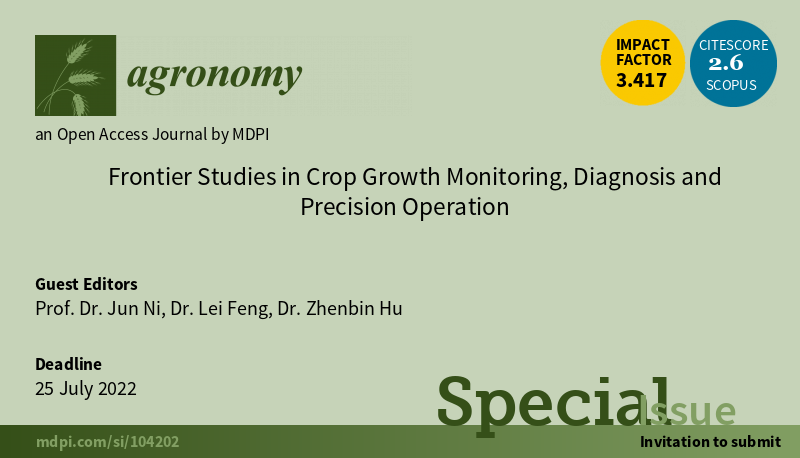
🔔Special Issue in #Agronomy
🌿"Frontier Studies in #Crop Growth #Monitoring, Diagnosis and #Precision Operation"
✍️Guest Editors: Prof. Dr. Jun Ni , Dr. Lei Feng and Dr. Zhenbin Hu
📅Deadline for manuscript submissions: 25 July 2022.
ℹ️https://t.co/1VRs7D8SIO
Very happy to share that our new paper on an R package we developed for analyses of TSS sequencing data has just published in NAR Genomics and Bioinformatics @SLUBiology@SLUResearch https://t.co/6J2Fv2YITI
Population-scale long-read sequencing uncovers transposable elements contributing to gene expression variation and associated with ... https://t.co/iy3GxXrDKY #biorxiv_evobio
Very happy to share our recent work "The neutral rate of whole-genome duplication varies among yeast species and their hybrids". @landrychristian @mathieu_henault Guillaume Charron @afijarczyk
See the story now published @NatureComms
https://t.co/9k5PqHMHQB
In this article, we provide an overview of the global state of 7,039 edible plant species, and emphasize that this diversity stands in striking contrast with the few hundred food crops that mainstream agriculture currently relies on.
https://t.co/2r4rlK5Sec
Gene loss through pseudogenization contributes to the ecological diversification of a generalist Roseobacter lineage https://t.co/gjKLm8uCxa @ISMEJournal
Data from seasons 4 and 6 are now in the public domain - see "Data From: TERRA-REF, An open reference data set from high resolution genomics, phenomics, and imaging sensors" https://t.co/zSXiRW1vSK 1/n #opendata#agdata#data
Congrats to @vsbuffalo on the publication of his paper estimating the genome-wide contribution of selection to temporal allele frequency change https://t.co/U8CYvB4dT1
Metabolic biochemist here. Beautiful & intuitive way to get flux concepts across, I wld surely like to use in teaching. Can you depict back-and-forth *reverse* fluxes, which go on all the time e.g. in upper glycolysis? Only showing *net* flux downplays the dynamism... #metabolism