Longer thread later, but if you are designing small proteins or want to building a stability predictor using 1.8 million highly diverse experimental measurements… credit to @ChoYehlin and @KotaroTsuboyama !
https://t.co/4U5ULToaat
Could the folding of synthetic gene circuits in 3D shape how genes are expressed? Today @ScienceMagazine we report on the role of gene syntax in shaping feedback between transcriptional activity and genome folding for advanced circuit design🧵 (1/n)
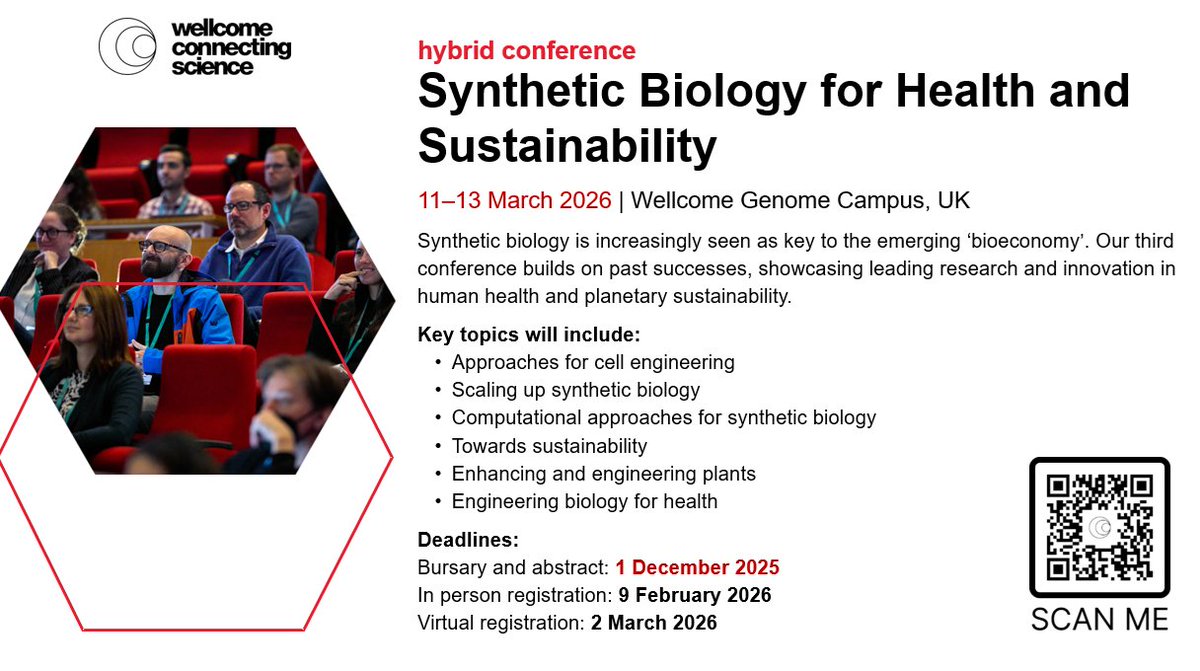
Join us next March'26 at
Synthetic biology for Health and Sustainability
Abstracts deadline: December 1st, 2025
Link below 👇
Great lineup of speakers and excellent venue: Kristala Prather (MIT), Luis Serrrano (CRG), Priscilla Briquez (Freiburg), Zibo Chen (Westlake U) @ZiboChen , Tobias Erb (Max Planck), Cleo Kontoravdi (Imperial College), Debora Marks (Harvard), Nicola Patron (U of Cambridge), Sai Reddy (ETH), Anna Rising (Karolinksa), Edda Schulz (Max Planck), Claudia Vickers (Queensland U), Chris Voigt (MIT) @Geneticdesigner, Harris Wang (Columbia)
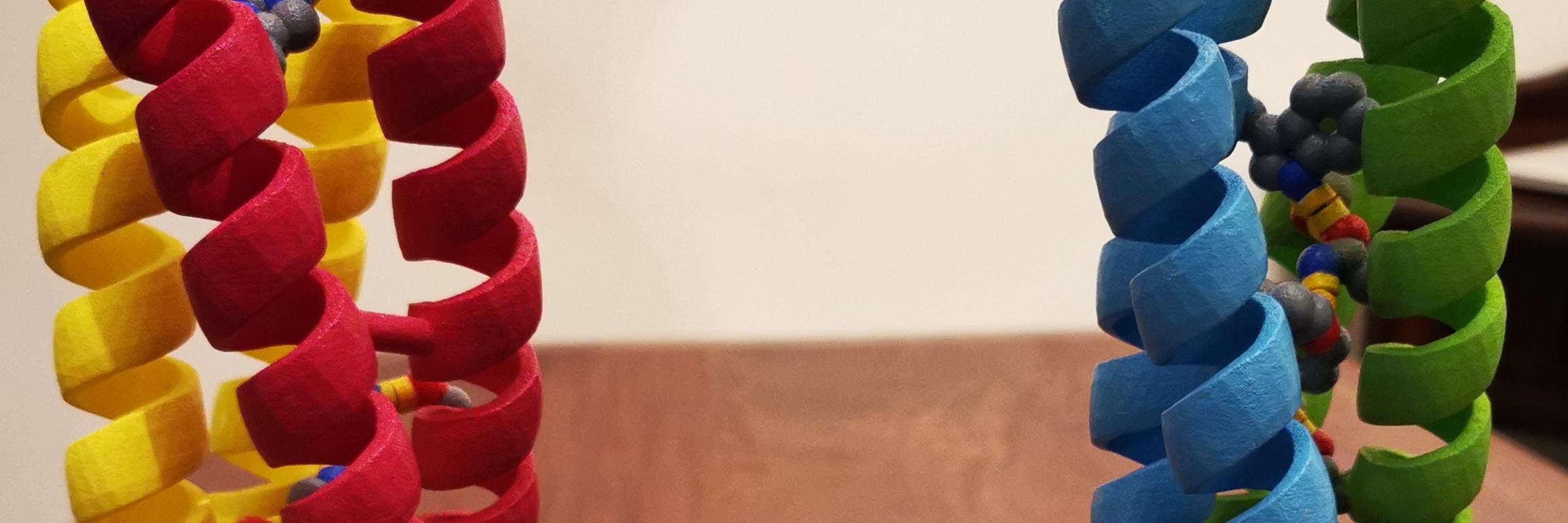
@MoKhalilLab@BashorLab Huge shoutout to @DamonRunyon for funding this work. And check out this stunning cover art by the unstoppable first author, Xiaoyu, with a Haiku interpretation from Gemini:
Small bots read the stone
Linked by glowing, sensing wire
Many arms see one
Thrilled to share our new paper on MASS (Multivalent Antigen Sensing Simulator)!
We built a fast and accurate simulator to calculate multivalent binding KINETICS from monomeric properties, enabling sensing of cell surface antigen types and densities.
https://t.co/W42OrxTWIc
@MoKhalilLab@BashorLab We also optimized the code to be fast, so you're not waiting hours to simulate higher valency binding kinetics. Code is available here: https://t.co/apXOZwMU3c
Legend David Baltimore died yesterday. He understood the way things should work: "the real contribution of @MIT is that it doesn't take itself too seriously. It takes ideas seriously, but the people are relatively informal. They are not self-aggrandizing the way academics can be.
LIDAR is out! https://t.co/hmzijbK03t We've improved a lot, e.g., making MESA-like LIDAR work, RNAseq of on-/off-target editing, and optimizing RNA delivery. We are one baby step closer to making it useful for therapeutics. NIH high-risk high-reward program provides key support.
🚨NEW PUBLICATION ALERT🚨: In a paper out today in @ScienceMagazine we describe a way to build synthetic phosphorylation circuits with customizable sense-and-response functions in human cells. Check it out at https://t.co/hrA7Mys9PZ. 🧵1/n