Incoming AP @UTKnoxville | PhD Candidate @UCSDPolSci | MA @DukePoliSci. Studying authoritarian institutions, Chinese politics, and methodology. He/him 🌈
1/6
SSRN: https://t.co/SFw2HPNnpK
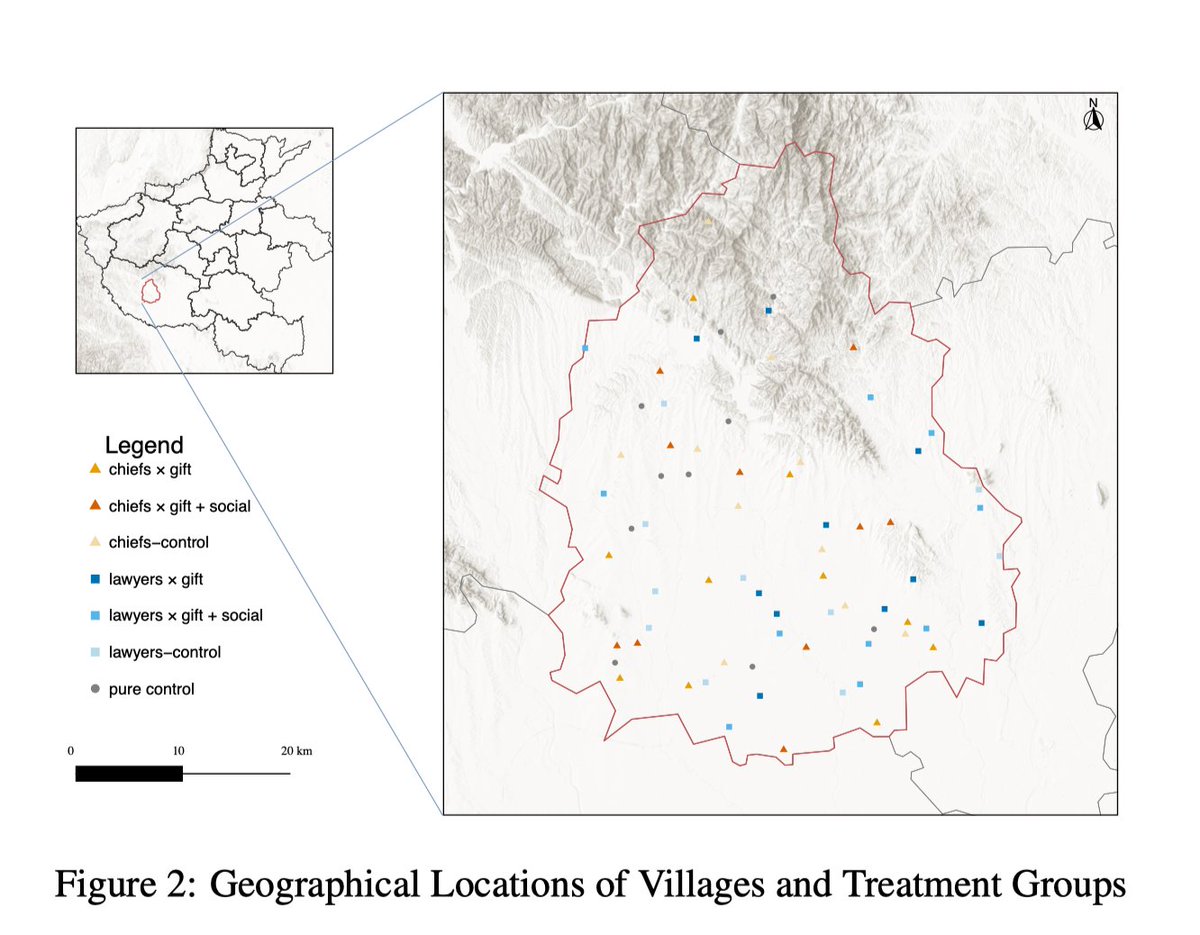
I ran a rare randomized field experiment on law and politics in the most populous province in rural China 🇨🇳⚖️
For 20 weeks, across 70 villages and 60,000+ adults, I studied what happens when ordinary people get easier access to legal service.
Does that make them more compliant with the system—or more able to use it? What are the social and political implications of accessing law in autocracy? 👇
comments are welcome :)
Today I successfully defended my dissertation and officially became Dr. Zu. I cannot thank my advisors @vshih2, @mollyeroberts, @rxjia, Stephan Haggard, and Sebastian Saiegh enough for their guidance, support, and generosity throughout this journey.
Illiberal Law and Development by Susan H. Whiting
Explains how China achieved transformative economic development without secure property rights and regime durability despite conflict.
📚 https://t.co/Ativ9f6DfY
6/6
The strongest combination:
⚖️ lawyer-led mobilization
🏅 public recognition
→ more follow-up consultations
→ largest reductions in village-level conflict 📉
Big picture:
The same state program can produce shallow compliance—or real legal empowerment—
depending on who mobilizes citizens and how participation is framed.
1/6
SSRN: https://t.co/SFw2HPNnpK
I ran a rare randomized field experiment on law and politics in the most populous province in rural China 🇨🇳⚖️
For 20 weeks, across 70 villages and 60,000+ adults, I studied what happens when ordinary people get easier access to legal service.
Does that make them more compliant with the system—or more able to use it? What are the social and political implications of accessing law in autocracy? 👇
comments are welcome :)
5/6
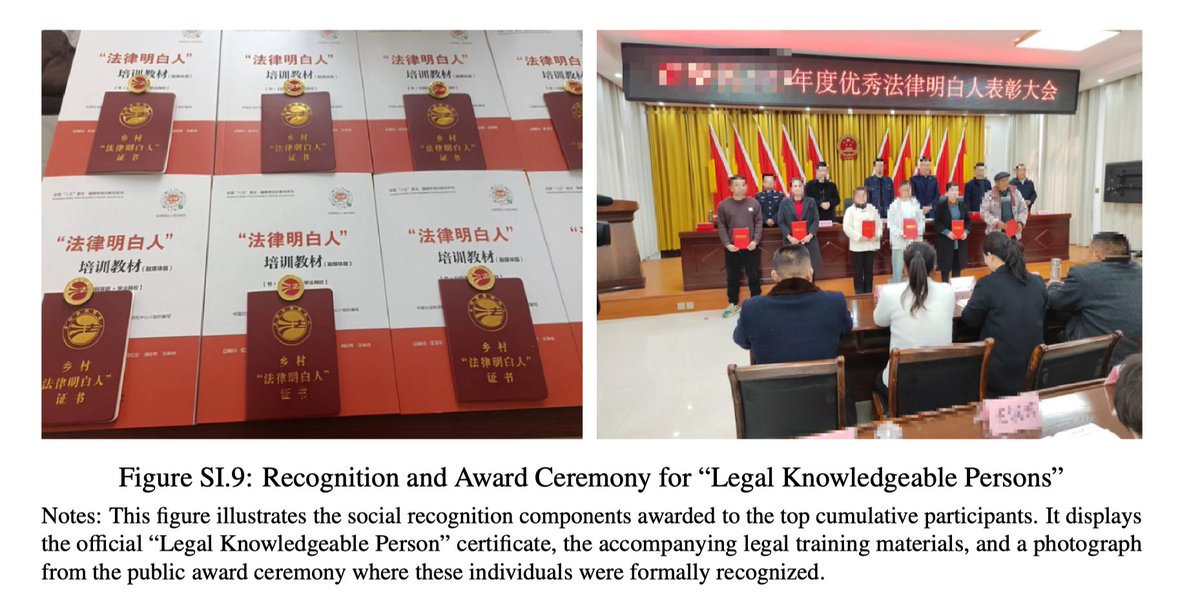
Incentives mattered—but not in the obvious way 🏅
Small gifts helped a bit.
But public recognition (being named a “Legal Knowledgeable Person”):
• increased participation persistence
• strengthened legal learning
• improved trust in legal institutions
And it worked best when paired with lawyer-led outreach.
8/8
So the key divide is not response vs. nonresponse.
It is recognition vs. empowerment.
Authoritarian legality at the frontline can be accessible, polite, and still selectively disempowering.
Updated version here: https://t.co/3p21DKJAkf
Comments very welcome.
1/8 Updated version of my JMP working paper:
How do authoritarian regimes make law accessible without letting it become politically dangerous?
I study this through China’s legal-aid hotlines. 🧵
7/8
Evaluation pressure matters asymmetrically.
Praise improves both substantive and symbolic responsiveness.
Complaint pressure mostly improves the visible side of service—tone, patience, accommodation—more than the claim-enabling side.