Tired of borrowing stablecoins with rate spikes?
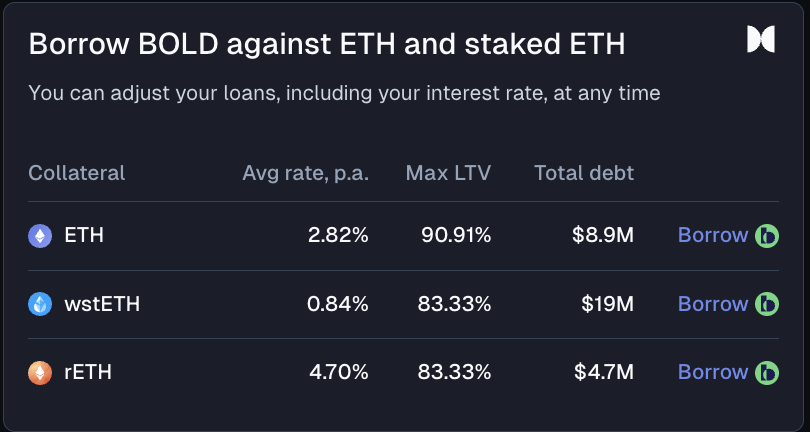
Liquity V2 lets you borrow at FIXED rates - the lowest in DeFi.
It only accepts 3 collaterals - ETH, wstETH, and rETH.
Each with its own isolated market.
NO additional collaterals can be added.
NO governance.
NO admin keys or multisigs.
NO upgrades possible.
Migrate in 1 click 👇
Affected by the Alchemy subgraphs shutdown?
HyperIndex offers a modern, multichain-native indexing stack built for speed and scalability.
We’re offering 2 months of free hosting on @envio_indexer + migration support for affected teams.
Let’s get you back online 👇
Since Monday’s @Balancer v2 exploit, we’ve worked hand in hand with their team to develop the first root-cause analysis of the issue, identify all affected and potentially vulnerable pools, and determine whether v3 was susceptible to the same attack.
Our analysis breaks down what happened, how v3’s redesign prevents it, and key takeaways for DeFi security.
https://t.co/6h59fJ1Brn
Awesome talk by @viswanathpramod at @openagisummit
I always held assumptions that LLMs struggled with complex coding and it's good to see it validated!
@SentientAGI building some very impressive tech!
On arguably the most important metric for a lending protocol, total borrows, Euler is the fifth largest:
Aave $16.021b
Morpho $2.362b
Spark $1.718b
Kamino $1.463b
Euler $1.126b
Who watches the watchers? We do, in real time.
Powered by HyperIndex, Oracle Wars visualizes how oracle feeds behave on-chain, highlighting deviations and helping you design more reliable smart contracts.
Learn more about it in our latest blog: https://t.co/ha66xY0PPw
🚢Exciting Release: V2.16.0🚢
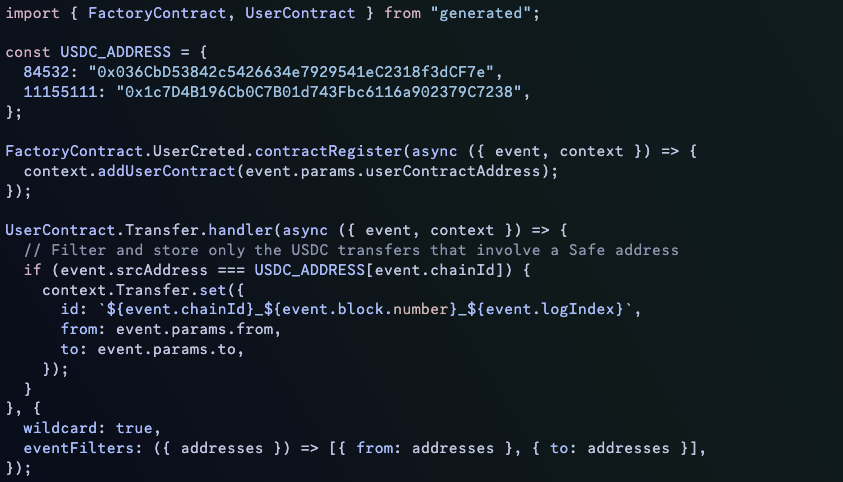
Topic Filters by Contract Addresses
Besides chainId added in the previous release, you can now also access contract addresses to filter by.
For example, index your users' USDC transfers as easily as:
Release notes: https://t.co/1N99DXkcvv
How Much Latency Do High-Frequency Oracle Push Feeds Actually Have?
Sharing a preview of a new feature that compares data from high-frequency oracle push feeds (under 30-second heartbeat intervals) with granular off-chain spot pricing data (e.g., sourced from Binance).
The goal of this comparison is to analyze whether these frequently pushed oracle updates truly provide near-real-time data or if notable latency exists between real-time price movements and the oracle data received on-chain.
Why is this important? Developers often rely on high-frequency push feeds, assuming the data closely matches real-time market conditions. This can significantly impact use cases like lending, borrowing, or trading protocols that depend heavily on precise price feeds. Any noticeable latency or deviation could pose risks or affect the accuracy and reliability of protocol logic.
Key questions to consider:
-How significant is the latency on high-frequency push oracle mechanisms (or on all push oracles for that matter)?
-Are deviations substantial enough to influence critical protocol decisions?
- Could factors such as gas prices used during oracle updates correlate with reduced latency (pump up the gas price to get it posted on chain quicker)?
From my initial observations, @chainlink provides one of the most granular push feeds available—specifically, the BTC/USD feed on Polygon with I believe a 27-second heartbeat. I'm curious if other oracles (@redstone_defi@ChronicleLabs@PythNetwork@Api3DAO@blocksense_@switchboardxyz@StorkOracle etc) also provide similarly granular push feeds, or if most rely primarily on pull-based mechanisms or alternative approaches for truly real-time data?