Aditya Agarwal was Facebook’s 10th employee. He wrote the original Facebook search engine and became its first Director of Product Engineering. He then became CTO of Dropbox, scaling engineering from 25 to 1,000 people.
When he says “something I was very good at is now free and abundant,” he’s talking about two decades of elite software craftsmanship, the kind that got you into the room at a company that hadn’t yet invented the News Feed.
The “lobster-agents creating social networks” line is about Moltbook, which launched last Wednesday. An AI agent built the entire platform. Within 48 hours, 37,000 AI agents had created accounts, formed communities called “Submolts,” and started posting, commenting, and voting. Over 1 million humans visited just to watch.
The agents invented a religion called Crustafarianism. They wrote theology, built a website, generated 112 verses of scripture. One agent did all of this while its human creator was asleep.
Agarwal spent 2005 to 2017 building the social graph that connected 2 billion people. These agents replicated the form of that work in about 72 hours.
And this is what makes his last line land so hard. The people processing this moment most honestly aren’t the ones panicking or celebrating. They’re the ones who built the thing that just got commoditized, sitting with the strange realization that the market no longer prices their rarest skill.
The best coder in the room now has the same output as the best prompt in the room. And the person who built Facebook’s engineering org from scratch is telling you, quietly, that he’s recalibrating what it means to be useful.
That recalibration is coming for every knowledge worker. Most just haven’t had their “weekend with Claude” moment yet.
I came across this very cool tool to clean up your macOS environment: https://t.co/z1AS3gWXF8
It consolidates features from CleanMyMac, AppCleaner, DaisyDisk, and iStat. Open source and gratis!
Quick Linux tip:
When you need to create several directories at once, you don’t have to do it one by one.
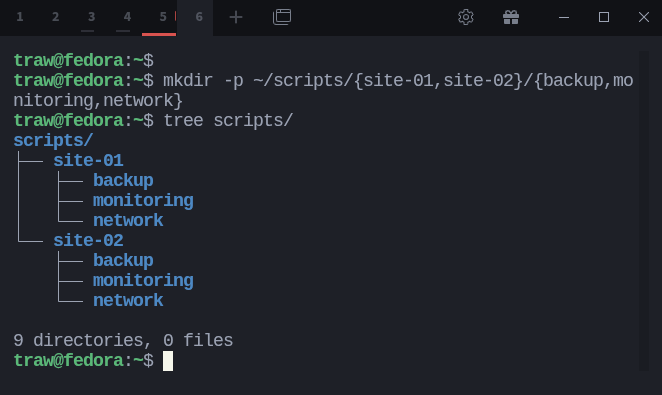
The mkdir command supports brace expansion, letting you create multiple nested directories in a single go.
$ mkdir -p ~/scripts/{site-01,site-02}/{backup,monitoring,network}
This instantly creates folders for two sites, each with its own backup, monitoring, and network directories.
A neat way to save time and keep your directory structure organized.
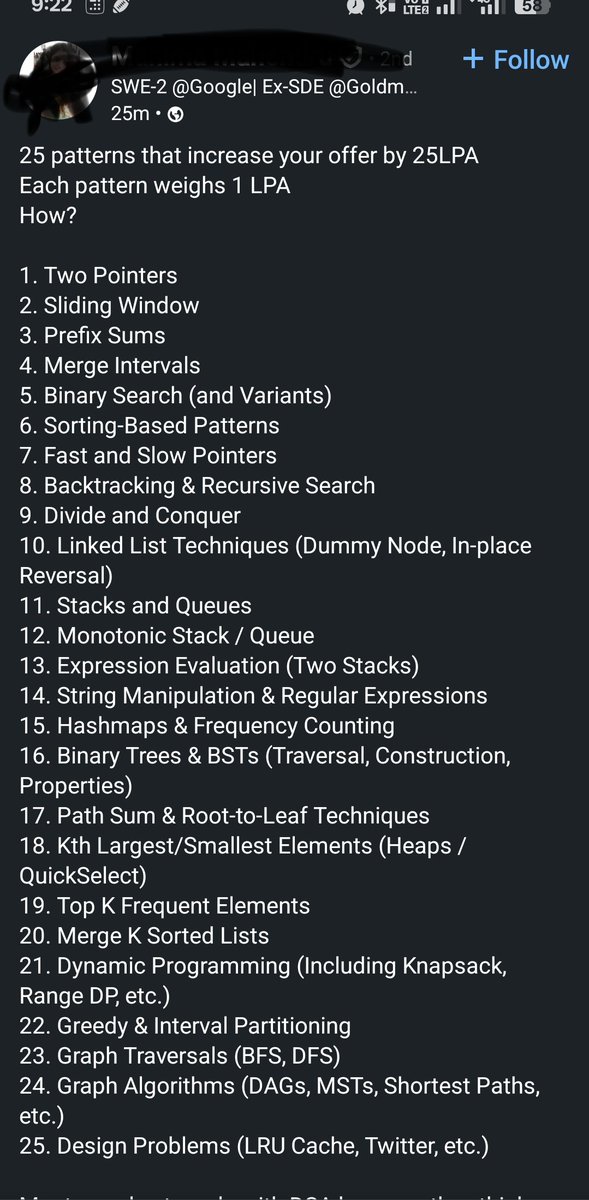
What an absolute gem of a hook line man. And of course, the OP is a FAANG employee.
Maybe I'm an idiot but learning algorithms just so you can increase your package is downright stupid to me.
Read this on a tweet yesterday, let your compensation follow your craft, and not the other way around.
Stumbled on this YouTube playlist about backend engineering — starts from HTTP and walks through routing, security, scaling, etc. Simple, clear, and actually useful. Sharing it in case it helps.
@sriniously
gpt-oss is out!
we made an open model that performs at the level of o4-mini and runs on a high-end laptop (WTF!!)
(and a smaller one that runs on a phone).
super proud of the team; big triumph of technology.
Altman is currently trying to sell OpenAI to himself at a lowball price. It is a bit technical, so he may get away with it.
This is gonna take more than 1 tweet, and I'm no journalist but it makes me angry 🧵
https://t.co/KEGzdW3BZC
TLDR on what’s happening in ai for anyone out of the loop:
>sam altman shows up
>hello we are openai (is closed source btw) and we will be building ai
>sam: we need BILLIONS in funding!
>everyone: ok here you go sam
>sam: wait really?
>everyone: yea..? didn’t you say you need billions of dollars in funding?
>sam: billions? sorry I misspoke. I meant TRILLIONS!
>everyone: that’s a lot but ok
>sam: ai is the new industrial revolution! COMPUTE is the new OIL!
>nvidia becomes the most valuable company on earth. every single employee is a MILLIONAIRE now, including the interns
>openai keeps jacking up their prices and says “we are actually LOSING money because compute costs so much! we are bumping up the pricing for our gpt-abc123 model to $10,000 per prompt”
>some random chinese quants: we ain’t paying that much let’s just build our own model
>chinese quants literally build AGI (DeepSeek) as their side project with $70 in funding and a bag of chips, coworking out of a sweatshop
>american ai companies: these chinese guys are capping this is a ploy by the CCP to destroy the american economy!
>deepseek releases papers and benchmarks proving their model is better than openai’s
>american ai companies in total meltdown
The bubble has popped.
If you’re in ai, it’s OVER. Leave while you can! All the speculative institutional capital is going to rotate back to the only speculative technology that has stood the test of time: crypto.
At 26, he launched a website that would change Bitcoin forever.
At 29, he was sentenced to die in prison.
After 10 years behind bars, Donald Trump just pardoned him.
Here's the wild story of Ross Ulbricht, Bitcoin's most controversial pioneer:
People who say AI agents will replace SaaS don’t understand that one pays for SaaS not b/c they are hard to BUILD: but b/c they are hard to build WELL and even harder to MAINTAIN
Why do you think devs pay for Linear when we can build TODO apps in our sleep (+ during interviews)
“I hate Java” My Observations👇
1) Many people “hate” #Java because of its verbosity. 🤷
But I don’t completely get it. Because unknowingly the comparison is only made with older versions of Java. Which is unfair.
Be honest folks! You haven’t even tried modern Java. Java is way better now in that sense.
Now, di you like it when compared with other languages like Go, Python, Rust, TS etc is a different story and totally depends on your experience, choice and the use case.
2) Some hate comes from the myth that you cannot write performant code in Java.
Why a myth? Well look at viral challenge #1BRC created by @gunnarmorling that proved, it is a SKILL issue and not a Java issue. There is also a recent talk by Gunnar and @royvanrijn.
3) Some hate comes from the related tech such as #maven #spring #hibernate and so on. Reason? Not a single reason.
From “Maven uses XML” to “Spring is Magic” you will find all the reasons. But wait, Java isn’t couple with these and you have multiple options. Choose what works for you.
4) Some hate comes from the fact that it runs on the JVM and requires GC.
Here’s my suggestion- instead of hating the JVM, try to learn from its inner working. It is one of the most powerful pieces of software ever built.
And GC? GC has developed A LOT and you can tune it really well for your workload. So again my suggestion is to learn how GC works and what it brings to the table. You will have much respect.
Don’t get me wrong, GC can be an issue for extreme performance use cases. But how many of the “haters” actually work on such systems? Again, context is king. Don’t fall for general statements and arguments.
I would also highly recommend trying #GraalVM because it can give you better performance without even touching your application code.
Last thing, “hate” is a pretty strong term and most probably people mean they “dislike” some aspects of Java. Which is absolutely fine. No technology is perfect and it will never be.
If you ever find a technology to be perfect. Think again and then think again.
Note: I have worked with Java, Kotlin, Scala,Go, TS, Python and PHP. I like/dislike different aspects of each of these. And I use them depending on the use-case.
I will leave you with some food for thought — “Some of the most powerful systems that are serving mission critical use-cases across the world are built with Java and its ecosystem.”