New paper: Using digitized medieval Korean gazetteers, we show how elite families reorganized local power during a political transition. Our findings showcase gazetteers as a powerful data source on elite family dynamics and regional power shifts!
https://t.co/SHTzB20K7j
@theHauer Nominations and a copy of the article must be emailed to all committee members! You can find the full list of the committee members in the link provided above :)
2025 Call for awards for the ASA population section:
https://t.co/KYCtdweSqy
I am one of the student paper award committee members, and please let me know if you have any related questions!
Join us tomorrow at 11:40AM for our next Lunchtime Colloquium speaker:
Presenter: Tayana Malewschik;
Presentation Title: "Exploring Adolescent Vaping Behavior: A Social Bond Theory Perspective"
https://t.co/9jAGpZTR6W
Explore how family ties beyond the nuclear unit impact social support and inequality. KINMATRIX data reveal new insights into the complexity of modern kinship networks. #FamilyResearch#Sociology#KINMATRIX https://t.co/w8GO7uohiR
Interesting #reserach connections: research in this #thread - a recent paper in #JPE (shared by @YotamSofer ) and an older paper by @GompersPaul (pic & link below) - raise interesting questions about costs of #homophily in high-skilled professions.
https://t.co/jYJ1jh63Yg
Happy to share our latest publication! Grandparenthood reduces hours worked and earnings for grandmothers, especially when the grandchild is born to a daughter, and most when a daughter gives birth as a teenager, even in Denmark.
New paper alert! This is an ethnography on the process of scientists' internalization of boundary work. I call this boundary-training. I've always wanted to write about daily signals that encourage scientists to comfortably say they are apolitical, and this is it! Hope you enjoy!
Youbin Kang (@ybnkang) and Jungmyung Kim (@kim_jungmyung) published "The spectacle of automation and status aspirations: adoption of automated metro systems around the world, 2000–2020" in Socio-Economic Review. https://t.co/KyEeKEvNMN
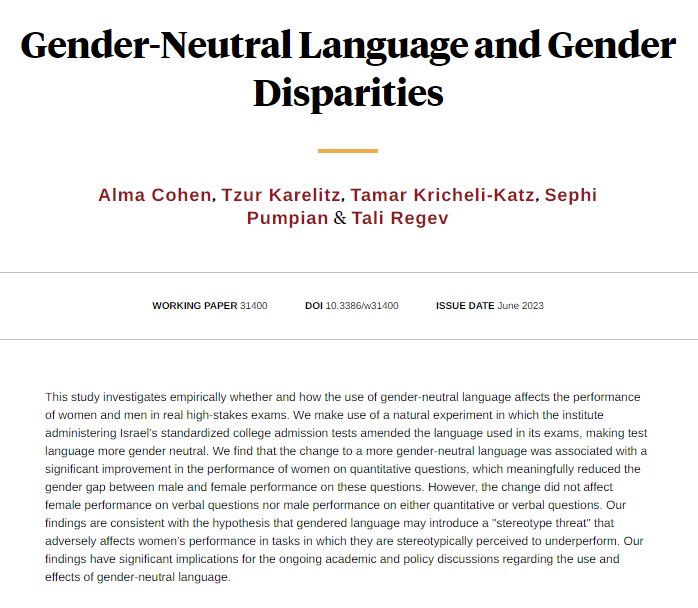
Using a natural experiment to show that use of gender-neutral language reduces the gender gap in performance of tasks that women are stereotypically perceived as underperforming, from Cohen, Karelitz, Kricheli-Katz, Pumpian, and Regev https://t.co/ppaY7ZSaV5
It’s my first publication day! Using a conjoint experiment, @bonniersiegler and I find that white parents strongly prefer schools with fewer Asian students in a new paper out at @SocEducation. \thread
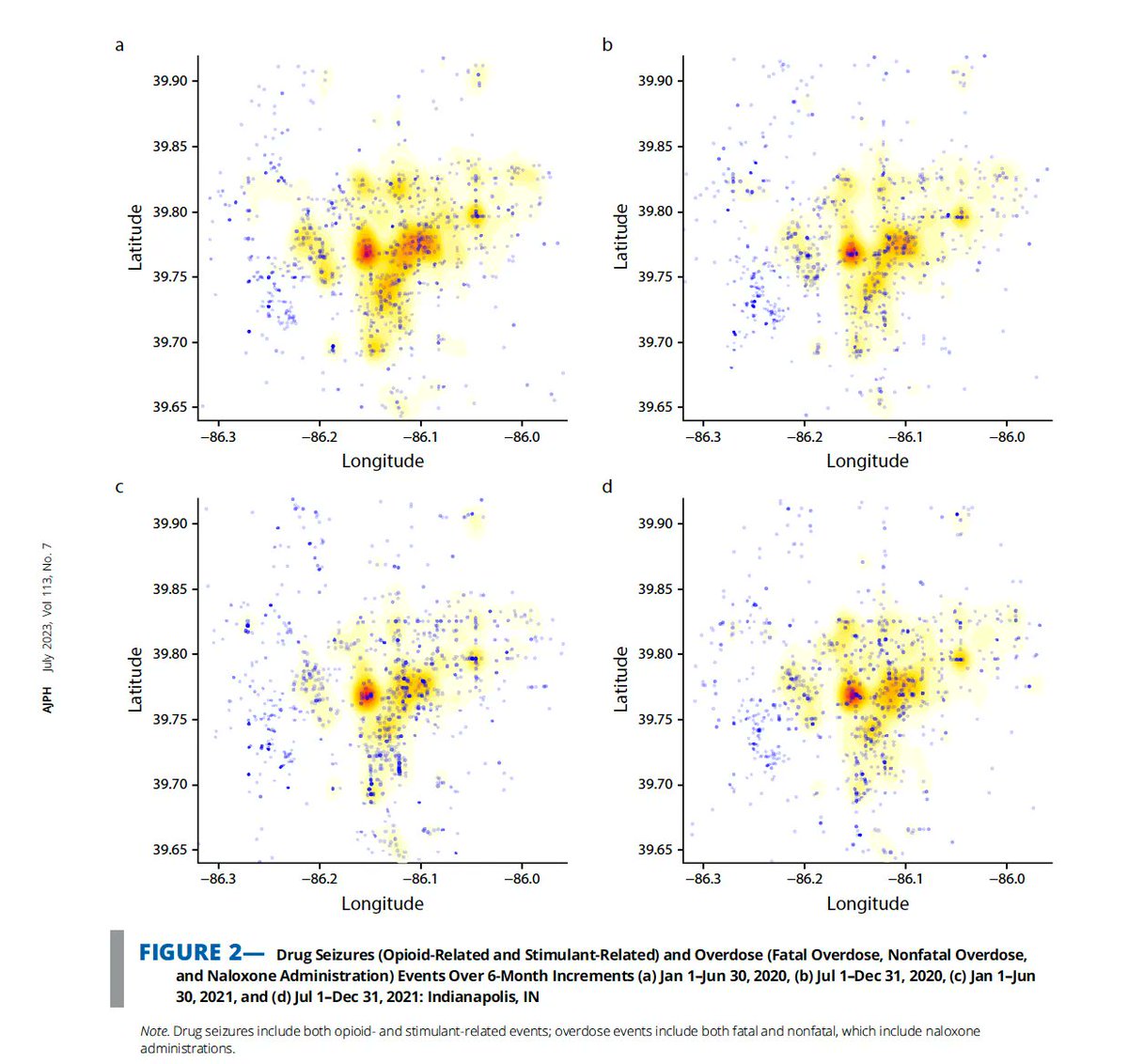
Law enforcement efforts to disrupt the local drug market were associated with increased overdose events in the community in the days following the interdiction effort
This study by @BRaySociologist @veruka2 @gwittervitter1@BrandondelPozo is Open Access: https://t.co/Kasm1MYiEA
Excited to share our new working paper on how large language models can augment surveys! Can LLMs can replace human participants in surveys? We show that LLMs are more useful in augmenting, rather than completely replacing human responses in surveys: https://t.co/FjloKX3x9y
Following a peer teen becoming pregnant, youth change their sexual behavior to lower risk of becoming pregnant themselves, from Priyanka Anand and @ProfLisaBKahn https://t.co/NcT4UphHIE
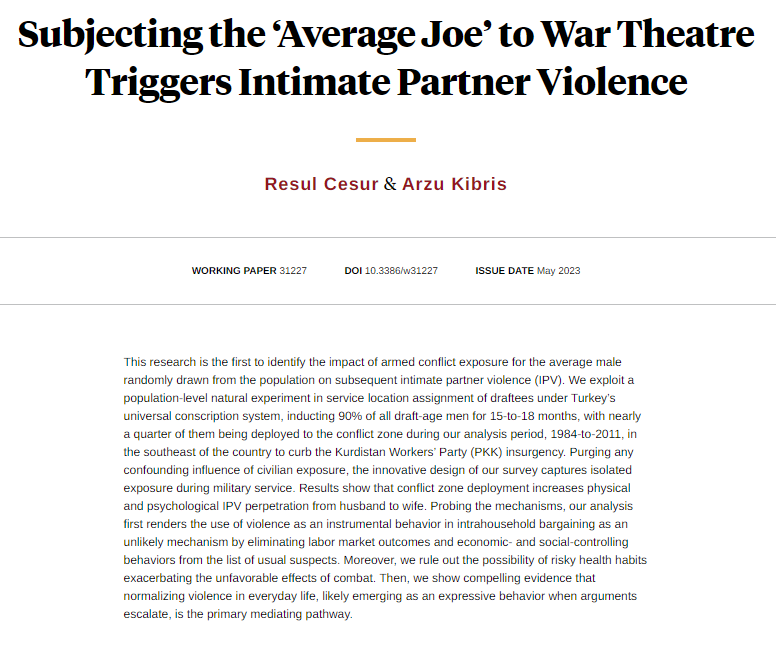
Exposing average males randomly picked from the population to armed conflict increases domestic violence by causing anger-management issues and normalizing violence, from @the_resul_cesur and Arzu Kibris https://t.co/ydALcbhL4F