The Blue Zones—places where people supposedly live past 100 at extraordinary rates—aren't real.
A 🧵 on what went wrong: bad record keeping, pension fraud, and lots of money.
This is going to be a super long tweet about Meaningful vs Placebo changes - Identifying them, engaging with them and trying to understand them. Ultimately concerning itself with Mages botlane/roaming supports/etc - but also applicable elsewhere. There's also around 4 hours of conversation on this topic (or subjects adjacent) on stream if someone would want to hear more depth.
As a preface to this: an important introductory question before we talk about the "mages bot" stuff - found in Phroxzon's tweet here is this:
Do viewers/casual players and the majority enjoy mages and other classes existing in bot lane? Ultimately the conversation always needs to be centered around the longevity of the game. Pro-players ultimately must fall in line when it comes to what viewers enjoy, example fearless drafting - players hellbent on non-fearless are forced to adapt or fall away.
As for the content of the tweet itself:
- A lot of the changes proposed here are essentially placebo, stay with me now, because it should not alter the viability of the decisions already currently being made or the justifications surrounding them.
- To better explain this as an issue that occurs often, it's often just numbers appearing scarier than they are. For example, if someone says 50% of a company left, but the company only had 2 people, the language invokes a different response pre and post context.
- The 25% to 33% during that window contextually is not a variable that any pro team, pro player or anyone is reliably able to consistently control to a degree that it would ever meaningfully alter the outcome or the win probability decisions that someone should make.
- The exp needed from level 3 to 4 is 480exp, from 4 to 5 it is 580 exp. Even if you absorb full penalty during this window, so a number than initially sounds scary in summation actually ends up being able to be recouped by absorbing a almost 3 melee minions shared and spellcaster minion. For catch-up exp and comeback mechanics, yes, they will be impacted but again the number percentage sounds scarier than the realized number. 25% of 100 is 25, 33% is 33. 25 vs 33. In the context of exp for example, a melee minion gives you 62, a cannon 75, and a spellcaster 31. Scary sounding, but on inspection: not highly impactful. In terms of it's application now being able to 3 to 4 you need 150 exp as mentioned above, and then you need 190. For levels 4 and 5 now you need an additional shared minion wave for context, which can be picked up in random places or through comeback exp etc. One of the better ways to also engage with the substance of this is to ask yourself if the advantages that are being pursued is greater than the loss of being slowed an additional 180~ EXP which again is a varying EXP number from game to game because there would've existed games where random things like deaths, minion rng, top/mid/etc contributed to you having already "felt" a nerf like this without realizing it, and now just going forward that constant occurs a little bit more, but compared to the pursued advantages it shouldn't alter the decision for why you do it. In simple terms - Is the advantage that I give my mid or top laner or jungler larger than me being stunted 180 exp at X game timer requiring me to share X of a wave in order to recoup it. If you perceive this way, the decision is still clear that the advantage gained in mid/top/jungle in terms of pursuit is still larger than the deficit incurred with this change, meaning the decision should not change if it was the right decision in the first place.
- Riot as a balance team are very good at making changes that require the reader to engage with the numbers and the context in order to understand the magnitude of the changes. People might be able to look at various changes and realize that they do or don't do anything sometimes, but clearly this reservation that Riot has (relative to contextualizing the changes listed here) indicates that Riot wants to approach this situation via placebo and not transformative game balance, as they seemingly perceive the situation to clearly be balanced in a meaningful way.
- Riot is doing something with these changes that they are very good at: presenting a set of numerical changes without contextualizing the actual breakpoints or behaviors they expect those changes to alter. This forces the reader to investigate the numbers before understanding their magnitude. That does not necessarily mean the changes serve no purpose. If Riot considers mage bot broadly balanced but wants to reduce its adoption, encourage players to reassess it, or relieve growing hostility towards it without destroying its viability, then mechanically minor changes can still alter pick rates, ban rates, practice allocation and professional priority. In that sense, a placebo change is not the absence of balance, but balance conducted through perception. Riot’s reluctance to contextualize the magnitude of the changes leaves that distinction deliberately unclear.
- A fundamental rule of League of Legends is that for a change to be "meaningful" it must alter fundamental aspects of the game in a way that can be replicated and controlled a reasonable amount of the time by human players.
- For example, take the instance that Jhin Q deals X damage to minions and because of that, Jhin requires Y set-up in order to cs, otherwise the minions live at Z hp thresholds. If suddenly Riot comes in and alters the numbers in a meaningful way that it completely changes the conditions and thresholds by which Jhin is allowed to cs, i.e different X different Y, then Jhin gains access to one of the most important resources/constants in league of legends (and games in general) aka 'Time'. For an added example of how much time can affect things, look at what happened w/ the sped up minion waves at one point.
- Suddenly if pushing a wave requires less auto attacks or additional abilities or aid from other champions, you gain access to a controllable variable (time) that you can use to alter trade patterns, push patterns, recall timers, and other things in a meaningful enough way that can change fundamental aspects across REPLICABLE games. It can also demonstrably lead to instances in which you are able to conserve more mana and HP potentially depending on your champion/etc and the patterns that previously existed.
- As an extension to this however, time itself doesn't inherently mean anything if you can't transform into something. If a jungler clears at 2:05 but it's impossible for them to invade or it's impossible for them to gank, what good or what difference was 2:05 in the grand scheme of things across a very large sample size w/ practical arguments thrown at it, compared to a different jungler who might clear slower but can do something instead. If anyone has ever played Ivern for example this instance can come up a lot where lane states aren't in a gankable position, and you're incapable of doing anything meaningful with your time. Likewise if you just shove a wave blindly and then move back and forth in lane from left to right for 20seconds doing nothing, then your time didn't mean anything if you couldn't utilize it. A good example of seeing things like this would be on twtv nickich when he is queuing mid lane.
- Now, following this logic - I want to talk about how these support changes are the exact opposite of this: because of uncontrollable variables and variance that can occur inside of games.
-What I mean by this is that there are games where support players will just happen to, through no volition of their own, acquire more xp than in a previous game due to factors outside of their control (minion rng) or just lane variance i.e. minion dies just inside range, auto was cancelled in a lane. This spawns a huge tree of compounding multitudinous variables and factors that become extremely difficult to engage with in meaningful ways. So if the variables are incapable of being controllable by human means in a meaningful manner - the worry and concern surrounding a topic loses value.
- A tangible example would be say Cho'Gath Q getting a buff to require Cho'Gath players to not need certain items in order to CS the wave. The Cho'Gath player in a sample size of 100 games can confidently know that they are able to now with absolute certainty obtain or opt into different recall timers, lane trades, etc, because they no longer require as much AP or to commit a W to the wave or E in order to CS it fully. This type of a change is much more meaningful and tangible in the macrocosm of things because of the variables that the human player is able to engage with confidently. For example if you alter something like 2ad on Viktor midlane and have Chovy play vs Knight/Faker/Showmaker 100 games in the same match-up, the lane will never end up looking or going the same because of outside variables and factors that a human being player can not ever possibly engage with or claim to be able to in a pragmatic way.
- Contrasted to the Cho'Gath example, that change is meaningful enough to know that the human player and their teammates are now able to make meaningful enough decisions in game that are made available to them now via the game. This is the example of a real change vs a placebo change.
- This is what I mean when I say that a lot of Riot Patch Notes in recent years are "dead" in that most changes aren't actually meaningful and don't alter anything to a meaningful degree when you contextualize what the change is actually doing (especially in a controlled environment like pro play).
- In conclusion regarding the support changes, when we put the numbers into reality and don't become scared of them:
Now assuming that you get all of the EXP with this nerf applied: from level 3 to level 4 you would need exactly 150 more EXP than before. For reference 1 melee minion provides 62 exp by itself, 40 if shared. Meaning that in a large enough sample size (and again, uncontrollable) there will exist so many games where exp is gained even prior to this nerf, that would have played out as if the nerf were already there. Essentially, it could've happened anyway - and therefore is mostly placebo.
Factoring in: minion rng, mid rng, top rng, etc allowing you to absorb exp through totally random means. Even in the worst faith interpretation, the amount of exp lost assuming you get all EXP with penalty applied you still need less than 3 melee minions of exp. Repeat the same logic for level 4 to 5 and contextualize it to arrive at the conclusion.
BUFFS TO ADC MR AND NERFS TO GROWTH:
- If we take the above logic, we can extend it to thought surrounding whether the decisions to play a mage or whatever else botlane would be fuelled by "placebo" or "meaningful" change.
Let's say ADC's get a buff that allow them to have 3% more MR early game. For context this means after you absorb 1000 damage of magic, you have saved 30hp. 30HP is a low enough value that in many games it might've been dealt to you or not dealt to you by minions completely without your control. Further damning is the fact that the timings where this is most applicable is direct super all-in's, as the game goes on, it loses even more value to look at.
As in the 2AD Viktor argument, if you took Peyz&Keria vs Ruler&Duro and had them play 100 bot lane games with the same exact match-up, you would not be able to have enough matches that look the same with the hp variance at game timers would consistently vary due to contextual factors: minion rng, skillshots landed, tethering of autos (skill expression vs RNG)and minion rng. Meaning that the HP threshold is not a point for consideration in the macro picture of making the decision to play the mage. However, you should still note it as an objective buff that could be compounded with later buffs to make a big picture meaningful change in future.
- Also interesting to note is Riot saying that MR growth will slow down. My experience of reading patch notes and engaging with them in detail for the last 12 years is that this will often be a break-point typically balancing out around level 5 or level 9 or there around. Again, just my initial interpretation.
The relevant question is then not simply whether the ADC has more MR, but what the temporary advantage actually allows them to do before that crossover. Across a large sample of games, we can examine how frequently the ADC/support trades into the mage/support, how much magic damage is exchanged and consequently how much HP the additional MR preserves. Does that saved HP create a repeatable difference, surviving an all-in, remaining in lane, contesting a wave, preserving a summoner spell or forcing the mage to change their sequencing? If it consistently produces one of those outcomes, the change is meaningful. If the ADC is objectively healthier but the amount saved remains inside the ordinary HP variance between games and cannot be reliably planned around, then it is unlikely to alter the broader decision to play a mage bot. In my experience, To date I've yet to see anyone demonstrate a consistent threshold of that kind.
BUFFS TO HEAL + MR BUFF:
- So as we talked about earlier, an additional complication is the compounding of other buffs in addition to the MR buff etc.
If they were to example, in a similar timeframe, give an extra 40hp level 1 to Summoner Spell Heal, in addition to the 1000 magic damage absorbed at a 3% increase to reduction, then you end up with 70hp.
- 70hp is interesting but again, it's typically going to be an auto-volley + minions, although still meaningful as it's true hp. So, is the 70hp enough leverage to alter something in a tangible or meaningful enough way when considering that the team with a mage is able to observe the changes and alter their play with consideration to it. (The next step logically).
- Just because the ADC gains 70 effective HP does not mean the mage is forced to interact with that additional durability. The calculation assumes that the mage deals roughly 1,000 magic damage and that the extra HP consequently changes the outcome of those trades. But the mage controls whether those trades occur at all. A Sapphire Crystal-start Syndra, Malzahar or Cho’Gath can continue using their mana to control and clear the wave rather than repeatedly trading into the ADC. Their primary objective is not necessarily to kill the ADC or reduce them from 600 HP to zero; it may simply be to neutralise the lane, prevent the ADC from generating pressure and create the conditions that allow their support to leave.
- This means the additional durability is an objective buff, but it does not directly attack the sequencing or play pattern that makes the mage desirable. Even if an ADC with 2,000 HP effectively gains another 60–80 HP through increased magic resistance, that value only becomes strategically meaningful if it allows them to force a different trade, contest the wave, create a new lethal threshold or otherwise prevent the mage from executing its original plan. If the mage can acknowledge the additional durability and continue clearing the wave without opting into those interactions, then the ADC is numerically stronger without the fundamental decision to pick the mage becoming any less attractive.
Also - What happens if the match-up doesn't even call for heal lol.
- Following up on this it reminds me of the Galeforce item back in the day when some ADC's would claim dependency on the item and that the ADC champions only be able to exist through the existence of the item. Obviously we know this not to be true, but at the time it was a real shared argument that was also protected by social conformity bias. It would be like saying Mages [always] needed Chovy-Belt in mid lane, even though for years they played without it. The difference now is that they have altered their gameplay in order to factor in have the Rocketbelt and likewise opponents adjust and calibrate for the existence of the Rocketbelt as well, and thus there is an adaption that exists inside of the game, which means there can be another one that follows.
UNINTENDED CONSEQUENCES:
- ADC champions naturally gain strength now in mid lane and top lane lol. Champions that utilize some of the incoming buffed items get an indirect buff from this. This has a consequence (albeit minor) on mid/top lane and it needs to be recognized, because I'd argue much more that the intended/stated buffs are more impactful in those lanes than in bot lane where the variance factors are much more difficult to control.
- Enchanters also get a buff to them having heal w/ all their multipliers.
- Supports now who can't roam at all are more punished if they're forced to do so. But this is kind of a funny problem, because my current hypothesis is that the roaming supports are identical to full clear junglers of yesteryears.
In the past you were flamed/criticized/mocked for suggesting full clear jungling even if it was backed by logic and math and other things that could be demonstrated. It wasn't until Damwon's laners would intentionally play their lanes different allowing Canyon to full-clear and them going on to win everything did the public consensus change, even though the arguments for it was demonstrable. In an interview, Canyon went on to say that it was on the laners to learn how to lane without the need for their jungler, because the opportunity cost/variance was lowered and EV increased with the Jungler full-clearing vs opting into high-variance ganks or invades etc predicated on opponents misplaying. As professional players and teams, if you believe yourself to be better you want the least amount of variables existing, not more.
So now, let's evaluate how the supports are justifying their roams and then ask is it actually the highest EV decision. Currently laners play in a way that their support is roaming, same as the jungler, but what if they simply opt to play in a different way knowing that their support won't roam. Much like in the full-clearing meta, we need to not be caught up with social conformity and popularity bias but rather evaluate what is truly happening. My current belief is if the invert happened similarly to full-clear junglers and simply now the onus was on the jungler/top/mid to alter their traditional way of playing, that if the opponent opted into the support roams without proper calculated reason, that the loss/disadvantage incurred by having solo-botlaner lane 1v2 vs potential match-ups could actually be worse. Meaning that the roam is bad, provided the teammates play accordingly. Similar to how ganks in 2019/2020/2021 were bad prior to full-clearing and you could demonstrate that by explaining how the laners played their lanes poorly or didn't adjust to their jungler full-clearing.
This situation with roaming supports is identical to full-clear junglers, as it's a new territory most people don't have enough experience or knowledge about and aren't properly doing the work to bother understanding it at a fundamental level by contextualizing losses and gains. Laners currently play with the assumption/expectation that their support will roam. So their dependence on it can not itself prove that roaming support is truly optimal, as they haven't adjusted for the alternatives or actively practiced to fight against it.
Trying to endlessly copy what everyone is doing is just going to render one a servant to the tides. If someone doesn't bother to engage with the absolute core basis of why things happen or the logic upon which they were founded, then they'd be forever blind to what could come next.
If players just continue to accept whatever the top LCK player or LPL player or team does as a form of dogma, then of course evolution will progress at a snails pace as it constantly has throughout league history.
Trying to endlessly copy what everyone is doing is just going to render one a servant to the tides. Refusal to engage in the absolute core basis of why things happen: or the logic upon which it was founded, is the needle in the haystack being returned to sender: instead of the pursuit of that which is seldom found: you are blinding yourself to ever see the inevitable tsunami. You are destined to drown.
As long as players continue to take whatever the top LCK player or LPL player or team does as dogma, the longer they doom themselves to exist in the reverence of their shadow. Indeed, if humans subscribed to the idea that flight was impossible, then of course why ever even look for lift?
Ray Peat on thyroid hormone conversion:
“If you were deficient in selenium, the correcting effect would be quick, but if there was a problem with intestinal flora, that would have to be taken care of before conversion was good. Other nutritional deficiencies could be involved. Daily raw carrot, weekly seafood and liver, enough sunlight and vitamin D, a good ratio of calcium to phosphate, are often helpful.”
...
“Calcium (two liters of milk), vitamin D and plenty of orange juice sometimes help to regulate things by balancing the minerals. A daily carrot salad should keep the small intestine fairly sterile.”
...
“The liver has to convert T4 to T3 (the active thyroid hormone) for it to be effective. It needs glucose and selenium to make the conversion. Adequate protein, at least 80 grams per day, is necessary. Sea food, once a week will provide selenium, two quarts of milk and a quart of orange juice would provide many of the other essential nutrients. Taking T4 at bedtime sometimes is helpful. Most people feel best on a ratio of T4:T3 of 4:1 or less. Checking the relaxation rate of the Achilles reflex is a quick way to check the effect of the thyroid on your nerves and muscles; the relaxation should be instantaneous, loose and floppy.”
...
“Free fatty acids are usually high in diabetes, and interfere with glucose use. Aspirin and niacinamide help to lower stress increased fatty acids, so allow exercised muscles to use more glucose. 2 or 3 mcg of cynomel (T3) with some food should help to avoid the adrenaline. Vitamins D and K, and salt and calcium, are other things that improve glucose use. Since the liver needs glucose and glycogen to convert T4 into T3, diabetes usually interferes with the conversion. A blood test could show if the ratio of 'T4 to T3 is very high.”
...
“...women in particular tend to have problems because estrogen interferes with the conversion of thyroxine (T4) to the active hormone T3. So women always are more dependent on the actual preformed T3 and very often get an antithyroid effect from over-accumulating the pure thyroxine (T4) because the liver is our main source of conversion to the active hormone. And estrogen, the average woman will have a sluggish liver for the conversion or for detoxifying alcohol, for example.”
...
“Sometimes selenium or getting more sugar in the diet, like orange juice, more frequently, sometimes that will get the conversion going. But sometimes a few doses of progesterone can shift the balance, activating the thyroid gland and liver, which will then tend to stabilize your blood sugar so that the glucose is available for doing the conversion of T4 to T3.”
...
“The worst thing is to start out taking maybe your whole day’s dose (of thyroid hormone) all at once on an empty stomach before breakfast — the message goes to your liver that you have a gigantic excess of thyroid.
And so you activate the liver to get rid of the excess thyroid. Your liver, in just 12 hours after you’ve taken that one morning dose, will create extreme hypothyroidism because it has learned to get rid of the excess, but then when you don’t keep adding it, your liver pushes you to a very low level.
That’s one of the reasons a mixed product like natural desiccated thyroid, a product like Armour Thyroid USP, for example, has a reasonable balance, the same balance that you would normally produce with your own thyroid, or a synthetic such as Cynoplus, which has about four or five parts of T4 to each part of T3.
So the T3 can activate your (conversion) processes and the T4 is available to continue to keep up your T3 level without at any time forcing you into the hyperthyroid state that you get when you take even 10 micrograms of Cytomel at once, which will give you the signal of excess that will lead to reduced thyroid function.” https://t.co/m81DDvVA7x
I do an exercise called “fear-setting” at least once a quarter, often once a month. It is the most powerful exercise I do. Fear-setting has produced my biggest business and personal successes, as well as repeatedly helped me to avoid catastrophic mistakes.
Here's my conversation with Jeff Kaplan, a legendary Blizzard game designer of World of Warcraft and Overwatch, which are two of the biggest, most influential games ever made. Jeff is one of the most genuine & awesome human beings I've ever met: kind, thoughtful, hilarious, and still & forever a gamer through and through.
This was a truly fun & inspiring conversation. We talk about it all: the lows, the highs, the memes, the details of the game design process, and the new game he's been secretely working on: The Legend of California. I got a chance to play the game with Jeff, and it's incredibly beautiful (and fun). You can wishlist it on Steam now. I can't wait to play it with all of you!
Conversation is here on X in full and is up everywhere else (see comment).
Timestamps:
0:00 - Episode highlight
1:27 - Introduction
4:07 - Early games: Pac-Man, Zork, Doom, Quake
18:33 - Writing career - 170 rejection letters
34:06 - EverQuest obsession
47:04 - Getting hired at Blizzard
1:02:32 - Lowest point in Jeff's life
1:08:37 - One of Us
1:12:54 - Early Blizzard culture
1:32:36 - Building World of Warcraft
1:50:20 - How WoW changed video games
2:07:42 - Single-player vs Multi-player
2:28:35 - How Blizzard made great video games
2:54:25 - Online toxicity
3:01:59 - Why Titan failed
3:19:09 - Overwatch in six weeks
3:46:07 - Best Overwatch heroes
3:54:37 - The challenge of matchmaking
3:58:01 - Rust
4:08:22 - Why Jeff left Blizzard
4:30:35 - Diablo IV
4:32:03 - Getting back to making video games
4:40:59 - The Legend of California
4:54:44 - Greatest video game of all time
5:02:51 - AI and future of video games
Children who stutter have higher blood histamine levels and lower vitamin B1 (thiamine) levels.
Vitamin B1 deficiency increases histamine.
Some people find that taking B1 helps with stuttering.
Hypothyroidism is also associated with stuttering, and it increases histamine.
B1 deficiency and hypothyroidism interfere with brain energy by impairing glucose oxidation.
“The results revealed a significantly lower level of thiamine in the stuttering group (M = 29.9, SD = 15.6) compared with the control group (M = 38, SD = 19.3, p = .02), and a significantly higher level of histamine in the stuttering group (M = 20.5, SD = 6.5) compared with the control group (M = 9.4, SD = 7.5, p ≤ .00). The results also indicated a significant negative correlation between severity scores and the level of histamine. The findings of the current study may provide further supporting information about the relationship between childhood-onset stuttering and some biological markers such as thiamine and histamine.” From: Plasma Levels of Thiamine and Histamine in Childhood-Onset Stuttering
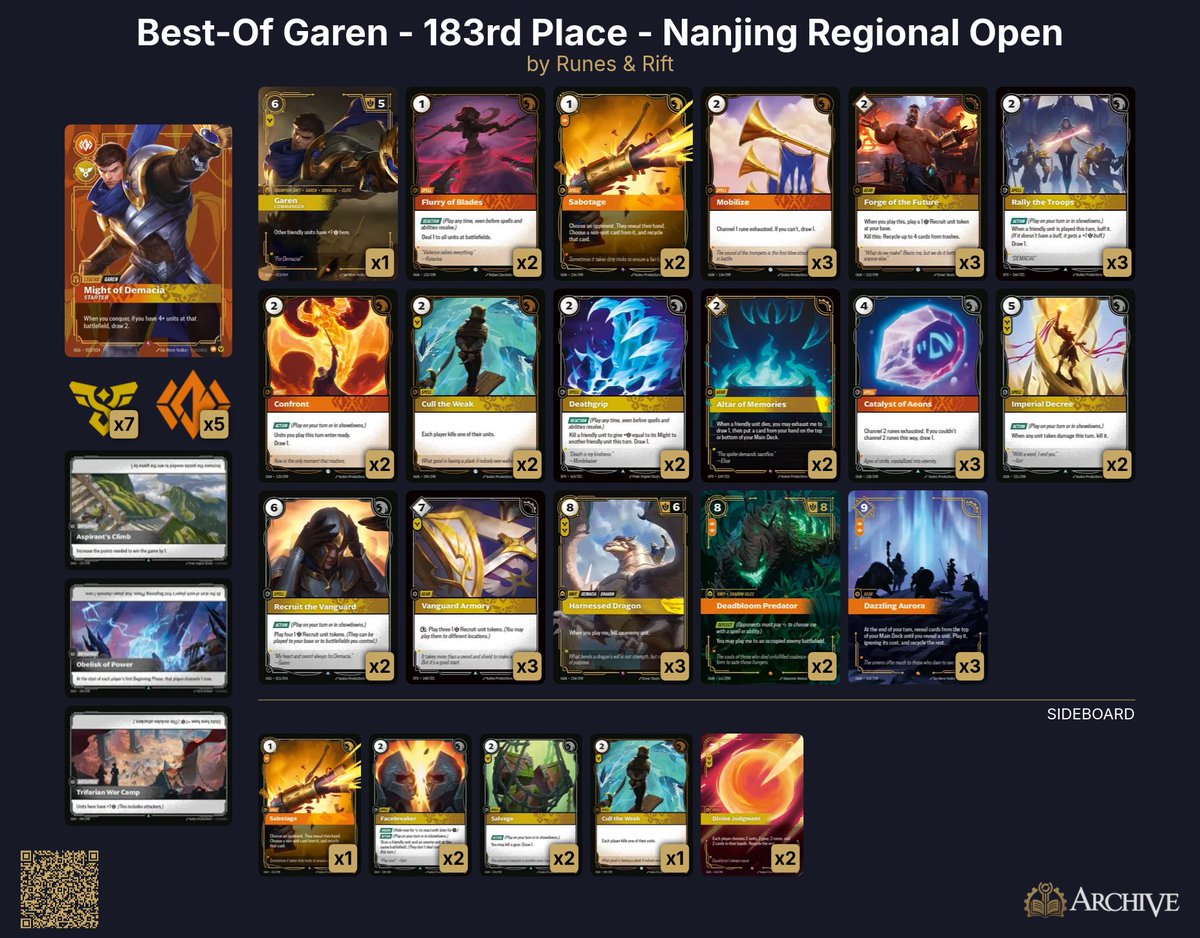
🧵 Best-Of Prizing Winners from the Nanjing #Riftbound Regional Open!
Here are all the highest-placing decklists for each Legend out of 508 total players:
305 – Lee Sin
211 – Jinx
183 – Garen
178 – Yasuo
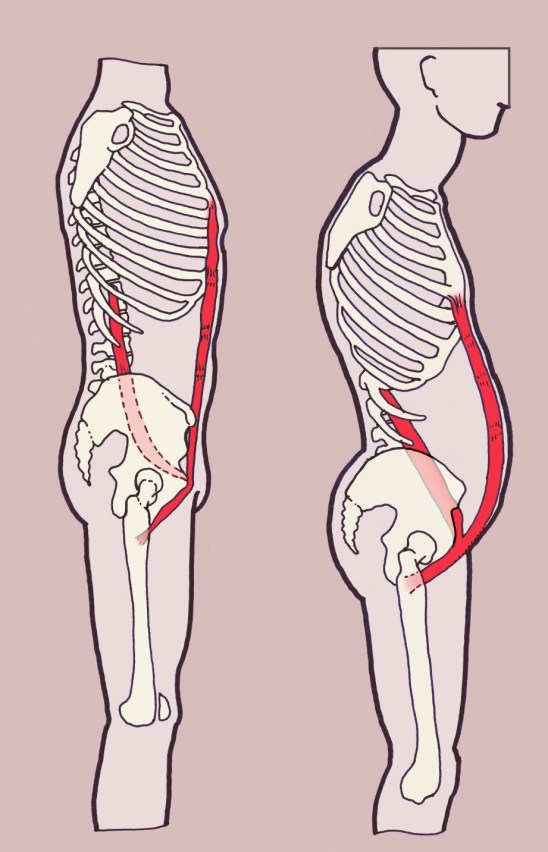
Tons of people constantly suck their belly in to look “thinner”.
But what they don’t realize is that this has significant consequences for not only your posture, but also your breathing.
Good news is, there’s often a better solution. Here’s what you need to know 👇
You have high self-esteem when your psoas muscle is strong.
You strengthen psoas muscle > You adopt a beautiful and upright posture automatically -> Gut compression & irritation reduces dramatically -> You like what you see when you look in the mirror swiftly
Just exercise your psoas muscle already - once you notice how amazing you feel and how beautiful you look - you will strengthen this muscle daily - no doubt about it.
The psoas is known as the "muscle of the soul"
Exercise your soul muscle today!
(Make sure you do it correctly though)
SCIENTISTS JUST PROVED YOU CAN REVERSE YOUR BRAIN AGE IN 4 HOURS
What happened on November 2025 will rewrite human longevity.
A single 25mg dose of psilocybin didn’t just alter consciousness. It physically rewound the human brain to a youthful state. Measurable. Reproducible. Persistent.
The data that changes everything:
Your brain’s default mode network … the rigid autopilot running your thoughts … collapsed by 40%. Entropy spiked 25%. Neural patterns identical to a child’s brain emerged within hours. The flexibility lasted days.
This isn’t theory. This is measurement.
Nature published it. Bryan Johnson documented it live. fMRI scans confirmed what sounds impossible: temporary brain rejuvenation through a single molecule.
Now connect the dots that will stop your heart:
Fifteen-year studies tracking 70,000 humans prove happiness reduces death risk by 22%. Optimism cuts heart attacks by 35%. Purpose and well-being … the exact states psilocybin produces … predict mortality better than cholesterol.
Ketamine already reversed biological age by 3 years on epigenetic clocks. Published 2025. Peer-reviewed. Repeatable.
Do the math:
One supervised session. Four-hour brain state shift. Four-week plasticity window. One to three years of biological age erased. Sixteen to thirty-five percent lower death risk through sustained well-being.
For one billion aging humans, this means 300 billion prevented deaths. Three trillion dollars in healthcare saved. Ten to twenty percent extension of functional lifespan.
The mechanism is brutal in its simplicity:
5-HT2A receptors flood. Prefrontal rigidity dissolves. Sensory integration explodes. Your brain remembers how to be young. The entropy peak forces neural rewiring. The afterglow cements new patterns.
Phase 3 trials launch in 90 days.
If entropy doesn’t rise above 10% or lifespan gains fall below 5%, the hypothesis dies. If inflammation hits 20%, we stop immediately.
But if it holds?
Aging just became optional.
The compressed timeline between proof and protocol is 18 months. The distinction between medicine and evolution collapses.
One molecule. Four hours. Everything changes.
This is the inflection point.
Full deep dive article here - https://t.co/3IKiHEkLeI
@bryan_johnson you inspire me mate!
“GERD is usually associated with disturbed muscle action of the whole stomach and intestine and gall bladder. High estrogen, serotonin, prostaglandins, low thyroid, inflammation, and bacterial overgrowth in the small intestine are often involved. Stimulating the intestine with a daily raw carrot often helps.” — Ray Peat
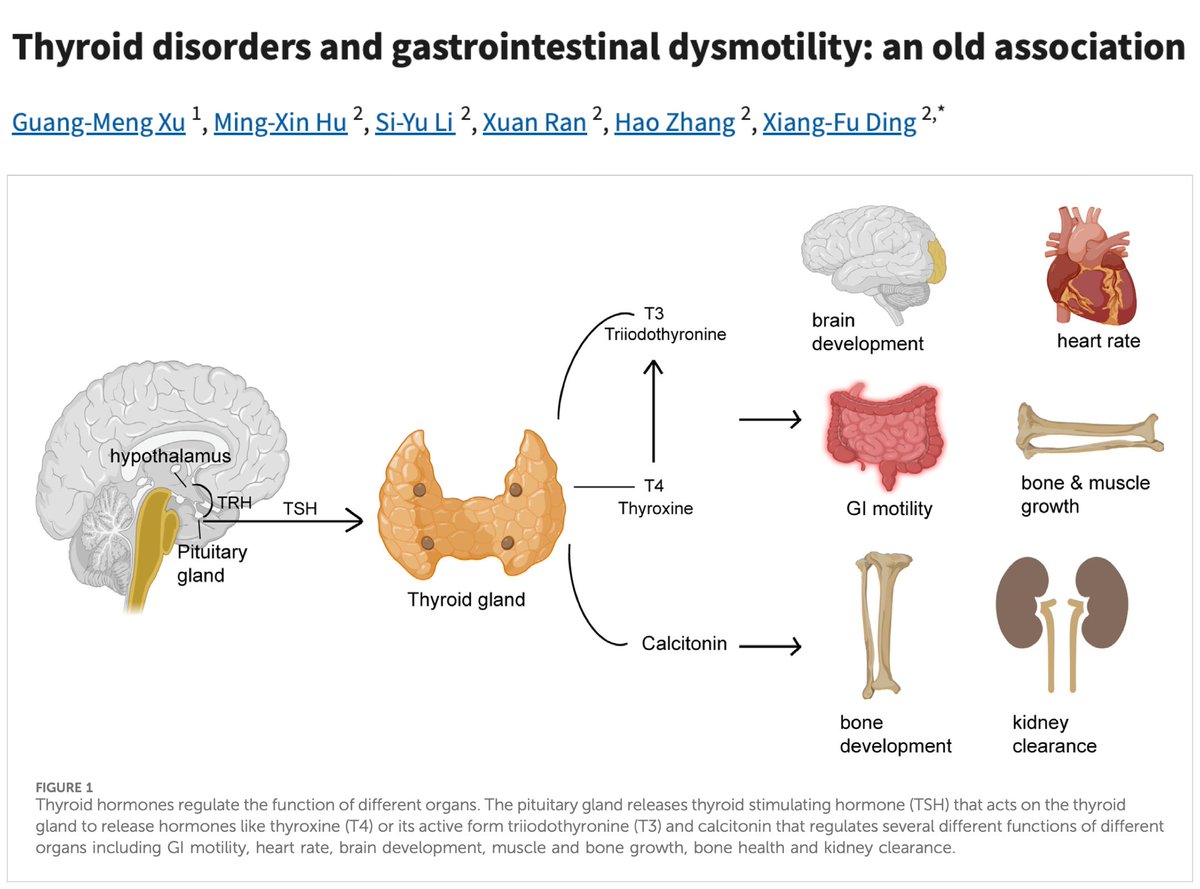
“GI motility dysfunction develops following reduced esophageal sphincter pressure and lowered contraction amplitude in esophageal body leading to reflux and dysphagia. Thyroid disease treatment show improvement in such symptoms.” PMID: 38803365
“A 65-year-old woman suffered from both chronic gastroesophageal reflux, which was complicated by columnar metaplasia (Barrett's epithelium), and profound hypothyroidism. An esophageal motility tracing showed absence of peristalsis in the lower esophagus and the lower esophageal sphincter (LES) could not be identified. Thyroid replacement therapy, in conjunction with antacid and cimetidine treatment, was associated not only with improvement in the gastroesophageal reflux symptoms, but also with a return of esophageal peristalsis and LES pressure to normal. To support our clinical observations, we rendered four cats hypothyroid with 131I and documented a fall in LES pressure. We propose that abnormal smooth-muscle function of the esophagus may be another manifestation of the gastrointestinal motility disturbances which are associated with hypothyroidism.” PMID: 7119407
.@DrAndyGalpin explains how to breathe when lifting weights:
"If you're going to be doing something in which you can complete the
entire exercise without a breath and it is of a maximal or close to load, that's probably your best strategy."
"If you're going to be doing multiple repetitions, think about how many you're going to complete and then breathe according to that, and it tends to increase in frequency as the number gets closer to failure."