@tnyfrontrow Granular analysis can reveal the structures and patterns that make a work cohere. And why assume analysis is designed to find contradictions? Art isn’t a law school issue spotting exam.
The horror of being trapped in a house resonates because housing itself has become a source of anxiety. The movie is an expression of housing scarcity. Mortgage, insurance, taxes, impossible prices. In 2026 a house is a scary thing.
Netflix has put a man into a billboard in Los Angeles, California, to promote one of its shows.
Crowds were seen forming at the bottom of the billboard to see if the person inside was real.
The man inside was writing on a whiteboard to communicate with the people below on Sunset Boulevard.
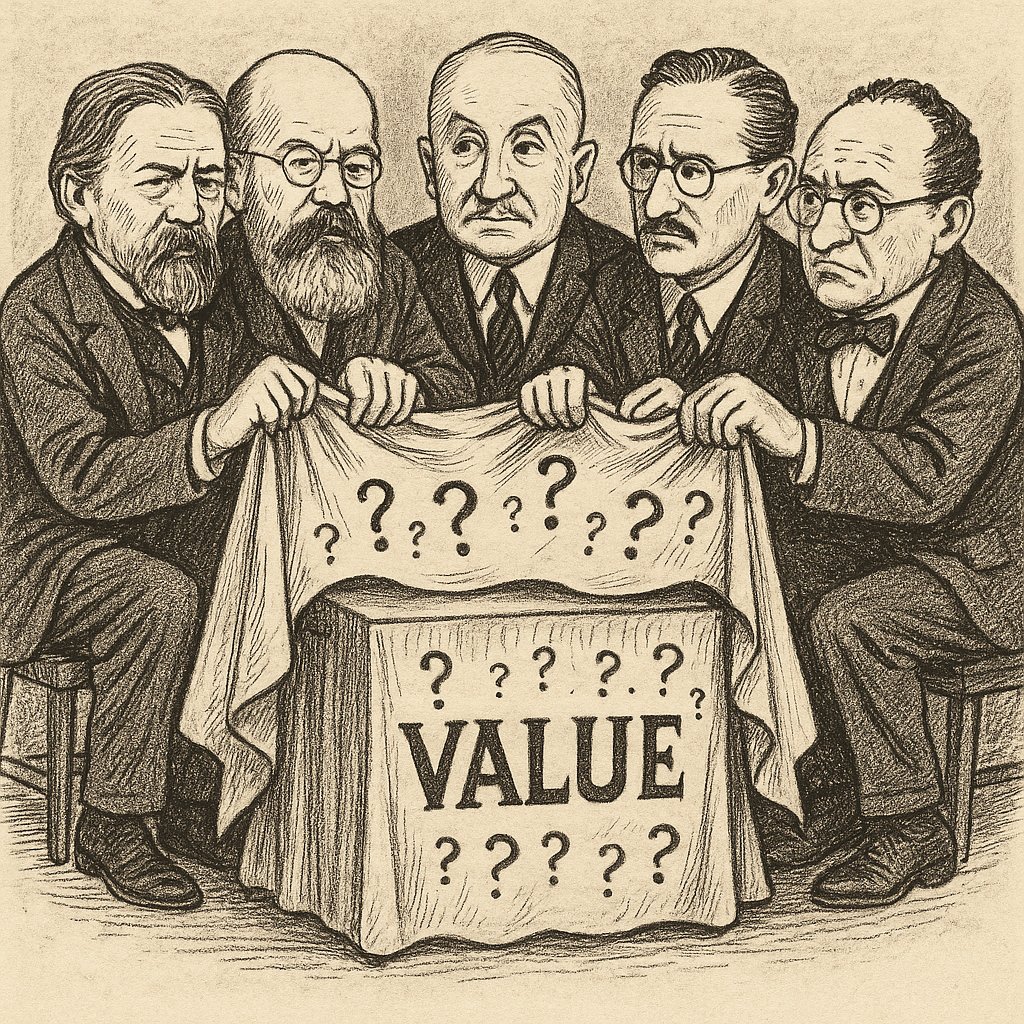
Why Austrian Economics Is Open Ended : The "No-value Theory Of Value"
The usual argument against Libertarianoids during their "mudpie" thesis is that obviously labor has to be productive (a complex concept involving all aspects of social relation both objective and subjective) denoted by SNLT.
But this isn't the best argument. When Austrianoids mudpie, throw it back in their faces: they have no theory of value to begin with.
They IMPLY the ontology of value is capital because they are stupid never read their positivistic masters.
Most libertarian and Austrian economists never argued that value comes from capital. What they rejected was the entire project of grounding value in any objective, ontological, or material substrate. For Menger, Böhm-Bawerk, Mises, Hayek, and Rothbard, value begins and ends in the subjective evaluations of individuals. Nothing in the world has value in itself, not labor, not capital, not raw materials, not land. Value is simply the mental ranking of ends, and because these rankings have no external standard, there is no deeper structure one can “trace” value back to. In their view, to search for the real source of value is a category mistake: value just is the preferences people happen to hold at a moment in time.
In other words, a kind of hippie subjectivity that only becomes "real" through empirical study of intersubjective trends. No ontology at all.
From this standpoint, the market does not reveal value in any complete sense. What becomes visible are prices, and prices are only social artifacts that emerge from the intersection of subjective choices. Hayek called them signals that coordinate plans among strangers, not windows into any underlying essence. They are objective only in the sense that anyone can look at a price tag, but what that number represents is still nothing more than a crystallization of millions of private judgments that have no common ontology. The apparent “objectivity” of the system is therefore only the byproduct of intersubjective interactions. The individual subjectivities never lose their primacy; the market process simply aggregates them into a set of usable constraints.
Within this framework capital plays a very different role. Austrians do not argue that capital is the source of value; they insist it cannot be. Capital goods are valuable only because they serve the subjective ends of consumers. Their productivity is not metaphysical but temporal. Capital arises from deferred consumption, and through saving and investment the production process becomes more roundabout. More complex tools and machinery allow labor to produce more physical output, and by producing more output at lower cost the entrepreneur can satisfy subjective wants more efficiently. But capital never generates value by itself. It only shapes the technical path by which labor and natural resources become goods that consumers already subjectively value.
Because of this, the difference between Marxian and Austrian thought is not simply a disagreement about where value comes from, but about whether value has any ontological content at all. Marx insists that value has a determinate structure rooted in the labor process and the reproduction of society. The Austrians deny this outright: for them value is groundless, foundationless, and irreducible. To look for a deeper basis is to misunderstand what value is. Once that fundamental divide is recognized, it becomes clear why they never claimed capital to be the source of value. In their system, nothing external to the mind can be.
Marx considered labor to be dialectical (human activity and nature contextually). This concept broke with centuries of simplistic Classical economics where value was as silly as the later Austrian inversion of it: that values ontology was simply unquestioned. For the classics it was all labor "being" valuable inherently. For Austrians it was simply intersubjective preference and tautological relativism.
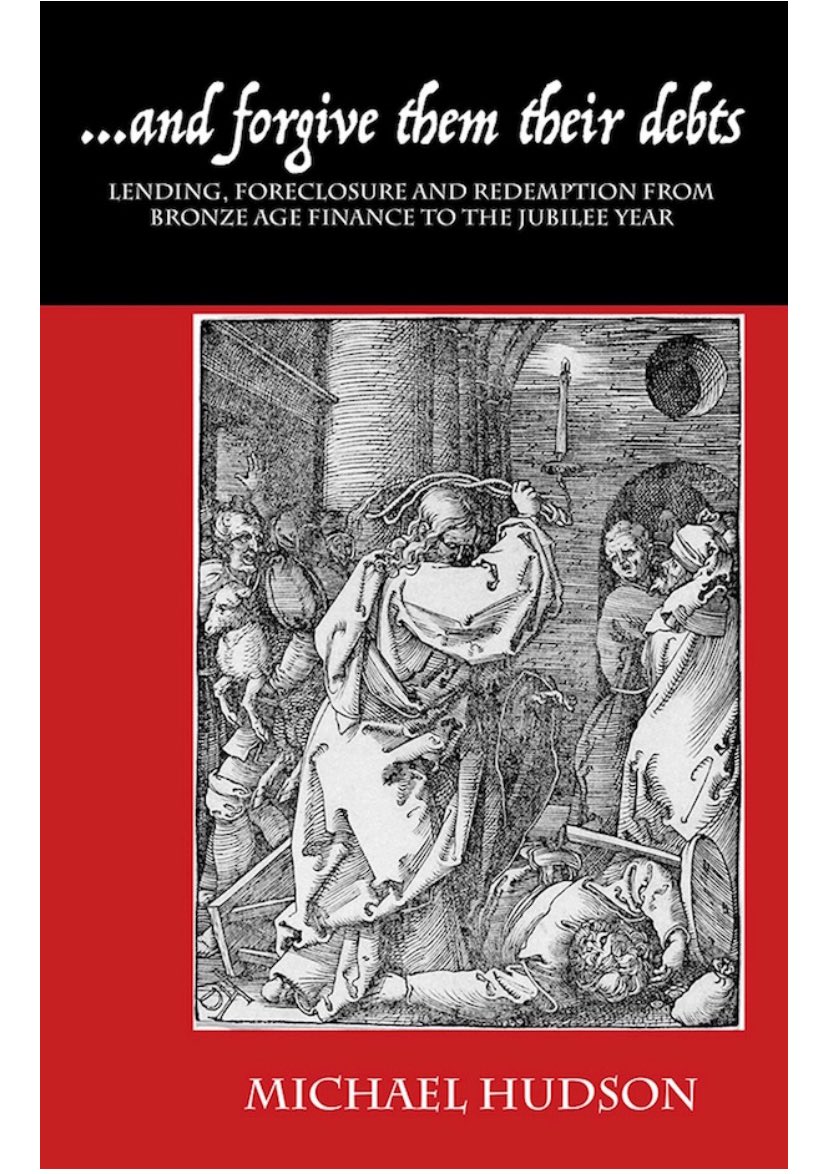
@nntaleb The real split was usury. Rome institutionalized non-forgiveness of debt, while the Eastern Church kept early Christianity’s debt-forgiveness (“forgive us our debts” is the actual Greek).
The later Crusades ultimately turned on the East as economic warfare.
Read Michael Hudson.