The Atomic Energy Network (ænet) is the free and open-source code for the development/application of #MachineLearning potentials based on #NeuralNetworks.
This is the first outcome using the ænet code:
N. Artrith and A.M. Kolpak, Nano Lett. 14 (2014) 2670.
https://t.co/o7GDfKOtUd
Check out the other projects here: https://t.co/rdb6tzCJFZ
#MachineLearning#NeuralNetworks#compchem#AENET
Cost-Effective Strategy of Enhancing Machine Learning Potentials by Transfer Learning from a Multicomponent Data Set on ænet-PyTorch #machinelearning#compchem https://t.co/SKHCYCmd5w
Refining catalyst–adsorbate interatomic potentials with transfer learning in ænet-PyTorch
From optimizing catalyst interfaces to extending molecular dynamics (MD) simulations, linking broad chemical knowledge to specific adsorbate systems often poses challenges in materials research. While large-scale data repositories can help, constructing accurate machine learning potentials (MLPs) for adsorbate-catalyst complexes still requires significant computational resources, especially if only a small custom data set is available.
A recent paper by An Niza El Aisnada and coauthors proposes a transfer learning strategy to build stable MLPs under tight data constraints, particularly for catalyst–adsorbate systems. Leveraging the Open Catalyst 2020 (OC20) database—a substantial collection of diverse catalyst configurations—they pretrain MLPs on carefully selected OC20 subsets. By transferring the pretrained models to a smaller target data set (only a few hundred ab initio references), they achieve robust energy and force predictions. Notably, these transfer-learned MLPs remain stable for hundreds of picoseconds of MD simulation on Cu–Au/water cluster systems, whereas models trained only on limited local data fail much sooner.
They explore two main approaches for selecting relevant subsets from OC20: (1) random sampling to mirror the original database broadly, and (2) filtering by chemical environment (for example, focusing on Cu–Au). The pretrained MLPs, once transferred, exhibit significant improvements in force prediction and MD stability—even though raw RMSE metrics in smaller data sets do not always reflect such gains.
A key component of their workflow is the “ænet-PyTorch” framework. Originally, the Atomic Energy Network (ænet) was a C/Fortran toolkit for ANN-based MLP construction. In this updated PyTorch extension, parallelization and GPU acceleration are harnessed for efficient training, allowing the incorporation of both reference energies and forces. Through transfer learning, a user can import a pretrained model (from large data sets), then fine-tune it on domain-specific references to achieve both accuracy and scalability.
Beyond a simple methods comparison, the authors emphasize pragmatic insights—such as the importance of CV-limited data curation, the synergy of domain-focused subset selection (e.g., focusing on Cu–Au to boost transfer success), and the pitfalls of relying on single scalar metrics like RMSE. They illustrate how data set sizes and neural network hyperparameters (for balancing energy vs. forces) drive generalizability in practice.
Paper: https://t.co/2xajmrOr3u
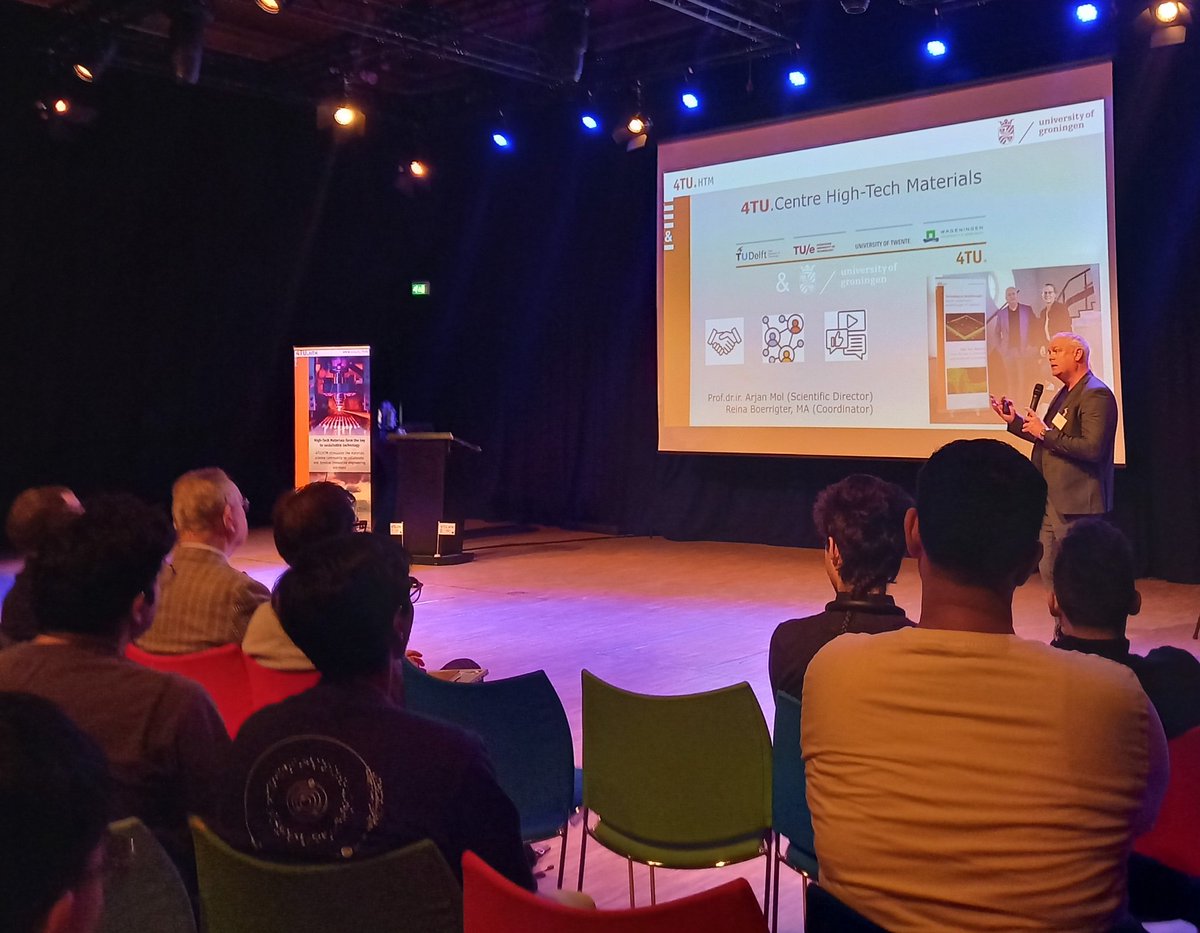
📢Reprise! For last year's MaterialenNL Conference, @ArjanMol2 elaborated on the importance of #materials in NL and uniting the fascinating #materialsscience and engineering "hotpot of academia, industry, government & society".
🎥Complete interview: https://t.co/7I2Pvvbsv6
1/2 👇
We proudly present our 524 page book on equivariant convolutional networks.
Coauthored by Patrick Forré, @erikverlinde and @wellingmax.
https://t.co/y9YBpqhyLG
[1/N]
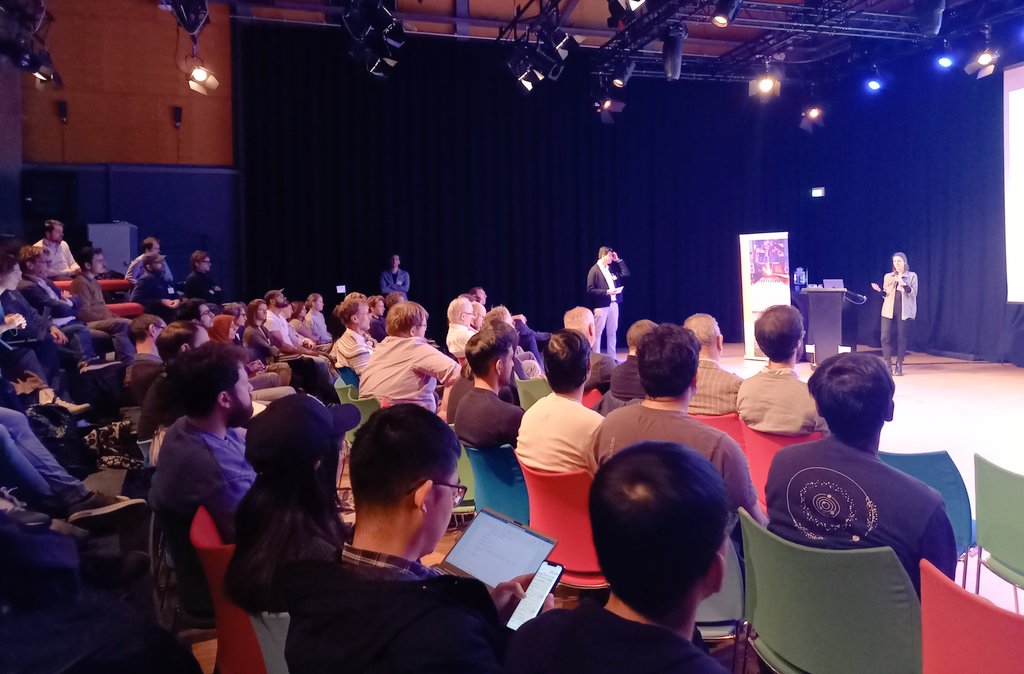
Join us and learn more about ML for Simulating Complex #EnergyMaterials with Non-Crystalline Structures from Dr. Nong Artrith during the @4TU_HTM Workshop on the role of #machinelearning in Molecular Discovery @tudelft, 21 March '24.
Full programme:
🌐https://t.co/HA6csXDfgf
4/
How can we efficiently learn ML potentials for atomistic systems with few and expensive reference data? Here we explored a transfer learning approach via a combination of pre-trained graph neural networks & kernel ridge regression
https://t.co/Y0hfLZMsUQ
#NeurIPS2023#ML4science
MSc students discussed & presented a recent Nature paper https://t.co/rbl7J3KtvQ with Dr. @NArtrith in the SK-MASMS course: The paper showcases the combination of DFT cals, literature data, & robotics for swiftly discovering new compounds🤖🤖#AtomisticSimulation#ML#NewCompounds
Direct active learning molecular dynamics to large structures with up to 1M atoms using M3GNet & a novel substructure sampler.
🎉 Thanks to our AI4Science team & @NArtrith!
📄 https://t.co/YklpWfVLjo
#AI4Science#MLPotential
An enthusiastic deep dive into the interfaces of battery materials at different length and time scales and supercool applications of ANN potentials à la @AENET_Network for multiple use cases by @NArtrith at #MLIP23
So excited to see this go out! Really fun to have new applications of large datasets and generalizable ML potentials. Also so much fun to continue to collaborate with groups like @medford_group as part of the position here at @AIatMeta !
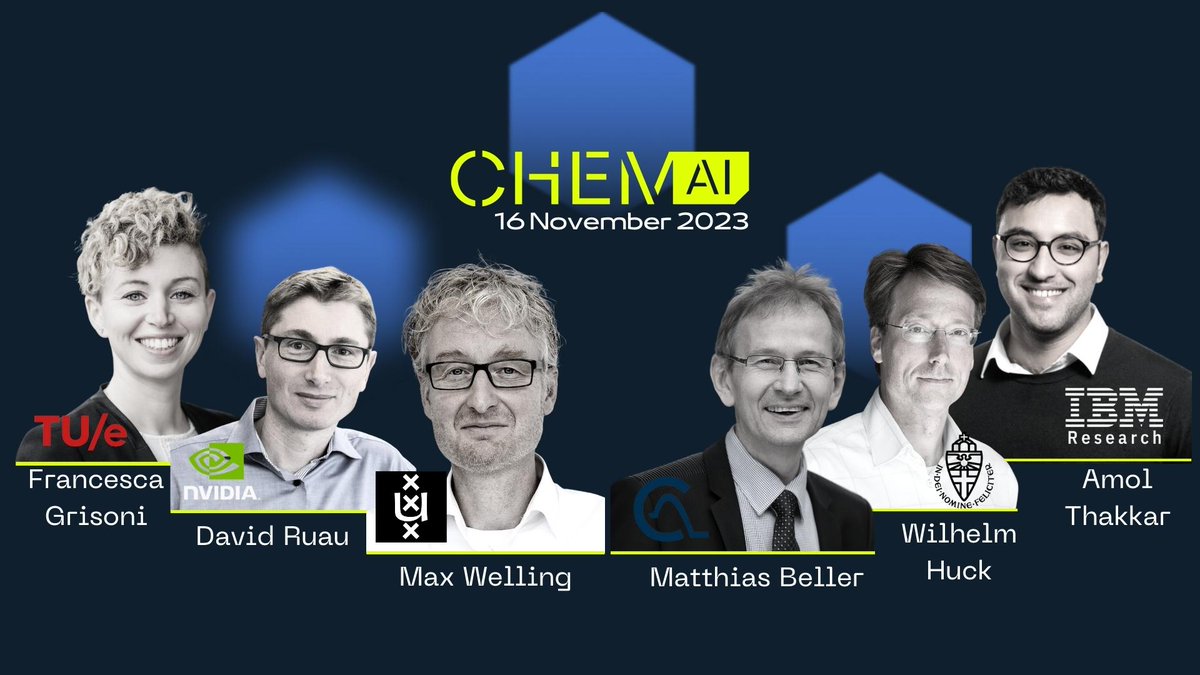
Please join us for the ChemAI day on November 16. I am really looking forward to speaking and meeting other people who see the huge potential of AI for Chemistry. Register here: https://t.co/O20bunWyoH
🌟Check out our Open Catalyst Demo — a super cool way to explore ML models for catalysis! 🚀 Huge shout out to my amazing colleagues who made it happen!! 👏
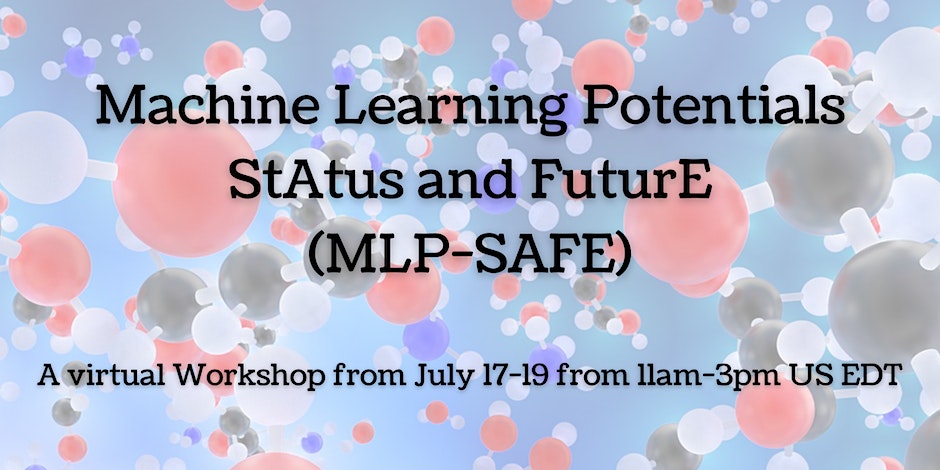
🤖🤖Exciting! On July 17-19, 11am-3pm US EDT! Come join us at the virtual👩💻🧑💻 #ML Potentials - StAtus & FuturE (MLP-SAFE) workshop. Explore the world of #ML, engage with experts & discover its future implications. Don't miss out!⚡️🌤️ 🚀 #MLP_SAFE2023 ➡️
https://t.co/AB8wOTc8hs
Tired of energy barriers hindering global optimization? Do as @AndreasSlavensky: build a simpler, complementary energy landscape using e.g. #SOAP and Gaussian kernels. Then use that to accelerate structure search. #CompChem. Just published in @JChemPhys:
https://t.co/fFPdVu4grq
Please join the upcoming virtual workshop “Machine Learning Potentials - StAtus and FuturE” July 17-19 11am-3pm EDT. Learn about key advancements and opportunities in MLPs. The workshop is free and all are welcome! https://t.co/CC56LtNASD #AI4science







![maurice_weiler's tweet photo. We proudly present our 524 page book on equivariant convolutional networks.
Coauthored by Patrick Forré, @erikverlinde and @wellingmax.
https://t.co/y9YBpqhyLG
[1/N] https://t.co/Xf7DzkZx4I](https://pbs.twimg.com/media/F8tveafWoAANtjt.jpg)