BREAKING: Anthropic rings the Nasdaq opening bell after raising $107 billion in the biggest IPO in history.
Then they told investors something you almost never hear on IPO day:
1. "We will not bend to either business nor political pressure."
2. Anthropic will slow down the training and release of its AI models if needed, "taking as long as is necessary" to be sure they are safe.
3. As a public benefit corporation, Anthropic is legally required to weigh the public good alongside returns to shareholders.
4. AI working with humans could compress a century of scientific and medical progress into a decade.
5. AI risks include misuse by individuals and nation-states, economic disruption, and losing control of AI systems.
6. "The most difficult safety work lies ahead of us."
7. More than half of the Fortune 500 now use Claude.
8. Anthropic said no to ads, the business model that funds much of the internet.
9. When a new model turned out to be exceptional at finding security flaws, Anthropic held it back and gave it first to cyber defenders.
10. Doctors used Claude-powered OpenEvidence 42 million times in August alone.
11. The IPO puts Anthropic in a stronger financial position.
@KhalifKairo Since you are using existing LLMs and you cannot fine-tune the model, just build a lightweight knowledge pipeline around your current agent, and then RAG to retrieve relevant context at inference time
Not just PHP. Node.js has also announced security releases for October 21, with HIGH-severity vulnerabilities affecting its 26.x, 24.x and 22.x release lines.
If you run either stack in production, keep an eye on official advisories and apply patches promptly.
Security maintenance doesn't stop at your application code. Your runtime matters too.
Node.js advisory: https://t.co/rmgw4sOnqU
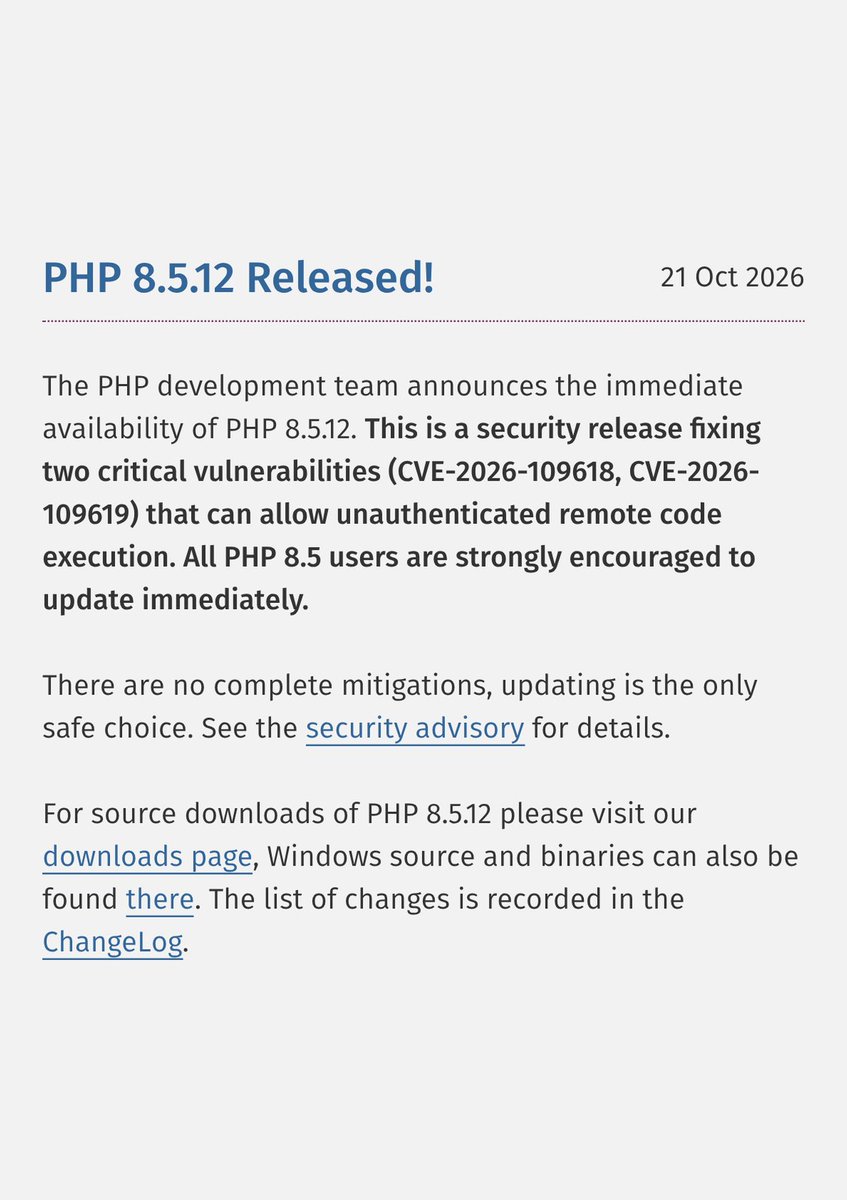
Two critical vulnerabilities have been identified in PHP, a widely used programming language that powers websites and web applications. These vulnerabilities (CVE-2026-109618 and CVE-2026-109619) could allow malicious cyber actors to remotely execute code in PHP core, potentially compromising sensitive data and networks.
The FBI urges organizations to take the following steps now:
➡️ If an immediate update is not feasible it is recommended that organizations take the system offline until it can be fully mitigated.
➡️ Immediately update affected PHP installations following the guidance on https://t.co/rDrPSxB3zX. Inventory where PHP runs in your environment, prioritizing internet-facing systems and vendor products that bundle PHP.
➡️ Monitor web servers for suspicious activity, including PHP processes unexpectedly launching command shells or downloading files. Ensure appropriate process-monitoring capabilities are in place to help identify potential exploitation.
➡️ If you find signs of compromise, isolate affected systems, preserve your web server and PHP logs, and report it to your local FBI field office or https://t.co/iqgVZIbCru. Those reports help us identify the actors involved and warn other organizations before they become victims.
For the latest information, follow PHP’s announcement on https://t.co/rDrPSxB3zX, CERT-EU Security Advisory 2026-018, and CISA’s Known Exploited Vulnerabilities catalog.
@IntCyberDigest One unpatched vulnerability can compromise an entire server before your application even runs. If you're running PHP in production, patch now.
‼️BREAKING: PHP has released its fix for the two leaked flaws, which can let attackers run code on servers without logging in.
"There are no complete mitigations, updating is the only safe choice," PHP says.
Update to PHP 8.5.12, 8.4.27, 8.3.36 or 8.2.35 now.
PHP says Apache with mod_php is most at risk, with a demonstrated exploit that fires before any application code runs.
PHP 8.1 and older get no official update, though PHP has published source backports for 7.4, 8.0 and 8.1.
All the best startup accelerators to apply in 2026 (below FULL spreadsheet):
[ Top-Tier ]
1. Y Combinator (~$500k, 7% on $125k + uncapped SAFE)
2. a16z Speedrun (~$500k for 10% + $500k follow-on)
3. Techstars (~$220k, bumped from $120k in fall 2025)
4. Founders Inc (~$100-250k for 4-7%)
5. Sequoia Arc (~$1M, terms per company)
6. South Park Commons (~$1M total, $400k for 7% + $600k guaranteed)
7. HF0 (up to $1M uncapped for 5%, repeat founders only)
8. On Deck ODX (DISCONTINUED 2022, skip)
9. Pear VC PearX (~$250k-2M for ~10%)
10. 500 Global Flagship (~$150k for 6%)
[ AI / ML Specific ]
11. AI Grant (~$250k for 7%, Nat Friedman + Daniel Gross)
12. AI Fund (~$1M+, Andrew Ng, studio model)
13. NVIDIA Inception (credits + perks, no equity)
14. Microsoft for Startups (up to $150k Azure credits, no equity)
15. Google for Startups AI Accelerator (credits, no equity)
[ Vertical / Deep Tech ]
16. SOSV (~$525k across IndieBio, HAX, Orbit)
17. IndieBio (biotech, ~$525k = $250k for 6-8% + Genesis SAFE)
18. HAX (hardware, ~$525k via SOSV)
19. Greentown Labs (cleantech, workspace + grants)
20. Activate (deep science fellowship, 2-yr stipend)
[ Crypto / Web3 ]
21. a16z crypto CSX (~$500k for 7%, SF in-person)
22. Alliance (~$500k, ALL18 starts Sept 7)
23. Outlier Ventures Base Camp (~$250k, per-chain verticals)
24. Coinbase Base Builder (varies, mostly non-dilutive)
[ International / Regional ]
25. Seedcamp (~€350k-1M first check, rolling, Europe)
26. Entrepreneur First (~$250k = $125k for 8% + uncapped MFN)
27. Antler Disrupt US (~$400k = $250k for ~9% + uncapped)
28. Brinc (~$100k, Asia + Middle East)
29. Station F (Paris campus, hosted-program terms)
30. Founder Institute ($499-999 fee + 2.5% Equity Collective warrant)
[ Pre-Seed / Idea Stage / Niche ]
31. Z Fellows (~$10k for 1%, pre-product)
32. ERA NYC (~$100k for 8%, generalist)
33. The Residency (community-first, no standard check)
34. Plug and Play (varies, often non-dilutive)
35. Build For Tomorrow (community + grants)
Four things worth knowing:
1. small program acceptance rates are higher than YC, not because they're easier, because the funnel is smaller. apply to 5-7, not 1
2. brand premium on YC is real but not infinite. Arc + Speedrun + HF0 carry signal too
3. "$X for Y%" is the only number that matters. uncapped MFNs are not free money, they dilute you on the next round
4. avoid any list still quoting Techstars at $120k, ODX as active, HF0 at $100k, or Founder Institute as "$10k for 4%". all wrong
Shared with you those where I am going to apply with my ideas and products
Terms shift annually. Verify on each program's site before applying
gl with successful raising
@rishabhnasa 100%. The best feature a builder can develop right now is the ability to say "NO" to 99% of shiny new tools so they can actually ship the 1% that matters
The best skill you can build this week isn't learning a new tool; it's learning how to filter noise.
Focus on 1 goal, turn off non-essential notifications, and execute without overthinking.
@TTrimoreau The goal isn't to build the biggest company. It's to build a business that gives you freedom, solves real problems, and doesn't consume your entire life. Revenue is vanity if you have no time to enjoy it.
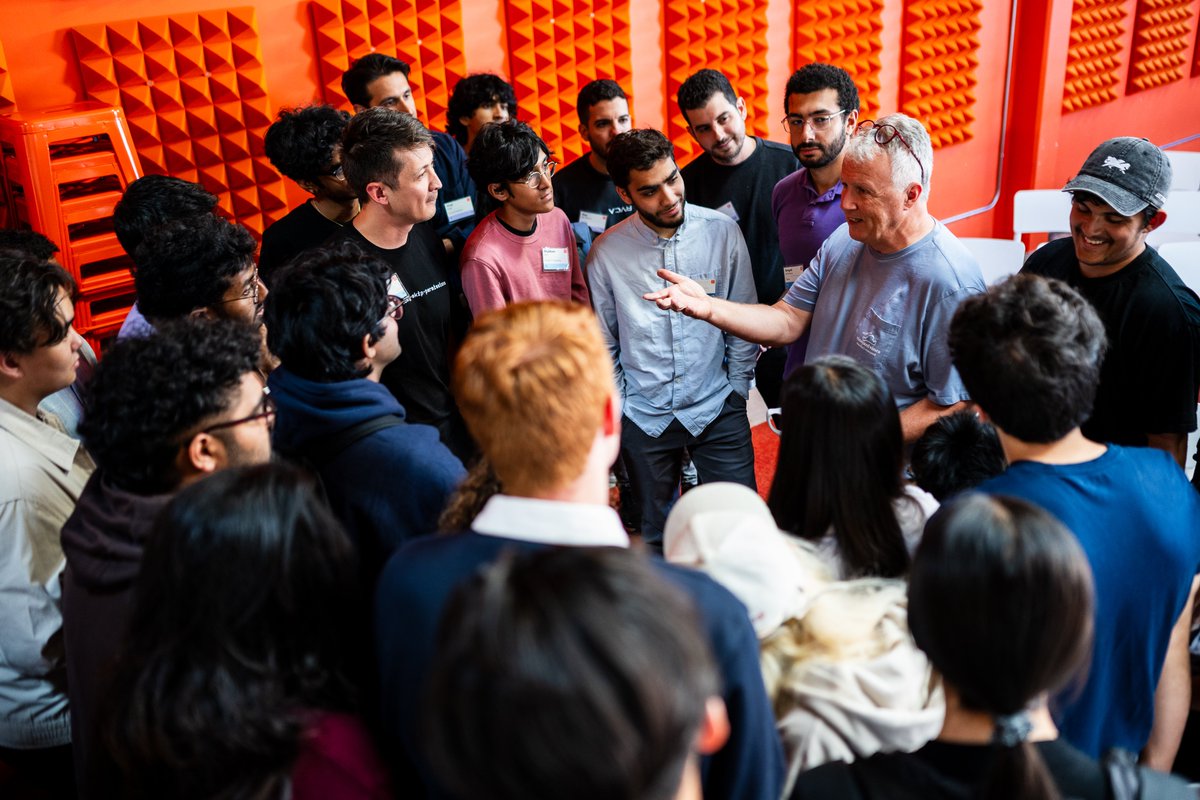
We’re looking to attract the world’s best and brightest researchers and graduate students!
Canada is home to world-class institutions and offers clear pathways for international students to pursue master’s and doctoral degrees.
From January to June 2026, graduate students accounted for 21% of new study permits issued, compared to 12% during the same period last year.
Why pursue a graduate degree in Canada?
• Simpler processing for most graduate degree students
• Faster timeline - 2 weeks for doctoral student applications
• Opportunities to work in Canada after you graduate
Learn more: https://t.co/fzpKYw5jRc
@iamgingertrash In a world where building software is becoming cheaper and less of a competitive advantage, we need to ask ourselves: what will become scarce enough to create lasting value?
We'll be spending a lot more time trying to understand the outputs of language models. A few thoughts, tips & tricks:
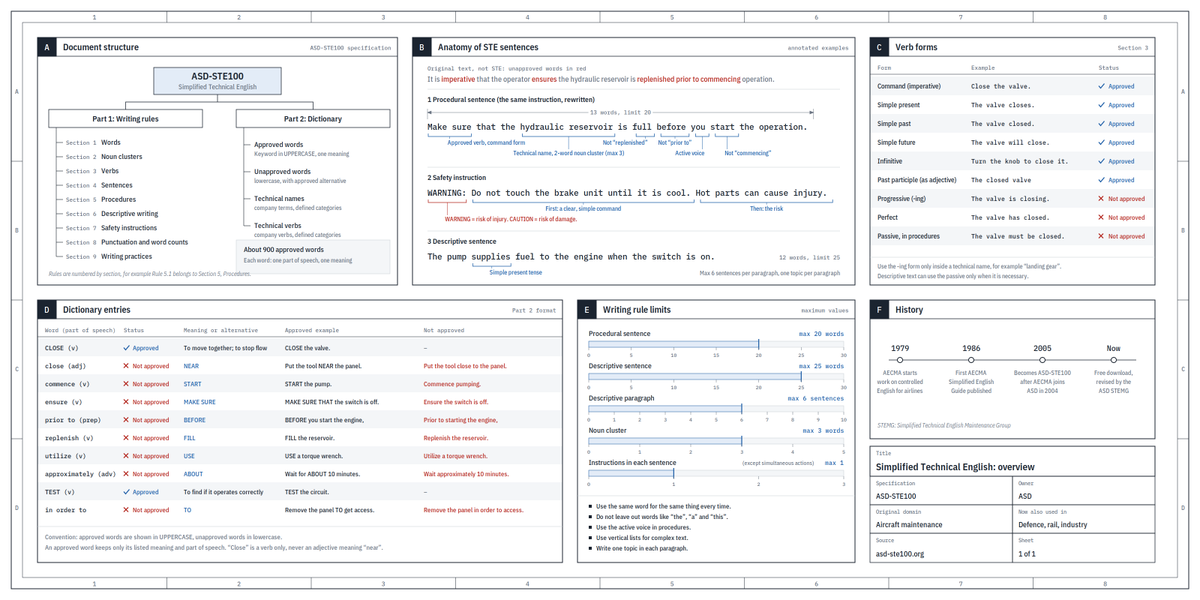
Writing. Something I've had success with: Ask your LLM to explain something in ASD-STE100, it's a controlled language specification originally developed for aerospace maintenance documentation. LLMs well-versed in this language and it comes with heavy constraints on clean writing style that I often find a lot more readable. Sometimes I've tried to soften it a bit e.g. ask for "80% of the way to ASD-STE100" because the spec is quite stringent. But even better:
Diagrams / images. Instead of writing, ask your LLM to create a diagram. These can be a lot easier to process, parse, and understand. But even better:
Web pages. Ask for output "in HTML" to get a beautiful, interactive webpage. LLMs are getting really good at frontend and can create beautiful experiences, animations, etc. But even better:
Explainer videos. The output format I am most bullish on is fully custom / bespoke explainer videos generated on any arbitrary topic. Experiment with things like "Create a 3b1b style video explainer on X. Use my ElevenLabs API key for audio narration". (you'd need an API key for the latter or you can ask your LLM to find you decent free alternatives that use your local compute). This is actually starting to work!
In summary:
- As LLMs get better, they will do more and more of the legwork autonomously, and a lot more of our work will rise up the abstractions into oversight and understanding.
- Luckily, LLMs can help here too because as intelligence and code are increasingly abundant, you can ask for large, custom, discardable software artifacts (e.g. web apps, video explainers) that would have never made sense to create before. Push the boundaries here and you'll be surprised.