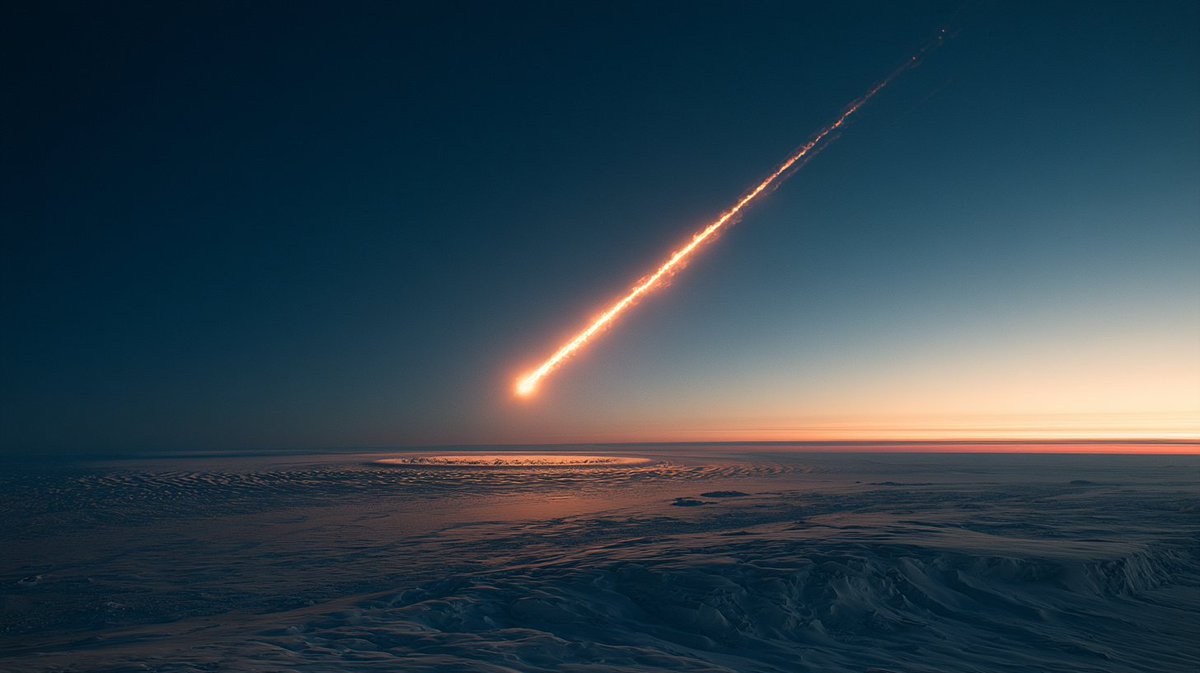
At the height of the Ice Age, the busy part of the world was in the Indian subcontinent and equatorial lands. Three great floods took much of it, now on the sea floor.
At Poompuhar, on the coast of Tamil Nadu, an underwater survey has mapped an 11 by 3 kilometre area, twenty-five kilometres out to sea, that appears to hold a drowned harbour, dockyards, settlements and canals wide enough to move over seventy ships at once. Some of the material dates to a period when, in the version of history most people were taught, human beings had not yet invented cities. Archaeologists’ initial dates need further investigation but it appears to be a transformational discovery.
The seas were then 120 metres lower than today. Two subcontinents that no longer exist, Sundaland off Southeast Asia and a second land reaching from Japan toward Taiwan, stood above the water. The warm coasts of the south were where fish were caught, cereals, fruits and nuts were collected, timber grew, and trade goods were gathered. When the ice melted, in three great surges, 25 million square kilometres of lived-on land went under, more than the size of Europe. Its people were sailors; Australia had been reached by boat sixty thousand years before.
Sri Lanka was managing cereals 15,000 years ago. The oldest cotton thread on earth was spun in northwest India. The Sarasvati, five miles wide in places, fed a river system that by one estimate housed a tenth of every human being then alive, while the far north was still thawing. Almost every culture keeps a story of a great flood, and they cluster thickest in the drowned lands. In India it is Manu, warned in time, and a boat towed to safety by Vishnu in the form of a great fish.
The story of the ancient world did not begin where we were taught. It began in the equatorial regions, on coasts now under the water, and the divers are only now starting to reach them.
Link to my full Substack essay with sources in the image below.
A huge part of my parenting philosophy is understanding that children literally do not have the cognition of adults.
And I think a lot of parents lose their fucking minds because they forget that.
They expect a 4 year old to think through a situation the way a 35 year old would. They assume that because a child technically “knows” a rule, they should be able to remember it in the moment, override an impulse, regulate their emotions, think about the future consequence, and then make the rational choice.
That is a lot of cognition. And little kiddos simply do not have all of that online yet.
So parents start assigning adult motives to developmentally immature behavior. They call it disrespectful, manipulative, selfish, lazy, defiant, or whatever. Sometimes it is just a tiny person with poor impulse control doing exactly what tiny people with poor impulse control do.
Your child is not a miniature adult who is inexplicably bad at being an adult. They literally do not have the capacity to do adult thinking yet.
And I’m not saying kids should have no boundaries or consequences. Obviously not. I’m probably stricter than a lot of people in that regard. But there is a massive difference between teaching a child the skills they are developing and becoming enraged because they do not already possess them.
The other major part of my parenting philosophy is that we cannot control other human beings. That includes our children.
We can guide them. We can teach them. We can set boundaries. We can create consequences. We can tell them what behavior is acceptable in our home and what is not. We can remove ourselves, remove privileges, or change the environment when a boundary is crossed.
What we cannot do is make another human being obey us.
And I think a lot of really ugly parenting comes from refusing to accept that fact. The parent decides the child must comply, and once compliance becomes the goal at all costs, coercion starts getting justified. Yelling, humiliation, intimidation, hitting, fear, whatever it takes to force the behavior they want.
I fundamentally reject that.
I do not think having more power than another human gives you the right to harm them into submission. And being their parent does not somehow make that less true.
My job is to raise a person who can eventually govern himself, not a person who behaves only because someone bigger than him might punish him.
Children need structure. They need limits. They need parents who are willing to say no and mean it. But they are still separate human beings with their own minds, temperaments, emotions, and eventually their own values.
I can influence that. I can shape the environment. I can teach. I can model. I can hold boundaries.
I cannot own another person’s will.
And I think parenting gets a lot healthier once you stop confusing guidance with control.
100% agree, Dave. We’ve been doing routine PET/CT sim for over a decade in #hnscc. Yao Yu, one our stellar faculty, published our results a bit ago. For a not insignificant number of patients, especially post op oral cavity, it changes management. #radonc#medtwitter@imrtlee@xrtGenomics
https://t.co/wQH4BC30MY
This is seriously scary. CCTV footage from Gyirong Port in Tibet, China, directly opposite Nepal’s Rasuwa district. This flash flood hit here first and later caused massive havoc in Nepal. Can’t even imagine someone surviving this. Prayers for everyone affected. 🙏
A photographer who's shot for National Geographic across 40+ countries in 18 years
borrowed his friend's iPhone for 5 minutes at dinner.
He took one photo with the default settings. Then he opened Settings, changed 9 things, and
took the exact same photo from the exact same angle.
He showed both pictures side by side.
"That doesn't look like the same phone."
"It is the same phone. You've been shooting with a professional camera in automatic tourist
mode. Apple put a 48-megapixel sensor, a computational photography engine, a night vision
system, a macro lens, and a cinematic video stabilizer inside your pocket. Then they shipped
it with every advanced setting turned off and the grid lines hidden. You've been taking every
photo the way the factory set it up 2 years ago."
He said the gap between an average iPhone photo and a professional-looking one is almost
never about the hardware. It's about 9 settings most people never open buried in the
Settings app, not the Camera app that change composition, color, resolution, focus, and
light control.
"You're carrying the most powerful camera 99% of people will ever own. You're using it like a
disposable."
Here are the 9 things he changed 🧵
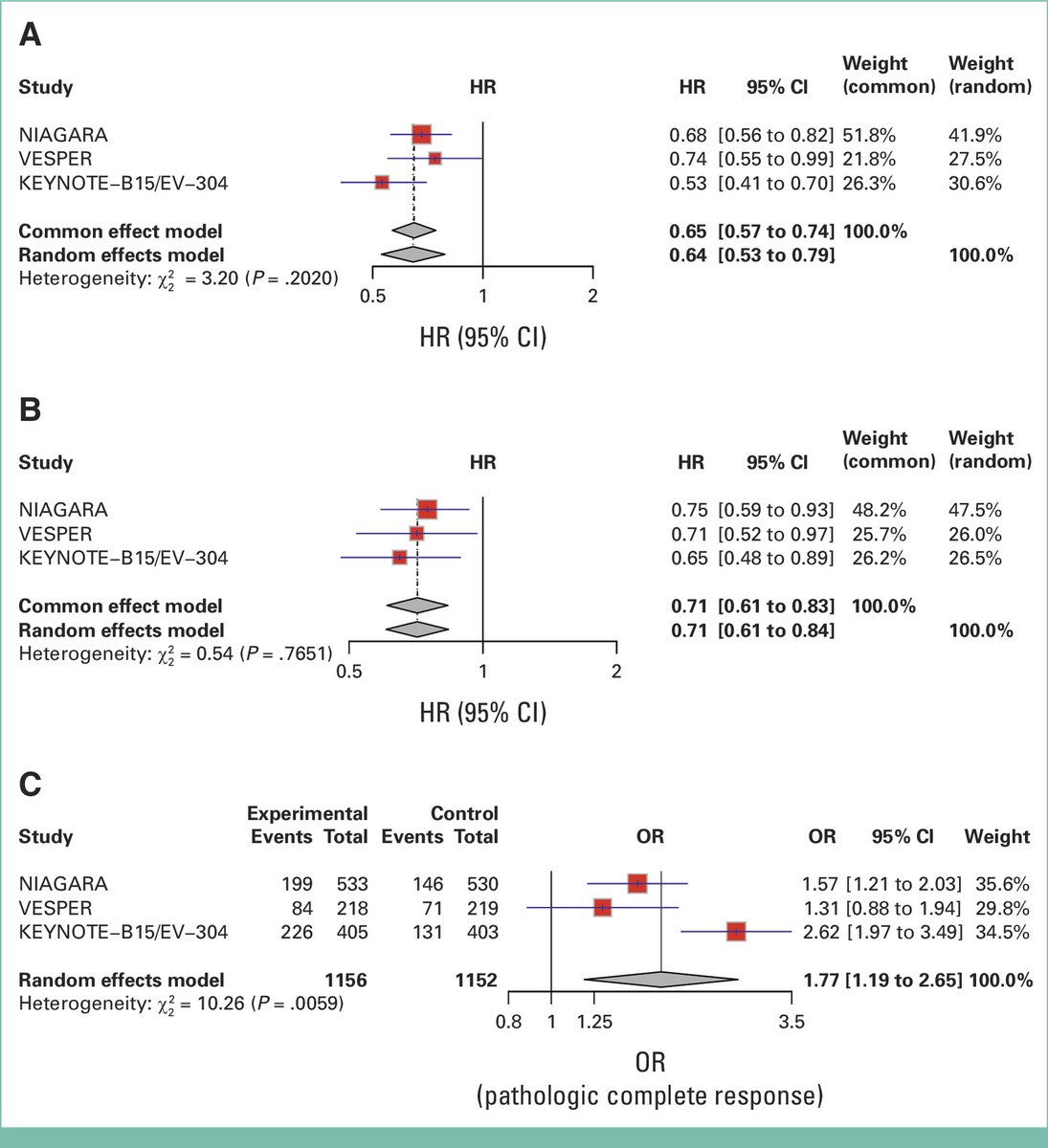
⚡️ Real-world quality of life outcomes in metastatic urothelial cancer treated with EV + pembrolizumab: QoL improved in responders, but deteriorated in patients who progressed.
Efficacy and patient-reported outcomes tell different stories — both matter for shared decision-making.
https://t.co/ArOc1vZ91r
@AndreaNecchi@JCO_ASCO
#BladderCancer
In 1927, diggers at Mohenjo-daro pulled a small steatite bust out of the earth. Half-closed eyes. A neatly trimmed beard. And a piece of cloth thrown over his left shoulder, tucked under his right arm, leaving the right shoulder bare.
Archaeologists call him the Priest-King. Nobody knows his real name / who he actually was. He is ~4,500 years old, and he remains 1 of the great unsolved mysteries of the Indus Valley (There are a few theories about that I will write separately).
But the way that cloth sits on his body is still exactly how a person wraps an uttariyam over his upper body today. It is how a groom wears his shawl at a South Indian wedding this month. A civilization we cannot even read the writing of left behind a fashion instruction that never stopped being followed.
A friend (I may proudly say), Mohan ji, a Prof. at IIT Hyderabad, sent me a paper I would genuinely never have stumbled onto myself, published in 2021, in Archaeometry, a serious peer-reviewed Oxford journal.
Written by a biomedical engineer at IIT Hyderabad. Title alone should tell you this is not folklore: "Indian Costumes Through the Ages: Insights into Sartorial Choices Using Mathematical Biology."
Mathematical biology. On clothes.......
They took the exact statistical technique scientists use to compress genetic data, the same math behind facial recognition software, the kind that reduces a human face down to a handful of defining "eigen-features" and pointed it at 70 costumes spanning from the Indus Valley to today, plus Egyptian, Greek, Roman, and Arab dress for comparison.
46 points on the body. 5 ways cloth can touch each point, knotted / banded / draped / enveloped / untouched. Every costume in history, reduced to a number sequence.
Then they let the math sort it. No labels. No hints about culture / religion fed in.
The Indic costumes clustered together on their own as one unbroken thread stretching from that same Priest-King bust all the way to a contemporary sari.
Egypt sat in a completely separate zone. Greece and Rome sat in between, like a bridge.
And buried inside that math, 4 patterns repeated for 4,500 unbroken years, present in stone before the pyramids finished aging and present on Indian bodies today: Cloth draped diagonally, left shoulder to right hip and almost never the other way (a few try the other way to look fashionable though).
The researchers went back into the Ṛgveda, the Upaniṣads, the Haṭhayoga-pradīpikā and found that every 1 of those 4 mathematical patterns lines up with something specific in yogic anatomy.
That left shoulder to hip diagonal is described in an old Pāśupata text as the exact path the body's prāṇa is said to travel.
The waistband corresponds to Uḍḍīyāna bandha, a foundational energy lock in Haṭha Yoga. The forehead emphasis sits right where classical yoga places the ājñā cakra.
Cold, blind mathematics, the same kind used on genomes landed on the same map yogic philosophy drew 1000s of years ago.
Nobody carving that Priest-King's shoulder cloth and nobody folding an uttariyam this morning coordinated with each other. And yet, run through the numbers, they are speaking the exact same language.
Thank you, Mohan ji, I would have never found this on my own.
Link to the Paper: https://t.co/BOXD37CuW4
A TON OF THINGS HAPPENED IN THE STOCK MARKET TODAY.
Here's a full recap:
1. The U.S. reportedly offered Iran a deal to halt the siege and lift sanctions in exchange for reopening the Strait of Hormuz and ending proxy attacks, according to Al Arabiya. Axios also reports that Rubio told several foreign counterparts the U.S. does not plan new strikes on Iran for now, with pressure shifting toward the naval blockade and new sanctions campaign instead. Crude Oil fell 4% and the 10-year treasury bond fell from 4.72% to 4.62%.
2. Global physical gold-backed ETFs $GLD attracted $6.4B of inflows last week, their largest weekly intake since January and the 3rd-largest weekly inflow on record. North America led with $4.4B, followed by Europe at $1.7B and Asia at $300M. This marked the 7th straight week of inflows, with global gold ETFs pulling in $16.4B over that stretch. Total AUM in global gold ETFs rose by $33B last week to $615B, the highest level since the second week of May.
3. Intuit $INTU reported Q4’26 revenue of $4.4B, beating estimates of $4.27B and up 14% YoY. Adjusted EPS came in at $4.03 versus $3.58 expected. Global Business Solutions revenue rose 14% YoY to $3.4B, the Online Ecosystem grew 17% YoY to $2.6B, Consumer revenue increased 14% YoY to $930M, and Credit Karma revenue rose 16% YoY to $743M. For FY27, Intuit guided revenue to $23.3B–$23.5B versus $23.72B expected, while adjusted EPS guidance of $22.88–$23.12 came in well below the $27.32 estimate. The company also raised its dividend 15% YoY to $1.38/share, bought back $5.5B of stock, and has $7.9B remaining on its authorization. Management said its strategy is to win as an AI-driven expert platform while staying disciplined on investments and scaling its big bets.
4. President Trump said the U.S. Navy has removed and/or detonated all mines from international waters in the Strait of Hormuz. He said Iran has been notified that any ship or boat placing new mines will be “immediately and systematically destroyed.” Trump added that Space Force is monitoring every square inch of the Strait, along with Pickaxe Mountain and the three previously destroyed nuclear sites, and said a “Zero Tolerance” policy on mine placement is now in full effect.
5. Canada is responding to U.S. tariffs with new tariffs of its own. The country is raising steel tariffs to 50% from 25%, while roughly 700 products will face new tariff rates of 15%, 25%, and 50%. The measures are set to take effect on September 8, marking another escalation in the U.S.–Canada trade dispute.
6. Anthropic is expected to tell IPO investors its total addressable market exceeds $30T, topping SpaceX’s $28.5T estimate, according to WSJ. The figure represents the potential value of work Anthropic believes AI models could eventually perform, not a direct revenue forecast. Anthropic generated $11.6B in Q2 revenue and could seek to raise as much as $100B at roughly a $2T valuation. IPO documents are expected within weeks, potentially setting up a September or early October listing.
7. OpenAI’s data-center head Chris Malone left the company last week, according to WSJ. Malone joined in March 2025 shortly after Stargate was announced and played a key role overseeing OpenAI’s massive data-center buildout. He previously led data-center strategy at Meta and earlier worked on data-center technology at Google. The departure comes just weeks after OpenAI also replaced its chief revenue officer, adding another senior leadership change as the company races to scale infrastructure, revenue, and compute capacity.
8. ClickHouse has surpassed $350M in annual recurring revenue, up 40% since May, as AI agents drive demand for database and observability infrastructure. OpenAI’s usage has reportedly grown roughly 10x over the past year to more than 30 petabytes of data per day, or around 30T events daily. OpenAI has also shifted parts of its log-management workload from Datadog to ClickHouse over the past year. ClickHouse was valued at $15B in January and says gross margins currently range from 50%–70%. Earlier this year, the company acquired Langfuse to expand deeper into monitoring AI applications and agents. Nebius $NBIS owned a 28% stake in ClickHouse as of May 2025, though that stake has likely been diluted by subsequent fundraising.
9. JPMorgan reiterated its Overweight rating on SpaceX $SPCX with a $240 price target, saying the company’s AI ambitions are coming into sharper focus and that it is increasingly positive on Grok. The firm highlighted SpaceX’s completed acquisition of Cursor on 8/14 as an important step in building enterprise AI capabilities. Cursor brings roughly $4B of ARR as of June 2026, with about 75% coming from businesses, which JPMorgan says should help streamline go-to-market and provide valuable model-training data. The firm also said Cursor data is already showing up in Grok’s supplemental training, with tangible improvements in recent model performance.
10. OpenAI says its new Broadcom-built Jalapeno AI chip outperformed Nvidia $NVDA GB300 in both throughput per watt and response latency during internal testing, according to Bloomberg. The chip is built specifically for inference, not training, and runs at roughly 700 watts. OpenAI plans to begin deploying Jalapeno for its models later this year, saying the performance gap widened on larger workloads, including Moonshot’s Kimi model, and that the chip has also performed well on unreleased OpenAI models. The key caveat is that Jalapeno was tested against GB300, not Nvidia’s newer Vera Rubin generation. OpenAI says a second-generation chip is already nearing tape-out, while work on a third generation has begun.
11. The top 10 most active options today by contracts traded were $NVDA with 1.8M contracts, $TSLA with 1.8M contracts, $AAPL with 636K contracts, $SPCX with 548K contracts, $INTC with 540K contracts, $AMZN with 498K contracts, $MU with 483K contracts, $AMD with 403K contracts, $PLTR with 361K contracts, and $SOFI with 359K contracts.
12. Raymond James raised its Nvidia $NVDA price target to $352 from $330 and reiterated a Strong Buy rating. The firm says Nvidia’s CPU opportunity is becoming more important, especially for agentic AI workloads, even though CPUs are only about 3% of sales today. Raymond James expects CPU revenue to reach roughly 5% of total revenue by CY28 and believes Nvidia could potentially become the world leader in CPU revenue within several years. The firm also argued the stock remains inexpensive, trading at less than 15x CY27 GAAP earnings, below the S&P 500 at 18.6x, despite sales and net income growth still expected to exceed 20% in CY28. Its new $352 target is based on a 22x multiple on CY28 estimates, which Raymond James views as conservative given Nvidia’s leadership, CUDA moat, GPU performance, free cash flow, and history of trading at much higher multiples.
WALL STREET IS THE GREATEST SHOW ON EARTH.
What turns a framework into a roadmap?
Naming the hallmarks of muscle health isn't enough. In our new @NatureMetab paper, each of the 7 is dissected 4 ways: mechanisms, what goes wrong in disease & ageing, how to measure it, and how it may be modified.
https://t.co/t9S3BdK3IH
Found Minister Vaishnaw's Substack
He is writing full fledged white paper on How Government is Building the Semiconductor Industry
Never blackpill Anon, serious things are happening in this country
Link 👇
https://t.co/Pq1qBAKem4
As for all postop cases, try to PET sim around 4 weeks after surgery (it's a tool, but not something that should change practice). Ultimately, need to use clinical judgement as to whether a finding is real (around a dissected node with ENE, positive margin, etc) or inflammatory. Finding some (small) CT correlate is very helpful.
Despite big surgical resections and neck dissections followed by postop chemoradiation, the locoregional recurrence risk is still around 20%... HPV-negative disease is aggressive, so it's not that surprising we can find small volumes of macroscopic disease lurking around.
I now routinely perform PET-CT simulation for high-risk postop H&N cases and not uncommonly find residual (or progressive) FDG-avid disease.
It makes me question whether the postop RT literature on intensification needs to be re-examined. How much is the benefit of chemotherapy, or prompt RT start, or even nivolumab, related to its efficacy in managing actual gross disease versus microscopic residual.
Take this as a rant.
Take this as something a long time coming
Take this from someone who's spent his life in factories growing up.
We need to develop a better ecosystem for ourselves to thrive!
A +ve critique on India's manufacturing scene. https://t.co/S2JcsubqDr
We have been manufacturing in Bharat for 7 years. We are profitable and growing every year, yet almost every issue discussed here is something we have experienced firsthand.
Land and rent make expansion expensive.
Capital makes machines far more expensive than their sticker price.
Poor infrastructure can set a factory back overnight.
Critical machine parts still need to be imported.
And finding skilled talent remains a constant challenge.
I remain firmly bullish on manufacturing in Bharat.
But optimism should not mean ignoring structural problems.
Until issues around land, capital, infrastructure, deep-tier localisation and skills are fixed, Indian manufacturing will continue to grow slower than its actual potential.
Factory owners can only hold the fort up to a certain point.
Beyond that, it is the government's responsibility to create an environment where manufacturers can build, expand and compound.
This is one of the most accurate write-ups I have come across on the ground realities of Indian manufacturing.
A must-read for anyone serious about Bharat becoming a manufacturing powerhouse.
Hi, if you’re here from the article about us not compounding checkout this article on why we lack significant players in Medium Sized Companies in Manufacturing
Most are Micro/Small or Large.
This is a 2 part series.
A Jeju police officer was arrested today for deliberately shutting down missing-person cases — not one or two, but roughly 298 of them. He told families their loved ones were safe, then quietly deleted the cases from the missing-persons system.
The case cracked open because of Jang Mi-ran's disappearance, which turned out to expose a far larger cover-up.
Jang Mi-ran, 37, went missing on May 12.
Her boyfriend reported it, and the officer assigned to the case told him he'd reached her, that she was safe, and that she didn't want her location shared — then closed the file that same night. It later emerged there was no record police had ever actually contacted her.
Once the officer was identified and implicated, investigators went back through his past cases. Between August 22 and 24, they found four bodies of people who had been reported missing — Jang Mi-ran among them, found 104 days after she disappeared, just a few minutes' walk from where she'd been staying. The other three were men, two in their 60s and one in his 70s.
Since prosecutors' authority to conduct supplementary investigation was abolished, public anxiety has been mounting over how a single officer could kill hundreds of cases with almost no way for anyone to catch it.
Video: the family, enraged, confronts the officer. (Chanel A News)
This is by far my best article to date on manufacturing in India.
If you’re an operator or investor and looking for a late night read tonight, brew that cup of coffee and dive in.
I swear you’ll come out with deeper insights than you’ve previously had.