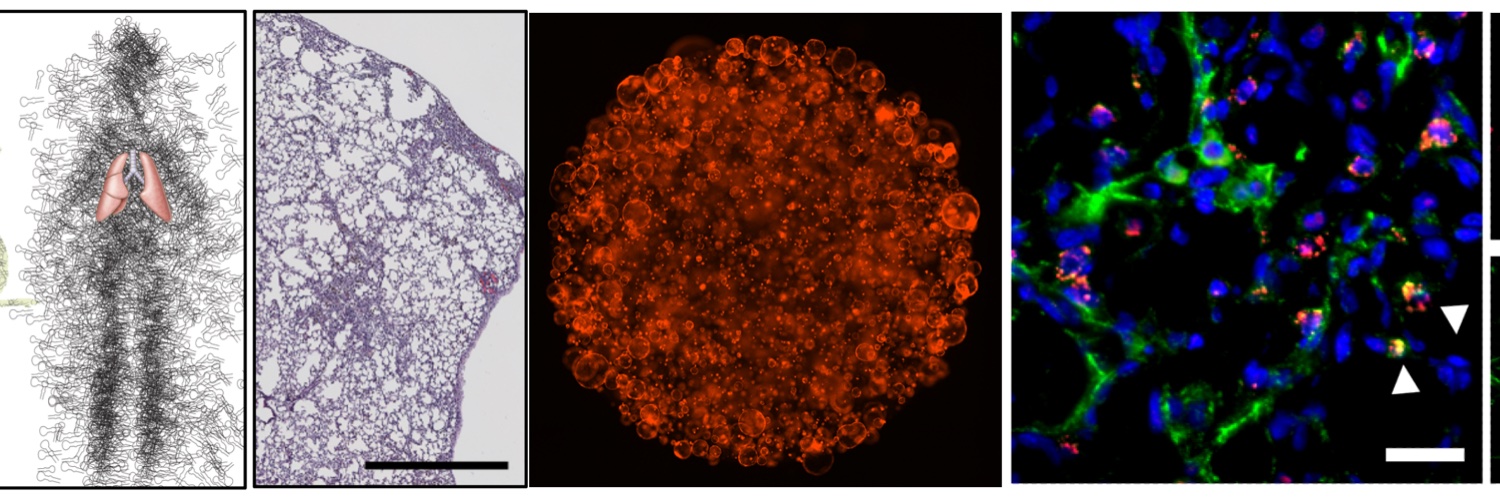
A very impressive study for how we could prevent lung cancer more than 5 years before it is diagnosed. Using machine learning, discovery of a 14-plasma protein signature of risk that predicts responsiveness to an antibody therapy to interleukin, IL-1β
Validated across 8 cohorts
@CellCellPress@CharlesSwanton
https://t.co/qpPtgs1dH0
📣 new preprint multimodal atlas. Imaging + scRNA, 57M cells. 🧬🔬
Cells are complex dynamical systems — but most ways we measure them destroy them. We asked: how does live imaging compare to scRNA-seq, the field’s gold std?
The answer surprised us 🧵
https://t.co/RG0PZ1KTHW
With aging, cells lose their identity and undergo a mesenchymal drift. Reversing this drift may be a way to mitigate aging and promote healthspan. A new @CellCellPress review
https://t.co/fr4N6b75Im
Large-scale transcriptomic data across four mammalian species and multiple tissues identify conserved molecular signatures associated with ageing and mortality risk.
The integration across species, tissues, perturbations, and interventions is a notable strength. Further, mRNA abundance is more biologically interpretable than DNA methylation, though still an indirect readout of physiological processes.
The article advances the idea that ageing is multidimensional rather than a single scalar process, with partially separable inflammatory, metabolic, extracellular matrix, and stress-response programs changing over time.
Predictive performance is strong, but it is important to distinguish predictive association from mechanistic understanding. Even sophisticated transcriptomic signatures primarily capture statistical dependencies and correlations with ageing-related states and mortality risk. They do not yet explain the causal mechanisms underlying ageing.
Achieving deeper mechanistic understanding will require more functional readouts: protein states and modifications, molecular interactions, metabolic fluxes, cell functions, tissue physiology, and experimentally testable causal perturbations.
This work provides a valuable cross-species resource and advances the field through its scale, comparative framework, and integrative systems biology perspective.
Elimination of extra chromosome in #cancer makes cancer become normal...
Stunning paper
@JSheltzer did I understand it correctly ?
https://t.co/aVAhLBSqMT
🧬Can paramutation help shrink the missing heritability gap? Yesterday I wrote about structural variants in the human genome. Today, another layer of inheritance to consider: epigenetics.
Unexpectedly, a new @NatureGenet paper reports that around 7% of inherited autosomal DNA methylation patterns identified in mice were non-Mendelian. DNA methylation is an epigenetic modification that can tune gene activity without altering the DNA sequence itself.
Most patterns — about 93% — still followed Mendelian expectations, mainly through cis-acting methylation QTLs, where local genetic variants shape nearby methylation.
The most interesting finding is evidence for naturally occurring paramutation in mice: one allele can alter the epigenetic state of another, and that altered state can then be passed on. These events were associated with IAPs — endogenous retrovirus-like transposable elements. Often casually dismissed as “junk DNA,” such elements can act as regulatory nodes. As targets of DNA methylation-based silencing, IAPs are plausible contributors to inherited epigenetic changes.
For me, the key point is that this paper gives a more systematic estimate of how often inherited methylation patterns can deviate from Mendelian expectations. The obvious next question is whether similar patterns exist in humans, especially as more biobanks and population cohorts begin to add long-read sequencing, including nanopore-based approaches.
https://t.co/3lHNc8wmik
#Epigenetics #Methylome #nonMendelian #MissingHeritability
Fascinating: this @MolecularCell paper claims that RNAs produced by Alu elements are required to organize the genome for erythropoiesis. Great insight into why only primates have red blood cells!
https://t.co/YWW6WM4YzP
Epigenetics Update - Non-Mendelian inheritance of DNA methylation patterns in mice https://t.co/ROIhBhSg0x
Kasper D. Hansen, David W. Threadgill, and Andrew P. Feinberg in @NatureGenet#Epigenetics#DNAm#NonMendelianInheritance
---
https://t.co/WmSYDGWPJD
Out of all the announcements at @Google I/O today, this is the one closest to my heart - our foundational research on Co-Scientist was published in @Nature and we announced its broad availability via @GeminiApp for Science.
When you are suffering from a disease, time is everything. As our collaborator and @StanfordMed Professor Dr. Gary Peltz reminds us, there are thousands of diseases out there with zero treatments. There is simply so much left to solve.
Our goal with Co-Scientist has been to give scientists superpowers and help them get to these answers faster - compressing the scientific process from months and years down to hours and days.
Much like Galileo's telescope helped us look into the stars, Co-Scientist is designed to help us make sense of the vast complexity of biological and scientific data. It is among the first examples of a truly general-purpose multi-agent system for scientific discovery.
The core research question behind it was: How can an AI system engage in the rigorous, structured thinking that’s the hallmark of science and scientists?
To tackle this, Co-Scientist builds on the principles of self-play and self-improvement underpinning @GoogleDeepMind breakthroughs like AlphaGo, generalizing them to scientific reasoning through self-debates.
Since our preprint last year, we have further improved its capabilities and have been validating it in collaborations with scientists across over 100 institutions globally, spanning both academia and industry.
And we are thrilled to see the emergence of a new form of AI-human scientist collaboration that's already leading to important new insights, discoveries and peer reviewed publications - from understanding antimicrobial resistance (published in @CellCellPress) to decoding plant immunity, to identifying new treatments for liver fibrosis (Advanced Science), cancer, neurodegenerative diseases like ALS and the grand challenge of aging.
I have always believed AI's greatest promise is accelerating scientific discovery and advancing human health.
My genuine hope for the future is that AI tools like Co-Scientist help democratize science, giving anyone, anywhere the means to pursue their child-like curiosity and change the world.
This work was done with stellar team mates spanning @GoogleDeepMind@GoogleResearch, @googlecloud and @GoogleLabs especially Juro Gottweis (@Mysiak ), who is the heart and soul of this effort.
Special thanks also to all our wonderful collaborators: Gary Peltz, @CostaT_Lab, @jrpenades, @_e_d_v_ , @iambyronic, @OpsBug, @jgooten, @omarabudayyeh Ritu Raman, Ryan Flynn, Filippo Menolascina, Velia Siciliano, Clare Bryant, Matt Onsum, Katherine Labbé and more.
Nature paper link - https://t.co/ap4woY9Fo3
Google DeepMind blog - https://t.co/LLJZ27ufPP
Gemini for Science - https://t.co/lDhsHCCXrj.
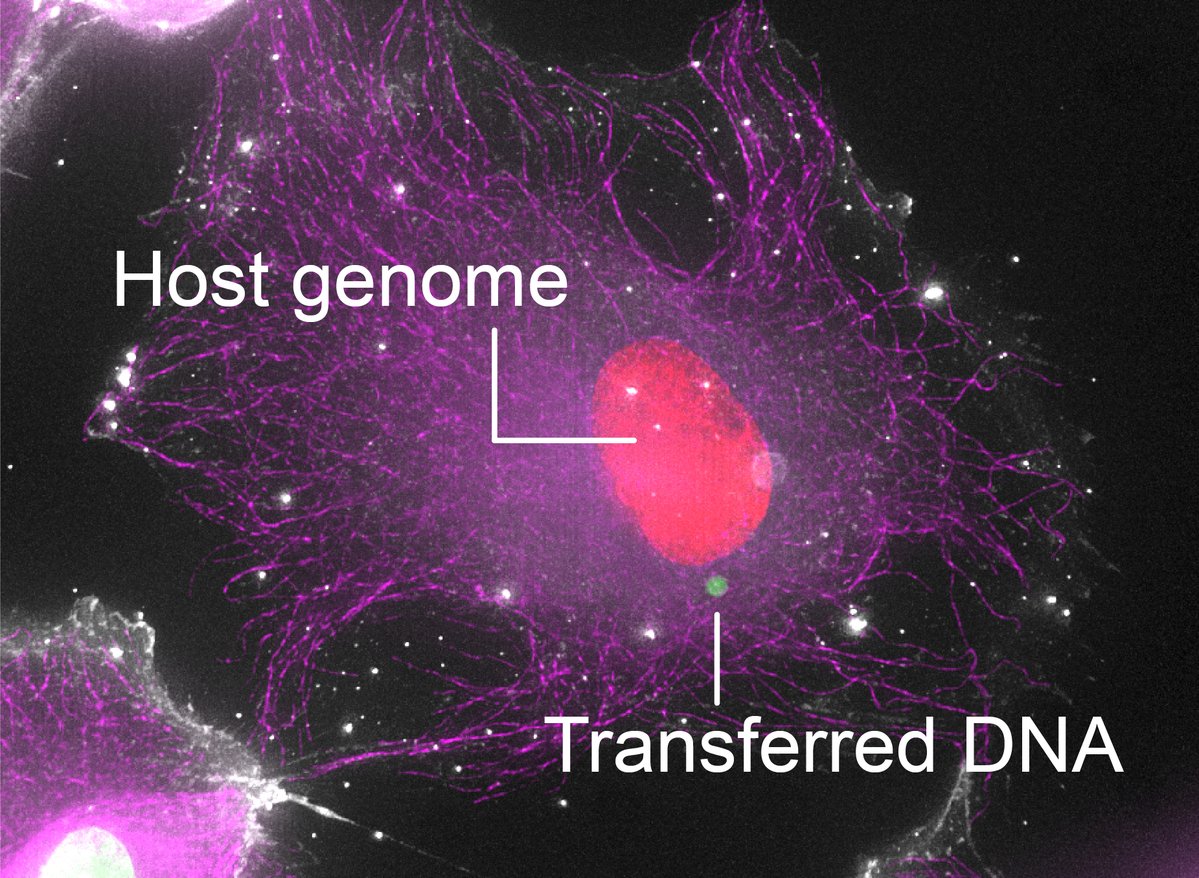
Excited to share our latest paper, out today @CellCellPress. We found that large pieces of the human genome can transfer between cells upon direct contact, endowing recipient cells with heritable phenotypic changes. (1/7)
https://t.co/SbshGhofN0
Today we all lost our jobs.....
Three Nature papers showing that scientists in the conventional sense are obsolete
At least read the first one.... the AI replaced all things that the scientist does ....
https://t.co/zMsRLaaRDU