📢 New paper out in Environmental DNA! 💩🧬
How does dhole diet vary across space and time in central India?
Using a new sampling strategy + DNA metabarcoding workflow, we found that dholes rely predominantly on wild prey across seasons and areas🦌🐗🐇
https://t.co/ylYWa8rLkc
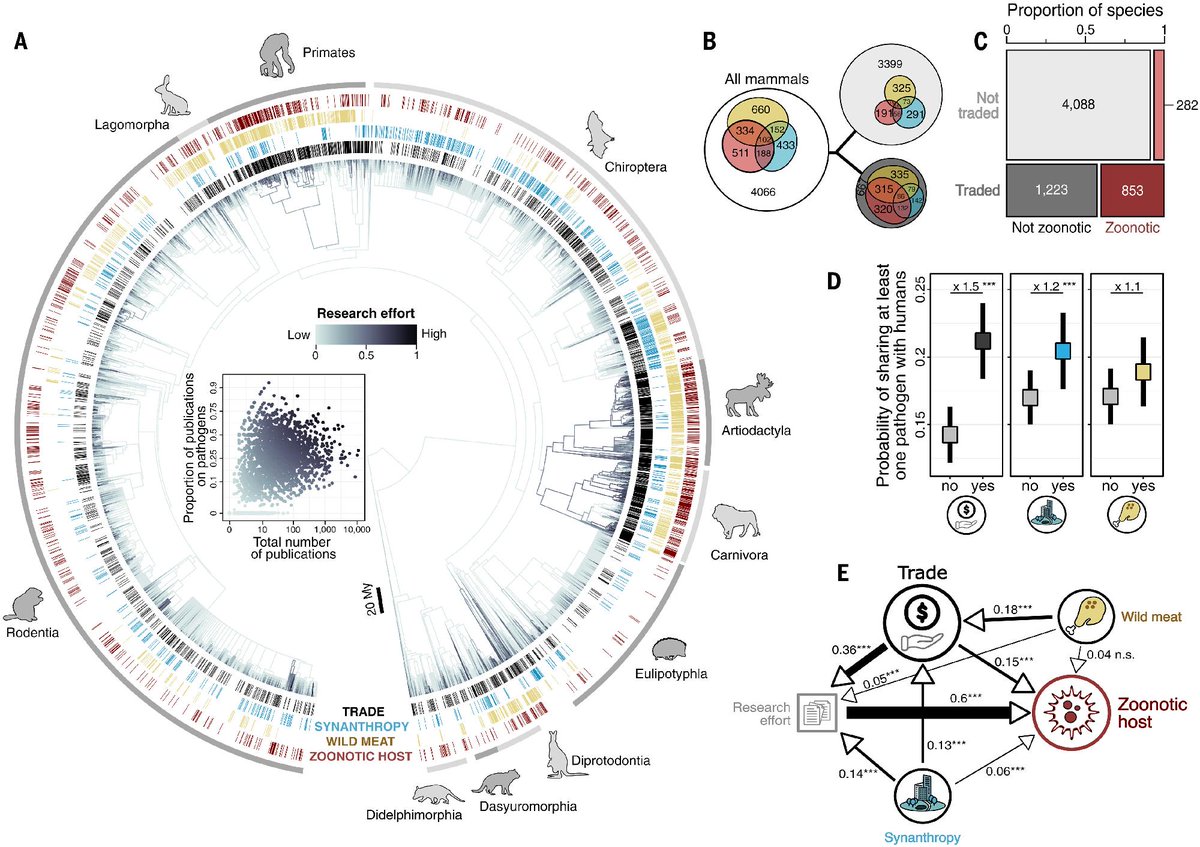
The global wildlife trade—especially in illegal and live-animal markets—is fueling the spread of diseases from animals to humans, according to a new study in Science.
The findings show that traded mammals are more than 40% more likely to harbor human-infecting pathogens, with species accumulating more shared pathogens the longer they remain in the trade.
Learn more: https://t.co/9GsERoW0We
And, only when the larger community engages in the work, they ask the tough and pertinent questions to our researchers: https://t.co/G5t3fpfhyF
These make the work more wholesome.
2/2
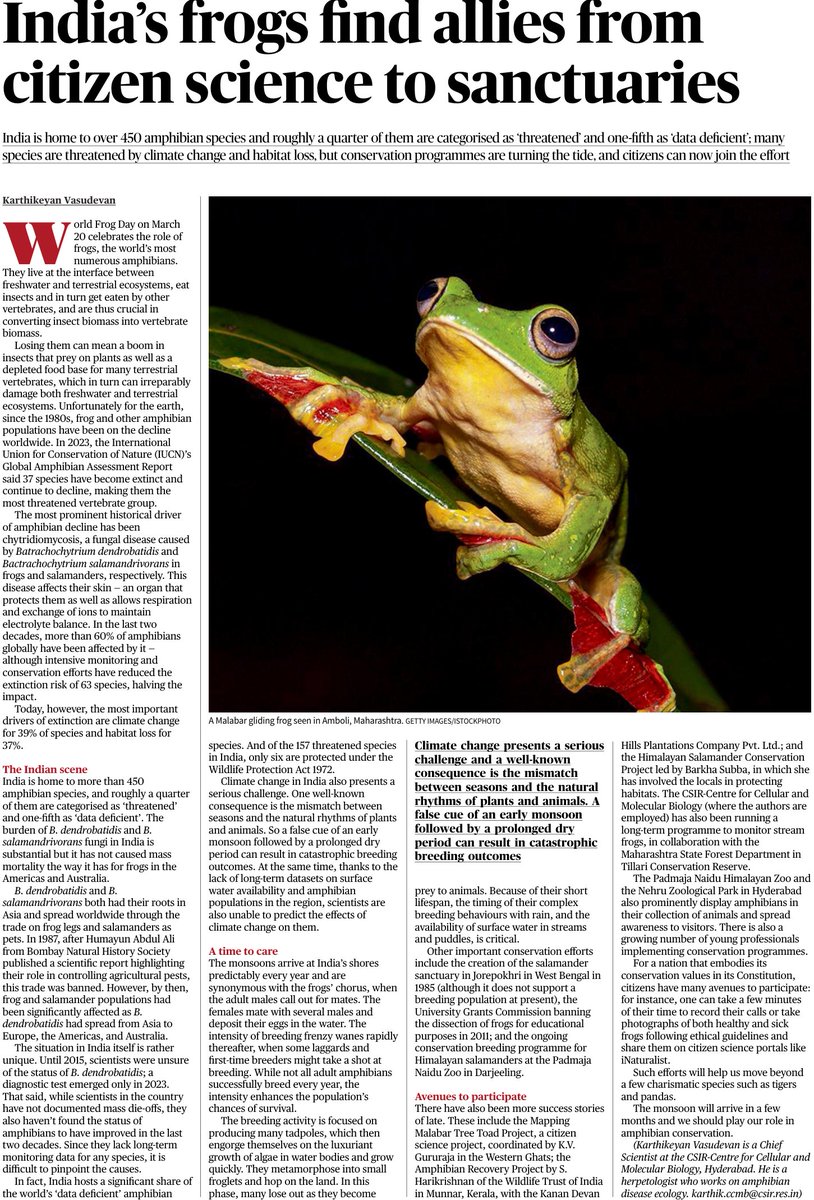
Read on Karthikeyan Vasudevan and his team's efforts that are finding rare frogs in unknown locations in India: https://t.co/gxP7VF7zVv
This calls for a larger community to protect these habitats. More frogs is good for humans+other organisms in the ecosystem.
@CSIRIndia 1/2
Today is World Frog Day. Frogs that should croak as soon as the monsoon arrives. But are they found as many now? They unfortunately are the most threatened vertebrates. This coming monsoon, we all have roles to play in their conservation, as pointed out by Karthikeyan Vasudevan.
A research study by Ashoka University Professor Gautam Menon (@MenonBioPhysics) and PhD student Philip Cherian examining how an H5N1 outbreak could unfold in humans has been featured in the BBC and Nature India. The peer-reviewed modelling study, published in BMC Public Health, uses real-world data and computer simulations to map potential outbreak scenarios and identify early public health interventions that could prevent widespread transmission.
Highlighting the importance of timely surveillance and rapid response, Professor Gautam Menon told the BBC, “The threat of an H5N1 pandemic in humans is a genuine one, but we can hope to forestall it through better surveillance and a more nimble public-health response."
Read More: https://t.co/rhXCg7pCBu
https://t.co/TkjnycJzpq
(@NatureInd, @BBC)
#AshokaUniversity
Pixelated pathologies: Camera trapping as a tool for monitoring wildlife health 🩺📸
Expanding the use of camera traps (CTs) for disease detection could enhance real-time monitoring and conservation efforts 🐘
https://t.co/jiNsLQ7PWG
Publication alert: Paper outlining the rigorous methodology behind The State of India's Bird 2023 report is out. R codes/data files available via Zenodo and Github #OpenAccess@SoIB_India@moefcc@wii_india https://t.co/WPUcF7gfCQ
🐸💧 New from @Becker_Lab@PennState: Drought reshapes amphibian behavior, skin microbiomes, & disease risk.
In pumpkin toadlets, less rain = lower fungal loads but disrupted microbiomes & more time in wet spots.
Full paper 👉 https://t.co/laUkaIyAm0
Coffee agroforests with native shade trees are promising seed sources for diversifying nurseries and scaling up of restoration in coffee-growing landscapes, says a new Practitioner’s Perspective from India’s Western Ghats biodiversity hotspot 🌲
🔗 https://t.co/eO9oeh22Vy
Disease ecology in the biodiverse Western ghats. Rodents communities, Bartonella and vectors,historical host swiching. With @ansilbr2009 and others. https://t.co/gV1u42SI76
New paper out in Aquatic Ecology @SpringerNature :
We looked at the freshwater rockpools on the rocky outcrops of Konkan part of the Western Ghats, to see how pool size, monsoon progression and presence of predators influence the tadpoles in them.
📢#LatestPublicationAlert !
@ansilbr2009 & team from @uramakri's lab have identified five novel adenovirus lineages in Rattus satarae, an endemic forest-associated rodent species in the Western Ghats.
Read here: https://t.co/KFD0iW3uI7
🎉Congratulations to the team!
@DAEIndia
Optical Genome Mapping coupled with the complete T2T-CHM13 reference genome, is changing the way clinicians can detect large structural variants in genomes. The study led by Karthik Bharadwaj shows how CCMB is lesfing this.
@SofiaBanu_@TejSowpati@karthikbt@CSIR_IND
1/2