Every org is already paying for its data foundation — either upfront to build it right, or ongoing in failed AI projects.
There's no neutral choice. Just which tax you'd rather pay.
https://t.co/0DnCZrL1nM
If you want diverse, heterogeneous data sources to work together without constant manual remapping, you need agreed-upon, standards-based abstractions sitting above the data itself. Thus the need for ontologies and semantic metadata in general.
https://t.co/CvNLSei3ml
Cisco reports: 85% of enterprises are experimenting with agents, but only 5% are in production. 📉
To bypass rogue AI and black-box orchestration, we need to ground agents in a verifiable source of truth using GraphRAG.
6-step process to bridge the gap: https://t.co/NUXEXNGqVe
Hierarchies manage complex communication. AI agent orchestration is now rediscovering this core principle. Insights from Heather Hedden: https://t.co/QGBqCpNi5m
Data science teams don't have to reinvent the wheel with knowledge graphs; librarians have been working with open knowledge management/knowledge graph standards, tooling and techniques, for decades now. Just use what they've already put together.
https://t.co/J7IgFvLAP0
The real breakthrough for agentic commerce will not be a killer app, but the underlying knowledge foundation that allows all systems to understand the business with consistency and trust.
https://t.co/0I0aMPtuhB
Myth #1: Leading software vendors care about you.
Myth #2: The AI we have is the AI we need.
Myth #3: Packaged agent orchestration is something new and essential.
Myth #4: Companies can keep their old architectures in the AI era.
More at: https://t.co/RjF4c0TMb7
A core problem: AI interprets and synthesizes across files faster than static controls can govern it, exposing untested gaps in enterprise safeguards.
The current RDF graph stack isn’t static or periodic. Semantic graphs anticipate agent problems.
More: https://t.co/Ik55QhMBgw
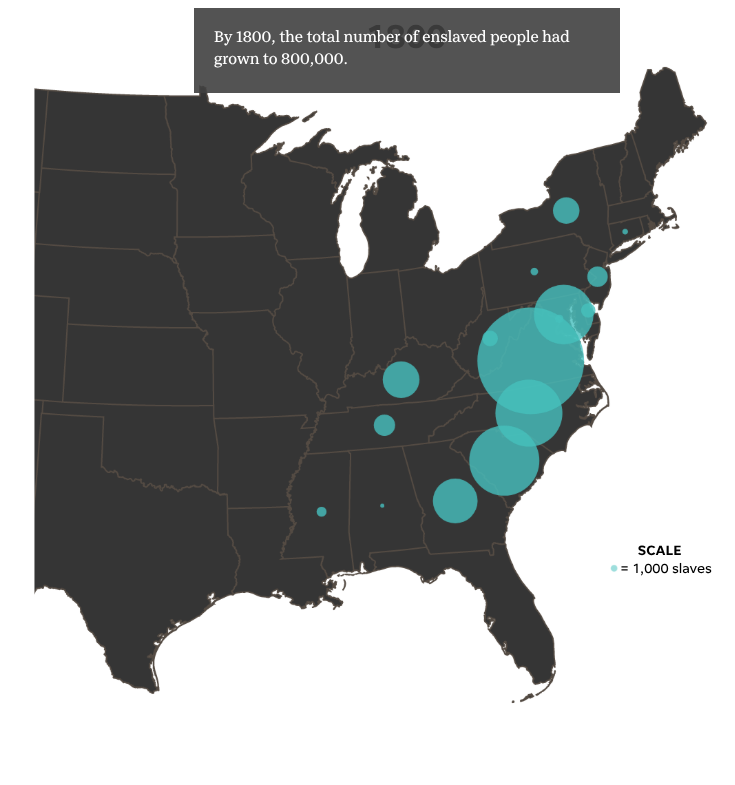
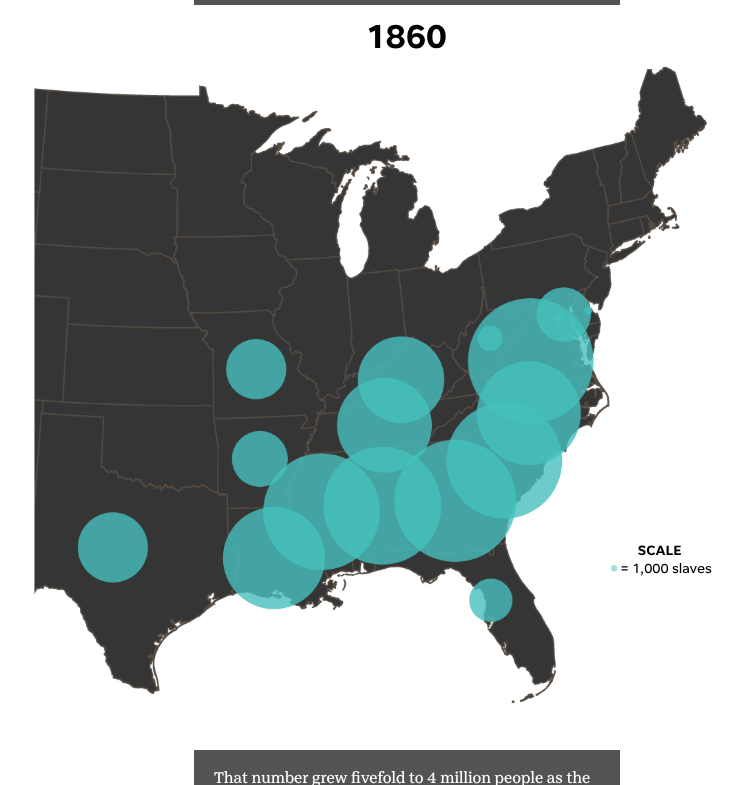
@mattyglesias Regarding the Deep South, USA Today posted an analysis in 2019: 4M people of African ancestry in the Southern states by 1860, up from 400K in 1800:
https://t.co/GcZw5O7hbl
I'll be presenting on decentralized AI trends today at 2pm Pacific/5pm Eastern at BrightTALK's virtual Edge AI Summit. It will be a contrarian point of view on hybrid AI's accuracy at the edge. Register now at https://t.co/ntCC2rPdCs
The contrarian, neuro-symbolic AI approach grounds neural nets with symbolic AI or knowledge representation. That’s a blending of pattern recognition facility with disambiguation and reasoning at scale.
More on the contrarian AI in my latest post at https://t.co/aurEU3QCP3
The big agentic AI challenge: agents won’t always act in your best interest, so you have to impose controls over them. The less effective your controls are, the more risk there is.
Here's now to make the workplace environment machine readable. https://t.co/cLq4bqaOY5
Tietoevry, Cognizone, Semantic Partners, Enterprise Knowledge, LLC, EPAM Systems, and Zenia Graph have built intelligent apps with Talk to Your Graph. TTYG today (Wednesday) at the Graphwise webinar. Live session begins on the half hour. Register here: https://t.co/vYSfUQbCaN
Tietoevry, Cognizone, Semantic Partners, Enterprise Knowledge, EPAM, and Zenia Graph built intelligent applications using Graphwise's TTYG (Talk To Your Graph).
See how smart apps take advantage of TTYG Wednesday at the Graphwise webinar. Register here: https://t.co/vYSfUQbCaN
“Holistic AI is about creating each organization’s starting point for what will become a dynamic mirrorworld. Ideally, that mirrorworld will accurately reflect shifts in business realities.”
“Explaining GraphRAG to an Executive Audience” - @AlanMorrison
https://t.co/DbTR70TkBF
Explaining GraphRAG to an Executive Audience https://t.co/kqZ1nHY4IP
Graph RAG at its core is a simple idea. It give generative AI and agents the means to retrieve the kinds of trusted information that’s been inside business databases for decades.
https://t.co/kqZ1nHY4IP
@sundarpichai When Sundar Picher of Google and Alphabet says Gemini does "reasoning", is an LLM really reasoning? I mean, even Geoffrey Hinton acknowledged that neural nets don't reason very well.
Or is Google's LLM doing graph RAG against a knowledge base?