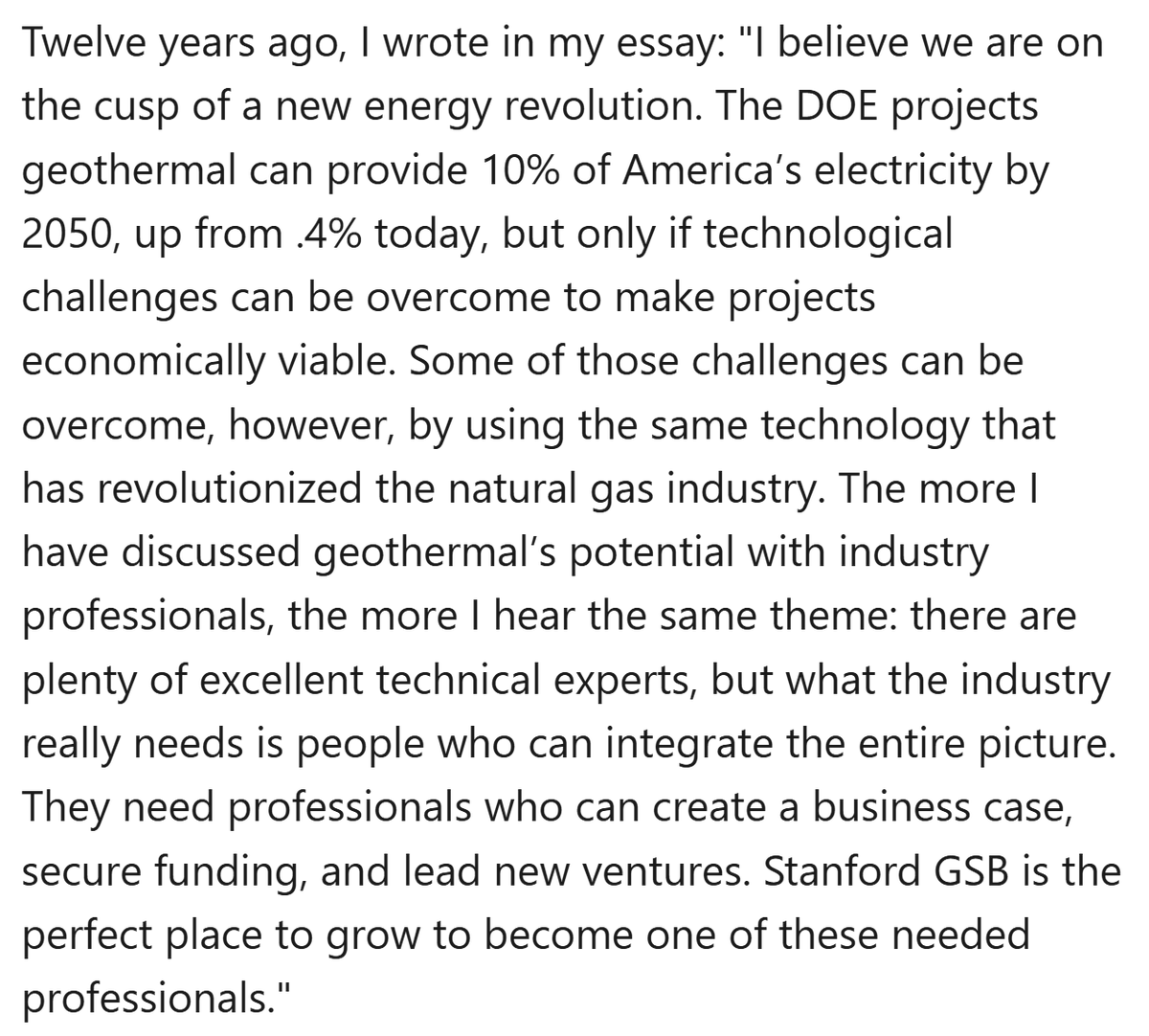
'@TimMLatimer had a vision for enhanced geothermal back in 2012 as a junior drilling engineer at an oil company. Getting no internal traction, he decided to pursue it as a startup. He and the team at Fervo Energy not only had to overcome major technical challenges, but also convince the deeply skeptical worlds of energy services and finance.
Last week’s blockbuster IPO was an extraordinary validation of that vision. Tim’s essay to Stanford GSB shows just how prescient his thinking was long before the rest of the industry came around. It's an incredible story of equal parts conviction and execution. Congrats to the whole team.
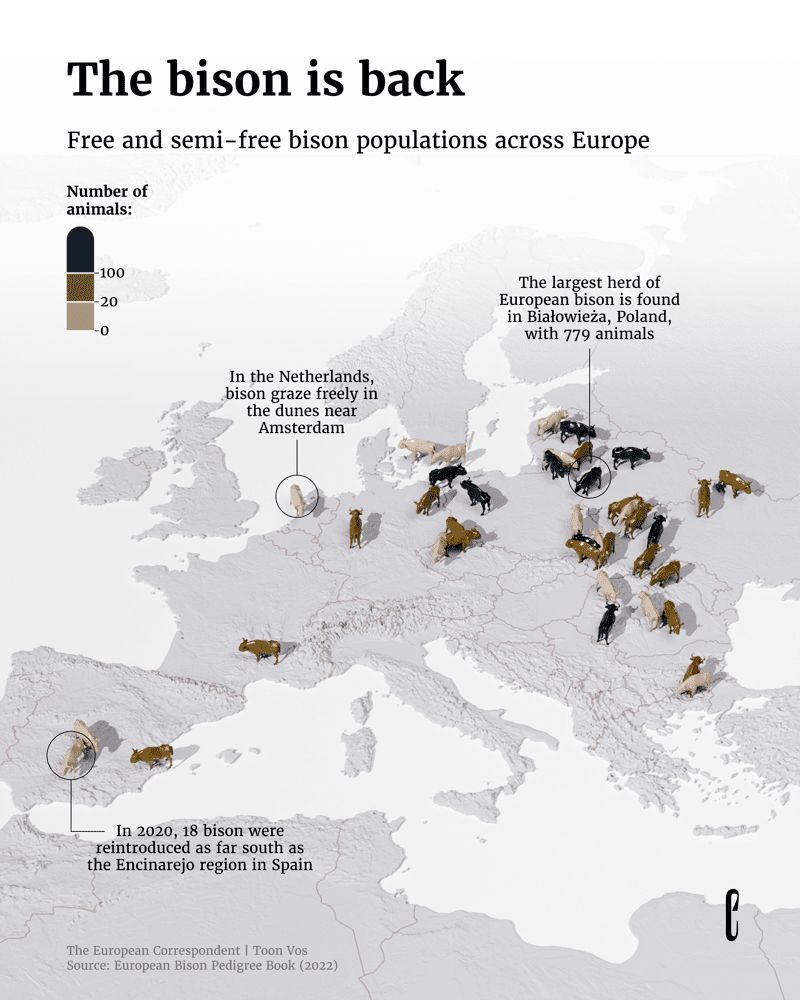
In 1927, the last wild European bison was shot. The bison was fully extinct in the wild, surviving only in zoos. A century later, thousands roam Europe again. Proof that conservation can work and that even seemingly doomed species can make a comeback.
A thread on the 50 best fortifications to go and visit in the world according to me. They are all fun for at least one in the family. They are listed in reverse rank order as determined by how much fun, unique and awesome they are.
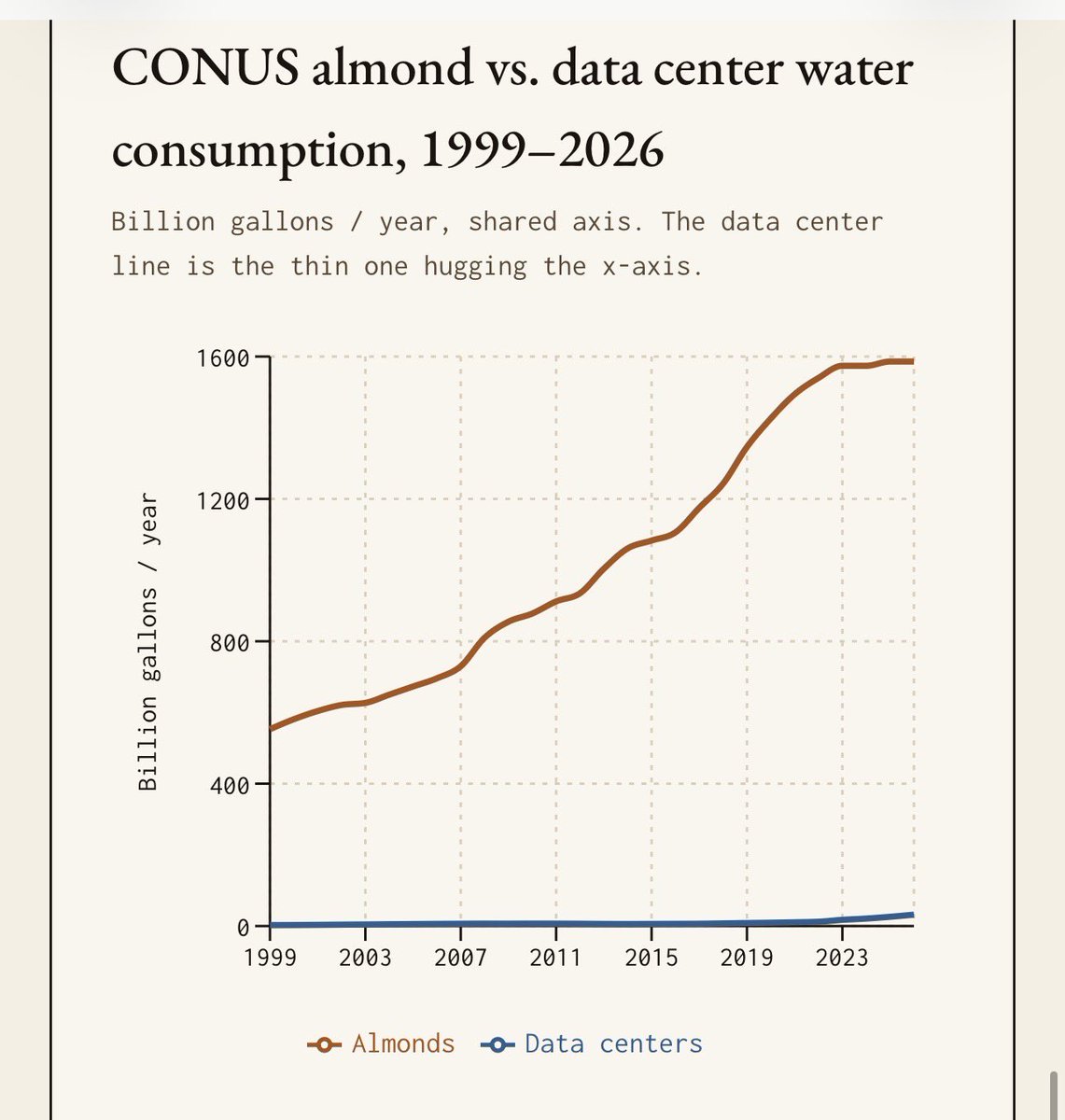
It's wild that we are having an environmental panic about data centers — a carbon-free industrial facility that during ordinary operation consumes no natural resources besides electricity and water and emits no waste products besides heat.
I don't think it's possible to navigate the challenges of the energy transition without a realistic understanding of the economic benefits of fossil fuels (on both the consumer and producer sides)
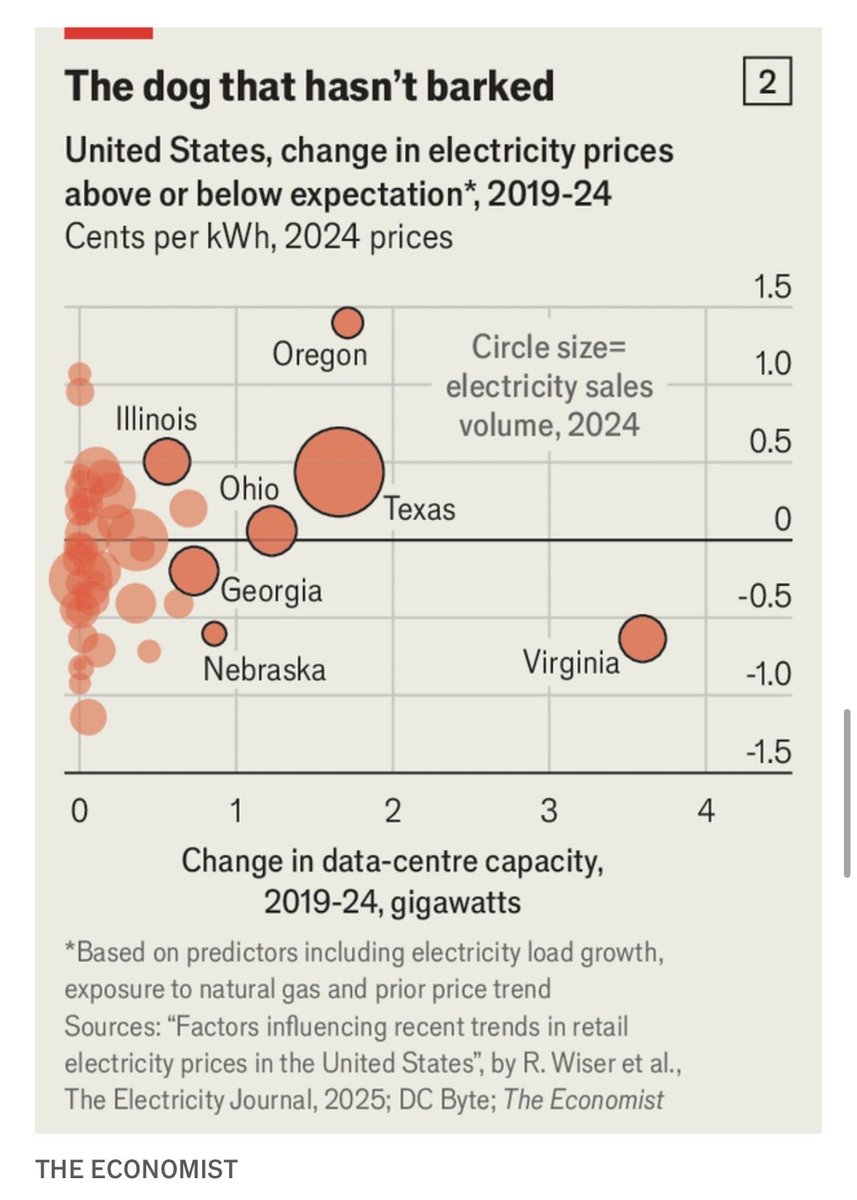
Narrative violation:
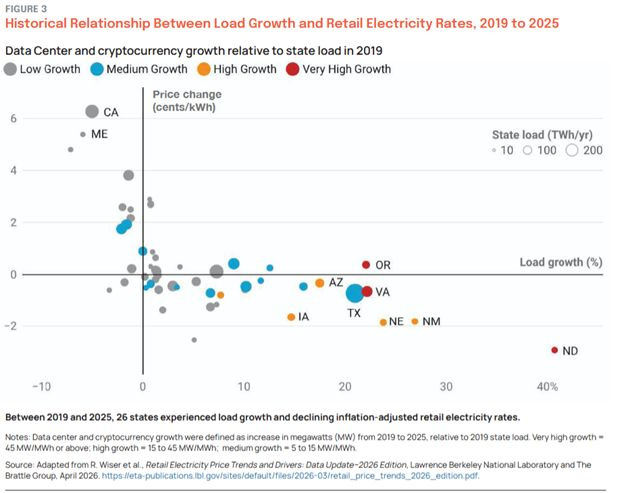
with the right policy, new data centers can *lower* electricity prices by spreading the fixed costs of the grid out among more paying customers.
There’s a lot of cognitive dissonance in the power debate right now.
On one side: data centers are framed as the source of all evil, driving electricity bills higher and consuming every incremental megawatt.
On the other: people still haven’t fully internalized what broad-based electrification and decarbonization actually require. Electric vehicles, heat pumps, industrial electrification, reshoring, transmission upgrades, battery manufacturing, air conditioning growth, etc. This was always going to be an enormous power demand story.
That’s why I keep coming back to the same point: AI/data centers may be one of the best things to happen to grid investment in decades.
For the first time in a long time, you have:
-governments prioritizing infrastructure
-corporates willing to sign long-duration power contracts at above market prices
-capital markets willing to fund generation/transmission
-customers that can actually support the returns needed for massive buildouts
Does it solve everything perfectly? Of course not. There will be bottlenecks, local stress, permitting fights, bad projects, longer thermal runoff period,and periods of volatility.
But absent another generational supercycle where incentives align across utilities, policymakers, infrastructure developers, and private capital, this may be one of the strongest opportunities we get to materially modernize and expand the grid, ever!
Also a little convenient how some of the loudest proponents of gas stove bans, EV mandates, and broad electrification are suddenly treating data centers as the sole culprit behind higher power prices.
Everyone who cares about climate should understand this. Texas, with no pro-climate policies, has blown passed California in clean energy. In large part because Texas has less red tape and makes it easier to build.
"The umbrella North America’s Building Trades Unions said it hit a record number of members and apprentices in 2025.
"The organization’s president, Sean McGarvey, compared it to the build trades’ expansion in the 1950s. He attributes today’s growth to data centers, power plants and legislation under former President Joe Biden that subsidized the construction of semiconductor and electric vehicle battery factories, energy efficiency projects and grid transmission improvements.
"Data centers’ voracious energy needs are setting off a power plant construction boom and delivering a one-two punch of new life to unions whose members also build and maintain boilers, ductwork, pipelines and other power infrastructure."
Last week, we lowered the close to 2,100,000-pound Basemat into place — the foundation for the G7's first Small Modular Reactor and Canada's first new nuclear build in more than 30 years.
One of the largest crawler cranes in the world lowered the Basemat module into the reactor shaft at the Darlington New Nuclear Project site — 35 metres below ground. It’s the first time in Canada a foundation for a reactor building was assembled modularly – putting the “M” in SMR – as the giant component was fabricated, welded, and put together in one piece before being lifted into place.
This was a milestone months in the making, requiring significant attention to detail and safety, as well as the hard work of dedicated trades and project partners.
Piece by piece, we're continuing to build one of the largest and most complex clean energy projects in Canada today. Learn more: https://t.co/bOJhhWLBlg
Potentially hyper-cheap sodium batteries are becoming commercially available and are getting LFP battery specs. This is nuts! This could lead to *incredibly* cheap batteries!
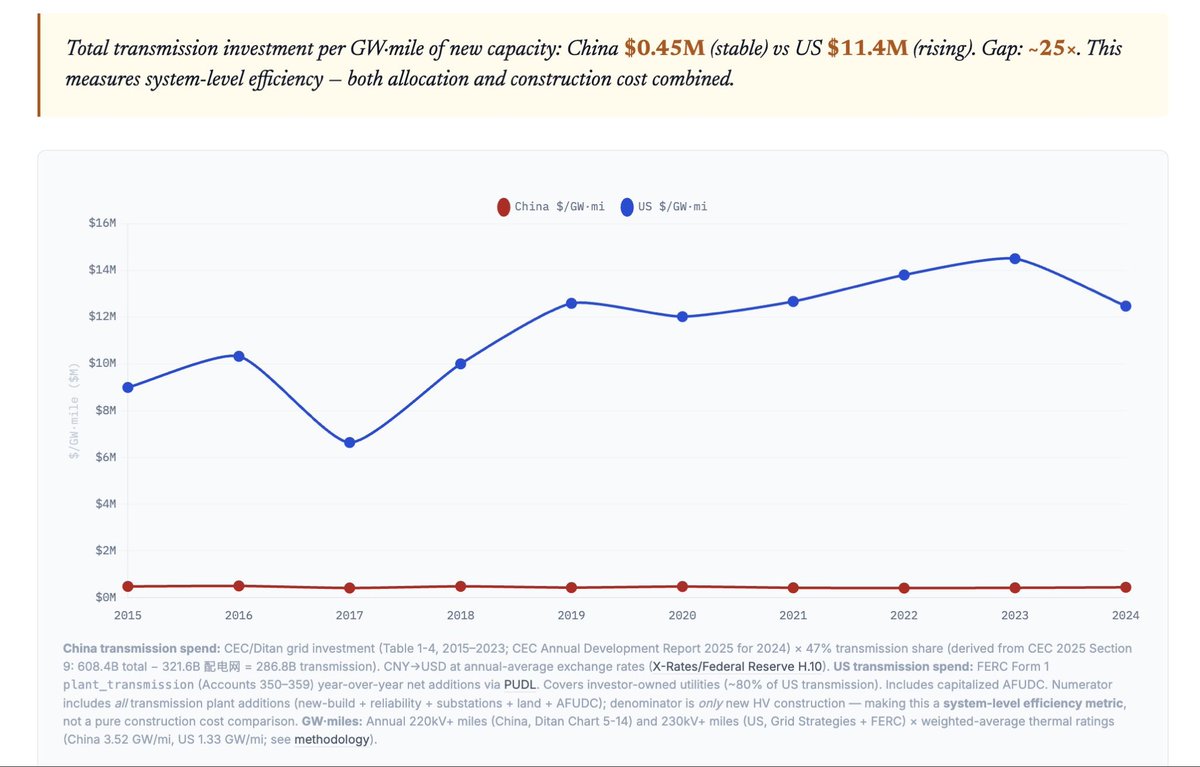
Monopolies will tell you we can’t have competition because we’d duplicate transmission and waste money…
…and then they’ll spend 25x what it should cost.
This is a well researched and comprehensive article on the merits of supporting copper smelting and processing capability Canada, in which I have a small quote. TLDR; the economic case is weak but the security case is pretty strong. Job #1: keep QC Horne smelter operating.
https://t.co/3tKq4CtBze