Latest #CDlab paper on BioRxiv: https://t.co/VARIvVUm3V
How do intercalators affect DNA loop extrusion by SMC proteins?
Brian Analikwu found that they lower SMC binding and extrusion speed
& showed a new assay without intercalators that shows loop extrusion but at twice speed!
Nice to see this finally out in @NAR_Open ! My final paper from CD lab🥳🥳
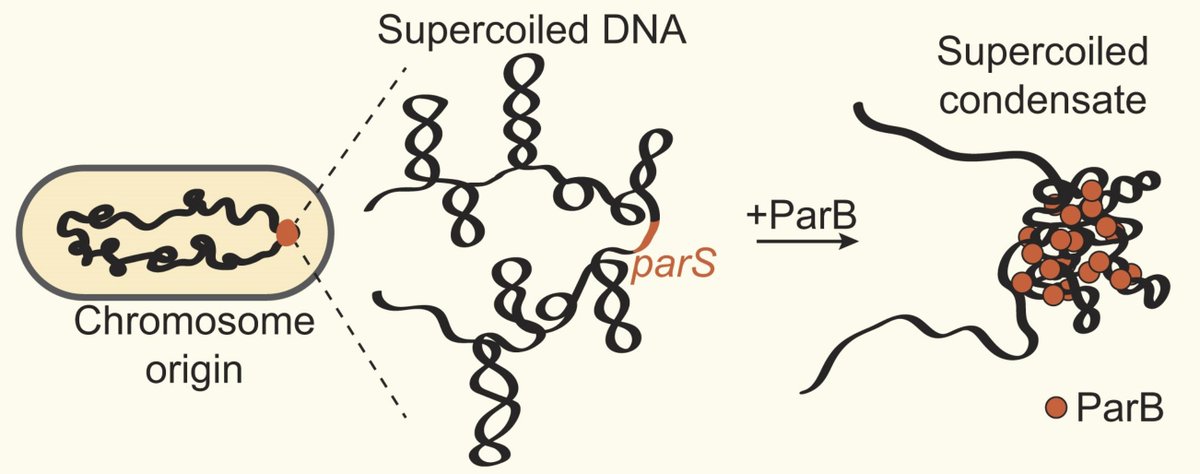
Check out how DNA supercoiling influences partition complex formation by ParB! 👇
Out today in @NAR_Open from @cees_dekker lab!!
*DNA supercoiling enhances DNA condensation by ParB proteins*
https://t.co/ZDJIxvbE1V
Together with @Aless322 (and @Gruber_Lausanne ) we show the interaction between partition complex proteins (ParB) and supercoiled DNA!
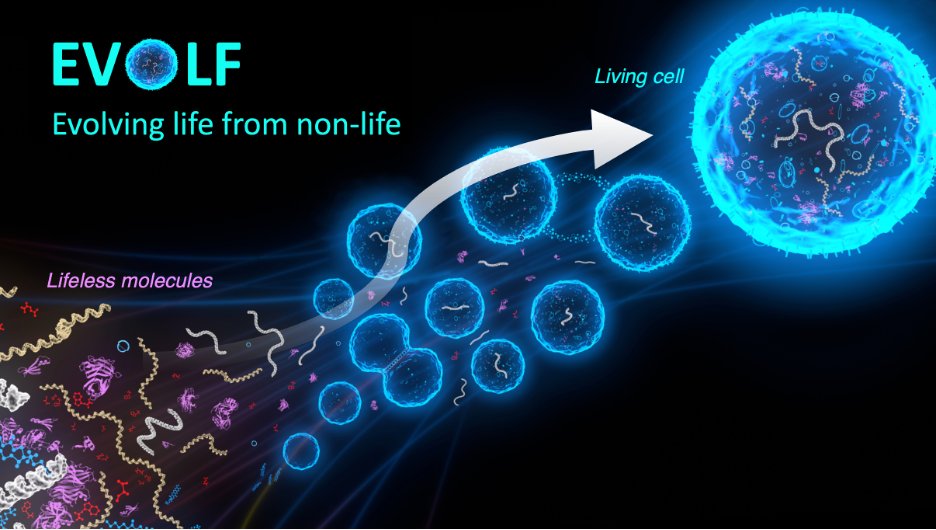
I’m thrilled to be able to announce that we were granted a NWO Summit grant entitled ‘Evolving Life from Nonlife’ (EVOLF) with 40 million euro for a 10-year project aimed to cross the gap between non-life and life by assembling a living synthetic cell from lifeless biomolecules!
@cees_dekker Daarnaast trekt het geweld steeds verder het land door, gebieden waar wij als familie vroeger veilig konden komen, zijn nu geheel onveilig en ontoegankelijk. Niettemin is het een prachtig land met ongerepte natuur en fantastische diversiteit aan culturen.
Latest #CDlab paper out now: https://t.co/2J85IK8O9d
This is a review on the bacterial partition protein B (ParB), with an emphasis on insights from single molecule studies - written by @TismaMilos@JovanaKaljevic@Tung_BK_Le @Gruber_Lausanne and yours truly.
Enjoy!
Latest #CDlab preprint online in @biorxivpreprint: https://t.co/5XHwWkwctR
New discoveries on SMC molecular motor proteins!
- All SMCs extrude DNA _a_symmetrically
- SMCs have a direction switch, a gearbox to reel in DNA from the left, or from the right, in loop extrusion!
1/
Another great manuscript just before🎄 from @RomanBarth2 diving into whether SMC complexes have the same or different looping properties, (un)suprisingly: they have the same mechanism... Looping by one complex and one direction at a time, true for condensin, cohesin AND SMC5/6.
END-OF-THE-YEAR-PREPRINT 🎄
We took a deep dive into the characteristics and dynamics of DNA loop extrusion by the eukaryotic SMC complexes – with some unexpected findings. Get comfy with your Glühwein and have a read...
Thread below /1
📜Manuscript: https://t.co/Q9CFRzf5vB
Today we report in @NAR_Open the single-molecule visualization of a 36-year old basic concept in Molecular Biology textbooks. The twin supercoiling domain model...
https://t.co/TiBJSGupVc
Had a great time celebrating Sinterklaas with our CD Lab, with a mini @cees_dekker and getting @BiophysLira to scoop a present out of the back of a dog!
Just out in @NAR_Open: Detailed model and investigation (both bulk and single-molecule) how DNA topology and supercoiling interplay with intercalation! Great collaboration with @TismaMilos and the @cees_dekker lab! https://t.co/Mq69Py7DSq
Latest #CDlab paper online now in @ScienceMagazine: https://t.co/UiwBeIxM0n
In this important hypothesis paper we sketch a possible mechanistic model for SMC motor proteins that make loops in DNA.
This is a collaborative effort of @HaeringLab, JM-Peters, B-Rowland,. and us
1/
How does DNA loop extrusion work? Four PI's came together to think about this question, compiling all available data and views. The result: this perspective. Curious to hear what the community thinks :)
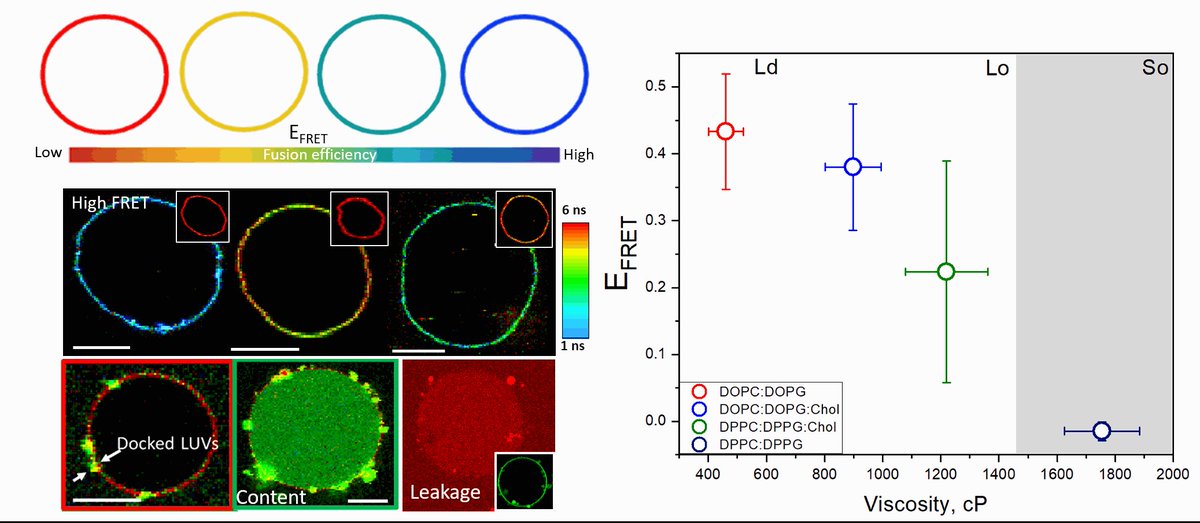
How is membrane fusion dependent on the mechanical properties of membranes? And does fusion depend on the (i) specific lipid composition or on the (ii) overal mesoscale properties?
Our recent study shows that the latter is the answer.
https://t.co/Z6qtaXiyar
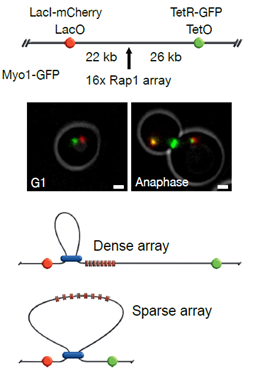
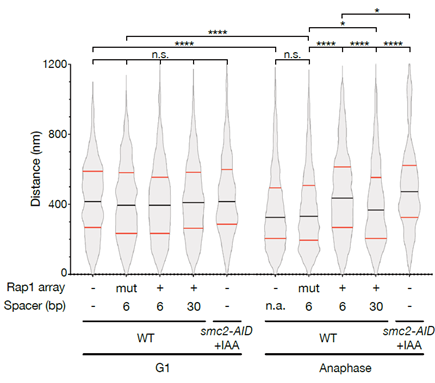
We recently posted my very first (shared) first-author preprint. We describe how telomeric protein arrays stall loop extrusion by condensin as a purely physical roadblock and obtained a remarkably good agreement between in vivo and in vitro studies!
https://t.co/R5J3uPTq36
1/
These arrays show a distinct domain formation if you compare dense and sparse arrays by MicroC and breakage of dicentric chromosomes occurs at telomere fusions depending on the array density. /11
These observations are nice, but how does it all translate to real cells and in vivo situations? Well, if you look at arrays positioned within a chromosome by microscopy, then we see a density-dependent condensation. /10