Testing is LIVE in Moses Lake, for both our Stage 1 structure and Zenith engines. Proud of the teams who are working relentlessly to drive us forward on the road to launch.🛣️🚀
Our Stage 1 structure is now shipped, delivered, and ready for testing in Moses Lake, WA. Standing in its full vertical orientation, this flight hardware will be thoroughly vetted before returning to Kent for some final touches before the journey to Cape Canaveral, FL begins.
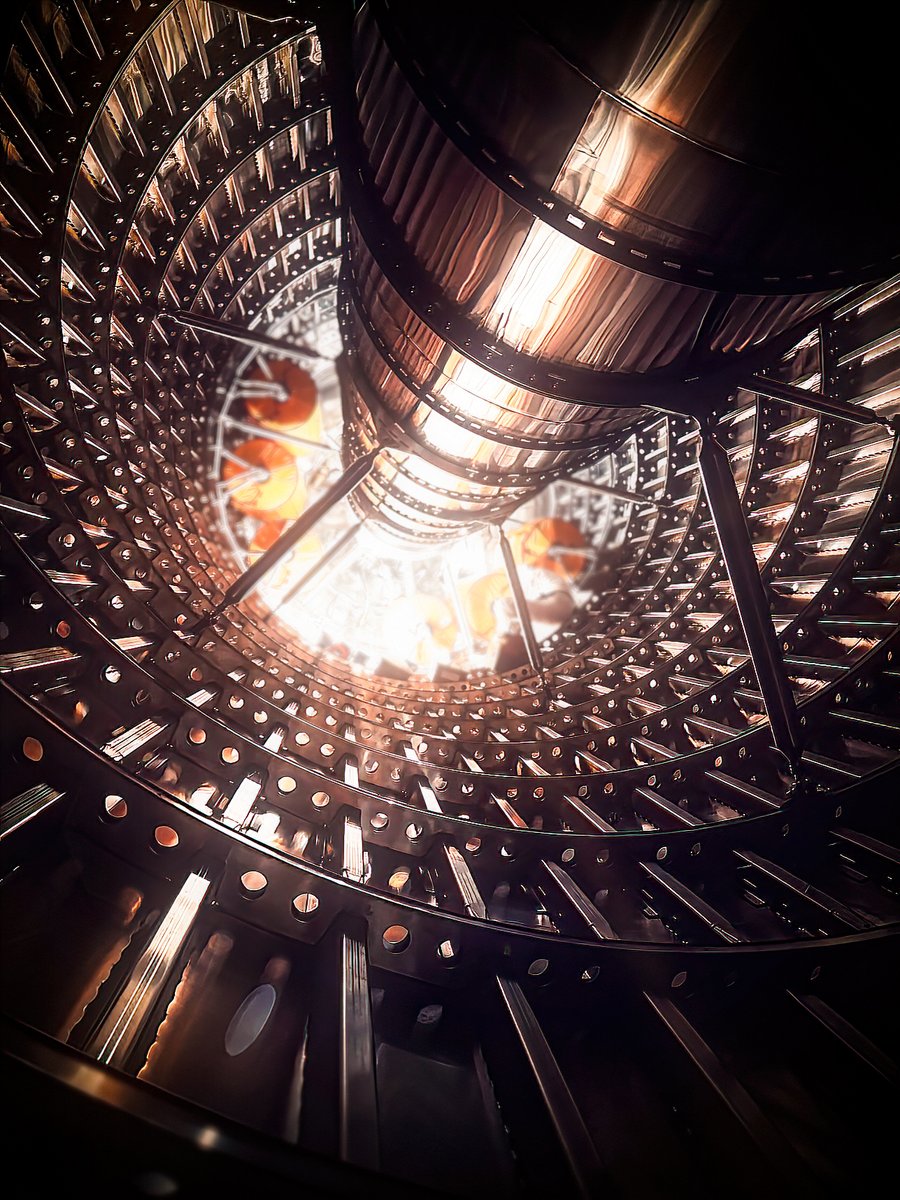
Sneak peek inside our Stage 1 tank, putting the finishing touches on our integration campaign.🤩 Next week, this flight article will ship to our test site in Moses Lake, WA for protoqualification testing. Enjoying the views at Kent while it lasts!
Another day, another Zenith engine hot fire... Here we conduct a chirp test of our thrust vector control system - gimbaling the engine at increasing frequency to demonstrate control bandwidth (how fast we can respond to commands in flight). 📈
It’s great to see our nation’s space program returning to a culture of pragmatism and results under @rookisaacman. Under that context, congrats to @SenateCommerce and @commercedems for advancing the NASA Reauthorization Act of 2026. This bill puts NASA on a path to unlock the LEO economy with scalable transportation to, through, and from space, advancing America’s leadership in the developing space economy.
Today, on the anniversary of John Glenn's historic space flight in 1962, we raised the flag over SLC-14 for the first time since breaking ground. It's an honor to be part of America's space history – and its future. 🇺🇸🚀
Special thanks to @SLDelta45 installation commander Colonel Brian L. Chatman, Director. of @NASAKennedy Janet Petro, and @RepHaridopolos for joining us.
Happy to announce an extension of our Series D financing round to $860M, adding $350M to the initial $510M raised in October 2025. This brings our total funds raised to $1.34B.
We're grateful to our investors and excited to bring our fully and rapidly reusable Nova rocket to market while accelerating future elements of the product roadmap.
Learn more: https://t.co/0AO9M1oGPV
5 yrs since YC but feels like 20 (and also feels like yesterday). Fun retelling those earliest days but it's still day 1 for us and for space, and there's a LOT more to do!
Stoke Space is racing to build the world's first fully reusable rockets that can launch, survive reentry, and fly again almost right away.
In this episode of Hard Tech, @aaron_epstein sits down with @stoke_space co-founders @AndyLapsa and @Rkt_Da to find out why they chose to take on one of the hardest problems in rocket science, how being a smaller startup gives them an advantage, and what full reusability could unlock for the future of spaceflight.
00:00 — Intro
01:16 — Stoke Space’s mission: Rapid reusability
02:18 — Why Second Stage capsules fail reentry
03:34 — Stoke Space’s stage 2 solution
05:30 — Reusability-First Design Philosophy
07:25 — Early Engine Development & Test Strategy
10:48 — Vertical Integration & Manufacturing
11:21 — Iteration Speed as a Competitive Advantage
12:29 — Software as Core Infrastructure
14:00 — Path to Orbit & Launch Operations
15:04 — How This Could Change The World
@SciGuySpace’s work is always no BS and heavily researched. In fact we give a copy of his book Liftoff to every new hire so it was an honor to spend some time with him at SLC-14 and share the progress.
I recently visited Stoke Space's launch site in Florida to understand what they're up to, and whether they can realize their grand ambitions.
https://t.co/vHSrRL07xH
It was less than 10 years ago when the idea of recovering a 1st stage was extremely controversial. Now it's absurd to even consider anything else. Today, the same skepticism surrounds 2nd stage reuse, but it won't be long until that, too, is archaic.
@booster_10 This was a planned test to structural limit as part of our structural qualification program. In addition to the multiple prior test objectives, this was the purpose of the “tiny tank”…
@DaveEnright6 @BellikOzan@KenKirtland17@eager_space@Erdayastronaut Nova is regeneratively cooled with hydrogen - no transpiration. My estimation is that successful transpiration has logistical challenges, especially for no-touch long-life reusability.