My itinerary was from Atlanta to Hyderabad (via Istanbul and Mumbai), departing on the night of December 4. I landed in this chaos at the Mumbai airport in the early hours of Dec 6.
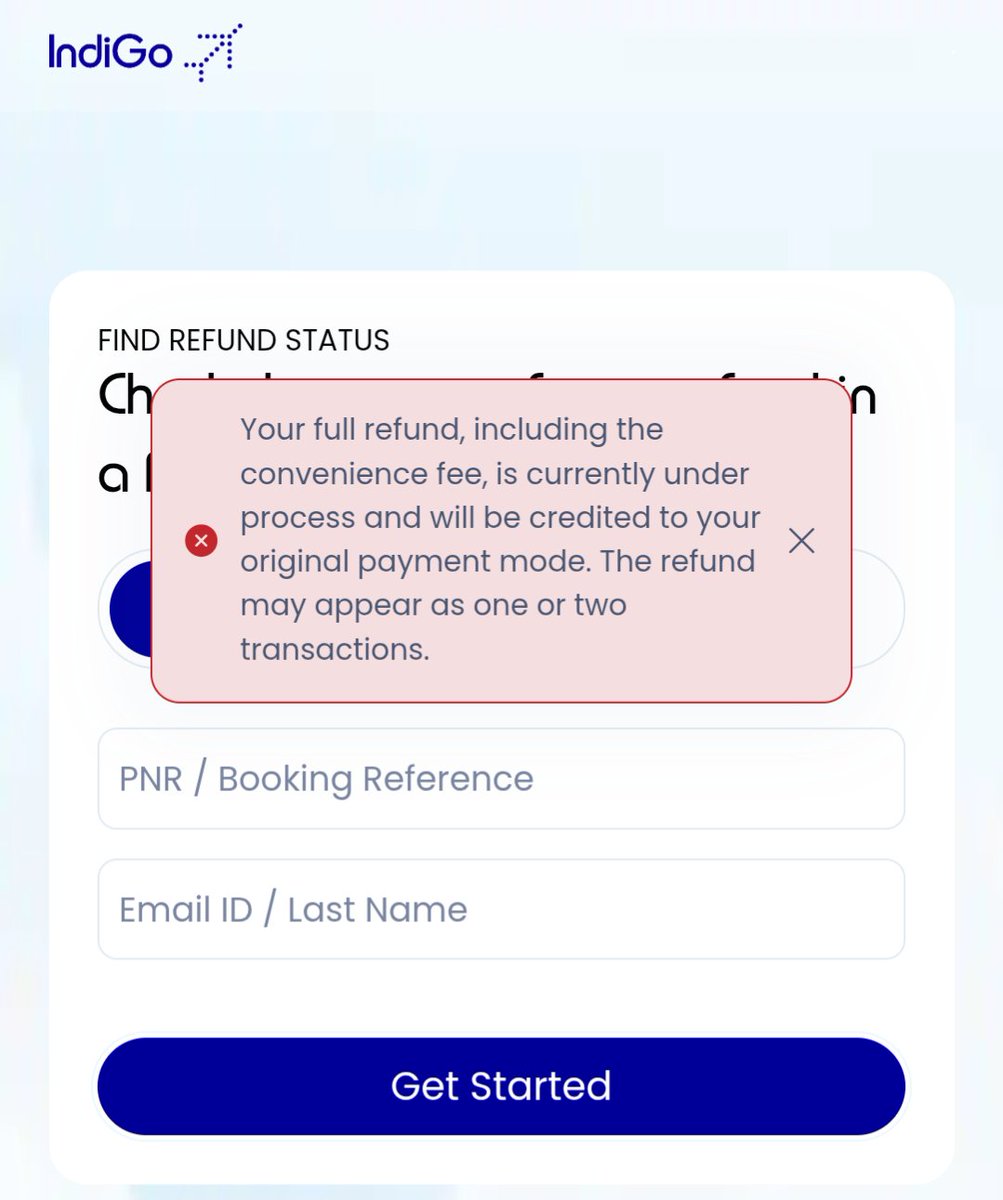
@IndiGo6E, it's been over a month (Dec 6) since my flight delay/cancellation, and I am yet to receive the refund. I have called and emailed multiple times, but no response. And attached is the message I have been seeing for more than 3 weeks, but haven't received the refund.
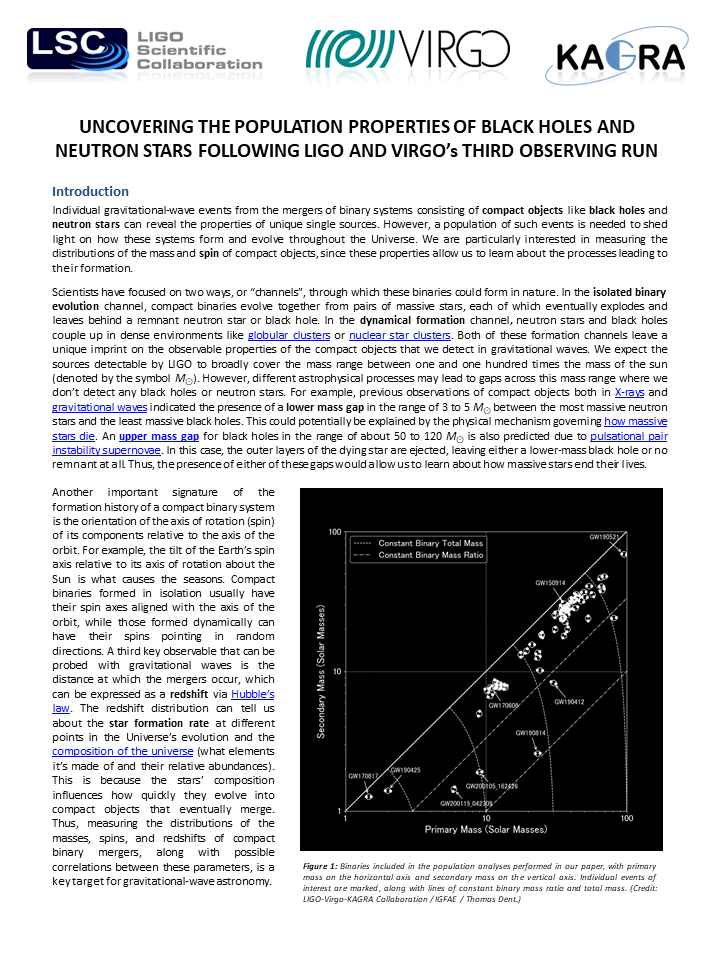
Also published today is another @LIGO@ego_virgo@KAGRA_PR@arxiv paper focussing on what #GWTC3 tells us about the population of #NeutronStars and #BlackHoles. Read the full the paper at https://t.co/870KL10sky, or check out the paper's science summary at https://t.co/dyYb0EADxl
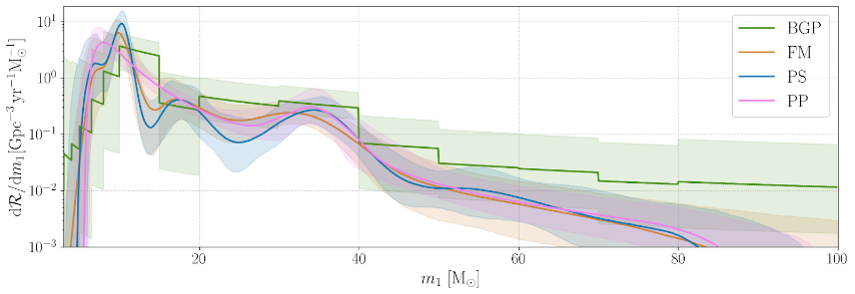
Here's another plot from our @LIGO@ego_virgo@KAGRA_PR populations @arxiv paper, showing the primary mass distribution inferred from our #GravitationalWaves data - including evidence for peaks at ~10 and ~25, and maybe ~18 solar masses. More details at https://t.co/dyYb0Ej2FN
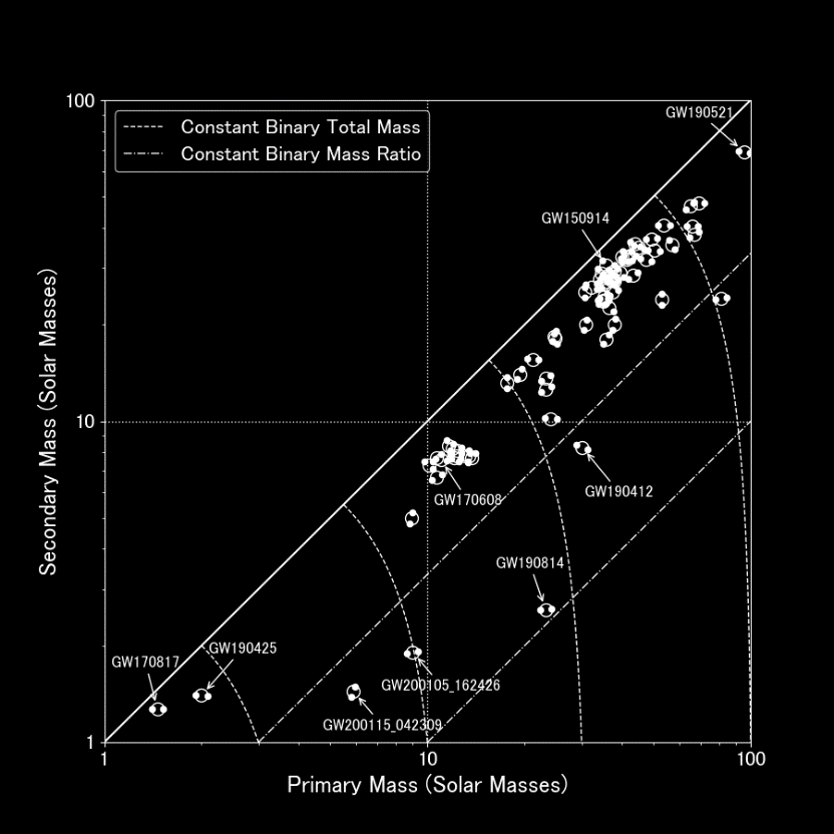
We love this plot, by c's @TomD_Santiago, of all the binaries included in our @LIGO@ego_virgo@KAGRA_PR population analyses, and showing some individual #GravitationalWaves events of interest. More info in the science summary at https://t.co/dyYb0EADxl
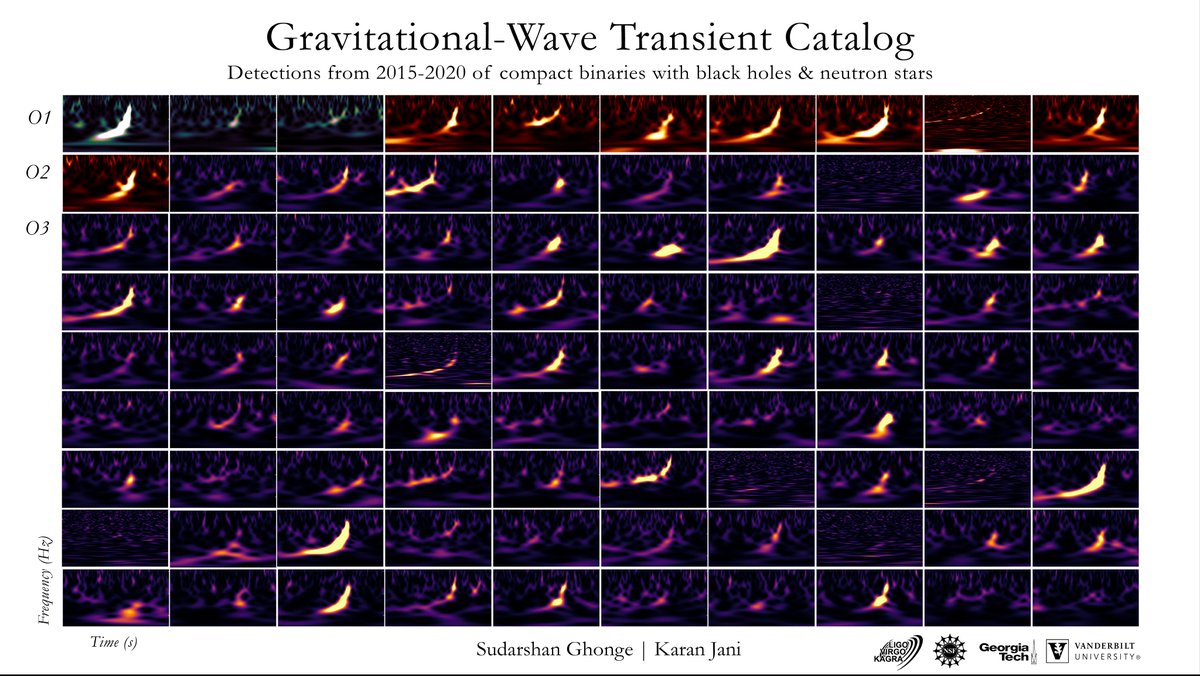
It's been a busy week for @LIGO@ego_virgo and @KAGRA_PR after our new #GWTC3 catalog was released! Coming soon: more highlights from our #GWTC3 companion papers, also published on @Arxiv last weekend. Find the papers (and their science summaries) at https://t.co/43rLJ2lJhr
On Thursday July 1st at 1400 UTC we'll be holding a @Zoom webinar to discuss the latest results from the 3rd @LIGO@ego_virgo@KAGRA_PR observing run. Register at https://t.co/rixZbYxZwd (and we'll be live-streaming on @YouTube too) More info at https://t.co/FLkNjMFIhI
Our new paper describes not one but *two* #NeutronStar#BlackHole binaries we detected in Jan 2020, in the second part of our 3rd Observing Run #O3b. Read the science summary at #NSBH https://t.co/eK8Isb82IG (multiple translations also available)
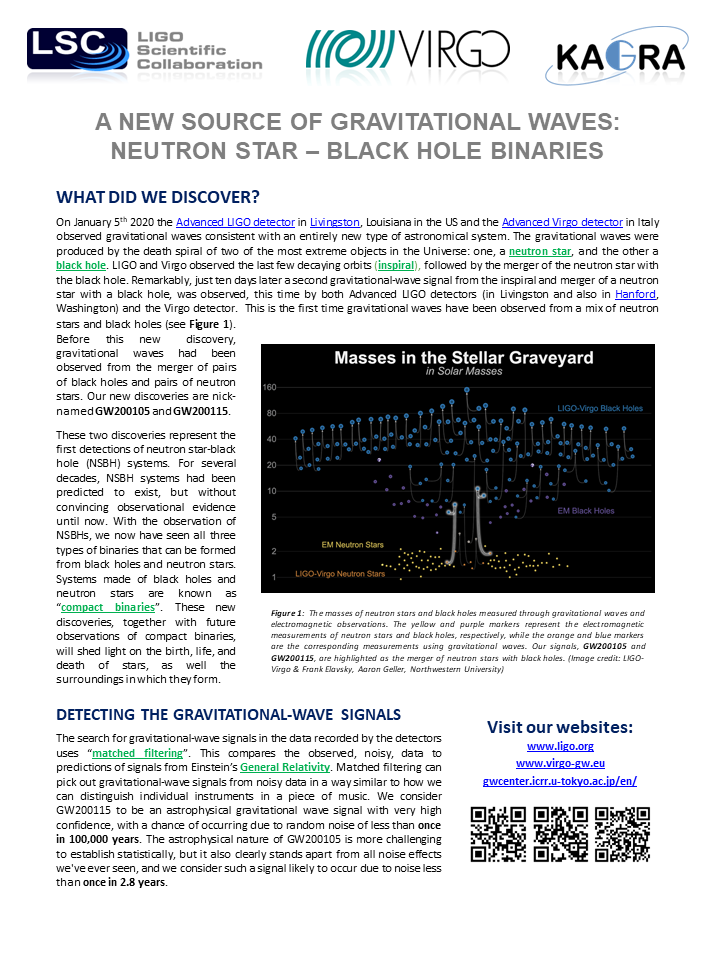
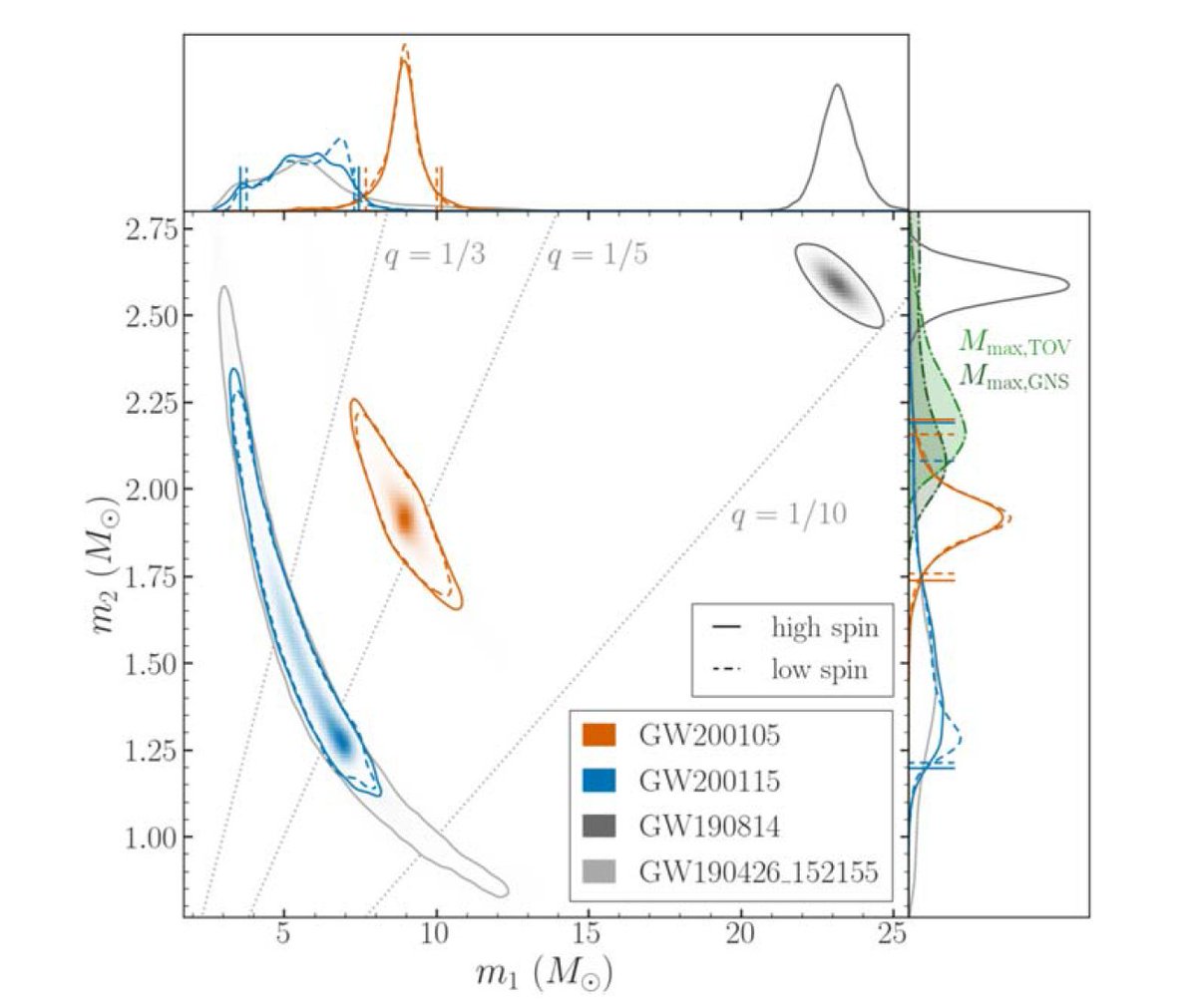
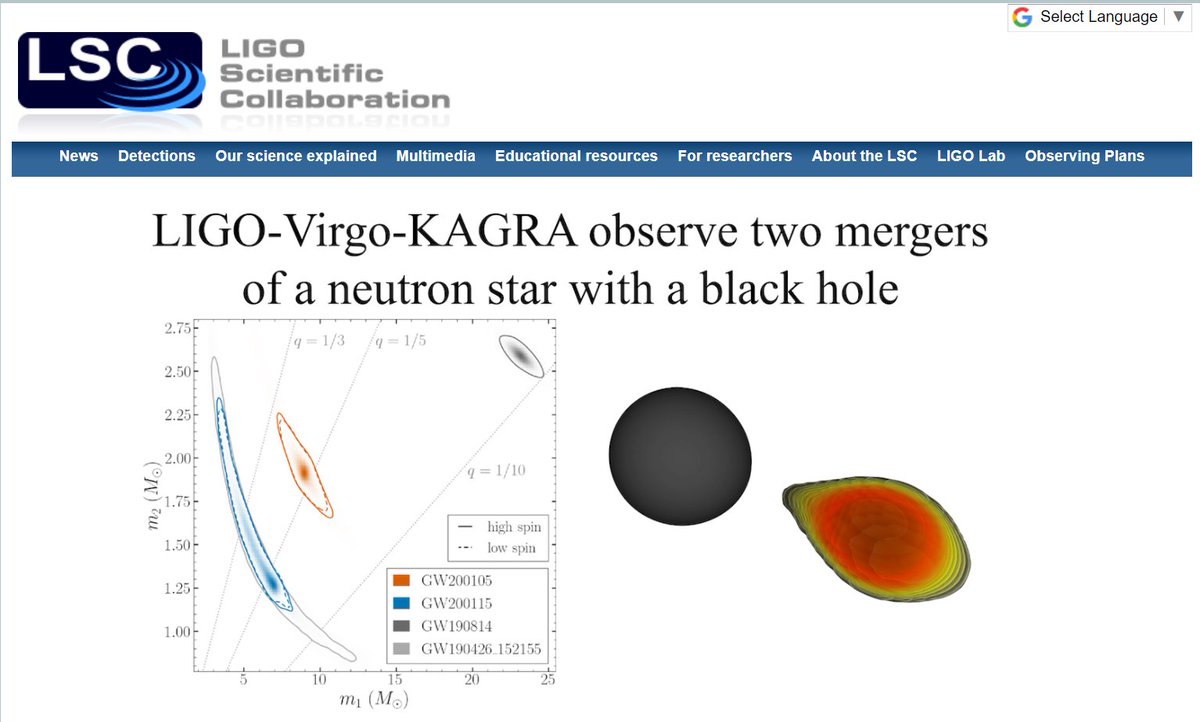
The masses of #GW200105 & #GW200115 reveal a new type of #GravitationalWaves source: our first confirmed detections of #NeutronStar#BlackHole binaries merging! This plot shows the estimated masses of our new sources on the left, in blue and orange https://t.co/eK8Isb82IG
Despite many years of searching for #NSBH systems, astronomers have never observed them before. Understanding where, how, and how often, #NSBH binaries form could give us vital clues about cosmic star formation - as this cool @ego_virgo animation explains https://t.co/lTA9rv0Hbt
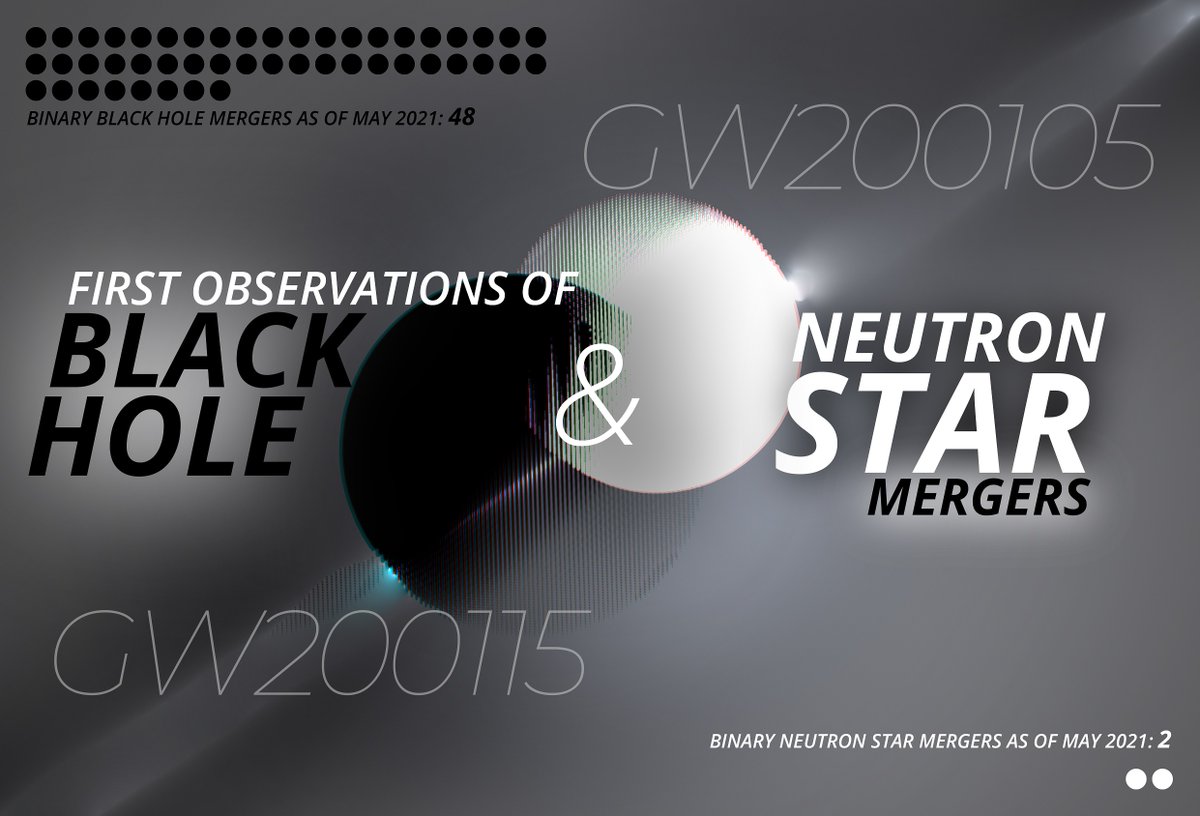
Since the first #GravitationalWaves discovery we've clocked up 50 confident detections : 48 binary #BlackHole mergers and 2 binary #NeutronStar collisions. Now we've added two #NSBH mergers! (Thanks, @ARC_OzGRav's Carl Knox for this nice graphic) https://t.co/ND7W8aLIgp
In June 2020 we announced our detection of #GW190814: a mystery event that *could* have been an #NSBH binary, but its secondary was much heavier than a typical #NeutronStar (and #GW200105 & #GW200115) so it's more likely a (very unequal) #BlackHole binary https://t.co/oc4vaRF63G
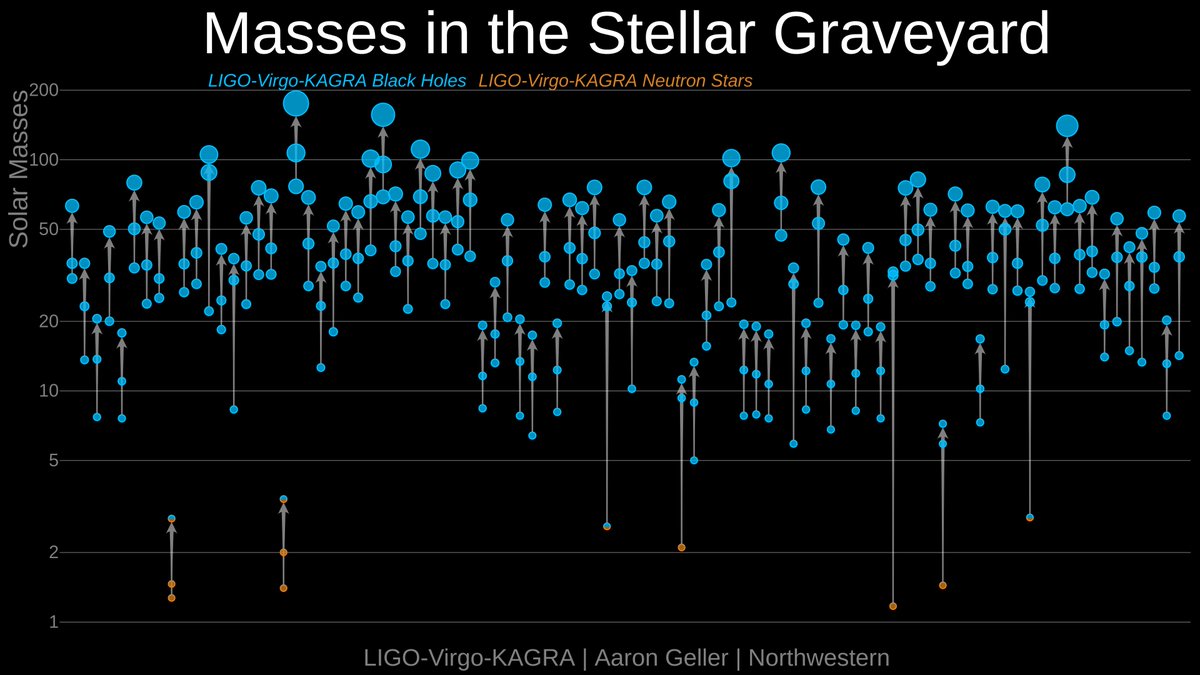
We love our "Stellar Graveyard" plot (from the @NUCIERA@LIGO team) showing all the #GravitationalWaves detections we've made since 2015 - now with added #NSBH binaries! You can find the graveyard plot, and lots more about #GW200105 and #GW200115, at https://t.co/ND7W8b3jEZ
Today @LIGO@ego_virgo & @KAGRA_PR have exciting news: the first ever confirmed detections of a #NeutronStar#BlackHole binary merger. Find out more at https://t.co/RKdgwo92IK and read our discovery paper, published today in ApJ letters https://t.co/GlcmP5syJ4