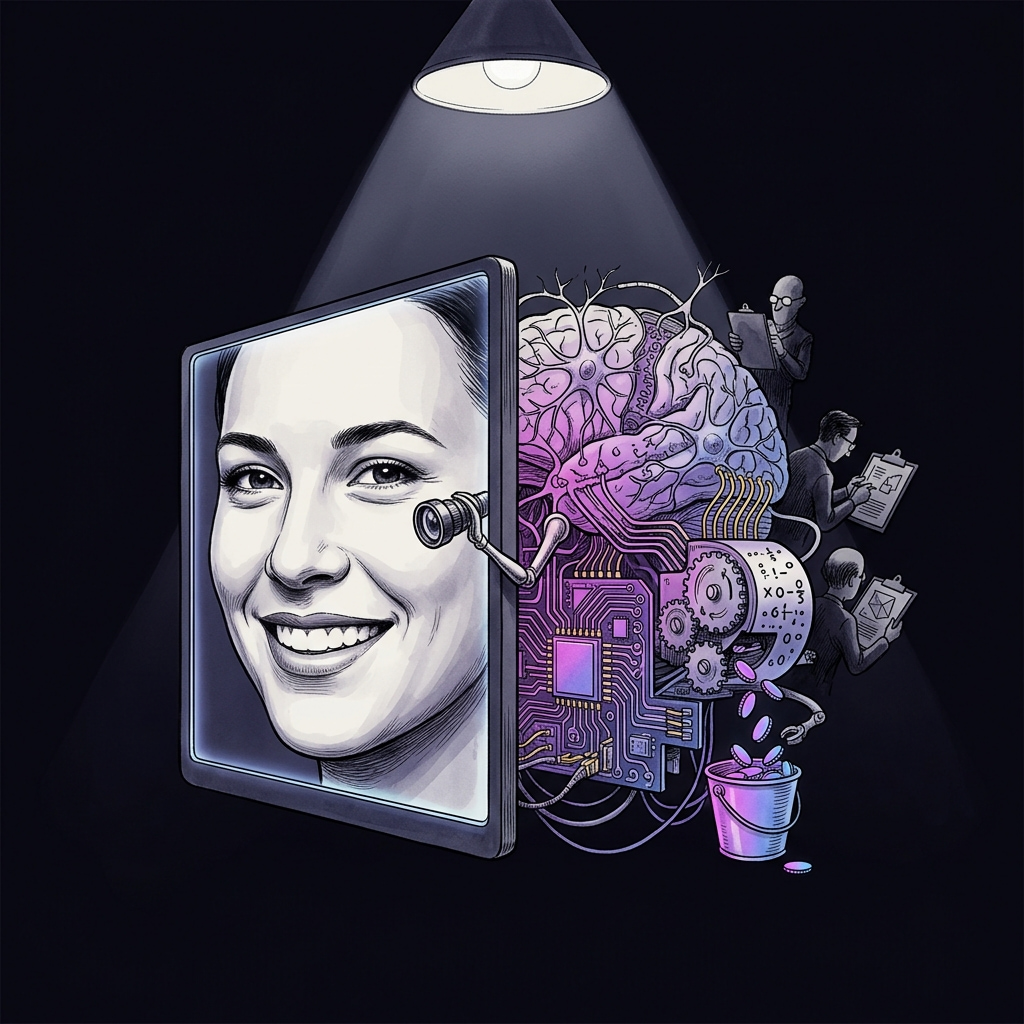
On October 1, 2026, Tavus said nearly half the people who spoke to its new video model thought it was human. The model is not for sale.
https://t.co/Lj3MOChyfV
In September 2026 the economics of AI agents changed. Vendors made watching free and put a meter on action, so the agent bill now depends on how often your company's own events wake the agent.
https://t.co/kSodmGiryr
Same label, different jobs. Six AI podcast editors fix six different problems, and Rowboat and CowAgent are both open-source desktop agents that solve very different ones. Pick the job first.
https://t.co/Llg4WHTyiu
https://t.co/Olx6ypPMff
An HR due diligence checklist template is a structured list of the workforce, compensation, benefits, compliance and culture items a buyer reviews before signing an acquisition, with each item tied to...
https://t.co/wUTeMgxvQr
The cheapest AI workflow automation for small businesses now comes from companies that sell ads, and owners should decide which agent sees the ledger before the subsidy decides for them.
https://t.co/ew2PA7yy8o
Broad and unlimited sound like wins until your job gets specific. LlamaIndex vs Pathway comes down to how fast your data changes. Epidemic Sound vs Soundstripe comes down to license terms.
https://t.co/0EhqLsu9jd
https://t.co/T2GuheUwF7
The arrival of persistent artificial intelligence agents forces a complete rewrite of enterprise evaluation models and the AI adoption metrics that matter.
https://t.co/k2spHM9x9c
In September 2026 frontier token prices fell 20% while GPU rent rose up to 21%. AI total cost of ownership now moves like a commodity, and the companies that budget it like software will keep getting surprised.
https://t.co/WaDdC9I9of
Two tools, one lesson: pick by workflow, then read the price. OpusClip cuts footage you already have, InVideo AI builds from a script. Resemble AI starts free, then jumps to $350/month.
https://t.co/akAiJ9E8EP
https://t.co/lzWvqaxRF2
The purpose of the AI industry should be to produce tools that, in the human hand, will improve human prosperity and welfare.
It should not be to create a "successor species" to the human race. Entertaining such a thought makes you, de facto, the enemy of all present and future humans.
StateBridge (Peng et al, COLM 2026, https://t.co/yJox3FvrLi) aligns a sender's final-layer hidden states to a receiver's input space with a closed-form orthogonal transformation (and no training)
in their setup sender and receiver are the same model (so the last layer of X mapped into the input embeddings of X, that have the same weights, and never X into Y): the reference points the closed form solves against come out of that shared embedding matrix, which is what makes a closed form possible at all
so what it shows is something about one model's internal geometry: a model's output space and its own input space sit close to a rotation apart: that's an interesting result and I didn't expect the fit to be that clean!
the cross-model case doesn't appear, and they're upfront about it, heterogeneous pairs are listed as future work
and it leaves open the thing I actually want to know: take two genuinely different models, fit the best orthogonal map between their spaces, and measure what's left over -- that residual is the part you have to learn
at similar scale I'd guess it's small, but at 753B into 4B I'd expect it to grow, and how it grows is the single number I'd most like to see published by anyone (us included!)
has anyone measured the orthogonal-map residual across a range of size ratios?