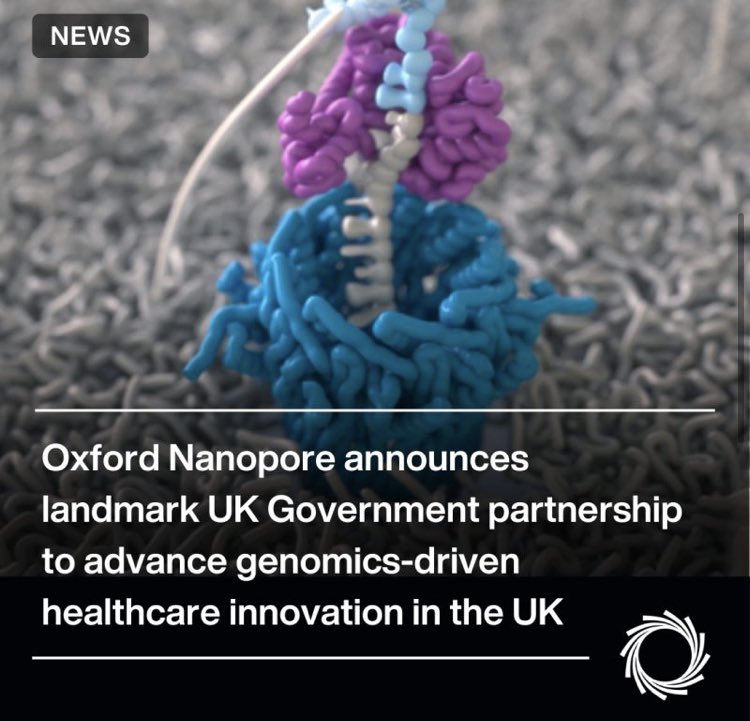
Incredible milestone: @nanopore announces landmark UK Government partnership to advance genomics-driven healthcare innovation in the UK
Initial program will launch rapid pathogen-agnostic surveillance across 30 NHS sites for public health & biosecurity
https://t.co/X5efxxuoXh
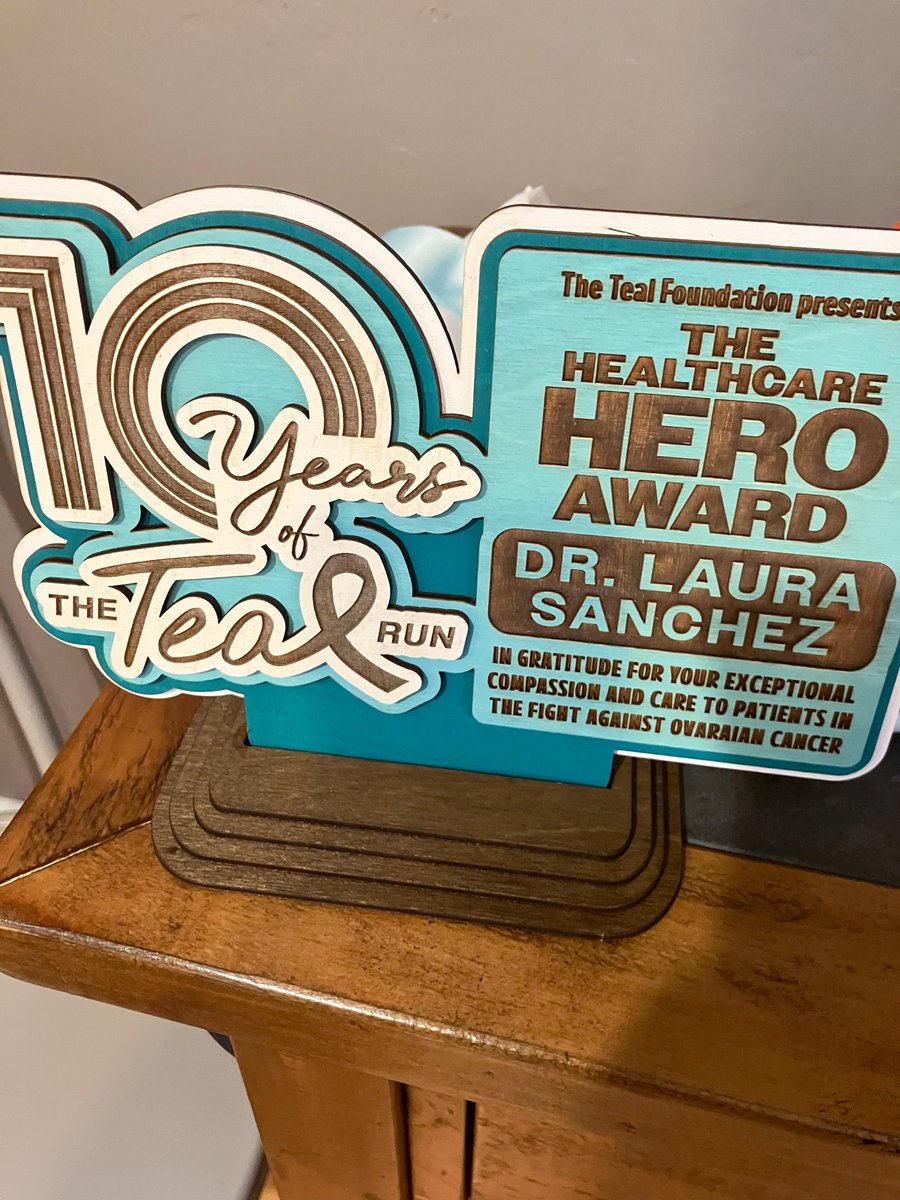
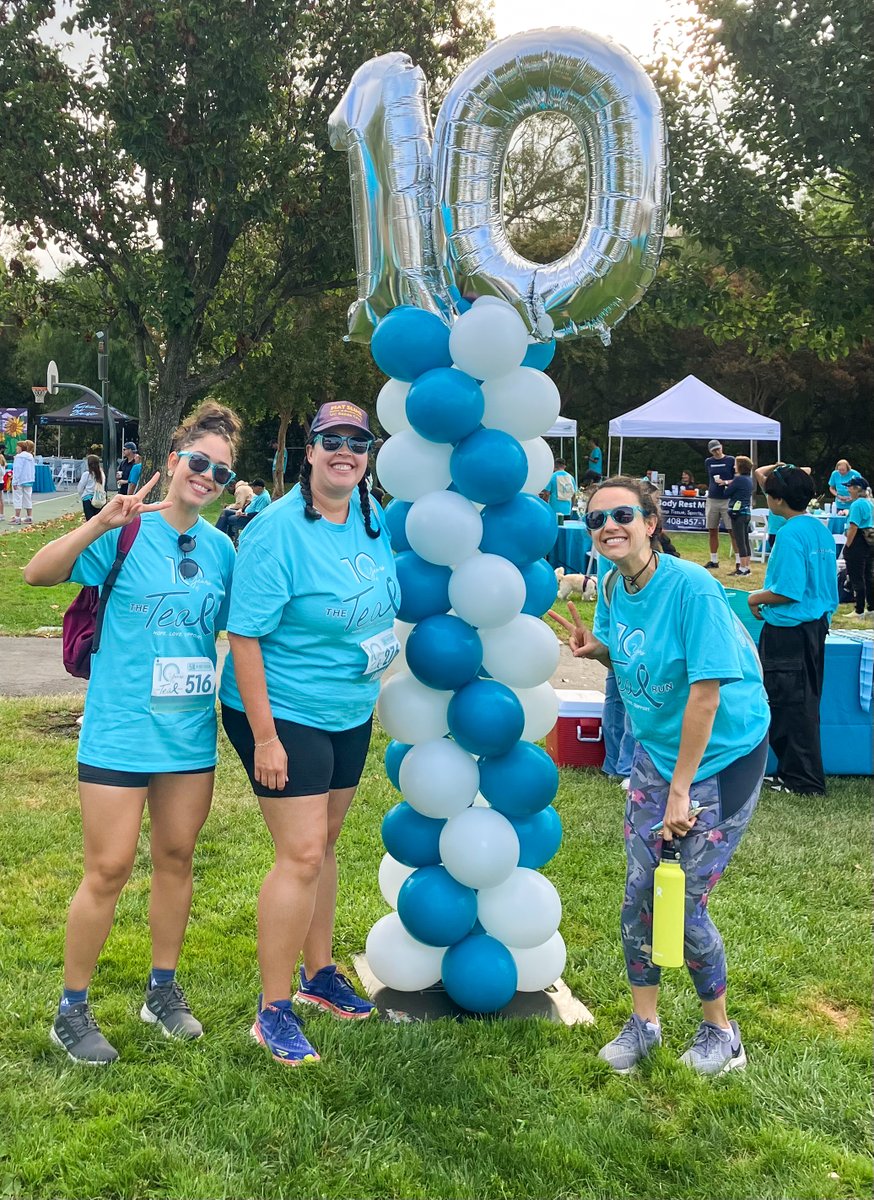
Congrats to @ucsc chemistry professor @DrLauraSanchez on winning The Teal Foundation's Healthcare Hero Award last weekend for her work in support of early cancer detection.💙 “The award is a meaningful recognition of our work aimed at benefiting patients and survivors," she said.
For anyone performing bacterial/plasmid sequencing with @nanopore, highly recommend checking out this update from the Machine Learning team! Major accuracy advancements using the latest basecaller and Medaka models 🦠 🧬
In the last few months at @nanopore, we've made major strides in improving the accuracy of native DNA sequencing in bacteria, a challenging task due to bacterial DNA modifications. Watch my colleague Katherine Lawrence dive into the details:
https://t.co/7C8WuGD6qH
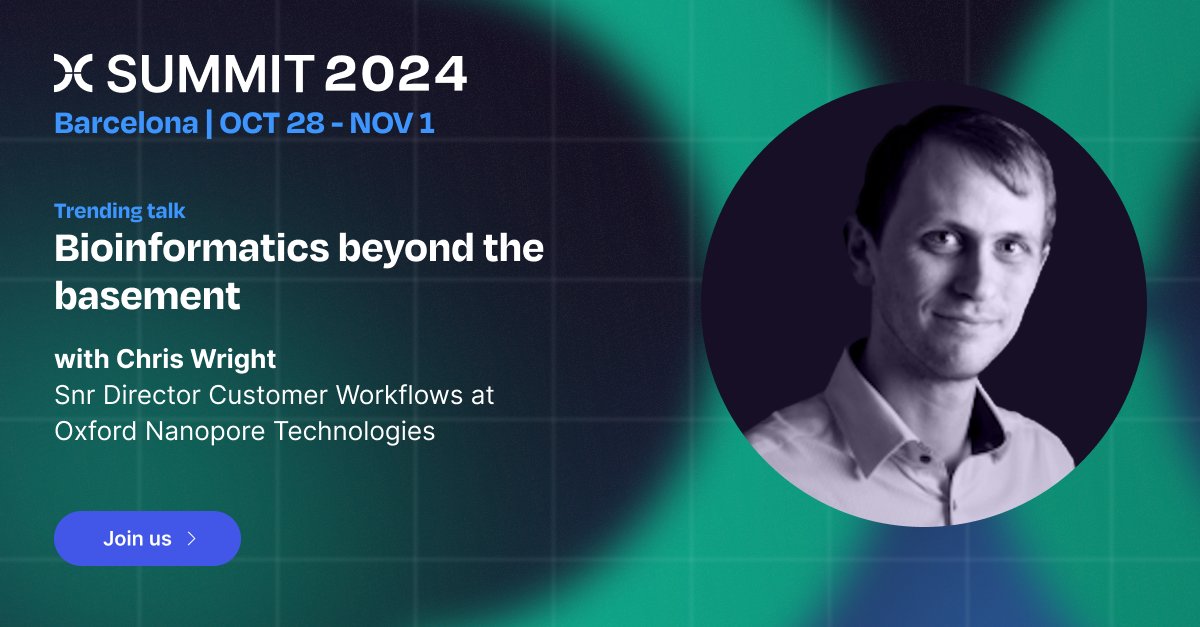
@quiltdata Chris Wright, Senior Director at @oxfordnanopore, is on board to share his talk, "Bioinformatics Beyond the Basement."
With over 10 years of nanopore expertise, this promises to be insightful! 🎉 Don't miss his talk: https://t.co/qmoTOuhPrP
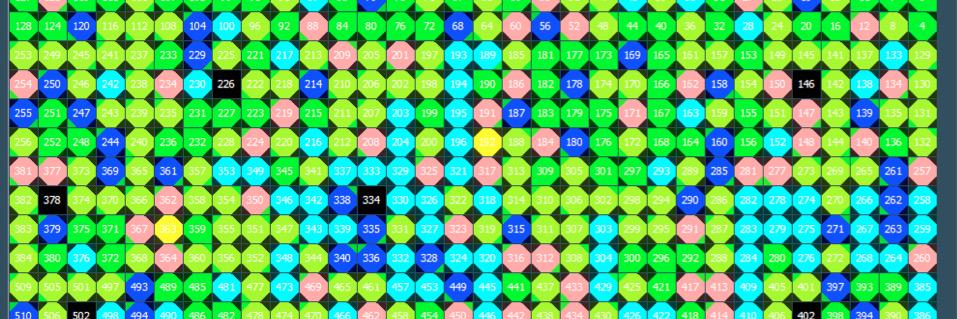
Published today in @Nature, we describe an approach for single-molecule protein reading on @nanopore arrays. By utilizing ClpX unfoldase to ratchet proteins through a CsgG nanopore, we achieved single-amino-acid sensitivity. https://t.co/ZTFNZkwpcj
Finished with your flow cells?
Remember you can return them, at no cost to you.
Returned flow cells are then recycled, reducing their environmental impact.
Learn more: https://t.co/2fRsS34F4R
If you missed our modified DNA (5mC/5hmC/6mA/4mC/dU) and RNA (m6A/pseudoU/Inosine) bases update at #nanoporeconf London Calling 2024 it is now on YouTube https://t.co/Hz8fLs1tm3
@nanopore
A lot of #NextGenerationSequencing people still don't understand nucleotide modifications, e.g. 5mC and 5hmC in mammalian genomes, or 6mA in bacterial genomes, but we'll get there eventually. New Remora models improve the accuracy of basecalling beyond 4-bases across all types.
We're making several @nanopore datasets available to coincide with #LC2024#LondonCalling2024. They are available for download now from the #EPI2ME blog. These include; Zymo fecal reference, plasmids, lambda and E. coli and some human reference RNA!
https://t.co/o8JXVFSMRT
Some very exciting and significant updates coming later this evening! Especially excited to hear from @AdrienLeger2 for all the latest mod base updates since NCM 👀 #DataAfterDark#Nanoporeconf
Exercise may be the single most potent medical intervention ever known. Its benefits in prevention outstrip any known drugs: 50% reduction in the risk of cardiovascular disease, 50% reduction in the risk of many cancers, positive effects on mental health, pulmonary health, GI health, bone health, muscle function. You name it. Exercise helps. In fact, the ability to exercise over long distances was likely key to our evolution as a species because the availability of densely caloric foods due to persistence hunting allowed our energy-avid brains to enlarge. And yet, we have had very little insight into the molecular basis of these magical effects...until now!
Published in yesterday's Nature and featured on the cover was work from our consortium that represents the culmination of a couple of decades of pitching ideas to the NIH, forming a consortium, planning experiments, executing those experiments, and analyzing data at unprecedented scale, all aimed at enhancing our understanding of the molecular transducers of exercise.
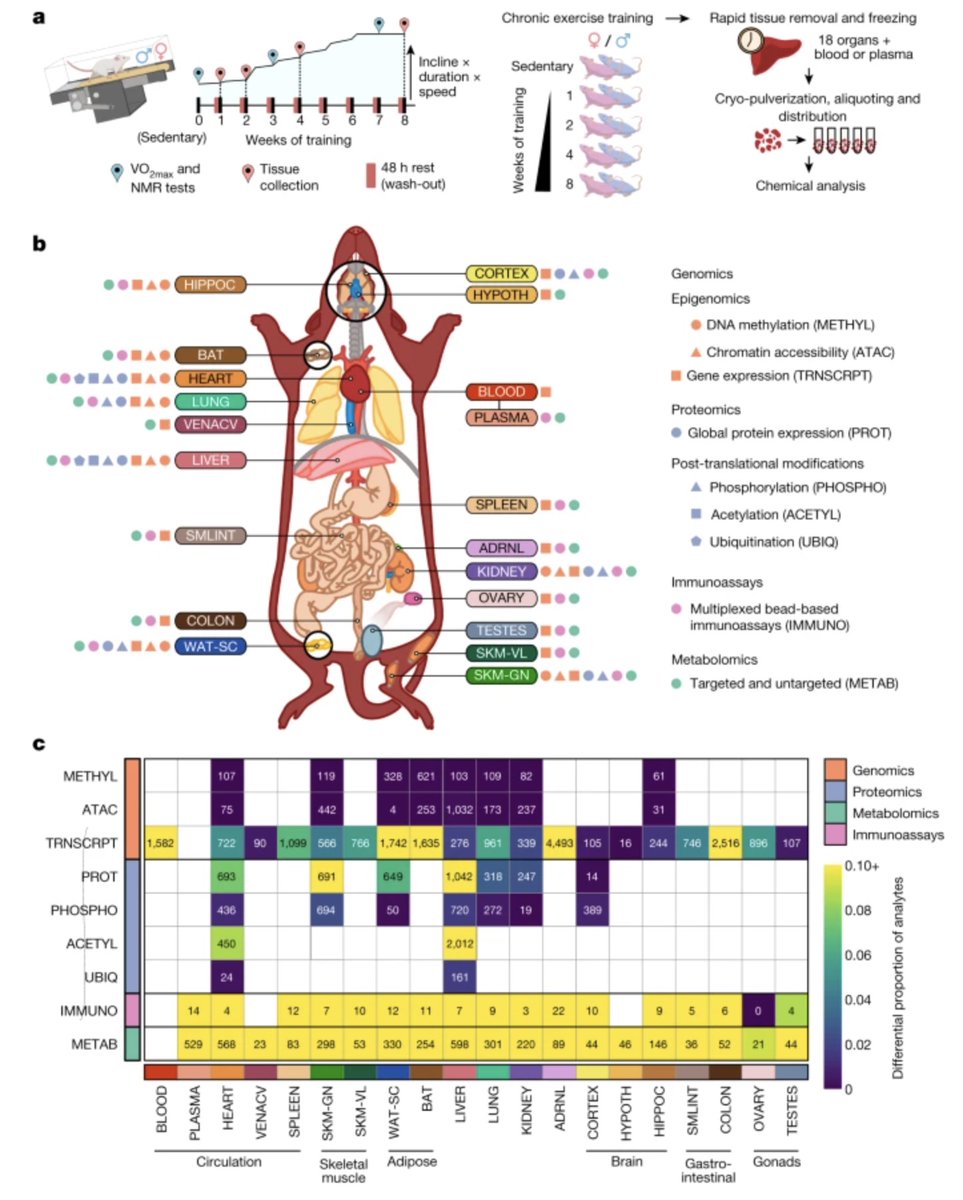
It was a major effort from so many in our consortium (playfully named MoTrPAC) and is the first landmark paper of many more to come. This first paper focused on the multi-tissue, multi-omics of treadmill exercise in rats. Specifically, we report the effects of eight weeks of treadmill running on the transcriptome, the epigenome, the proteome, the metabolome, the lipidome and the immunome of a broad range of tissues (in fact, 9,466 assays across 19 tissues, 25 molecular platforms, and 4 training time points).
The result is the most comprehensive molecular map of exercise ever created. At Stanford, my colleague @MWheelerMD and I co-lead the bioinformatics center and it was our team's duty and privilege to ingest the data, QC the data, help analyze the data, and make the data available to the world. Various tools available at our data hub allow you to explore the data, visualize it, and download it for your own use.
Have fun! And stay tuned for human data that will be coming.
So many people to thank who made this possible (see the paper for details). Special shout out to the primary analysts and authors: David Amar, Nicole Gay, & Pierre Jean Baltran.
Paper: https://t.co/0nhXdfhxx0
Data hub: https://t.co/NxTHsVdfRp