@Shasanraagi Never gonna stop feeding any jeev, no matter what. All my kevalin bhagwaan showed infinite karuna for every single jeev. The only way I can become like them is by showing whatever karuna I can which is still way less than what they had.
@OpIndia_com According to Jain Literature, Kalikaal Sarvagya Acharya Hemachandrasurishwarji Maharaja, the preceptor of King Kumarapala, performed consecration of several idols at this place in Vikram Samvat 1213. It is highly likely that this idol was consecrated by him.
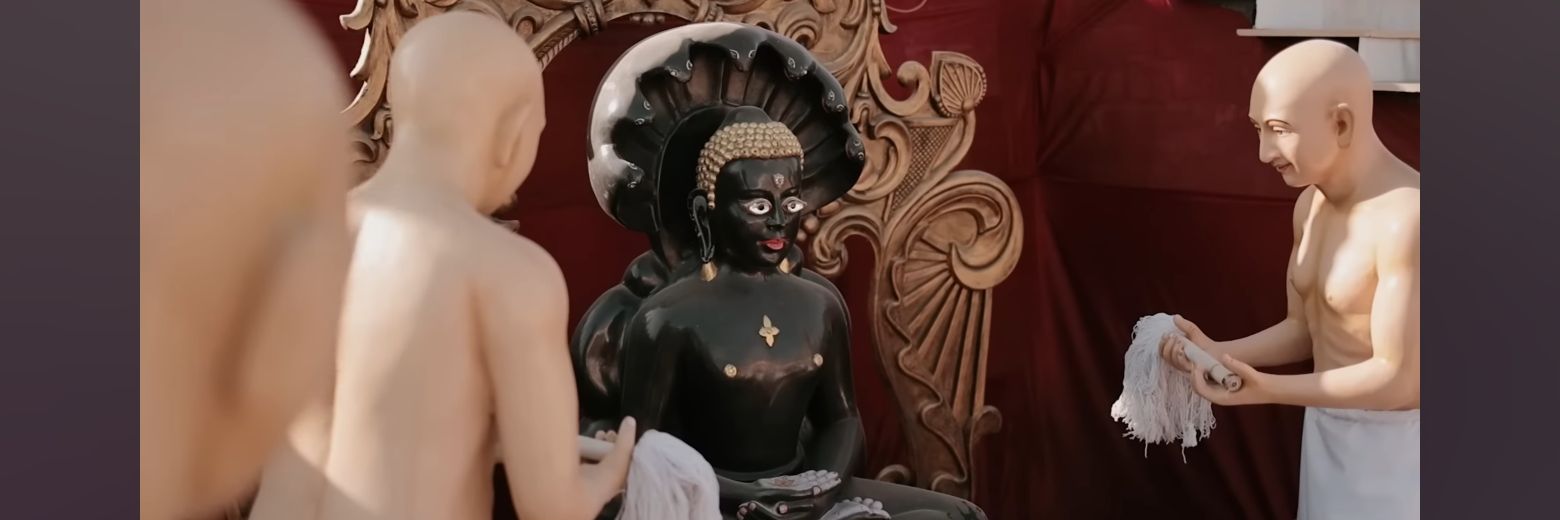
@missFunnyChhori Shakunika Vihara Tirth. The place where Kalikaal Sarvagya Acharya Hemachandrasuriji himself performed pratishtha in Vikram Samvat 1213.
जैन समाज के खिलाफ व्यर्थ विवाद करने वाला स्वभाव से ही असुर है, यह हिन्दू नहीं है। जैन समुदाय से मैं क्षमा मांगता हूँ कि इस असुर ने हमारे धर्म के नाम का उपयोग किया। यह हिन्दूविरोधी भारतद्रोही टुकड़े टुकड़े गैंग का सदस्य है।
जैनोंने तो आपको बहोत अच्छे से लॉजिक समझाया था की ये सफ़ेद पट्टा कोई धार्मिक सिम्बोल नहीं है, पर धूप में खुले पैर चलने में ठंडक रहे और बारिश की मौसम में काई न जमे या जमी हो तो तुरंत दिखे इसलिए किया l
अभी आपकी बारी l
"तदनन्तर महाराज भरत अपने छोटे भाई, अंतःपुर की स्त्रियाँ और नगर के मुख्य मुख्य लोगों के साथ पूजा की बड़ी भारी सामग्री लेकर जाने के लिए तैयार हुए l "
- दिगंबर शास्त्र "आदिपुराण"
1⃣ दि.शास्त्रों में मरुदेवी माता की प्रथम समवसरण जाने का कोई स्पष्ट उल्लेख तक नहीं मिलता। जब की (1/3)
🧵1/5
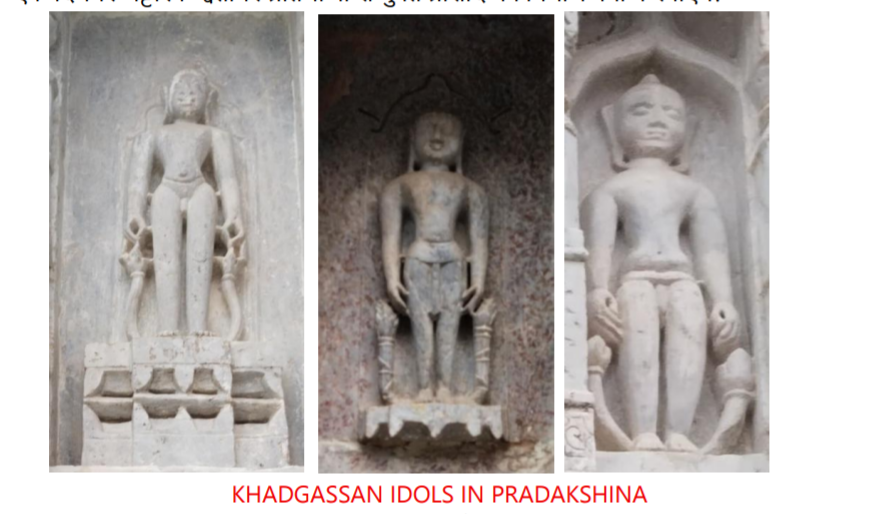
वि.स.1431 के एक शंकास्पद शिलालेख के अनुसार,यह प्रासाद दिगंबर भट्टारक धर्मकीर्ति की प्रेरणा से निर्मित किया गया था। इस संदर्भ में दो तथ्यों पर विशेष ध्यान देना आवश्यक है। पहला चित्र मूल प्रासाद की प्रदक्षिणा का है। प्रथम दृष्टि में यह एक खड्गासन मुद्रा मे स्थित
When childhood dreams find their way home...
There's a question that follows us through childhood like a gentle shadow: "What do you want to be when you grow up?"
We all remember the chorus of answers: doctor, engineer, astronaut, teacher. Safe, respectable choices that made adults nod approvingly. For most children of my generation, these were the acceptable dreams, the paths already mapped out before we could even read a map. But when someone asked me that question, I watched their faces change. Confusion first, then curiosity, sometimes a bemused smile. "What profession is this?" they'd ask.
"Archaeologist," I would say, with all the conviction a child's heart could hold.
While my classmates dreamed of stethoscopes and blueprints, I was lost in worlds buried beneath sand and time. I devoured books about ancient Egypt, where pharaohs slept among treasures for millennia. I traced the mysteries of the Indus Valley with my fingers on the pictures of seals in the history books, imagining the stories those ruins and pottery might tell. The Greeks, the Babylonians, the mummies that had outlived empires: these were my companions in those formative years.
But childhood dreams, as we learn, don't always survive the journey to adulthood. Life has its own plans, its own practical demands. The path I walked led me elsewhere, to a different profession entirely. And for years, that dream of brushing away centuries of dust to reveal forgotten truths remained just that: a dream, pressed like a dried flower between the pages of memory.
Yet something extraordinary has happened in recent years, something I could never have anticipated. My growing fascination with Jain history, its ancient literature, its archaeological footprints across time has quietly, miraculously, opened a door I thought had closed forever. While researching Jain history, in exploring various dimensions of this ancient tradition, I've found myself standing exactly where my younger self always wanted to be.
Today, I don't just read about archaeology. I get opportunities to interact with real archaeologists; people who live the dream I once held. I learn from them, absorb their knowledge, understand their methods. And more incredibly, I also get opportunities to collaborate with them, contributing to the very field that captured my imagination all those years ago.
It's not the path I imagined. I'm not the archaeologist my childhood self envisioned, complete with a brush in hand at an excavation site. But perhaps this is even more beautiful; finding your passion not by chasing it directly, but by following what genuinely moves your soul, trusting that the journey knows something you don't.
The divine, or fate, or whatever force guides the hidden currents of our lives, has a sense of poetry. My profession may be different from what I dreamed, but my purpose has found me anyway.
In pictures :
Archaeologist Dr. Tosabanta Padhan (Nalanda University)
Archaeologists Monish Deepak Shah and Siddharth Kale
Archaeologist and historian Dr. A P Jamkhedkar (Chancellor, Sir J J University of Art)
Rushabhayan 2.0 - Day 1 Highlights
Friday, December 19th marked a momentous beginning to Rushabhayan 2.0! The inaugural day witnessed a sacred gathering of Pujya Gurubhagwants under the guidance of Gacchadhipati Acharya Shri Yashovarmasurishwarji maharaja and monks from various Sanatan traditions, graced by the esteemed presence of Maharashtra Chief Minister Shri Devendra Fadnavis.
The afternoon scholarly conference was truly enriching. I was deeply honored to chair both sessions alongside two distinguished scholars - Dr. Priyadarshana Jain (Head of Jainology, University of Chennai) and Dr. Renuka Porwal (renowned research scholar specializing in Jain iconography and history).
The day featured exceptional presentations from luminaries in the field:
*Dhruti Ghiya Rathi
*Archaeologists Monish Shah and Siddharth Kale
*Dr. Sima Gala
*Dr. Shubha Mazumder (Archaeologist)
*Rahul Jain Shashtri
*Ms. Pinal Ajmera
*Dr. Priyadarshana Jain
*Dr. Renuka Porwal
The scholarly discourse was further elevated by the noted presence of Shri Ramjan Hasania and many other distinguished scholars.
#rushabhayan #jain #jainism #research
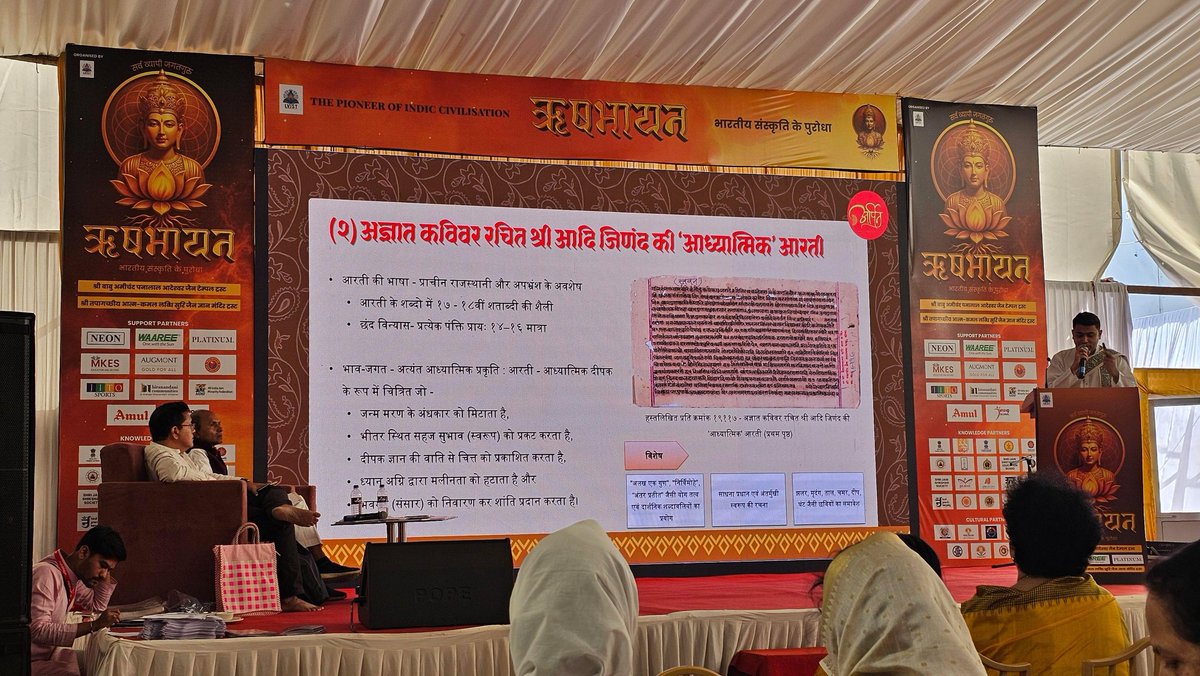
Feeling deeply grateful and humbled to have presented my research paper at #Rushabhayan 2 organised by @lvjstsorg before revered Guru Bhagwants, Sadhvijis, scholars, and fellow researchers on the topic of "15 Aprakat (Unpublished/Unknown) Aartis dedicated to Shri Rushabhdev Bhagwan."
My research explored these rare aartis composed between the 15th to 19th centuries in Maru Gurjar, Apabhransh, Braj, and other languages, preserved in hastprats (manuscripts) of Koba Gyanbhandar.
What makes these compositions truly special are their unique themes - including Aartis on Kalyanaks, the vivah (marriage) ceremony of Rushabhdev Bhagwan, and those dedicated to sacred tirths like Shatrunjay and Kesariyaji.
I was also blessed with the opportunity to compose 4 of the 15 aartis myself and present them before this esteemed audience. This experience has been profoundly enriching and inspiring.
#jain #jainism #research #aarti #rishabhdev #rushabhdev #adinath
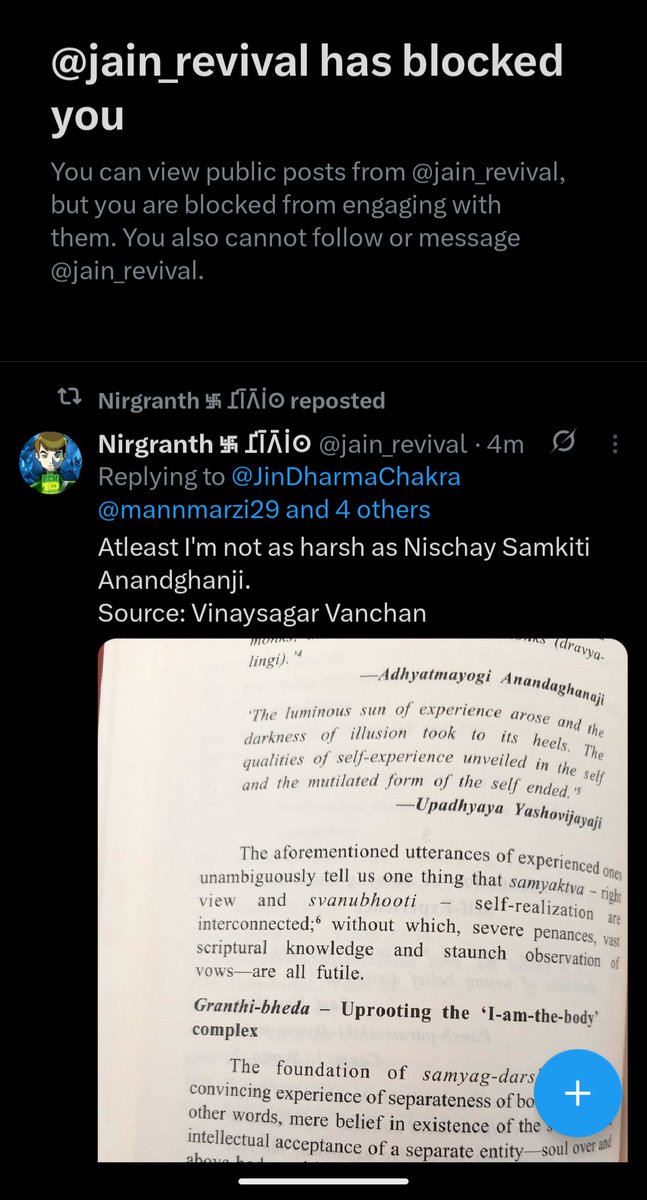
It has become common practice for disciples of Rajchandra/Dada Bhagwan to counter with references of taking some extracts of Anadghanji m.s. and Yashovijayji m.s. (meant for specific purpose &/ saadhaks).
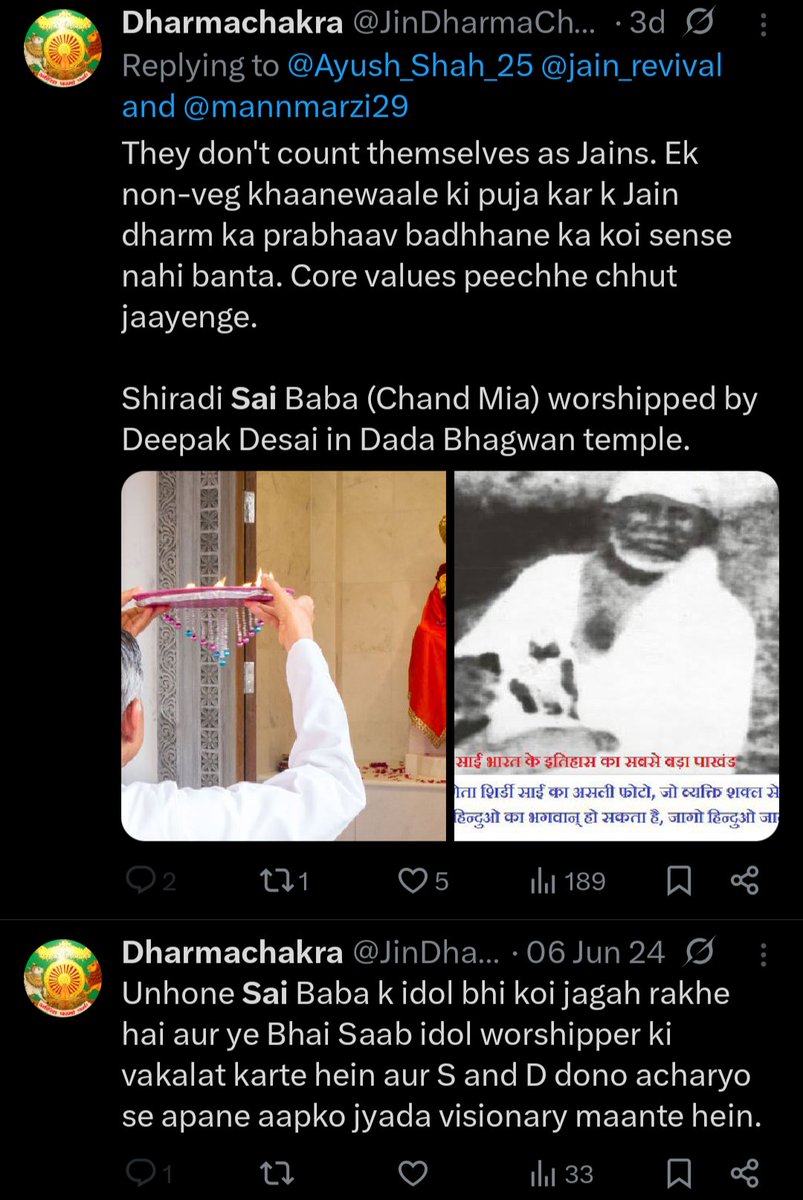
They cnt tolerate opposite thought but can talk on "Samatva"endlessly.😊
Disciples of Dada Bhagwan / Rajchandra don't have problem with Sai Baba for promotion of Jainism. But 8 Pratiharya of Teerthankar Bhagwan they do consider highly materialistic.