🚀 STARSHIP IS GO FOR LANDING.💕
SpaceX has given the green light for Ship 42’s historic return to Starbase.
Atmospheric reentry is expected to begin in approximately one hour as the spacecraft prepares for its return and tower catch attempt.
All eyes on Starbase. 🔥
📸 Credit: @SpaceX
These images show gravitational lenses, which occur when the gravity of a massive foreground object (such as a galaxy cluster) bends and magnifies light from a more distant background object.
They also lay the groundwork for follow-up observations by the new @NASARoman ⬇️
On Nov. 17, celebrate this once-in-human-history moment by creating a wave of golden light.
Shine bright for Voyager! Here’s how to join in: https://t.co/xmz6FXK83D
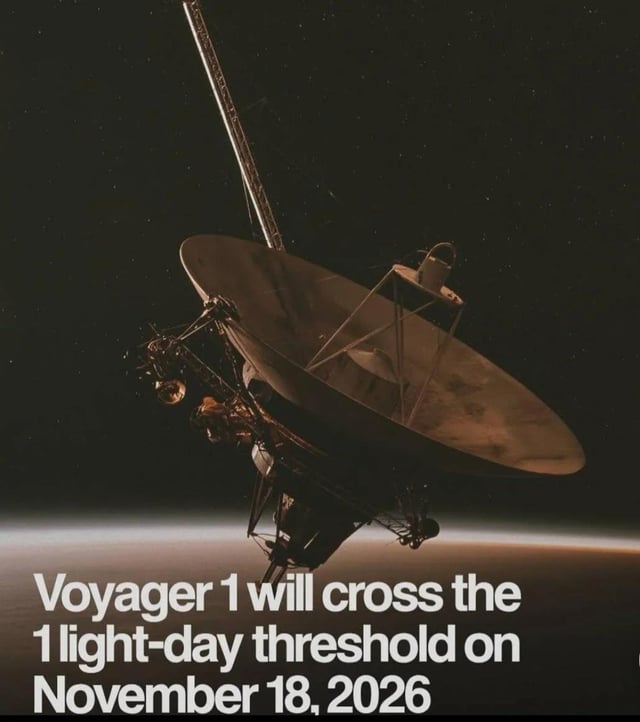
No other traveler has ever journeyed so far from home.
Voyager 1 is about to become the first human-made object to reach a distance of one light-day from Earth, or about 16 billion miles. ½
🚀 Size matters in space exploration! Check out this incredible side-by-side comparison of active and upcoming crewed spacecraft, and notice how one monster completely redefines the scale.
From the historic, reliable Soyuz to the sleek Dragon 2, modern engineering is rapidly changing the cosmos. But looking at the massive leap to Starship, the future of interplanetary travel is on a whole new level.
• 🇺🇸 Starship & Orion: Pushing the boundaries of deep space and lunar exploration.
• 🇮🇳 Gaganyaan: India’s highly anticipated leap into independent crewed orbital flight.
• 🇨🇳 Shenzhou: China's operational workhorse powering their presence in low Earth orbit.
• 🇷🇺 Soyuz: The legendary, longest-serving active crewed vehicle in human history.
We are living through a golden era of spaceflight.
Which of these vehicles are you most excited to see fly next? 🌌👇
🤩 En ce moment, ne ratez pas les Pléiades, un amas ouvert de 3000 étoiles, dont une douzaine sont visibles à l'œil nu. Les 9 étoiles les plus brillantes de l'amas tirent leur nom des sept sœurs et de leurs parents dans la mythologie grecque.
📷 Cité de l'espace / O. Sanguy
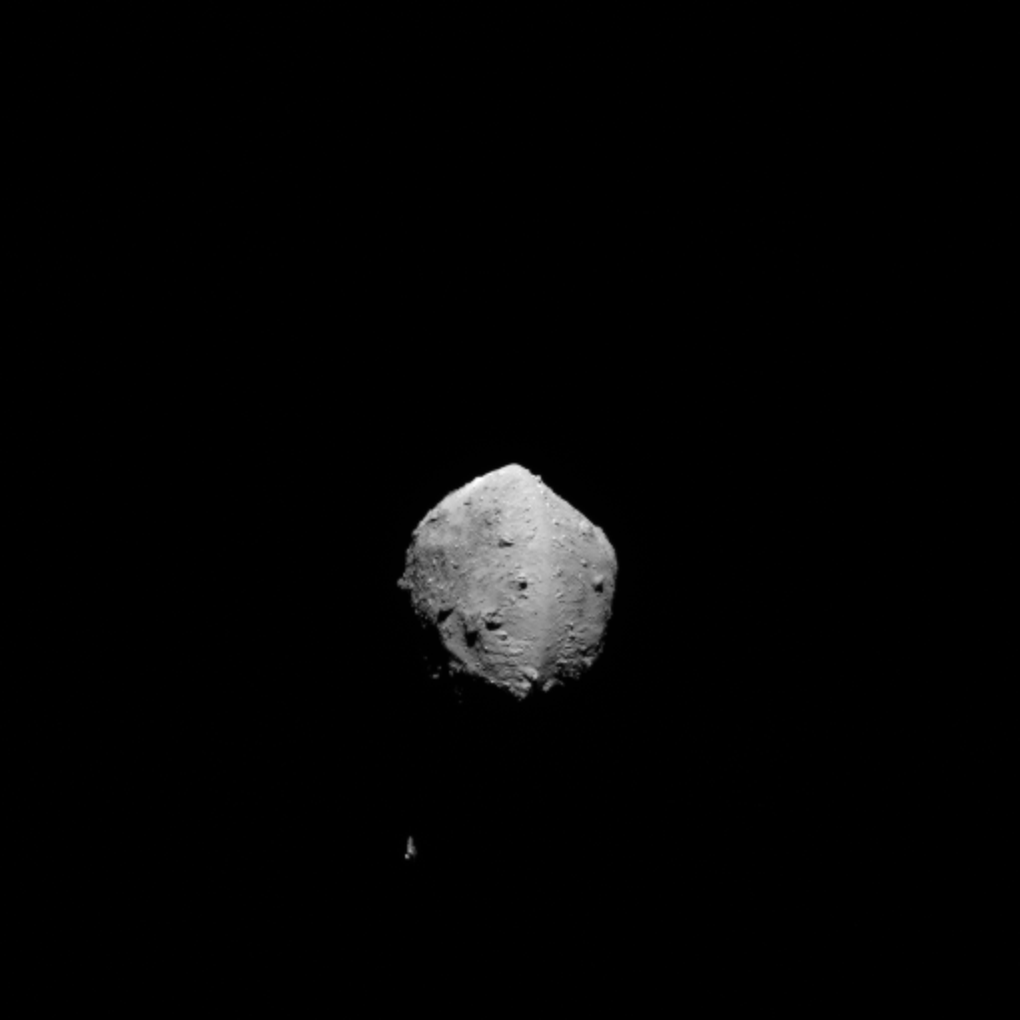
Closing in on Didymos. ☄️
Our planetary defence mission Hera has captured its first close-up of the binary asteroid system, 60 km away, as it prepares to investigate the aftermath of DART’s historic impact with Dimorphos.
Detailed images of both asteroids are coming on 25 November.
Read more: https://t.co/Q6SXvOgsmd
After 5 years and 2.2. billion miles, NASA's Lucy spacecraft has reached the Jupiter Trojan asteroids. These asteroids serve as time capsules from the birth of our solar system, rich with clues about the environment in which Earth & other planets formed.
https://t.co/kZW0KcQkA6
👩🚀🛰️ « Être dans l’espace, pour le corps féminin, c’est quand même la panacée ». Adaptation, morphologie, scaphandre… L’astronaute Sophie Adenot explique comment le corps de la femme réagit à l’environnement spatial.
Nearly 49 years after its launch, Voyager 1 is about to achieve a historic first: the only human-made object ever to cross the one-light-day mark—roughly 16 billion miles from Earth—pushing humanity’s reach into the true depths of interstellar space.
Pspspsp! Just in time for Halloween, NASA’s Hubble and James Webb Space Telescopes recently stared at an eerie star-forming scene within the Carina Nebula, a massive gas and dust cloud located approximately 7,500 light-years away from Earth.
🆕 Just in time for Halloween, a ghostly nebula lurks within sight of @Hubble_Space and the NASA/ESA/CSA James Webb Space Telescope
This is the Cat’s Head Nebula 🐱 a star-forming region located approximately 7,500 light-years from Earth. It is named for its resemblance to a cat sitting with its back towards Earth, its ‘head’ turned to the side. 1/4
Artemis III will be one of the most complex test missions in NASA history.
Launching in 2027, Artemis III astronauts will practice rendezvous and docking with two commercial lunar landers designed to carry crew from the Orion spacecraft to the lunar surface.
Details below ⬇️
NEWS: Starship Flight 15 eyes November 8 with a dual catch, and Flight 16 could launch from Florida 🚀🚀
Starship could pull off two firsts before the year is out. Flight 15 is now eyeing November 8 with an attempt to catch both the Super Heavy booster and the Ship, and Flight 16 could become the first Starship launch from Florida's Launch Complex 39A in December.
A dual catch means the whole rocket comes home ready to fly again, which is the entire point of Starship. A second launch site on the East Coast matters just as much, because it ends the reliance on a single pad in Texas. If both happen, Starship ends 2026 looking like an operational system rather than a test program.
Astronomers have found the first known star that would appear green to the human eye
It's a dead star and it's glow comes from swallowing pieces of its own shattered planets
Did you catch the @NASARoman launch? 🚀
NASA’s newest space telescope is on the way to its home orbit a million miles away, where it’ll capture wide-field, infrared views of the universe!
Roman gets the big picture, while Hubble delivers the details. ⬇️
Our #HubbleTopImage features a shot of a strange galaxy!
The Coma Galaxy Cluster is one of the closest very rich collections of galaxies in the nearby Universe. The cluster is about 320 million light-years from Earth, and contains more than 1000 members... 1/2
The Nancy Grace Roman Space Telescope has been named one of TIME's Best Inventions of 2026.
Roman continues its journey in space to its final orbit, completing critical milestones along the way. We expect first images by early 2027.
https://t.co/oy9o44u0cU
Perseverance has set a new off-world record! 🏅
On Oct. 11, the rover's odometer hit 28.10 miles (45.22 kilometers), eclipsing the distance record set by NASA's Opportunity rover. 1/2