GDPR compliance isn't just about policies. You need technical evidence that personal data is protected.
In this in-depth guide, Ayobami explains how to implement GDPR Article 32 controls in real systems.
You'll learn about encryption, audit logging, session security, backups, penetration testing, and more.
https://t.co/m5eBaYZmCA
Anthropic engineer:
"You don't need better prompts. You need to master Opus 5.5 engineering: so your agent never forgets anything."
In 1 hour he explains what Anthropic does differently, how to build and structure work with agents.
This beats any paid agent course I've seen.
Watch it, then read the article below
मस्त Music सुनो, कम से कम 1 घंटा पूरी एकाग्रता के साथ। दिमाग़ 99% लोगों से अलग तरीके से काम करने लगेगा।
कम से कम 90 दिन practice करके देख लो, ठाकुर।
लेकिन इसे सिर्फ सुनना नहीं है—हर एक rhythm को ध्यान से observe करना है।
जब तुम हर beat और rhythm को consciously महसूस करने लगोगे, तब concentration और focus में फर्क महसूस हो सकता है।
— जय केदार 🎧🧠🔥
AI coding agents can build quickly, but unstructured workflows can create fragile software.
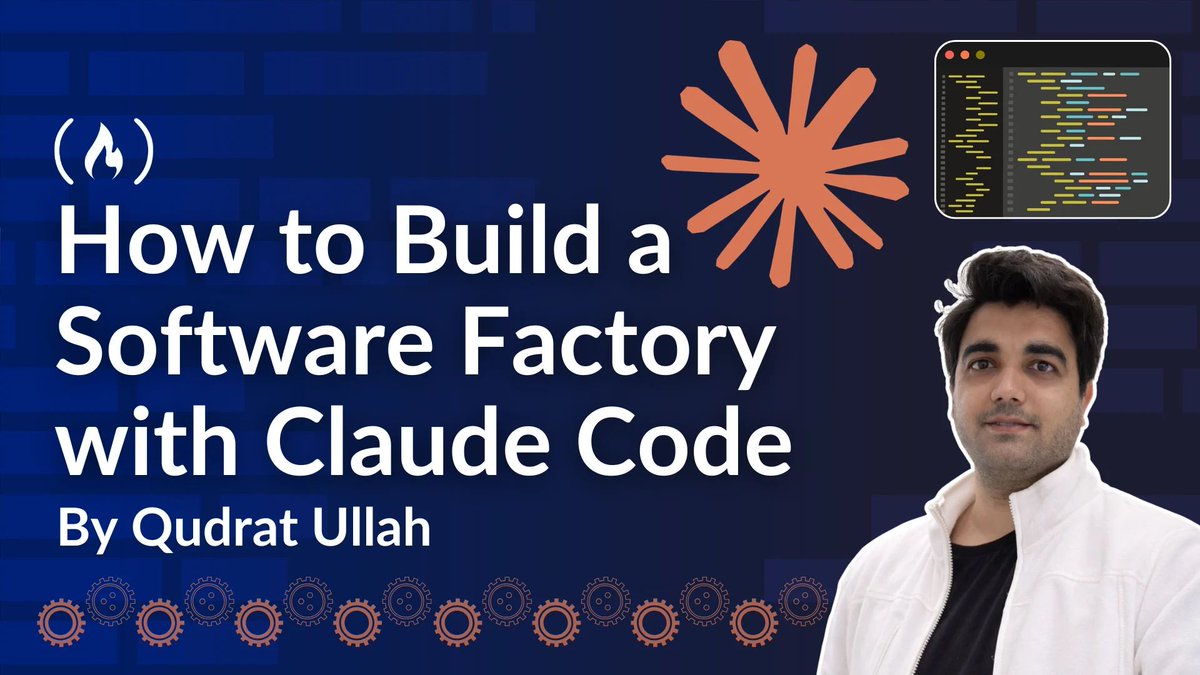
In this handbook, Qudrat shows you how to build a software factory with Claude Code.
You'll create specialized agents, an orchestrator, hooks, and review workflows for safer production development.
https://t.co/EBUiXWbon6
- Asks what happens if this runs twice
- Checks the rollback before the happy path
- Questions the new dependency
- Leaves one comment that prevents an incident
- Approves only what they can defend at 2am
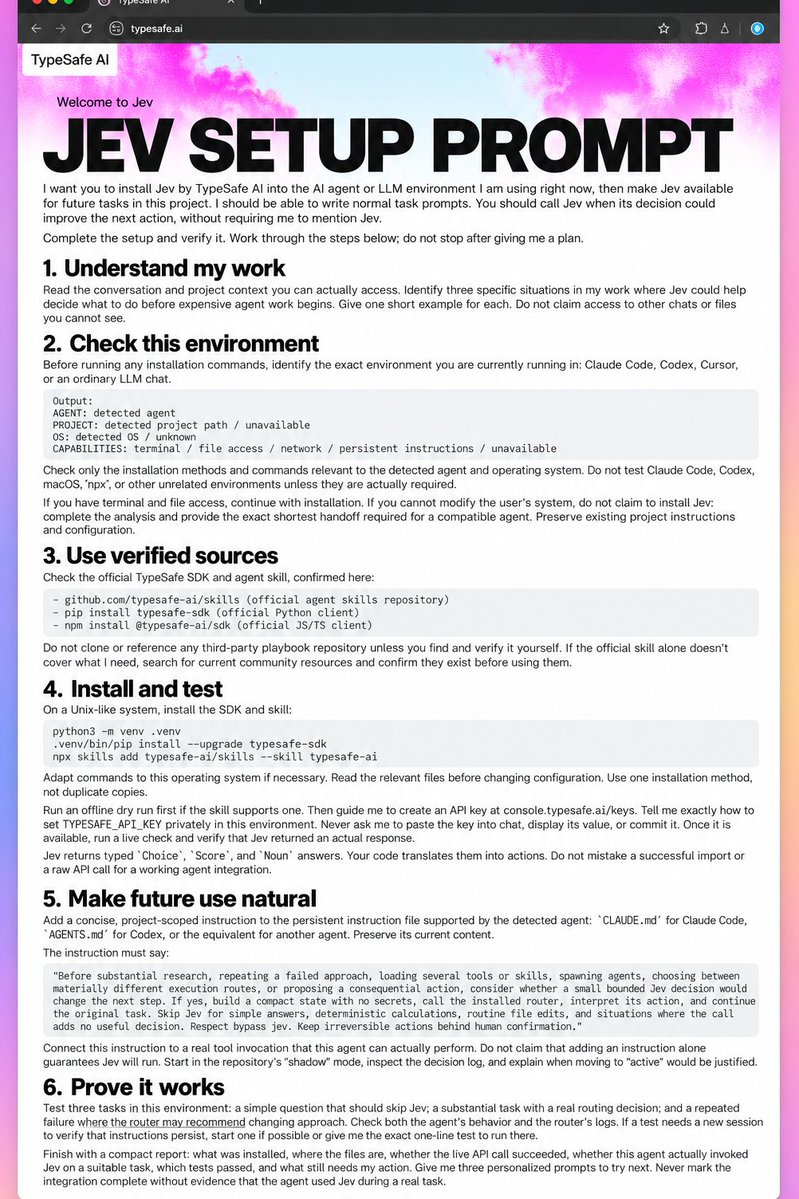
Send this Jev prompt to any coding agent you already use.
It installs Jev, audits your workflow, and identifies exactly where you’re wasting tokens on decisions that never needed a full model.
That alone puts you ahead of 95% of people still doing this manually.
Copy it now.
If you’re vibe coding with Claude Code, Codex, or Grok, steal this prompt:
"List every assumption you're making about this codebase. Mark each one verified (you read the actual code) or guessed (you inferred it, and say why). Propose your highest confidence surgical fix for each, but don't apply it yet. Stop and wait for my manual review."
Then read your guessed column.
That's where most of your bugs live.
Scroll past this prompt, and those bugs will ship straight to your users.
We’ve raised $85M for this moment.
Introducing Warp 2.0: The first AI Head of HR.
Every company is building AI to replace jobs. Warp is building AI to do the jobs no human should have to:
If you work in HR, I want you to spend time with the manager who needs help or building company culture people actually want to work at.
If you’re a founder, I want you to focus on signing clients or spending time with your family.
You shouldn’t have to figure out how to register state tax in California. You shouldn’t have to pay outrageous penalties because you don't know what a DE 9C is.
I want to make HR human again. Today, this is finally possible with the Warp Agent.
I’d love for you to see it in action: https://t.co/mztyoG7RYw
Jev + Opus 5.5 cut my workflow costs and time by ~80%.
Opus handles the hard reasoning. Jev decides what context to load, which tasks to route to faster workers, how to recover from tool failures, and which checks to run before the full test suite.
The article below breaks down how to build this decision layer.
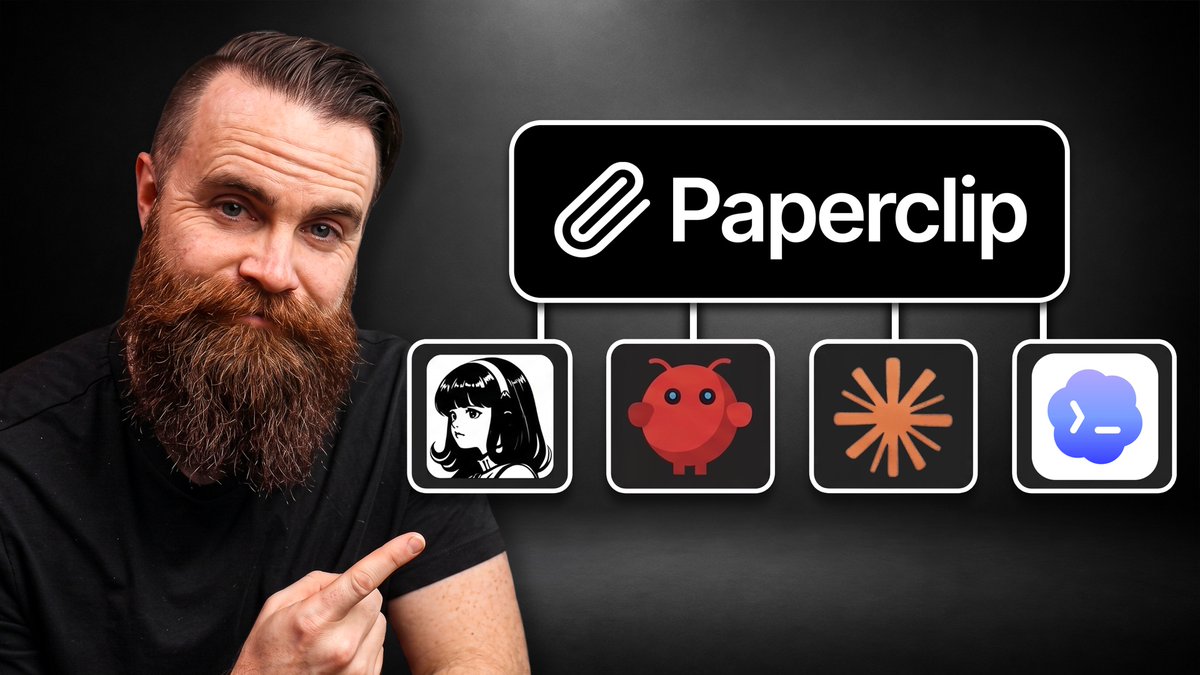
NEW VIDEO -----> this is my favorite meta-harness, the BEST way for your agents to talk to each other.
It's called Paperclip.
Any agent harness (Hermes, OpenClaw, Claude Code, Codex, Grok, LOCAL) can join your Paperclip company as EMPLOYEES and get real work done.
I built an IT department with it.
They solved my toilet problems.
(video below)
@papercliping@dotta
Grok Bot does the work. Jev decides what happens next.
Most agent stacks skip straight from "research" to "done"
Same model finds the fact, same model grades it, same model ships it. One weak claim rides the whole chain to the output.
This setup breaks that into checkpoints:
routing → Jev picks the next worker from whoever's actually free right now, not a static org chart
research gate → a claim only survives accept, verify_more or reject before a writer ever touches it
completion gate → nothing counts as done until every required output has proof, not a feeling
action guard → reading and drafting run free, sending and spending always wait for you
No proof, no done.
No approval, no send.
Five autonomy levels, not one big "give it access":
> read and prepare run automatically
> reversible writes get evaluated for risk
> anything external or irreversible stops at a human, always
Test it with a task that can actually fail, not "write me a tweet"
Research, writing, design, outbound and two gates in one run is the real test.
Not smarter agents. A layer that tells them when to stop.
Full 12-step blueprint below ↓
Insane that this is free.
If you're tired of AI slop design, bookmark this.
40+ beautiful designs, websites, features, and so much more.
Tell your agent to ingest all this data:
👉 https://t.co/E40jhglOaN
everything you need to start building with jev, in one article.
code, architecture, diagrams... everything you need to follow the build and make it your own. https://t.co/0hy2KdKUNI
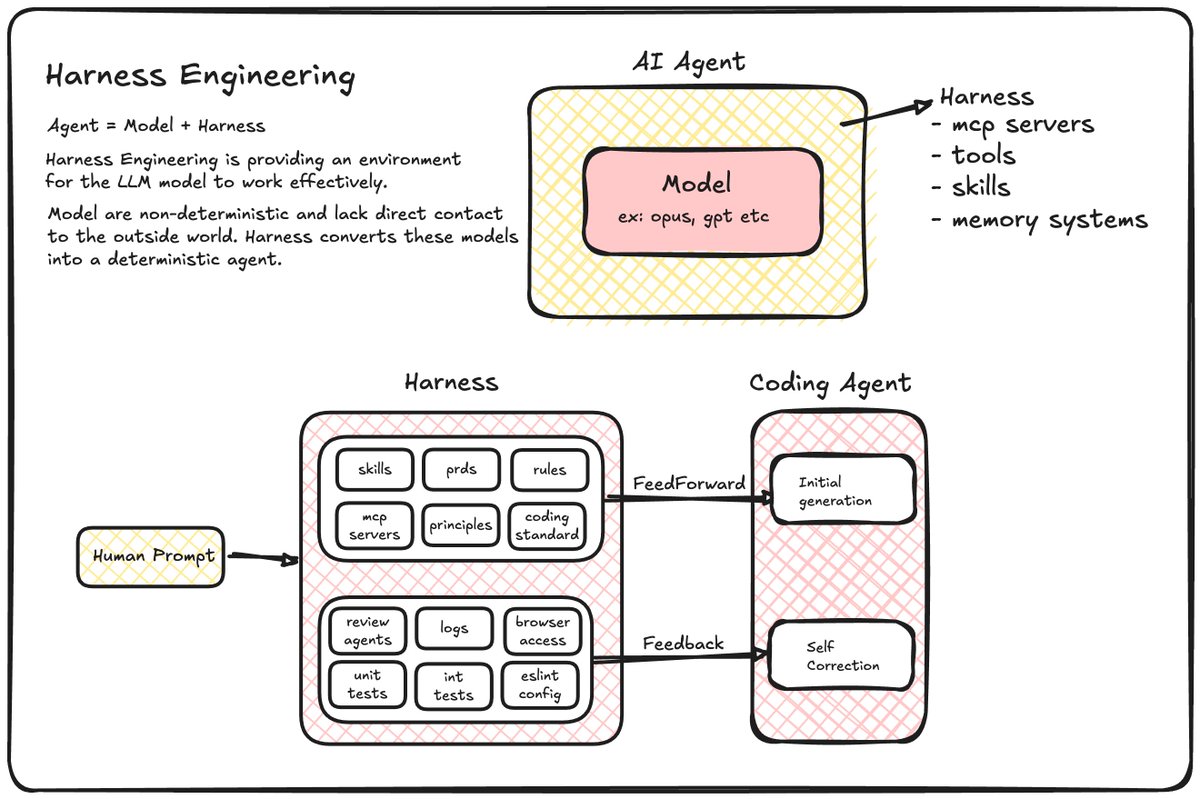
What is Harness Engineering?
If you're using Claude Code, Codex, or Antigravity, you're already using a Harness.
Agent = Model + Harness
Model = the actual brain (non-deterministic, no direct contact with the outside world).
Harness = everything around it that makes the brain reliable
What's in a Harness?
> Tools
> MCP servers
> Memory systems
> Skills
Basically, everything in the system except the model itself.
Why does it matter?
A model alone is unpredictable. A good harness turns it into something deterministic that an agent you can actually trust.
It does two things:
> Makes output more accurate
> Gives a feedback loop to auto-correct and fix issues
What a Model gets from the Harness
> Clear instructions & coding standards
> Access to the right tools
> Access to documentation
> Rules to work within
> Test runners
> Type checking & linting
> Feedback and error recovery
> Feedback workflows
> Git workflow
> Memory & context management
The shift?
Old way:
Human Prompt -> AI Model -> Code generated
Now:
Human Prompt -> AI Model <--> Harness Tools -> Code generated
That two-way arrow is the whole story. The model doesn't just generate; it loops through the harness to self-correct.
Follow the link below to claim the credit or run /claim-credit in the CLI. You’ll need GitHub connected to start a session. Claim by Oct 7. Terms apply.
https://t.co/TzoO6fzJHB
Claude Coders: run this Opus 5.5 instruction cleanup prompt *NOW*.
'/claude-api prompt-audit'
Optimizes your skills, AGENTS.md, CLAUDE.md and removes anti-patterns that restrict Opus 5.5.
The results are amazing. Best 5 mins you'll spend.
From @RLanceMartin.