There is no such thing as an essential carbohydrate.
That is not an opinion. That is basic biochemistry.
There are essential fats.
There are essential proteins.
Your body cannot make them, so you need to get them from food.
Carbohydrate is not on that list, because your liver can make the glucose you need from fat and protein.
That process is called gluconeogenesis.
So why were people told to base meals around grains?
The 1977 dietary guidelines pushed 6 to 11 servings a day.
That was presented as health advice.
It also happened to suit a food system built around cheap, storable, profitable products.
A population living on meat, eggs, and simple whole food is harder to sell to on repeat.
That is worth thinking about.
When I cut back on carbohydrates my energy stabilised, my hunger became manageable, and I stopped thinking about food every two hours.
That is not what you would expect if you had removed something essential.
Your body does not need carbohydrate.
It needs enough energy, enough protein, enough fat, and the right signals.
What is the most difficult carb for you to give up?
Just because centenarians have a higher TSH, doesn't mean that decreased thyroid function promotes longevity. It's demonstrating that a healthy system works harder to maintain output of thyroid. Metabolic/malnutrition stress suppresses TSH, masking the issue.
Kai Havertz: "We had a cook in London at the beginning, who came every day and cooked for us. And I have to say, I did not feel good at all. This had the complete opposite effect on me. He said to me because I'm a total sugar freak.
"And then we got a nutritionist at Chelsea and he completely went the other policy and said Kai you need the Fanta, you need the Coke, drink one a day. At half-time I get gummy bears, Skittles or something. And he has completely followed the other policy and then I said OK, I'll do it again and that moved the push in my body and I was full of energy again."
Except it isn’t.
Dayspring argued with me over this that Daniel Steinberg’s seminal research showing oxidation of the polyunsaturated fatty acids in the LDL particle membrane is *the* central mechanism driving its accumulation in atherosclerotic plaque is “outdated” because “LDL aggregability” is an independent driver of macrophage uptake.
Steinberg died a few years ago. But he was #3 just below Brown and Goldstein in LDL receptor fame and he chaired the 1984 NIH Consensus Conference that solidified the consensus that LDL-C “causes” heart disease, and his lab’s work laid out the central mechanism by which LDL particles wind up in plaque.
The problem with Dayspring’s argument is that
a) oxidation itself is a major driver of LDL aggregability and
b) the other major driver is the ratio of choline to saturated fat, which just happens to also be a major determinant of fatty liver disease.
The reality is every mechanism through which LDL particles wind up in plaques is completely separable from their concentration.
There are zero drugs and zero clinical trials that can distinguish between the impact of concentration versus the impact of oxidation.
This is a MECHANISTIC claim, not an “outcomes” claim so you MUST rely on mechanistic research to answer the question.
On this mechanistic claim about concentration being the driver, Steinberg’s graph from 1983 remains undefeated, shown below.
The range at which macrophage uptake of non-oxidized particles (bottom line) plateaus is massively below the physiological range, below an ApoB of 5 or an LDL-C of 7.
Meanwhile, oxidation (top line) causes a 5-fold increase.
So at physiological concentrations, concentration is irrelevant and oxidation is paramount.
@ClarkeMicah All milks are fine. Sugar is fine. Demonising foods without much knowledge on the subject is not. I prefer full fat and cream personally but plenty of dairy in most forms is helpful.
Bread and honey for breakfast and other reasons why top athletes and folk are generally better with adequate carbohydrate in their diet. World record anyone?
https://t.co/Od1ANbwGCL
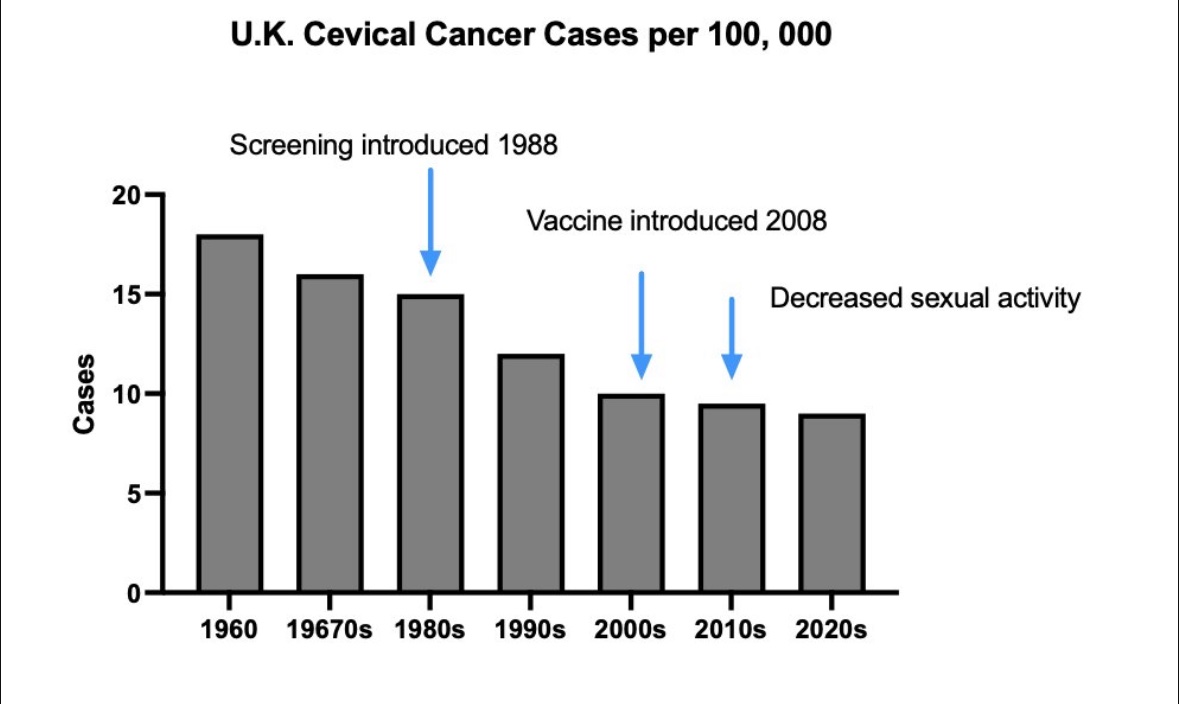
@DrNeilStone By your own logic this is the exact reverse scenario that you see with the introduction of some vaccines. Especially the HPV where reductions were well documented prior to intervention.
If you’re a doctor and truly interested in honest science then I would highly recommend reading @PGtzsche1 great book on what HPV vaccine is and does and the harms associated with it, Also detailing the heavily biased and fraudulent science that underpins the manufacturers claims.
It's truly baffling to me how so many doctors believe elevated insulin is a cause of problems rather than a consequence of them.
Elevated fasting insulin doesn't magically occur. It is a compensatory response to insulin resistance of adipose and muscle tissues.
Losing body fat and building muscle are the de facto ways of lowering insulin at the "root cause" (if you want to call it that).
Pretending that you need to artificially lower insulin with carbohydrate restriction to improve health is disingenuous at best.
Yes, low carbohydrate diets can help many people lose body fat. No, it is not because they lower insulin levels.