All things AI. Investing. Health & Longevity. Philosophy. Comedy. “That’s all I want to feel. I just want to feel like I played the game well.” —Jerry Seinfeld
Reinforcement Learning in production faces many challenges, if you want to learn more, here’s a short talk I gave last year on the topic:
https://t.co/W9hJZNWDQu
#reinforcementlearning#RLHF
Introducing TurboQuant: Our new compression algorithm that reduces LLM key-value cache memory by at least 6x and delivers up to 8x speedup, all with zero accuracy loss, redefining AI efficiency. Read the blog to learn how it achieves these results: https://t.co/CDSQ8HpZoc
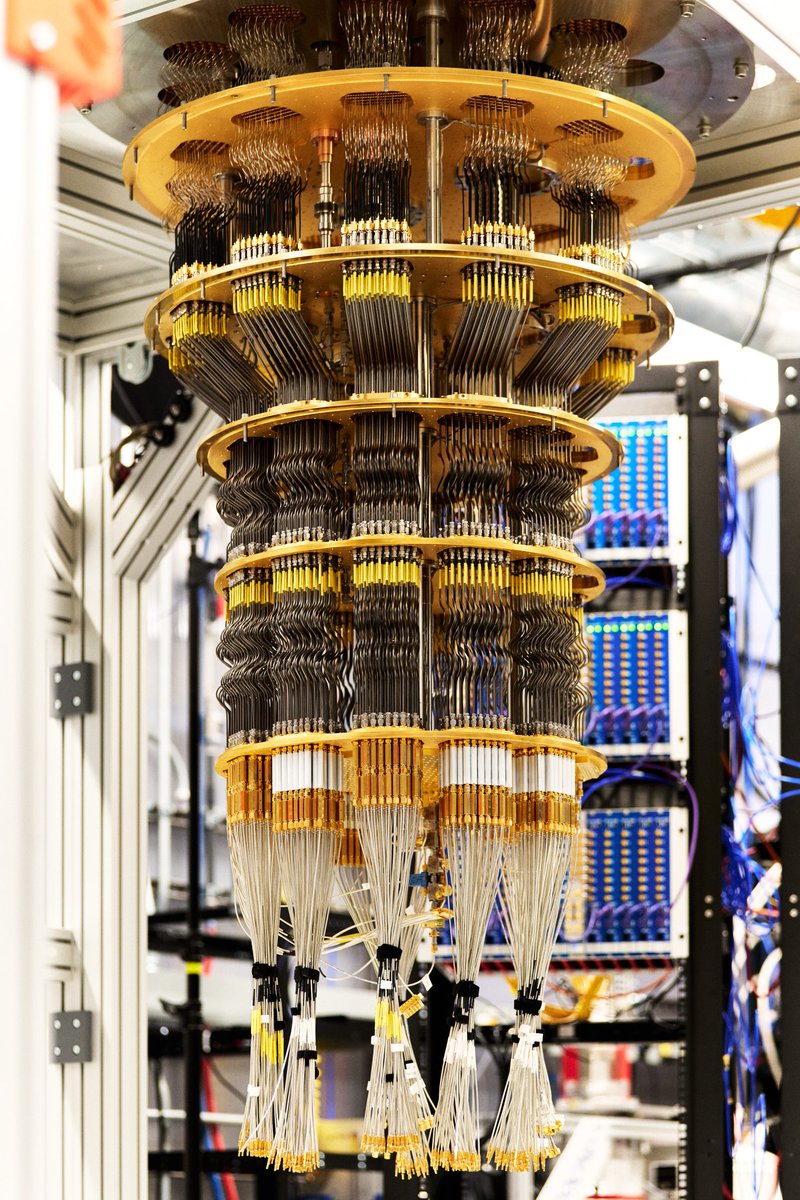
New breakthrough quantum algorithm published in @Nature today: Our Willow chip has achieved the first-ever verifiable quantum advantage.
Willow ran the algorithm - which we’ve named Quantum Echoes - 13,000x faster than the best classical algorithm on one of the world's fastest supercomputers. This new algorithm can explain interactions between atoms in a molecule using nuclear magnetic resonance, paving a path towards potential future uses in drug discovery and materials science.
And the result is verifiable, meaning its outcome can be repeated by other quantum computers or confirmed by experiments.
This breakthrough is a significant step toward the first real-world application of quantum computing, and we're excited to see where it leads.
Engaging in creative, skill-based activities like dance, music, visual arts, or gaming can reduce your brain's biological age by ~6 years.
Researchers measured the 'brain age gap' (the difference between predicted and actual brain age) and found that creative experts had significantly younger brains.
This expertise translates to greater neural connectivity in brain regions responsible for motor control, precise timing, mental imagery, and salience detection. They also had more efficient local and global neural networks, which is a signature of robust cognitive function.
Healthy brain aging isn't just about nutrition and exercise protocols. Deliberately challenging your brain with creative and skill-intensive pursuits profoundly enhances neural resilience and longevity.
GPT-5 Pro found a counterexample to the NICD-with-erasures majority optimality (Simons list, p.25).
https://t.co/T3m9MYgqe0
At p=0.4, n=5, f(x) = sign(x_1-3x_2+x_3-x_4+3x_5) gives E|f(x)|=0.43024 vs best majority 0.42904.
Well this is pretty fun. Naive conjecture posted on overflow: the LCM(1,...,n) function is always "highly abundant":
https://t.co/XM2KiAXGIA
Terry: I don't think so -- GPT, here's how I think you should be able to find a counterexample; can you write the code and check?
GPT (after some back and forth): Yep.
https://t.co/LBELIQD5bO
Note: the insight for *why* this conjecture should fail, and where to look for a counterexample is Terry's, not GPT's. Though I do wonder what would happen if you just gave the problem to GPT/Gemini/Claude, and let them "think" about it... (If you run such an experiment, please report what happened!)
One way I've found AI tools useful is that they make math research more fun. It can be frustrating to bang one's head against a problem for hours or days or months. It's nice to have a little guy in the computer to talk to about them.
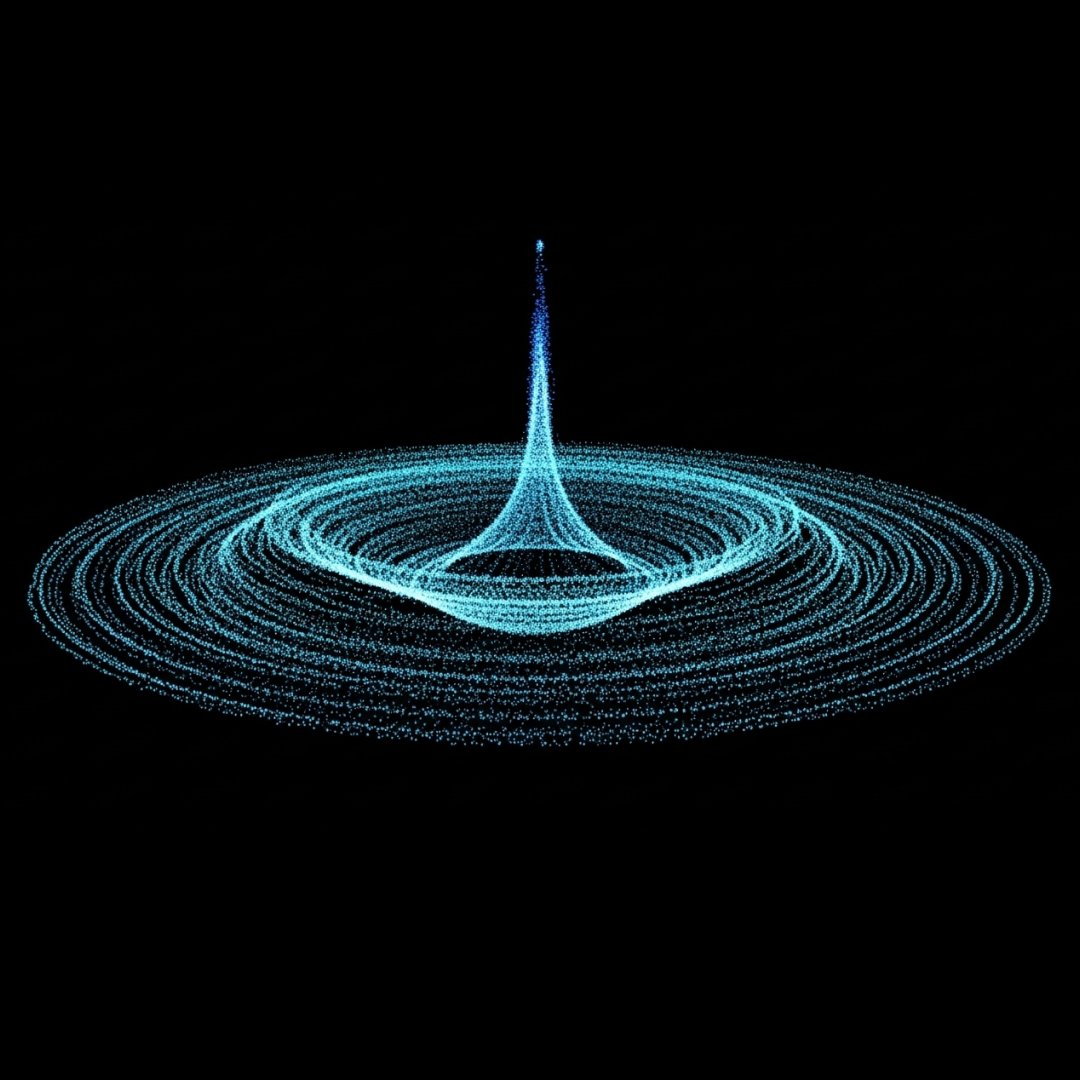
We’re announcing a major advance in the study of fluid dynamics with AI 💧 in a joint paper with researchers from @BrownUniversity, @nyuniversity and @Stanford.
Underrated life advice: Never stop being a good person because of someone else’s bad actions. Their choices reflect them. Yours reflect you. Integrity is keeping your character steady when the world gives you plenty of reasons not to.
There's likely a "sweet spot" for sauna temperature where dementia protection is maximized.
A recent (observational) study out of Finland found lower dementia risk with regular sauna at 90-99°C (176-210°F) but *not* for temps of 100°C (212°F) or more.
In fact, dementia risk for sauna temps higher than 100°C doubled compared to temps below 80°C during the first 20 yrs of follow-up.
Our paper was just published in the Canadian Journal of Neurological Sciences.
Up to 82% with neurological disorders have diagnosed mental disorders.
The divide between mental & physical health is imaginary.
Life is going so fast because you're not injecting enough silence into your days. Spend an hour reading or writing or walking in silence and watch how your day seems to double in duration
Saw a talk this week on the trippiest thing: bacterial cultures on skin induce immune responses. At Michael Fischbach's lab, they demonstrated immunizing mice against tetanus by just dabbing an engineered version of a harmless staph culture on its head. Unlike intramuscular vaccination, the antibody levels don't seem to demonstrate any waning, even after a year.
This is both scientifically very interesting (can vaccines just be... creams?), and an amazing reminder of how much we still don't know. We could have discovered this decades ago, but somehow never noticed until now.
The marble age is over. Melt the wax, or be left behind.
I believe that many people that are disappointed in vibe coding have the wrong expectations.
They are stuck in the traditional subtractive "coding as marble sculpture" point of view where every line of code you write is like a chisel strike. Mistakes are costly and debugging is like trying to glue chips of marble back on your (apparently not so) perfect sculpture.
However, vibe coding is additive, like lost-wax casting. You iterate by melting, bending, and reimagining many possible forms. Errors are cheap and fixing them is very much part of the process. The final result is cast in metal, but only after many cycles of refactoring.
Ultimately, like many things in life it all boils down to psychology.
ISTJ, INTJ, ESTJ, ISTP ⇒ you probably hate vibe coding since you love control, structure, and plans.
ENFP, INFP, ENTP, ENFJ ⇒ you probably love vibe coding since you love big picture, thrive on ambiguity, and open-mindedness.
Sorry all of you TODO-list fetishists, the vibe era is here to stay.