🚨#tweeprint time 🥳🎉
We studied how feedback-based motor control can drive rapid motor learning via plasticity in recurrent neural circuits. https://t.co/z2NyqwOuDq
w @mattperich@PresNCM@ClopathLab@JAlGallego
Pls read + RT + comment🙂
1/
The #aignostics team is heading to #ASCO2024!
Interested in hearing about how we’re transforming precision medicine with our industry-leading foundation model and advanced machine learning algorithms? Let’s connect on June 2-3: https://t.co/ObHQGsTrbl
#ASCO24#PrecisionMedicine
At #BernsteinConference2023 & interested in motor control? Visit poster III C06 (Thu, 12:30). @sunnyyduan@FieteGroup & I show a model that instantiates hypotheses about how different learning mechanisms in M1, cerebellum & integrative cortex help tackle challenging control tasks
Interested in the intersection between neuroscience and AI? Come to our workshop! We have a great program, which is getting better by the day, and Montréal is a great city with vibrant neuro and AI communities.
What could science at digital speed look like? 🚀
AI is poised to supercharge scientific discovery as we know it, by:
🔮 Exploring theories
🧪 Designing experiments
🔍 Analysing data
Find out how in @Nature. ⬇️ https://t.co/009jRhlgZz
🚨Tweetprint time! 🚨
We studied how de novo motor learning alters the underlying neural activity & affects motor adaptation using RNNs 📜 https://t.co/8Dq74VfXN5
Special thanks to coauthors @mattperich@PresNCM@JAlGallego@ClopathLab
Pls read 🧵 + RT! 1/n
Football players can tackle, get up, kick and chase a ball in one seamless motion. How could robots master these motor skills? ⚽
We trained AI agents to demonstrate these agile behaviours using end-to-end reinforcement learning.
Find out more: https://t.co/LkYtaMeUEd
MedMNIST (https://t.co/O2qjI379J2), the collection of 18 MNIST-like datasets for 2D and 3D biomedical image classification, has reached 100,000 downloads! Grateful for the recognition of our dataset in advancing research in this area. #MedMNIST#MachineLearning#AIforHealthcare
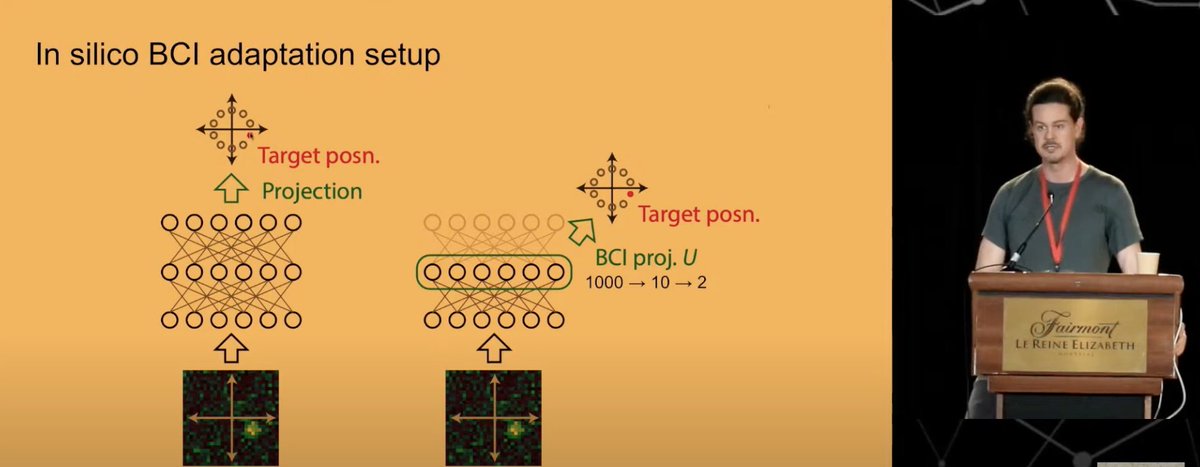
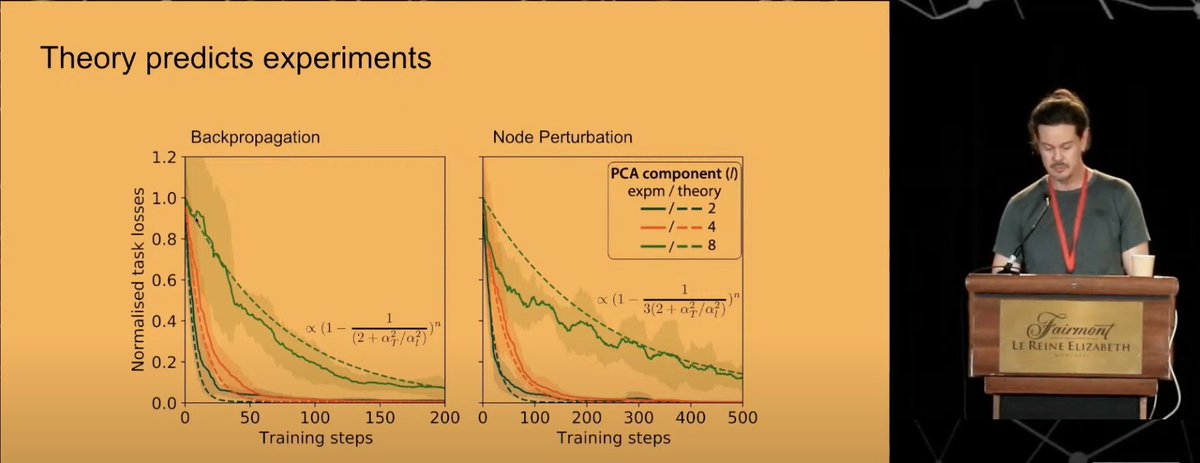
#cosyne23 highlight: Tim Lillicrap on BCI learning as gradient descent. I love this work: it elucidates, but it's also quite practical, as BCIs come online and we try to optimize them. Nice shout- outs to @neuroamyo and @g_lajoie_ 's work https://t.co/fWQsTqruMG
This is insane. Basically Germany has now said that postdoc contracts cannot last longer than three years, and after that, they have to be offered permanent positions (of which no one proposed how to generate). Even my own position now would seemingly be illegal. 🤦🏻♀️🙈
Preprint 🚨 Intriguing results outlining how gradient-based learning can be compatible with experimental neural perturbations during brain-computer interface learning. Setting up the stage for exciting future steps… @neuroamyo and A Payeur
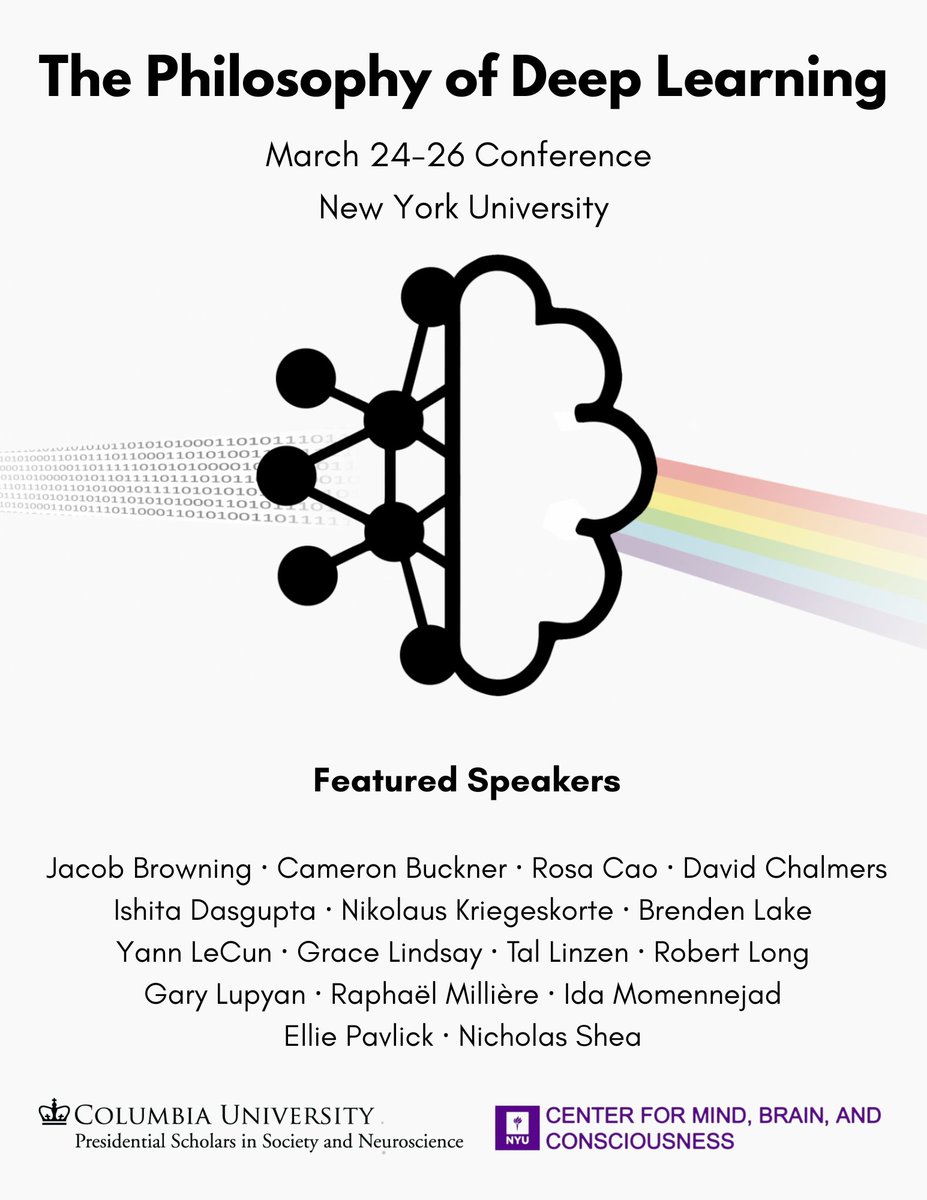
Very excited to share the final line-up and program of our upcoming conference on the Philosophy of Deep Learning!
Co-organized with @davidchalmers42 & @De_dicto and co-sponsored by @columbiacss's PSSN & @nyuconscious.
Info, registration & full program: https://t.co/TsxfG61hre
And #2: If you're at #cosyne2023 and are into motor control (esp. preparation), multi-region recordings, and models and cool stuff in general, stop by Bence's poster tonight!
Signed: Someone in FOMO mode
If you're at #cosyne2023 and are interested in motor control, learning, BCIs, RNNs and cool stuff in general, please stop by Jo's poster tonight!
Signed: Someone in FOMO mode
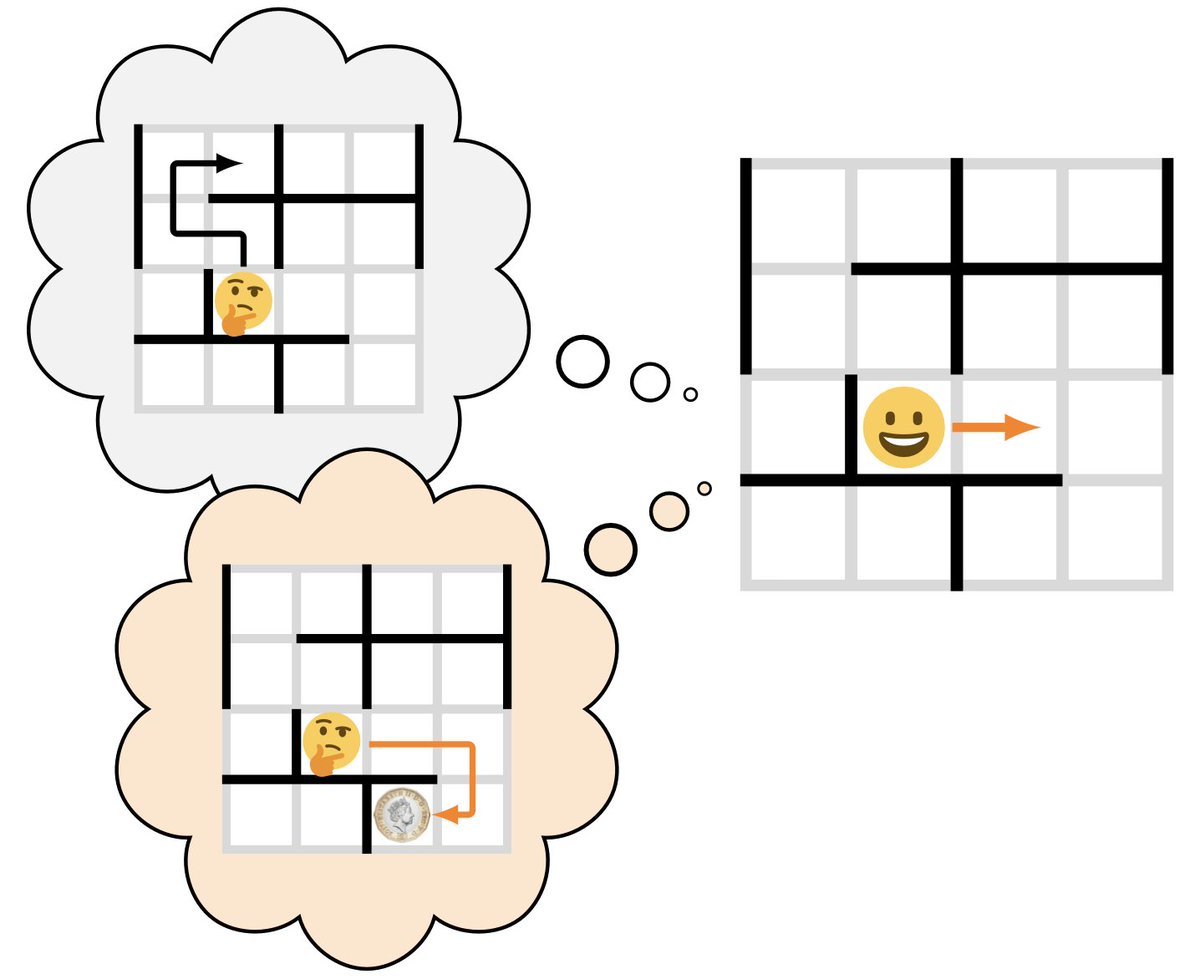
Super excited to share our new work showing that recurrent feedback from hippocampal replays to PFC can implement a form of planning that matches human behavior in a sequential decision making task!
https://t.co/cmBnaC2aGa w/ @GJEHennequin & @marcelomattar
Here’s a short #tweetprint about our latest work just published in Current Biology!
This is part of a fun collaboration with @NanNanS20, @neuroduque, @GuangyuRobert, @ostojic_srdjan and @jrochav
You can download the paper here:
https://t.co/GmqCE4tXCh
Are 'firing rates' and 'latent factors' simply the product of analysis & statistical modeling? Or are factors and rates well-defined mechanistically and central to understanding computation in recurrent spiking networks? @briandepasquale was curious.
https://t.co/66VqETCKZP
🚨 Preprint alert🚨
If you're interested in how changes in the network structure alter the state of dynamics in a recurrent network (without modifying other parameters) check out our new preprint w/ @vbuendiar (co-first), @EngelTatiana and @SelfOrgAnna.
https://t.co/qgq2lkGKgP