Sharing our new essay, out today at @PLOSBiology: "The problem with one-size-fits-all medicine: Biological sex and the aging immune system", where we argue that personalized medicine must account for #sex.
https://t.co/hpe7fSr2ku
TL;DR for AIxBIO and sex-specific data by Dr. Berenice Benayoun @BBParis1984:
AI models are only as useful as the data they are trained on. Yet female biology remains critically underrepresented and undermeasured in biomedical research.
Here’s what to know:
→ Even female-derived datasets often miss important physiological and life-history information needed to understand female biology.
→ Ovarian aging is one example. Despite the ovary’s importance beyond reproduction, key aspects of ovarian biology and aging remain poorly understood.
→ Closing these gaps requires more than increasing representation. We need richer, more detailed data on female biology across the lifespan.
→ AI cannot learn from biology that was never measured or recorded.
Read the full article:
https://t.co/GYxu8akZVO
PSA on women’s health R&D funding:
80% of our early supporters and those who were always the most inclined to help, have us on panels, made introductions, or fund us, have been men.
That is why it always feel special when
women got onboard.
The ratio does reflect % of capital allocators and positions of power but I don’t subscribe to the notion that the problem in the field is that more women are not calling the shots.
I think the biggest loss overall is that a lot of the high signal women who are in positions of power naturally will gravitate to other subjects that they are passionate about and that align with their current professional trajectory, regardless of if they have have had health issues or troubled fertility journeys.
Rightfully so, they want to shape the world. And if you have a seat at the table you will want to stay where the interesting conversations are. Where things are moving.
The women’s health conference circuit has become kumbaya, like women’s tech conferences. No offense to either, but really good operators don’t see any point in commiserating on slogans and how we just need to money. The big names come, give their talk, and then they leave.
I recalled being at a conference two years ago when a lot of people were incensed a female VC said that we need to improve startup quality as a lot of the deals she was seeing had zero scientific validity or a way to broach it. She was correct and vilified for daring to say so.
The space’s funding problem is never going to be solved if we don’t focus on the technical roadblocks (Please note that I am talking about biotech here. The area that gets you drugs like a GLP-1s to market). Any good life science investor will know that research and data is lacking and when they have many deals on the table, they have to calculate cost opportunities and what will benefit their fund. Female health deals probably score the lowest, unless of courses they need a token investment, so everyone can feel good about “supporting” women. One company to promote as changing all.
There is a lot of one ofs.
Even in philanthropy, when you talk about funding the space, people point you or imagine the problem is solved because they can reference Melinda Gates. Imagine AI safety, or rare diseases, or malaria research, only had one source and we thought the problem was solved because of that. Oh yeah and 250M is the available pool. That’s an SV series A!
I am doubling down on my belief that I think the biggest gains would come from getting women and men that are already proficient and experts of other high technical areas to get fascinated on the field as both a biological and engineering challenge to solve, not because you are a women (or not) but because the science is super cool and there are a lot of low hanging fruits that could benefit other areas of research.
I am biased but sex-specific biological data that we are missing would be a good start!
Don’t take it from me, as Dr. Bérénice Benayoun @BBParis1984 states in our recent publication @athenabiorg:
“You cannot model what you never measured”.
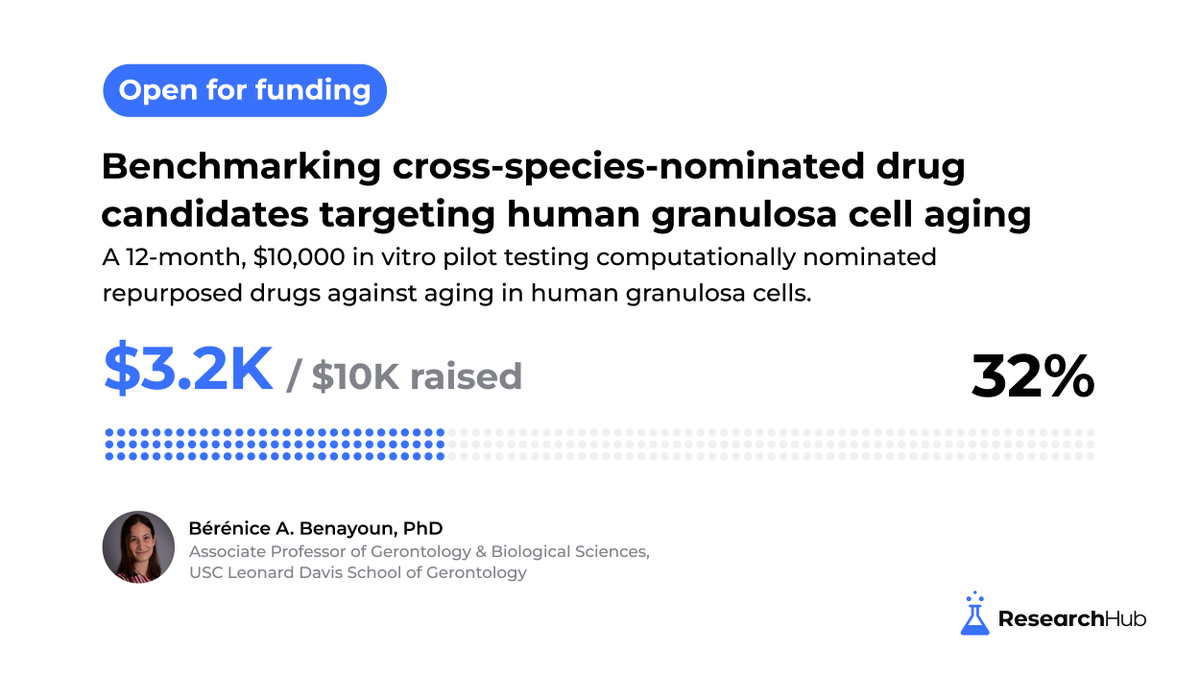
Associate Professor at @USCGero, @BBParis1984, is raising $10K on ResearchHub to test promising anti-aging drug candidates directly in human ovarian cells.
The project is already 32% funded. Help get it across the finish line.
Fund the research. 🧵
TL;DR: AthenaBIO is proposing a new research organization dedicated to collecting sex-specific biological data we believe will become a primary bottleneck on discovery for the era of AIxBIO.
The ambitious 5-year field-building plan that includes IP identification, data collection and analysis, and infrastructure to develop robust models to study diseases across female health.
Here’s what to know:
→ Female health data remains massively undercaptured. We are decades if not generations behind.
→ Some of the biggest DALYs come from diseases that disproportionately impact female health.
→ Unlocking the biology behind an organ like the ovary would lead to transformative breakthroughs.
We need sex-specific biological data as public infrastructure.
Read the full thesis through the link in our bio.
Bérénice Benayoun @BBParis1984 is doing some of the most interesting work in ovarian aging using computational biology.
Her recent research revealed a direct link between the microbiome (the collection of all bacteria and other microbes present) of the gut and ovarian health and function.
The article she wrote to accompany our thesis is a must read: https://t.co/KRbpwwSQ5h
Dr. Bérénice Benayoun @BBParis1984 explores why better AI in biology depends on better data - including sex-specific and life-history-aware datasets that can reveal biological relationships we have not been able to see before.
Read her article in AthenaBIO’s AIxBIO collection: https://t.co/GYxu8aks6g
So when it comes to models - not fashion ones - but AI ones that are going to cure disease - the best analogy of what I can see coming is the model will make its debut on the runway without pants, more precisely, without a skirt. https://t.co/ssUy95OQV2
Dr. Bérénice Benayoun @BBParis1984, emphasizes the need for richer, sex-specific and life-history-aware datasets to better understand female biology and build more reliable AI-driven models.
Read article: https://t.co/Tjt9hcxCRy
In the era of AIxBIO the fix isn’t just compute. We need biological data.
After building years in the field of women’s health I came to the conclusion that we are not going to get far without a serious and focused effort to get this.
We're proposing a new kind of organization with a 5-year field-building plan to close this gap:
→ IP identification across existing ovarian and female health research → Systematic data collection and analysis → Infrastructure to build robust models for the full landscape of ovarian health diseases
The goal: make sure the AIxBio revolution doesn't slow down because of a blind spot on biology we simply don’t have.
Today we are publishing a thesis for the era of AIxBIO.
Our call to action to decode female biology and generate the sex-specific biological data.
We propose a new research organization to tackle this challenge.
Read the thesis: https://t.co/lgrEiCo5zA
My lab has an internal model that has solved the thesis committee meeting scheduling problem, but we aren’t releasing it due to safety and alignment concerns.
🚨New preprint from the lab!🚨
LINE-1 (L1) #transposons become transcribed with #aging and #senescence, and are thought to contribute to #inflammaging. But what happens to a healthy, non-senescent human cell when #L1 turns on? https://t.co/jv9yMUecFw A 🧵, 1/7
@USCLeonardDavis
@dagarfield@USCLeonardDavis I only read the abstract but it doesn’t sounds like they looked at transposons. Most computational pipelines ignore or filter them out TBH…
🚨New preprint from the lab!🚨
LINE-1 (L1) #transposons become transcribed with #aging and #senescence, and are thought to contribute to #inflammaging. But what happens to a healthy, non-senescent human cell when #L1 turns on? https://t.co/jv9yMUecFw A 🧵, 1/7
@USCLeonardDavis
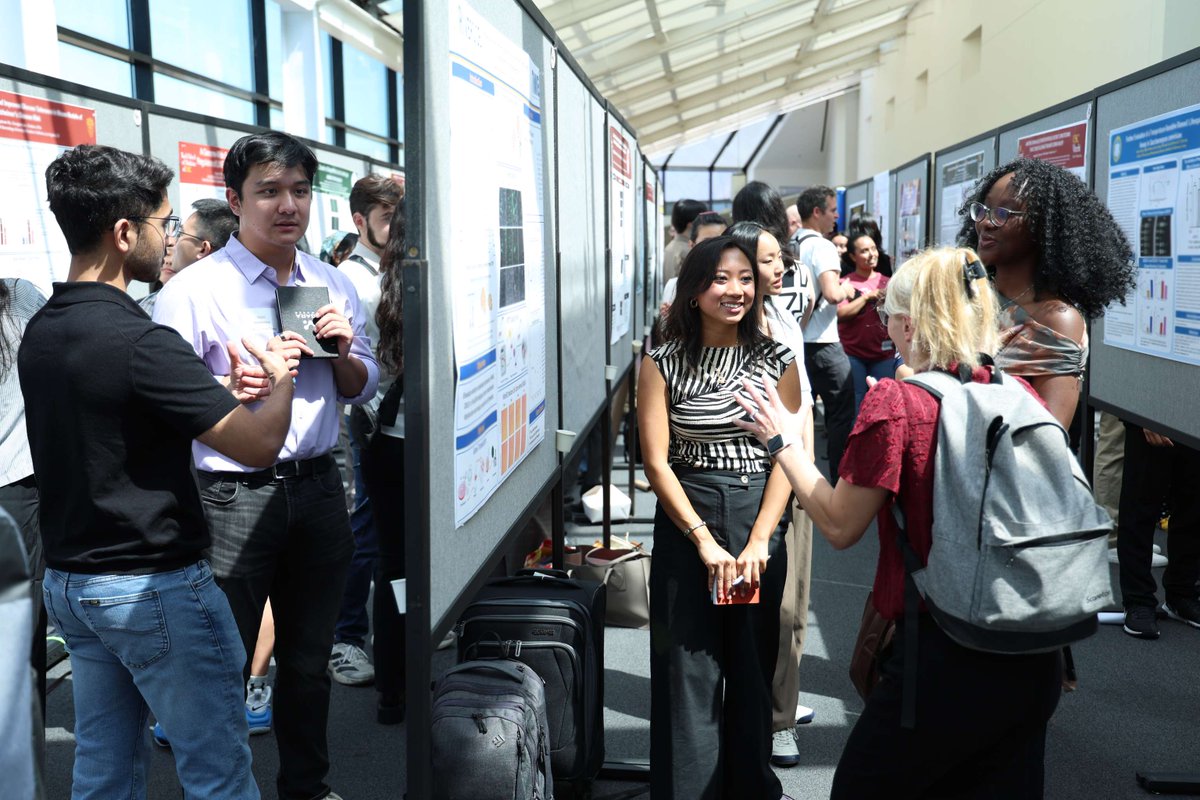
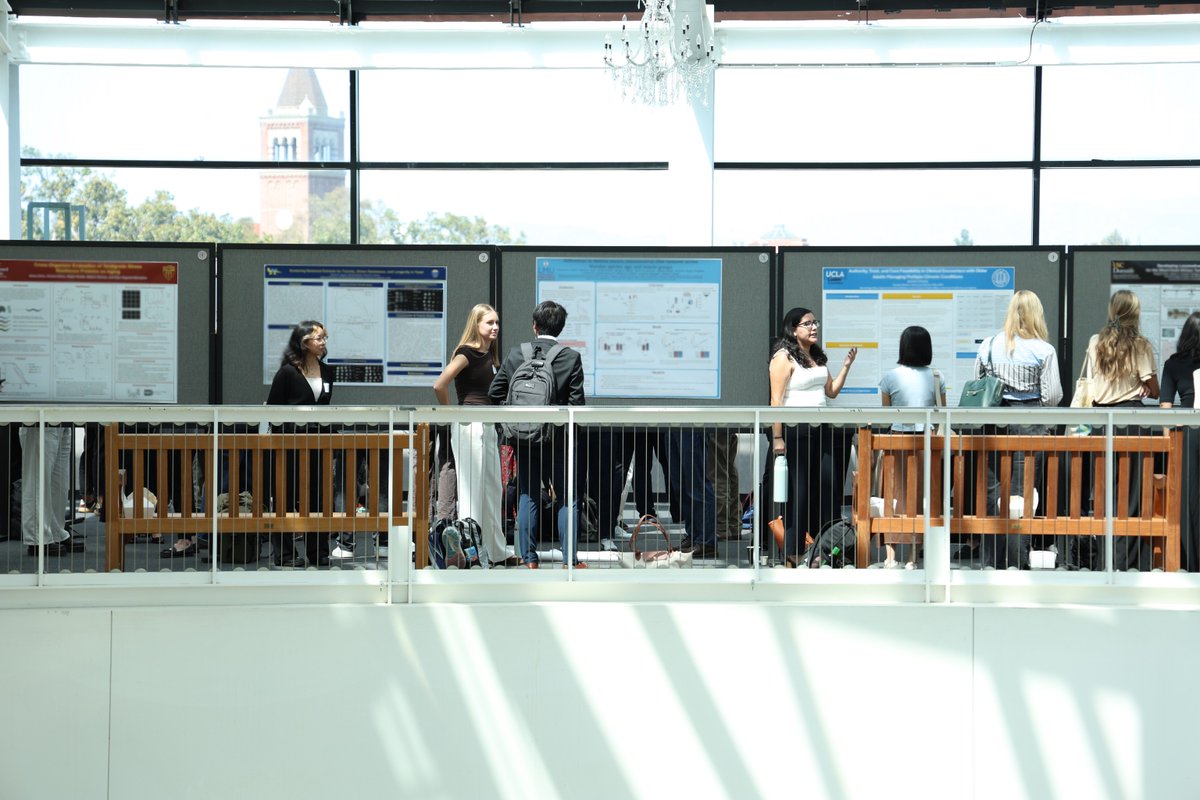
Thank you to everyone who attended and helped make GLAM 2026 a success! On Friday, September 4, geroscience trainees came together to share research, build connections and explore new ideas shaping the future of aging science.
#GLAM2026#Geroscience#Gerontology#AgingResearch
@AdamsBioAging@kapahi_pankaj@USCLeonardDavis Thank you Peter!
We were very puzzled by our results initially and it sounds like the cell context is important - so deep senescence must do something synergistic!
The takeaway 💬: #TEs are not universal triggers of aging. Which TE is expressed, in which cell, and in what cell state matters - #TE derepression with aging will drive a complex panoply of biological signals and not just a generic “TE response.” 6/7