NEW: Inside @PsiQuantum's Silicon Photonic Chipset
*Never-Before-Seen*
With Er-Xuan Ping, SVP, Barium Titanate (BTO) Development
Backdrop: the U.S. government just announced a $2B push into domestic quantum computing manufacturing - but what does that actually fund?
The @CommerceGov Department recently awarded PsiQuantum $100M to accelerate development of BTO, giving a rare look into the underlying manufacturing stack required to scale fault-tolerant quantum computing.
We profiled PsiQuantum last September following its $1B Series E, including how the company produces the world’s highest-performing optical switch - a core component of its silicon photonics platform.
PsiQuantum is currently the only company or institution in the world manufacturing this BTO material for optical switches at 300mm scale.
While the company built this silicon photonics platform for fault-tolerant quantum computing (FTQC)*, the implications may extend far beyond quantum itself.
As AI data centers increasingly shift from copper to optical networking, PsiQuantum’s photonics stack could also become foundational infrastructure for next-generation AI systems.
*Fault-tolerant quantum computing (FTQC) refers to quantum computers that can continue operating accurately even when individual quantum bits (“qubits”) are noisy or error-prone.
Shoutout to @PeteShadbolt
There are two types of shipbuilding partnership announcement:
1️⃣ The whispy vapor of a software layer that will “save shipbuilding” without getting dirt on your loafers
2️⃣ The union of tried and true partners - each specializing in distinct parts of a ship’s stack
🇺🇸🚀 Then there is what we are announcing today.
Today, we reveal first how we’re moving metal differently. “Distributed shipbuilding” will remain a valid buzzword for as long as we don’t have enough shipbuilders. With workforce stretched thin around yards, Blue Water has distributed some of our most complex build activity.
In Georgia, at @CaterpillarInc engine factory, we build our marine diesel engines. Nothing special to see here - almost all our competitors use Cat too - but what comes next will get your attention.
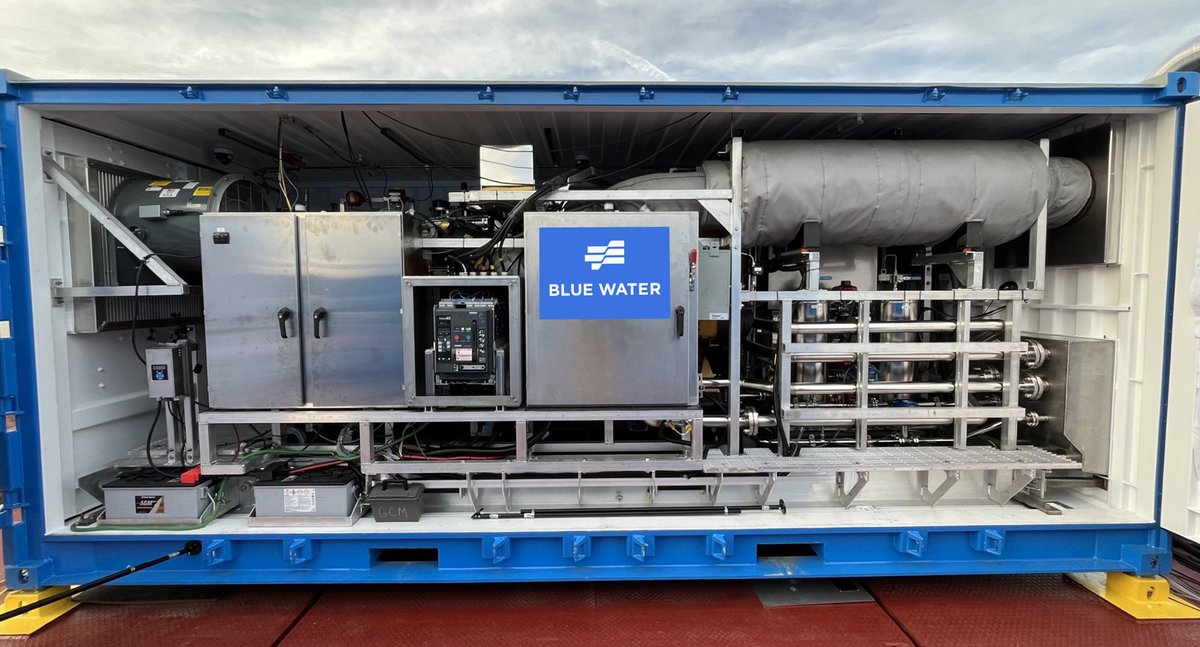
In Michigan, at Precise Power Systems, we assemble mini ship engine rooms in 20’ containerized engine modules.
That’s what you’re looking at in this picture.
Blue Water has been partnered with Cat and Precise since day 1 - because the first problem we attacked is ship engine room autonomy.
Architecting our unmanned ships around a micro-grid of containerized engine modules brought the HM&E reliability the Navy has long sought, but it accidentally unlocked a distributed shipbuilding hack too. Now, we can assemble the engine rooms - with all the cooling, cabling, and sensors this is the most complex part of the ship, requiring the most labor per square foot - far from the shipyard.
Instead of taxing overstretched shipyard workforce, we tapped Michigan’s power systems expertise just outside Detroit to assemble our engine rooms.
Next, we took a bet on @ValstadShip, who has been working with Conrad to automate micro panel assemblies and other welding tasks. Conrad has a fully automated steel panel line, and a robust network of local suppliers, cutters, and integrators - Valstad adds another arrow to that quiver.
Last, and most importantly in today’s announcement, we introduce @tulipinterfaces. Tulip is a commercially scaled Manufacturing Execution System (MES), today running hundreds of factories around the world.
“Commercial MES” may sound generic - let’s put it in context.
Many of the “my software saves shipbuilding” announcements you’ve seen in your feed are from companies who know software and know the customer. But they have only recently started identifying as manufacturing companies.
Tulip started as a manufacturing software play before it was cool, forged first at MIT, and then on factory floors around the world.
We use Tulip to run the whole show. From Massachusetts and Michigan to the dirt of the yard in Louisiana where Liberty is under construction.
Oh and all this flows into Conrad, with 5 yards and 1,100 workers who built a few dozen vessels last year.
Let’s build the future fleet.
American shipbuilding needs a revolution. A catalyst to bring maritime dominance back to our shores.
That catalyst has arrived with the growing demand for autonomous ships.
“We’re creating a production system that can move at the pace required for a modern maritime industrial base,” says CEO & Co-Founder @rylanhamilton.
We can leverage shipyard capacity that exists today across many commercial yards to build this class of ship, allowing us to distribute shipbuilding and manufacturing across leading partners without opening new yards. Today, we’re proud to announce the companies joining us to help make that vision possible.
The engine module shown here is one example of this strategy in practice. @CaterpillarInc provides the proven marine power systems, while Precise Power assembles and tests fully integrated engine modules before shipyard integration. @tulipinterfaces connects manufacturing operations with real-time production data. @ValstadShip advances robotic fabrication and modular structural production.
Together, these partnerships are transforming shipbuilding from a linear, yard-centric process into a coordinated production system capable of building autonomous vessels faster, more efficiently, and at greater scale.
This is the future of shipbuilding.
And this is what Blue Water is building toward, starting with Liberty Class.
Learn More 👉 https://t.co/mwfLwOpZEn
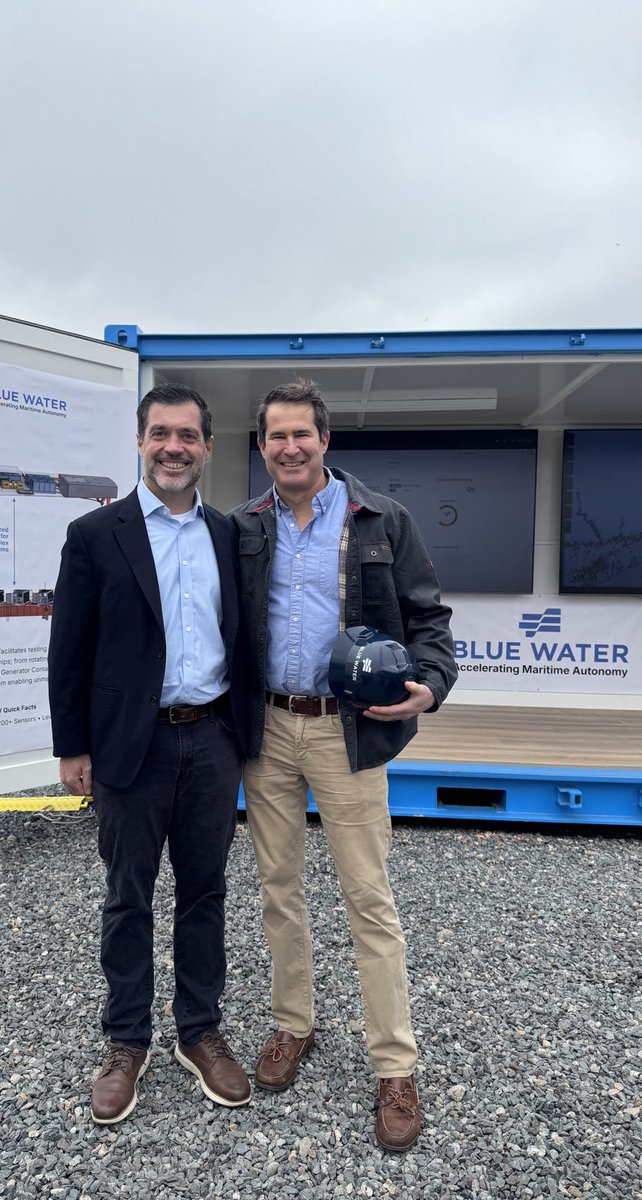
Today, we hosted @RepMoulton to our test site in New Bedford, MA.
Seth checked out our 170 ton autonomous test vessel, inspected an unmanned ship engine room, and talked about his Navy modernization priorities.
Massachusetts’ ecosystem - from robotics engineers in Boston and Cambridge to marine operators and technicians in New Bedford - has let Blue Water move with incredible speed.
We’re proud to work with leaders like @sethmoulton focused on modernization to support the warfighter.
Introducing: Liberty Class
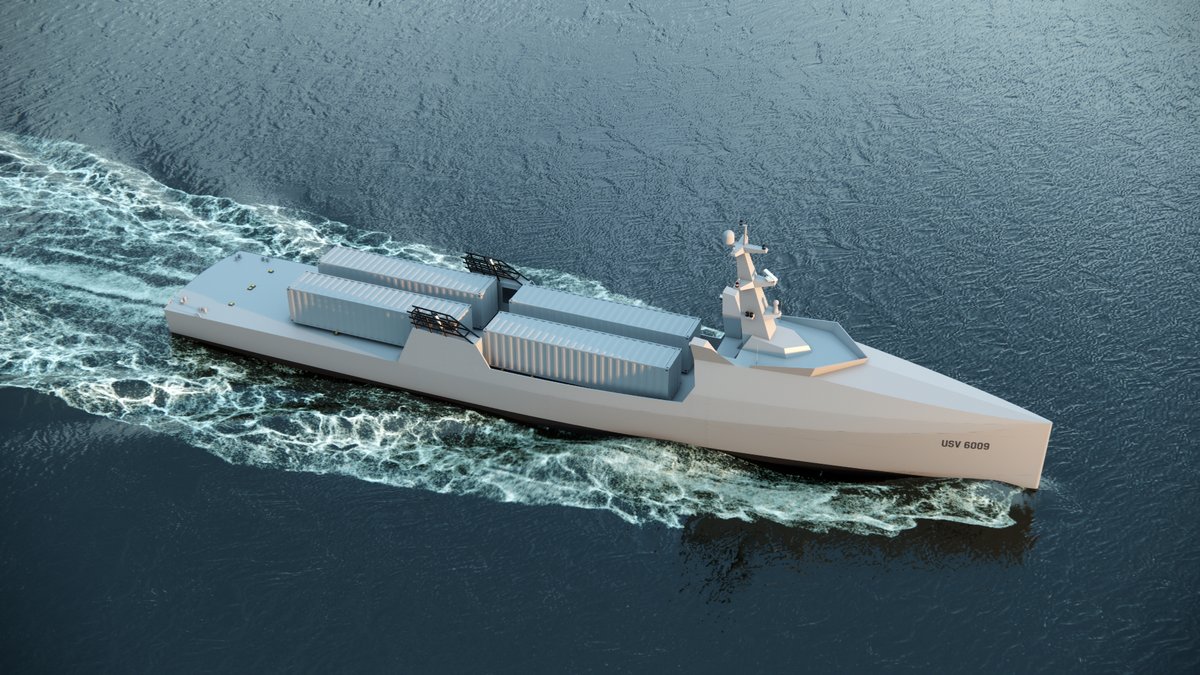
Today, we’re proud to announce our first vessel: the Liberty Class, a 190-foot autonomous ship.
In partnership with @damen, we’re delivering the next generation of naval capability with autonomous ships that are not only advanced, but reliable and producible.
Our collaboration began with Damen’s Stan Patrol 6009 hull, a design proven in demanding conditions across the globe. From that foundation, we re-engineered the vessel from the inside out, integrating Blue Water’s autonomous architecture while meeting the @USNavy need for endurance and reliability.
Together with Conrad Shipyard—whose five yards and 1,100-strong workforce deliver more than 30 ships per year—we’re moving from design to production, where technological innovation and legacy shipbuilding expertise converge to deliver operational autonomy at sea.
Learn more about the Liberty Class on our website (page linked below ⤵️)
Learn why @linear and @cursor_ai are now integrated, and how to best use these coding agents in any environment, in this episode of The New Stack Agents.
Feat. @tommoor and @milichab
https://t.co/wMCUPR6teu
OpenAI is now working on a LinkedIn competitor.
The OpenAI Jobs Platform is a hiring platform that will "use AI to help find the perfect matches between what companies [and governments] need and what workers can offer," per a new blog post by Fidji Simo, its CEO of Applications.
Term Sheet is hitting the airwaves!
After years in your inbox, our newsletter is coming to life in a brand-new format—introducing the Term Sheet Podcast! First up: @WillHurd, Chief Strategy Officer at Chaos Industries.
Listen/watch episode 1 here: https://t.co/nRqNZTNZ1P
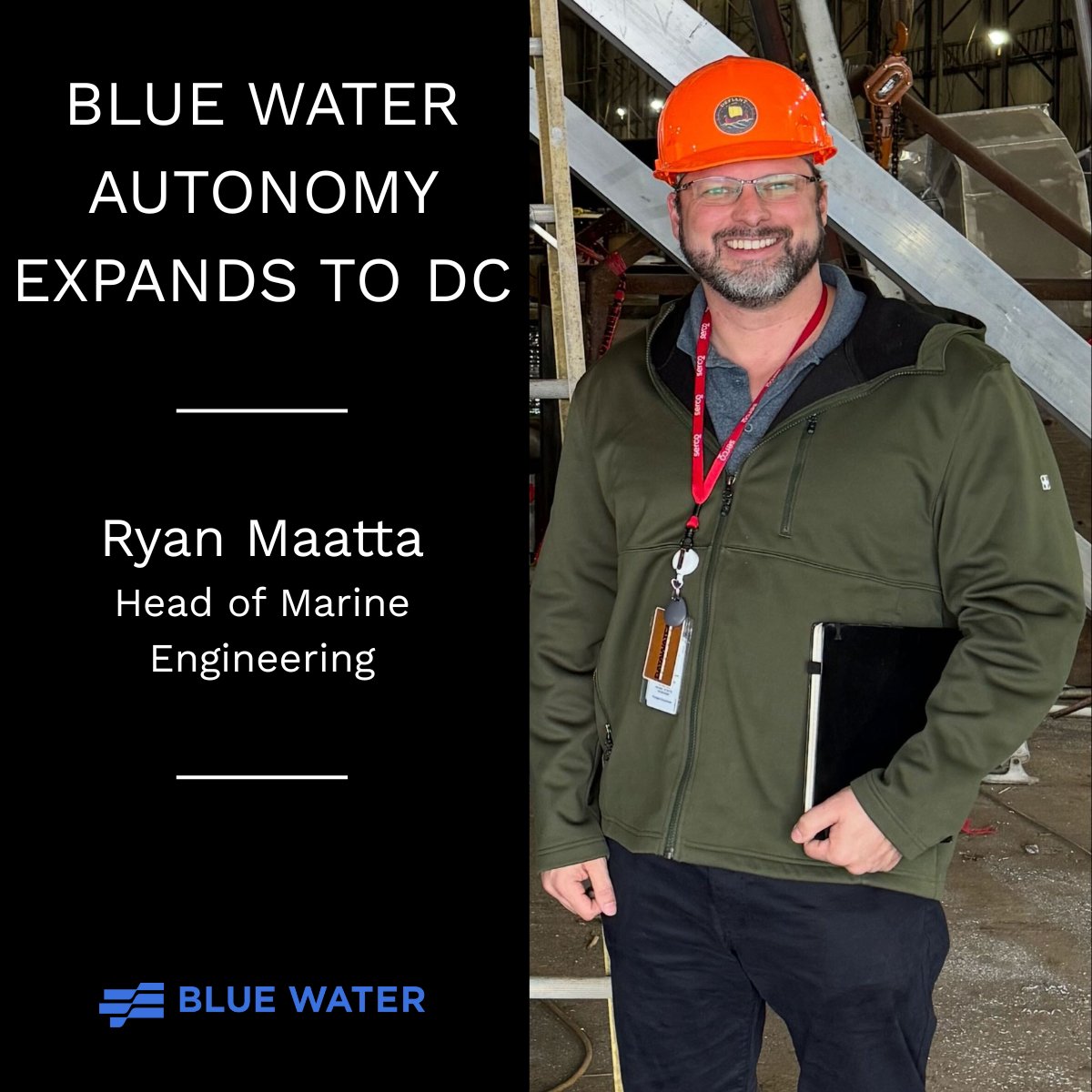
This week, we opened a permanent presence in Washington D.C. growing our team and opening our third office.
We are pleased to welcome Ryan Maatta, who will lead Blue Water's marine engineering team. Ryan has deep experience from oil and gas to defense and unmanned.
Our new D.C. office will host this growing team - keep an eye on job postings 😎 - and serve as our forward operating base in the nation's capital just steps from key Navy and Congressional leaders.
Damn the torpedoes 🇺🇸
News: Hebbia has made its first acquisition, of FlashDocs, a slide generator and fellow NYC-based startup.
The move solves a last-mile problem for @hebbia users, CEO @gsivulka tells @UpstartsMediaCo exclusively, in a fiercely competitive AI app race.
https://t.co/ecMt1xHKRi
Today, we're announcing our acquisition of @FlashDocs, the leader in generative slide deck creation.
FlashDocs automatically turns LLM output into fully branded slide decks, creating presentations in seconds, not hours.
The GitHub Copilot extension is getting open sourced, with an MIT license, and we can keep building useful, powerful AI together and learn from each other. Feels good man.
1. Coding agent: We are taking GitHub Copilot from being a pair programmer to peer programmer. You now have a full coding agent built right into GitHub. You can assign it issues – whether it’s bug fixes, new features, or ongoing code maintenance. And it will complete these tasks autonomously.
Built around an integrated, secure and fully customizable development environment powered by GitHub Actions, the Copilot coding agent is amplifying human developers with trust by design. And these protections aren’t just for us: as the new home of AI agents, we’re making the same primitives available to partners to ensure an open ecosystem for agentic peer programming.
@github@Minecraft Using state-of-the-art models, the agent excels at low-to-medium complexity tasks in well-tested codebases – adding features, fixing bugs, extending tests, refactoring code, improving documentation. It’s all about keeping you in the magical flow state ✨ https://t.co/HUvf3C7X0l