This is the century of biology.
We can create synthetic neural networks inside of living cells.
We can turn skin cells into egg cells and use them to create babies.
We can generate drugs by prompting a digital superintelligence that runs on the cloud.
We can edit our genomes using clear vials of liquid containing billions of $ in R&D.
We can prevent cancer by importing synthetic genes from exotic whales, sharks and mole rats.
We can politically sway an entire state of the continental United States to pass legislation to enable transhumanism.
We can skip school to work on the world's most important problems, thanks to places like @theresidency, @1517fund, @osvllc, @HummingbirdVC and @tylercowen’s Emergent Ventures.
And to get all of these people together in one room?
Incredible.
Was super fun to co-host this Aging x SynBio salon at the home of the gracious MIT Professor @manoliskellis along with Addy Cha from @ekkolapto.
Among many names, I wanted to give a special thanks to the following people for coming on short notice and helping to make the evening so wholesome:
- Prof Vadim Gladyshev @jpoganik from @gladyshev_lab at @harvardmed
- @biogerontology from @InSilicoMeds
- Prof Ron Weiss from @MIT
- @agupta from @ycombinator
- @ninon_lize from MIT’s @medialab
- Elena Sergeeva from the @wyssinstitute, @tufts and @foresightinst
- @jasoncrawford from @rootsofprogress
- @nick_linck from @theresidency
- @brad_w_e, Merrick Pierson Smela and @amplesa from @geochurch’s lab
- @parmita from @precigenetics
- @realNathanCheng from the @LBF_org and @vitalismorg
- @dullunlivin from The Alliance for Longevity Initiatives @theA4LI
Soon, I will retire from hosting these salons & dinners to focus on my research. But in the meantime, I hope these are helpful.
The $100B bottleneck in genomic medicine isn't payload design. It's delivery physics
We have spent two decades engineering breathtaking molecular payloads: base editors, prime editors, synthetic circuits, oncolytic vectors
Yet 90% of them hit a brick wall in the clinic because IV delivery is a thermodynamic compromise:
- LNPs and AAVs pool in the liver and spleen
- Reaching therapeutic titers in dense solid tumors, myocardium, or lung parenchyma triggers lethal systemic toxicity
- $2M+ per patient manufacturing costs simply to waste 99% of the drug off-target
Instead of spending another ten years trying to engineer synthetic biological tropism from scratch, the answer is already sitting right in front of us:
Interventional access
Catheter-directed delivery, isolated organ perfusion loops, and image-guided parenchymal injection
By delivering high-titer payloads directly into the vascular bed or tissue architecture of the target organ:
- You bypass neutralizing antibodies entirely
- You drop required dose by 10x to 100x, collapsing COGS from millions to thousands
- You turn "failed" systemic payloads into local curative therapies
We don't need better liver-clearing AAV capsids. We need interventionalists with catheters and needles delivering 1% of the dose directly into the tissue bed
The scalpel is dead. The operating theatre will soon become a delivery service for gene therapies
Of the 8 billion humans on earth, almost everyone is busy with civilizational maintenance: food, water, shelter, energy, healthcare and companionship.
The world can only spare a tiny sliver of GDP for wildly ambitious, absurdly risky, multi-decade bets.
Last year, I hosted a dinner for a handful of giga-brained obsessives crazy enough to think they can alter the trajectory of the human race.
William Shi folds DNA into origami at the nanometer scale. He spent two hours describing one of his projects to me, and I've thought about it every day since.
Picture a nanorobot made of DNA, shaped like a tiny spider. Eight short legs underneath, and two long arms attached to a rigid body. Each arm is tipped with a glowing fluorophore.
Set the spider down on a mystery molecule you're trying to identify.
...It starts to walk.
But it can't step just anywhere. Its legs can only grab onto specific atoms along the molecule. A short step over a tight bond, a longer hop over a loose one. And every time it takes a step, the long arms above sway with its rigid body, so the gap between the two glowing tips widens or narrows proportionally to the length of each step.
Take a picture and measure the distance between the two glowing tips. Rinse so the spider lifts its leg and plants the next. Take a photo. Rinse again. Take a photo... Stay with me.
Now, match the string of steps, angstrom by angstrom, against the length of every known chemical bond to reconstruct the chemical structure of the mystery molecule.
Then suspend trillions of these nano spiders in a bathtub of solution, all crawling at once over trillions of mystery molecules.
Congratulations. You've just built the highest-throughput molecular sequencer in the universe.
Take a drop of blood, give it to the spiders, and seconds later you know every molecule in it. Alien tech designed by a species of sentient arachnoids.
That was one conversation. At one end of one table.
Also in the room: Ron Weiss turning living cells into programmable computers, with logic and memory written into DNA. @omarabudayyeh & @jgooten solving genome engineering. @MichaelShadpour porting DNA-repair genes from 200-year-old bowhead whales into humans. Merrick making eggs and sperm from skin cells. @TheMitoQueen recapitulating the evolution of complex life on a bench in Cambridge. @markkhrapko building brain-machine interfaces that read and write without opening the skull. @manoliskellis building foundation models for all of biology. @koerding simulating brains. Amy Wagers & @MichaelFloreaX solving aging itself.
Each of these crazy, ludicrous, beautiful ideas is being worked on by people who have chosen to disappear into a cave of magic and wizardry for decades.
I've since realized that these dinners only pull them out of their caves and waste that oh-so-scarce sliver of GDP. Hosting this was a crime against humanity.
I have thus ceased hosting dinners for giga-geniuses, effective immediately.
Thank you to David Horne, Heidi Erlacher and the @FenwickWest team for supporting my expensive tastes. ;)
Of the 8 billion humans on earth, almost everyone is busy with civilizational maintenance: food, water, shelter, energy, healthcare and companionship.
The world can only spare a tiny sliver of GDP for wildly ambitious, absurdly risky, multi-decade bets.
Last year, I hosted a dinner for a handful of giga-brained obsessives crazy enough to think they can alter the trajectory of the human race.
William Shi folds DNA into origami at the nanometer scale. He spent two hours describing one of his projects to me, and I've thought about it every day since.
Picture a nanorobot made of DNA, shaped like a tiny spider. Eight short legs underneath, and two long arms attached to a rigid body. Each arm is tipped with a glowing fluorophore.
Set the spider down on a mystery molecule you're trying to identify.
...It starts to walk.
But it can't step just anywhere. Its legs can only grab onto specific atoms along the molecule. A short step over a tight bond, a longer hop over a loose one. And every time it takes a step, the long arms above sway with its rigid body, so the gap between the two glowing tips widens or narrows proportionally to the length of each step.
Take a picture and measure the distance between the two glowing tips. Rinse so the spider lifts its leg and plants the next. Take a photo. Rinse again. Take a photo... Stay with me.
Now, match the string of steps, angstrom by angstrom, against the length of every known chemical bond to reconstruct the chemical structure of the mystery molecule.
Then suspend trillions of these nano spiders in a bathtub of solution, all crawling at once over trillions of mystery molecules.
Congratulations. You've just built the highest-throughput molecular sequencer in the universe.
Take a drop of blood, give it to the spiders, and seconds later you know every molecule in it. Alien tech designed by a species of sentient arachnoids.
That was one conversation. At one end of one table.
Also in the room: Ron Weiss turning living cells into programmable computers, with logic and memory written into DNA. @omarabudayyeh & @jgooten solving genome engineering. @MichaelShadpour porting DNA-repair genes from 200-year-old bowhead whales into humans. Merrick making eggs and sperm from skin cells. @TheMitoQueen recapitulating the evolution of complex life on a bench in Cambridge. @markkhrapko building brain-machine interfaces that read and write without opening the skull. @manoliskellis building foundation models for all of biology. @koerding simulating brains. Amy Wagers & @MichaelFloreaX solving aging itself.
Each of these crazy, ludicrous, beautiful ideas is being worked on by people who have chosen to disappear into a cave of magic and wizardry for decades.
I've since realized that these dinners only pull them out of their caves and waste that oh-so-scarce sliver of GDP. Hosting this was a crime against humanity.
I have thus ceased hosting dinners for giga-geniuses, effective immediately.
Thank you to David Horne, Heidi Erlacher and the @FenwickWest team for supporting my expensive tastes. ;)
We built the lab that's able to go from AI-led drug design to data in 24h.
GPT-8 won't be bottlenecked by intelligence. It needs a biological compute layer.
This is Capable. We're turning AI capabilities into human capabilities--starting with short-sleeper peptides.
I’m so excited to share this update on @Conception –
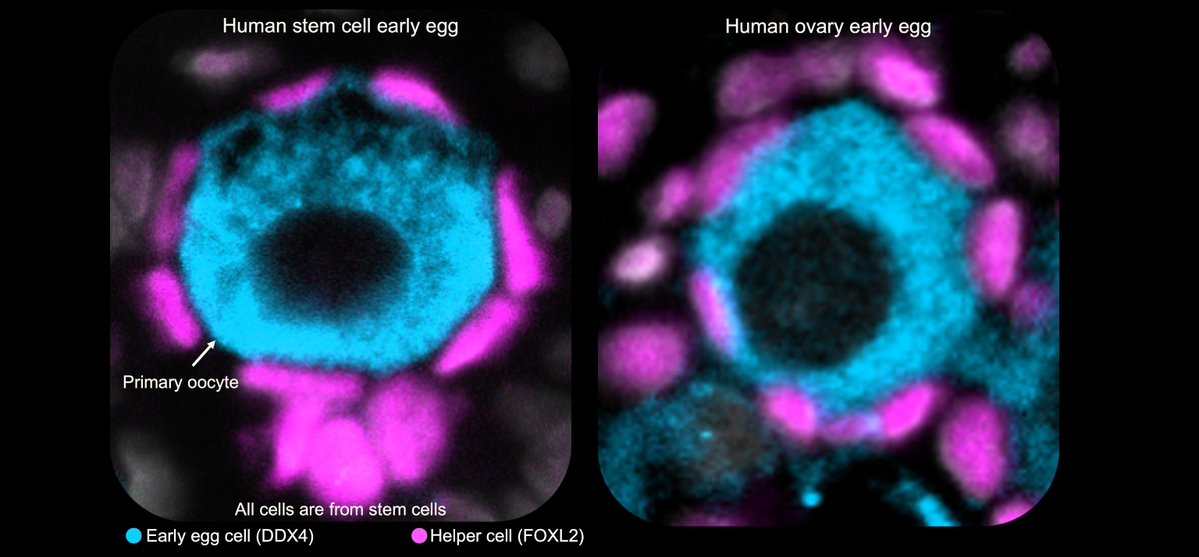
We’ve generated the first early human eggs derived from stem cells.
This is a big deal -- the potential to redefine fertility is real.
Set is ready @ElonMusk
We built it 25min from downtown Austin and can shoot anytime in the next 7 days on 1h notice.
Humanity is on the verge of becoming a multi-planet species and spacefaring civilization.
My goal with this interview is to help people viscerally feel what that future is going to look like and get everyone excited to help build it.
Tune into the latest episode of the @FrameshiftsPod with @BenjaminAryaMD to hear Nautilus Co-Founder and Chief Scientist Parag Mallick discuss how and why he founded Nautilus:
https://t.co/zMyeEHMPnq
In the episode you'll also hear how the Nautilus Proteome Analysis Platform is designed to enable researchers to achieve complete proteomic analysis without��tradeoffs between coverage and detail.
great to speak with @BenjaminAryaMD recently about the rhyming of biohackers and rare disease and the increasing commoditization of drug discovery through these groups.
In my conversation with Peter Diamandis, he described a future where AI can model human cells well enough to simulate individual biology. Some experts doubt it, others think it is close. The complexity is enormous, but AI may get us there. @PeterDiamandis