Check out this great work on mitochondrial mutations in aging from @rahulg603, @VamsiMootha, and co!
Adds to my growing conviction that mtDNA mutations are not key drivers of aging as once thought...
We took ~750,000 whole genomes and found the putative mechanism by which mitochondrial DNA mutations accumulate with age in blood. Spoiler: we think these mutations arise by replication error and tag age-related clonal hematopoiesis. Read @Nature https://t.co/Xlc0yIDgG1
Uno Wallet (@myunowallet) replaces Apple Wallet on iPhone and helps you pay with the right card every time. Add your cards, double-click to pay, and Uno picks the best one.
Congrats on the launch, @RuleSaket & @MordiShadpour!
https://t.co/2lH6wF6Haj
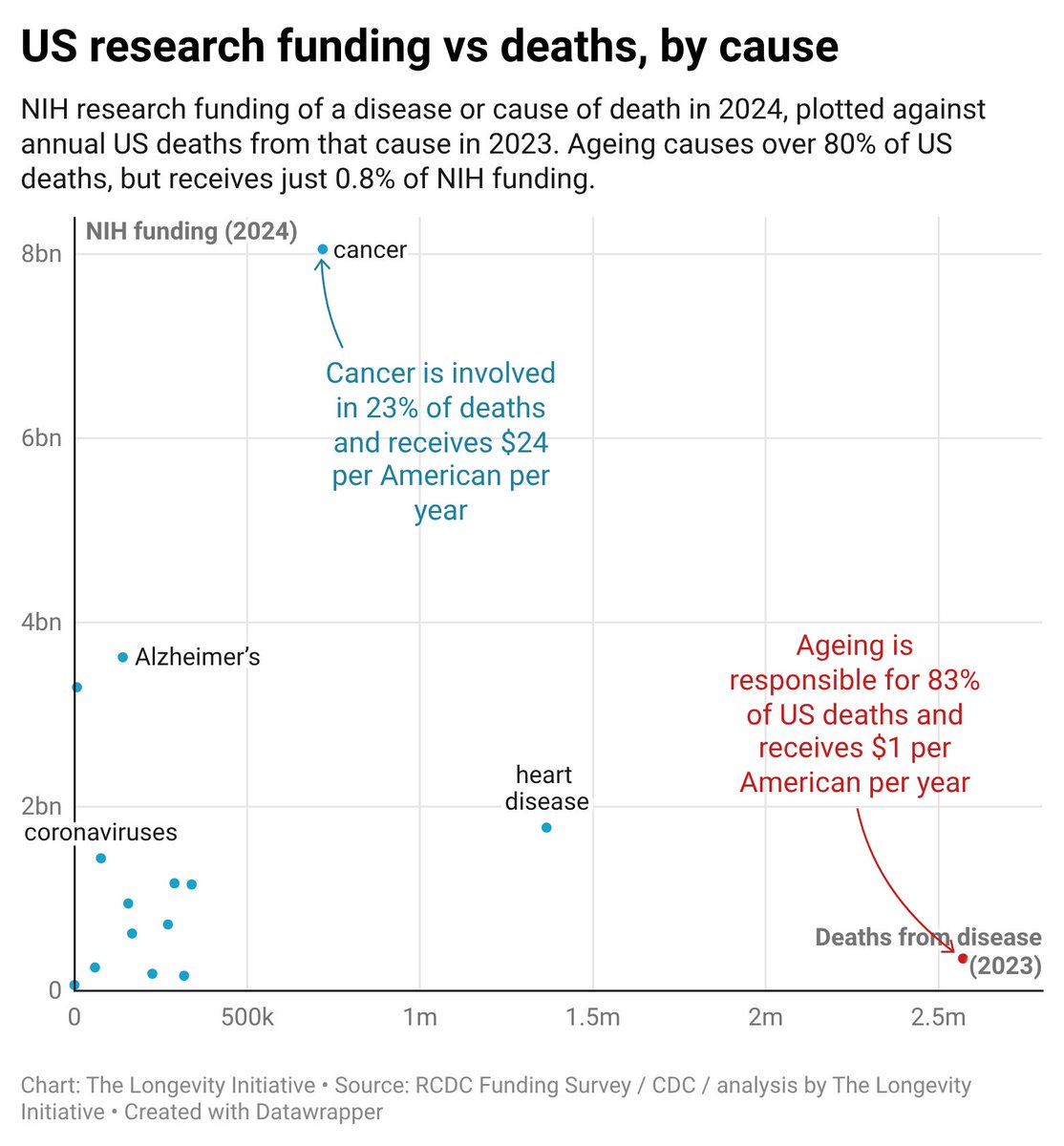
Does NIH research funding track what actually kills Americans?
Building on @theA4LI’s new report, we ran the numbers: and ageing fares worst.
Ageing causes 83% of deaths, yet receives just 1.2% of the research funding per death that cancer does—around $1 per American per year.
1/ How long do you want to live?
For most of human history, aging was inevitable.
It's now solvable.
Apply for LBF8 cohort program: longbiofellowship dot org
/THREAD🧵
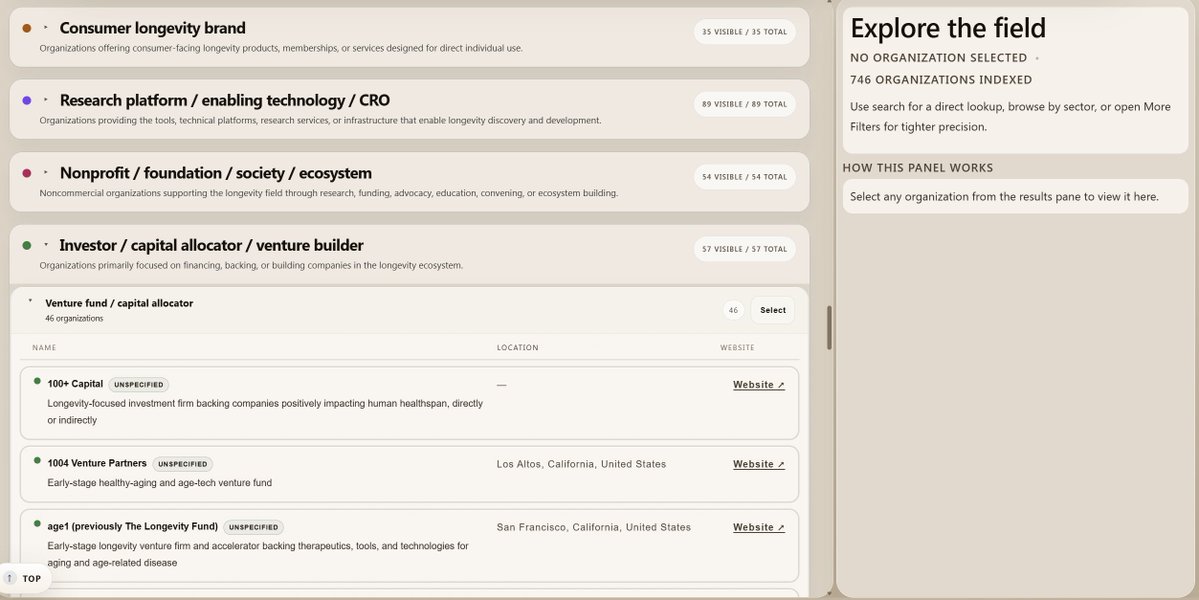
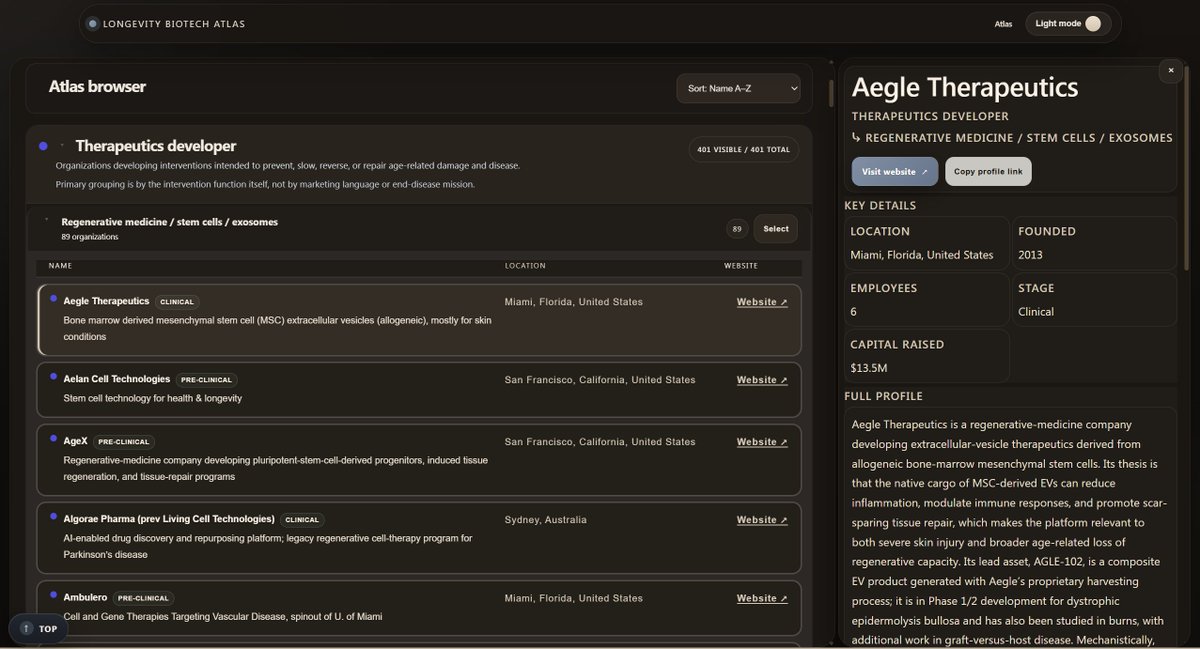
I’m excited to launch the Longevity Biotech Atlas, a personal project mapping 700+ organizations across the aging and longevity ecosystem.
Longevity biotech is moving fast.
A lot of the public narrative has centered on GLP-1s, peptides, biohacking, and consumer health optimization. But beneath that, a much deeper ecosystem is forming: companies, labs, investors, and non-profits working on core technologies that will enable fundamentally new forms of measurement and rejuvenation.
The field is growing quickly, but it is still hard to answer basic questions:
Who is building what?
Which areas are crowded?
Which technologies are underexplored?
Where should founders, scientists, investors, and operators be paying attention?
To help make the space easier to navigate, I synthesized public information on 700+ organizations—ranging from therapeutics developers, diagnostics, investors, and more— into a single database.
You can explore the atlas at the link in the comments.
This is still an early version, and I’ll be adding more over time: new organizations, personal accounts, bookmarks, and better ways to track how the field is evolving. My hope is to build this out into a core tool for people trying to understand, build, fund, or work in longevity.
If you’re interested in aging biology, biotech, investing, company formation, or the future of medicine, follow along. I’ll be sharing updates, maps of different subfields, and analyses of where the biggest opportunities and gaps may be. Let me know what you find useful!
Reversible cryopreservation has the potential to rescue every dying person on earth, until a cure can be found for them.
Grateful to the @foresightinst for making this project possible 🙏
Reversible cryostasis sounds like science fiction, but the biological building blocks to make it real may already exist in nature, in organisms that have survived extreme cold for millions of years.
We support @MichaelShadpour from @wyssinstitute as he systematically mines nature's cold-tolerance toolkit for human applications.
The goal: to screen 12,000 candidate antifreeze proteins sourced from diverse organisms across the tree of life, identifying which ones improve human cell survival under freezing and ultra-cold conditions.
Findings could advance the biological toolkit for organ banking and long-term cell storage, and lay the foundation for reversible cryostasis.
The drylab king is dead, long live the wetlab king!
As AI agents are rapidly replacing the drylab component of aging research. We need open-source biology for the next generation of wetlab robots to speed up our work on extending healthy human lifespan
https://t.co/CCluq9wzG7
Getting old shouldn't be viewed as inevitable, just because it happens to everyone. It's a disease that kills over 100,000 people a day, and hopefully it will be optional in the future.
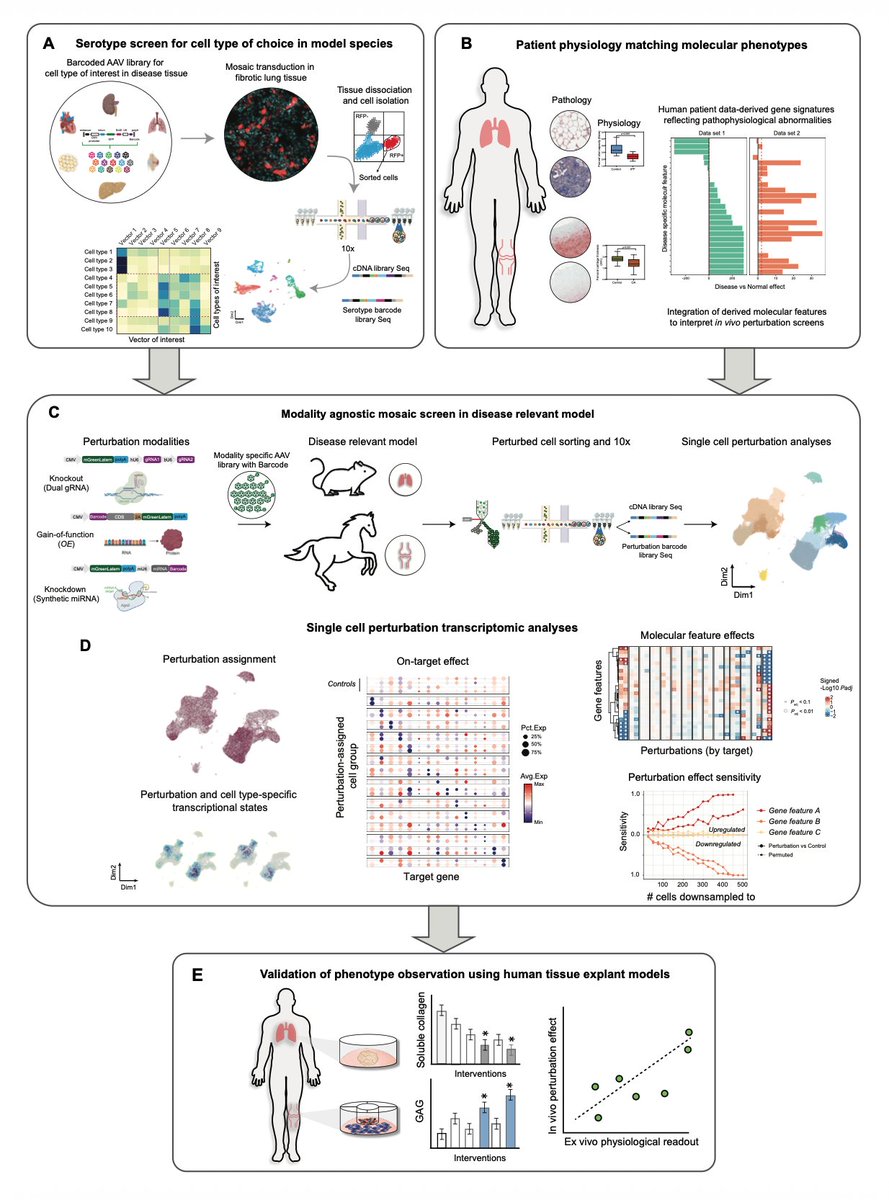
Finding new medicines is getting more and more expensive, and AI won't help much unless we can generate physiological data at scale.
In our new preprint, @GordianBio extends the progress of the functional genomics community to run pooled in vivo screens at scale, in a way that answers questions about physiology and therapeutic potential.
We show screens in mice and horses, fibrotic and degenerative disease, with a framework for physiological predictions validated in human ex vivo tissues.
Very proud of @v_sontake, @vkartha88, Neety and the rest of the team. Tweetorial follows:
Academics: “No one gives us money and talking about extending lifespan is the reason for this. Let’s make up a new word “healthspan” and try to get funding for low impact science.”
Technologists: “We want to extend human lifespan. Here is a lot of money to figure it out.”
Today, some 45M deaths a year owe to biological aging, and we treat these deaths as mostly inevitable. But what if they are not? What if preventing our newly slow deaths is a moral and economic imperative?
In my @TEDx talk, I suggest progress in aging bio may offer the highest social return of all possible investments in biomedical research.
Aging science could soon make for the most impactful breakthroughs in human history, exceeding the impacts of germ theory and antibiotics in redesigning how we live and die.
If we truly reverse biological aging, we’ll add trillions to GDP—and more meaning to life.
https://t.co/vHtJMDst1o
The value to society accrued from even moderate age reversal make it a no brainer public policy direction. @RaianyRomanni does an excellent job laying out the situation.
Grateful for @jamesfickel who continues to have an outsized impact on humanity backing high leverage efforts.
How could tiny breakthroughs in aging science change U.S. GDP and population growth?
What’s the economic value of making 41 the new 40, or 65 the new 60?
How many lives could we create or save if we could slow reproductive or brain aging by just 1 year? What would billions of healthier hours be worth to the economy, if we assume no change in the age of retirement?
I spent the last two years obsessing over the design, research, and execution of this project. The result is a book upcoming with Harvard University Press, a preprint, and—maybe your favorite part—an interactive simulation tool that lets you input your own timelines and assumptions for specific breakthroughs in aging bio, then see the ROI in terms of US population & GDP growth.
From @RickEcon and Jason DeBacker—the economists who co-developed the open-source, macro model that made this project possible—to extensive comments by @tylercowen, @sapinker, Richard Freeman, @NDHendrix, @ebudish, @elidourado, @geochurch, @jasoncrawford as well as interviews with 102 scientists (!) and countless iterations with award-winning designer Giorgia Lupi and the @pentagram team, we built something we hope will be a benchmark for how scientists, economists, designers, philosophers, entrepreneurs and storytellers can come together to paint, fund, and build different flourishing futures for our species.
I couldn’t be more excited to share this. It’s the start of an open and evolving project—the labor and product of love, obsession, and unrelenting care.
I hope you have fun playing with our simulation tool — and if you do, please share!
I'm a huge fan of AI + robotics to accelerate science.
Absent such innovation, animal studies will remain slow and expensive. Olden Labs built a smart cage system to change that.
Check out @MichaelFloreaX's Vitalist Bay talk on revolutionizing research through automation.
@emilkendziorra Open data would promote the formation of open source community of computational researchers interested in cryo. So few cryopreservation researchers, I think open source would improve research outcomes