Hi! We are The Longevity Initiative, a new think tank and educational organisation working towards a world free from age-related disease, where longevity medicines are accessible to everyone.
Find out more at our website, https://t.co/XbZK90irMu 🐢
Great to see the launch of AD-SMART, a multi-arm platform trial to test new drugs for Alzheimer’s in the UK’s NHS.
We would love to see something similar for repurposed longevity medicines—which might even be some of the same drugs! https://t.co/WljhoVMhKs
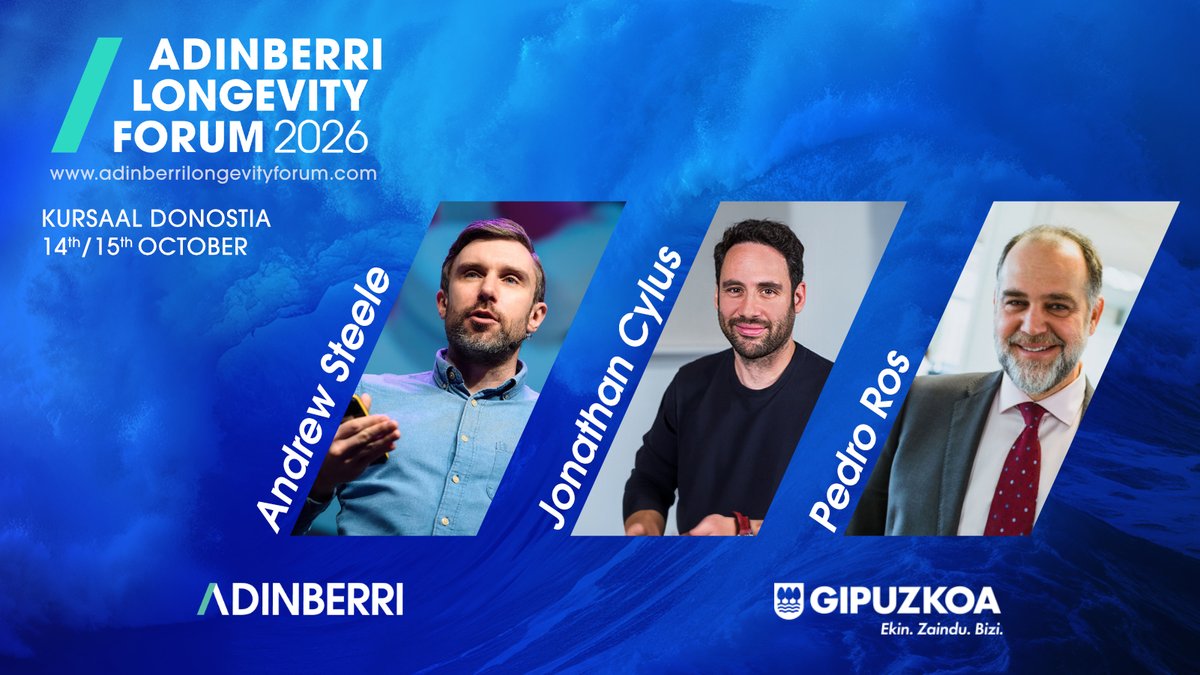
Our Director @statto opened the @AdinberriFund Longevity Forum this morning in Donostia / San Sebastián, Spain.
Spain has a life expectancy of 84, which is one of the highest in the world—so it’s an especially important place to discuss longevity science and policy.
🗣️ @statto: “I think most of us know that older people are more likely to die, but just how much really shocked me”
🔬 The scientist opens #AdinberriLongevityForum with the latest advances in ageing science and the potential to live longer, healthier lives.
I sadly can’t make it, but if you’re in Boston and want to chat longevity policy, regulation, funding and communication, please do grab a meeting with my @longevityinit colleagues Kamen and Sophie!
We’re fundraising and looking for collaborators: https://t.co/hpj3jzonTX
The longevity science community is converging on Boston for @ARDD_Meeting and @agingbiomarkers, and The Longevity Initiative will be there!
Our Director @shoylev and Researcher Sophie Shrimpton will be at the conference to catch up on the latest research, and with the people moving longevity science out of the lab.
We’re fundraising, and looking for collaborators to bring regulation and public understanding up to speed with the latest breakthroughs in longevity science. We’d also love to hear your thoughts on the highest-impact things we could be working on.
If you’d like to arrange to meet, you can grab a slot here: https://t.co/ljQcxXmTVK
See you in Boston!
Great to see a serious attempt to catalogue one of the more neglected hallmarks of ageing—DNA mutations. The diversity across tissues is fascinating.
We hope that our improving understanding will result in more effort trying to slow or reverse them in coming years.
One of the most comprehensive studies of human mutations across tissues and age was released last week. 53 cell types, 172 people, ages 0-93.
Many takeaways, but the big highlight is that mutation rates vary a lot - and not in the ways you'd expect.
A thread:
I was pleased to contribute to a new @NatGeo article from Hannah Singleton out today exploring one of the more interesting questions in longevity science: Could GLP-1 drugs actually slow aging?
It’s a thoughtful look at both the excitement around GLP-1s and the important uncertainties that remain. My view is that there is compelling evidence that GLP-1s can improve multiple aspects of health in humans. Beyond weight loss and glucose control, there are signals for cardiovascular, kidney, inflammatory, and perhaps neurological benefits. That makes me optimistic about the use of GLP-1 agonists in proactive healthspan medicine, potentially at doses and quite different from those currently used to treat obesity.
But, do they slow aging? And if so, are they anything more than a pharmaceutical way to induce caloric restriction?
The recent @Nature paper showing that semaglutide extends lifespan and improves multiple age-related phenotypes in mice is interesting. As I’ve commented publicly, however, the lifespan experiment did not include a calorie-restricted control matched for the reduced food intake caused by semaglutide. Weindruch and Walford showed in 1982 (DOI: 10.1126/science.7063854) that mid-life initiation of moderate caloric restriction increases lifespan in mice by almost exactly the same amount, in the same mouse strain background, as semaglutide in the current study.
So, we still don’t know whether semaglutide is doing something fundamentally different from, or additive to, eating fewer calories.
Regardless of the answer, I think these are extremely promising drugs when used carefully, in the context of high-quality nutrition and regular exercise, expecially resistance training to maintain muscle.
In fact, GLP-1s could ultimately prove extremely valuable for extending healthspan, even if they don’t slow biological aging at all. Preventing or delaying several major causes of morbidity could have enormous value independent of whether we ultimately classify these drugs as true gerotherapeutics.
For me, the most interesting next step is figuring out whether there are doses and protocols where the healthspan benefits substantially outweigh the risks, particularly in otherwise healthy middle-aged and older adults. That’s a question we can answer, and I'm optimistic the answer will be "yes".
https://t.co/WE81tBum8p
Read our interview https://t.co/6TbP860EhW with Dr Jamie Justice (@j_n_justice) to learn more about what solutions might have what it takes, regulation, evidentiary standards and accessibility.
What would it take to reverse 10-20 years of age-related decline in muscle, cognition and immunity?
#XPRIZE is spending $101 million to try and find out.
At The Longevity Initiative, we believe prizes are one of the most effective tools to efficiently test different hypotheses and fund those with the best emerging evidence. @xprize is playing that role for longevity, and we can’t wait to see the results in 2030.
Our Director Andrew Steele (@statto) was interviewed for @BBCRadio4 ’s Rethink, on the difference between chronological and biological age, and the first treatments aiming to close it.
Listen here: https://t.co/qdowvwKavv
Our Director @shoylev will be at the @foresightinst#VisionWeekendLondon.
If you would like to find out more about longevity policy, join us for office hours or a chat! https://t.co/ewuv7cafZV
We spoke with @chamath’s team from @socialcapital for their new Deep Dive on longevity!
Ageing is the biggest shared risk factor for the diseases that kill us, but they find that it gets just 0.25% of global biomedical R&D.
Read more here: https://t.co/SDWA5imxdm
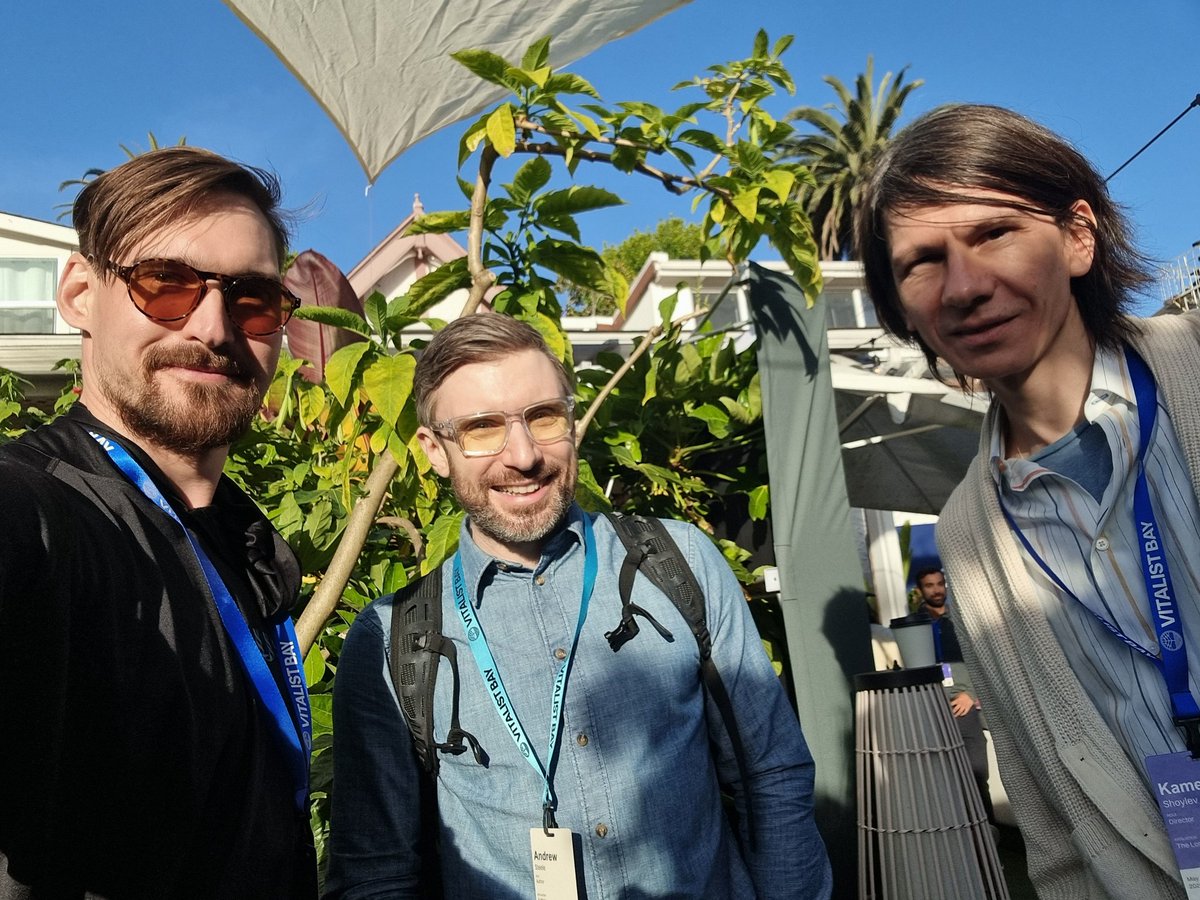
Met Kamen and Andrew from @longevityinit at Vitalist Bay.
They’re working on one of the highest-leverage longevity plays: getting governments to pour BILLIONS into aging research.
Advocacy like this might be 100x–1000x more impactful than funding research directly.
Make sure to follow the Longevity Initiative and send all your 🤎
We’ve been on there for a while, but just officially launched on @LinkedIn!
Check out our article on what we started a think tank, not a biotech – and please give us a follow over there and share our page with your network. https://t.co/W0pqLkOexP
Lovely to see a spike in traffic for our 2025 longevity business round-up last week as the @RetroBio_ news broke!
If you're catching up on the reprogramming gold rush, the biotech funding drought and recent big exits, it’s all here: https://t.co/n8bC046ToU