So excited to highlight our new work led by @chanjeneration, a postdoc in my lab recently awarded a K01 and BWF award (and on the job market!), out in @Nature!
This project identifies a novel role for dopamine in permanently remodeling the maternal brain through histone H3
Thrilled to share my main postdoctoral work out @Nature! This project tackles a fundamental question: how do pregnancy and postpartum experiences promote lifelong changes to the brain? https://t.co/BLnGSXzCHO
We resubmitted this paper a week ago. This paper has been up on preprint for a year now while in revision. There is uniform consensus that this is a very big concept. There is (as always will be) debate as to how throughly we have proven the existence of these polyorganic neurons that have been brought up for decades. However, a huge advantage of the preprint process is that it gives time for others to replicate or even find orthogonal motifs that support our claims. We now know that many labs have either prospectively found these or retrospectively found them in their datasets (serious labs). We also know there are motifs in other parts of the nervous system that mirror what we found, discovered by others. Astute patients have reached out saying they truly feel this is why they have visceral pain (some of them world class scientists). This, to me, is the beauty of science and the preprint process. We do not validate through replication from a single process, assay, or lab. We crowdsource the science and let time ferment the truth out through external validation. Congrats @ZhennWang! This is one way in which DeSci comes alive. Many more to come. @RHubJournal@ResearchHub@ResearchHubF@researchsquare
https://t.co/tZT808wUkx
Today in @ScienceTM, we report the use of in vivo adenine base editing to correct a variant causing Dravet syndrome, a severe childhood epilepsy and neurodevelopmental disorder, substantially ameliorating disease symptoms and extending lifespan in an animal model.
1/13
https://t.co/uQEwWvj94y
Where, exactly, does learning happen in the brain?
Out now @Nature , we identify a synaptic locus of birdsong learning and show that the circuit can be tuned to make birds learn faster, but at a cost.🧵 #neuroscience
https://t.co/mS6EJUPVa2
Open link: https://t.co/wiJ16guRj1
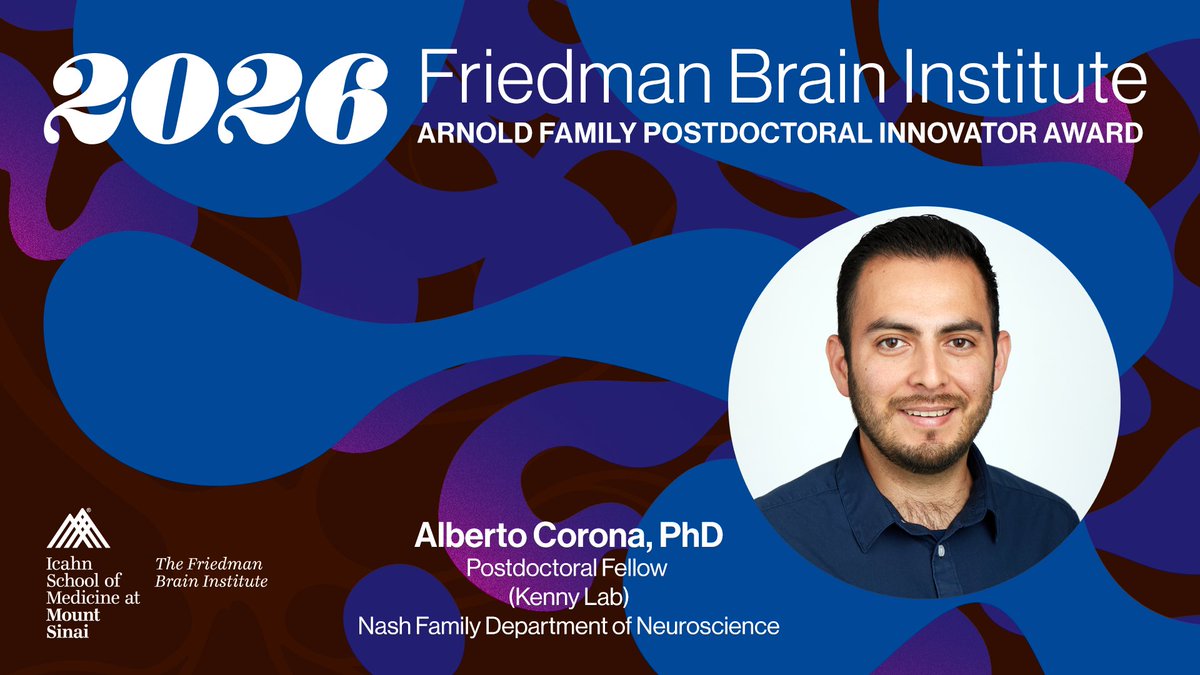
🎉Please join us in congratulating Dr. Alberto Corona on receiving the 2026 #FriedmanBrainInstitute Postdoc Innovator Award. The #KennyLab's @Mr_Beto_Corona is an extraordinarily rigorous young neuroscientist whose work is among the most innovative & compelling. CONGRATULATIONS👏
1/ Excited to share that TranscriptFormer is now published in Science.
We trained a generative foundation model on 112 million cells across 12 species spanning ~1.5 billion years of evolution.
https://t.co/oKyYpgcEAJ
Our preprint for de novo DNA binder design is out! https://t.co/fWBls0vEzQ. The punchline: methods have gotten good enough that we can find sequence specific DNA binding proteins from screening as few as 96 designs per target.
TOMORROW! On Tuesday, May 5th, 3pm, hosts @PaulKennyPhD, Dr. Ming-Ming Zhou and Dr. Mone Zaidi welcome @Yale's Dr. @CraigMCrews who will give a Special Seminar concerning one of the most exciting areas in drug discovery research today. In-Person - Hatch Auditorium. NOT TO MISS!
🆕 review with @jp_unfried out in @NatureSMB 🧐. Direct roles of lncRNAs in transcriptional activation. What do we understand about how lncRNAs lure Pol2 and set the stage for RNA production, and what do we still miss? https://t.co/iYJQ7Rbb9d
🚨Prime editing breakthrough (April 29, 2026)
Researchers at UMass Chan Medical School have developed “Prime Assembly”: a method to insert large DNA fragments (up to 11 kb) with high precision and without double-strand breaks in the genome.
They use two pegRNAs plus linear donor templates that assemble inside the cell. It works in quiescent cells and has already been demonstrated by inserting full genes such as dystrophin and CARs.
Prime Assembly (PA) perfectly complements their platform and PASSIGE technology for large insertions, opening the door to more indications (DMD, allogeneic CAR-T, etc.) with lower risk.
Another step that reinforces why prime editing remains the most versatile gene-editing technology.
Source: https://t.co/QbmNHCQGpz
Our paper with Vijay Ramani is out today in @Nature.
We show that chromatin has a richer grammar than simple "open" or "closed" DNA. Using IDLI, we read 14 nucleosome structural states across single chromatin fibers and find that this grammar is actively written by transcription factors.
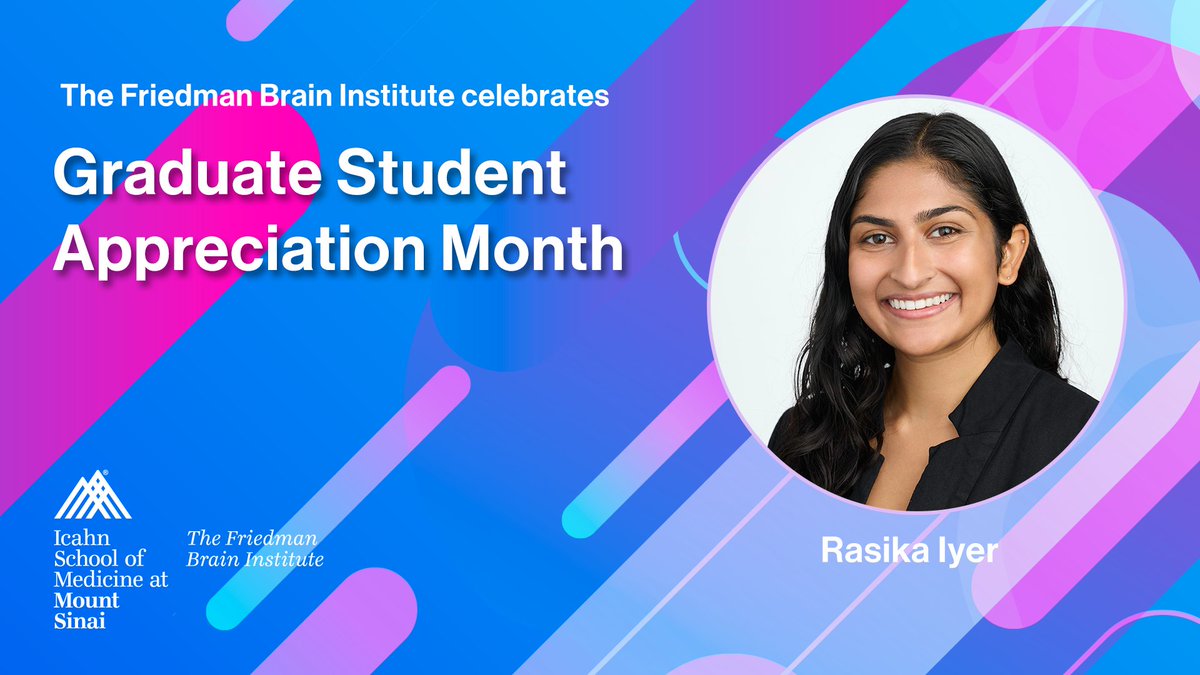
April is #GraduateStudentAwareness Month and we are proud to highlight Rasika Iyer, a PhD student @themazelab !👏Beyond the lab, as Co-President of @SinaiNeuro & a leader at Mount Sinai’s GEMS, Rasika is a dedicated advocate for science outreach & education in #NYC! WOW!💯
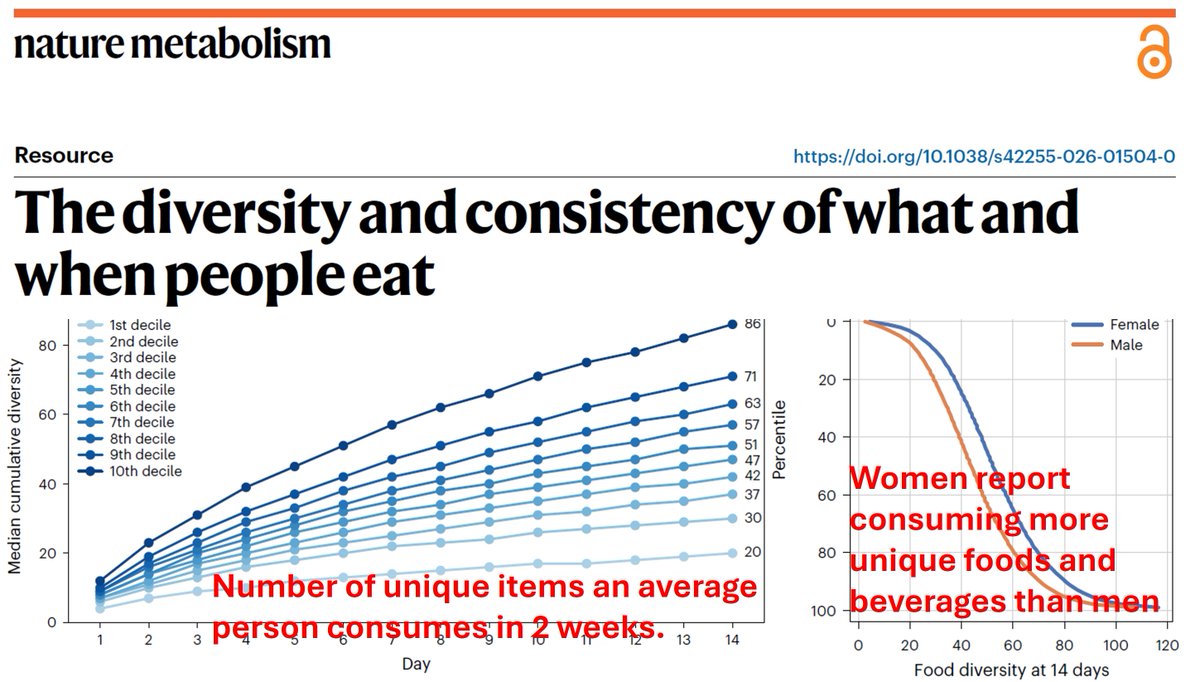
We’re told to “eat a diverse diet”—but how diverse is it in reality?
Over 2 weeks:
• Lowest 10% consume ~20 unique items
• Highest (novelty seekers) reach ~86
Interesting twist: women tend to sample more unique foods than men.
Where do you fall?
@NatMetabolism