I am absolutely humbled and honored to have been selected as a new HHMI Investigator. A huge shout-out to all of my brilliant lab members (past and present), outstanding collaborators and incredible mentors along the way who made this a possibility!!
HHMI News: We are proud to announce our 33 new #HHMIInvestigators. These individuals have the potential to make transformative discoveries over time and we look forward to seeing where their ideas lead them. https://t.co/HziK6G5Q6y
I am honored to have been awarded a 2026 BBRF Young Investigator Grant!! Thank you to
@BBRFoundation and my mentor (@themazelab) and colleagues for all the support. Very excited about this project!!! @SinaiBrain@IcahnMountSinai https://t.co/8ed28ZKYEK
So thrilled to finally have this paper out in @NeuroCellPress on Canadian Thanksgiving! Summary thread to follow soon #epigenetics#alzheimer
https://t.co/zLPLL1ktls
Check out our new preprint uncovering a novel reader of H3 serotonylation when coupled to H3K4me3, and its mechanistic actions in neurodevelopment and ODLURO syndrome.
KMT2E recruitment by H3 serotonylation regulates neurodevelopmental chromatin dynamics https://t.co/JX3KLil93e
I am thrilled to share my #TEDx talk, selected as an Editor's pick by the main @TEDTalks Editorial team! This is a distinction reserved for well <1% of TEDx talks. I feel humble & shaken & so happy for this highlight on #WomensHealth . Knowledge is Power!
https://t.co/PRlFfbbzrV
Check out our new Review manuscript focused on the impact of early life experiences/adversity on the neural epigenome and the contributions of such phenomena to affective disorder risk. This Review was spearheaded by @ANeurogirl, an amazing former PhD student in our lab!
🎉CONGRATULATIONS to Drs. Dina Iathzil Vázquez Carrillo, Brian Kipp & @BenjaminWeekley for being chosen as co-chairs for the MSN-Seminar series 2026-27! #MSNseminars invites leading postdocs to give an institutional seminar & meet w/ @icahnmountsinai's neuroscience community.👏
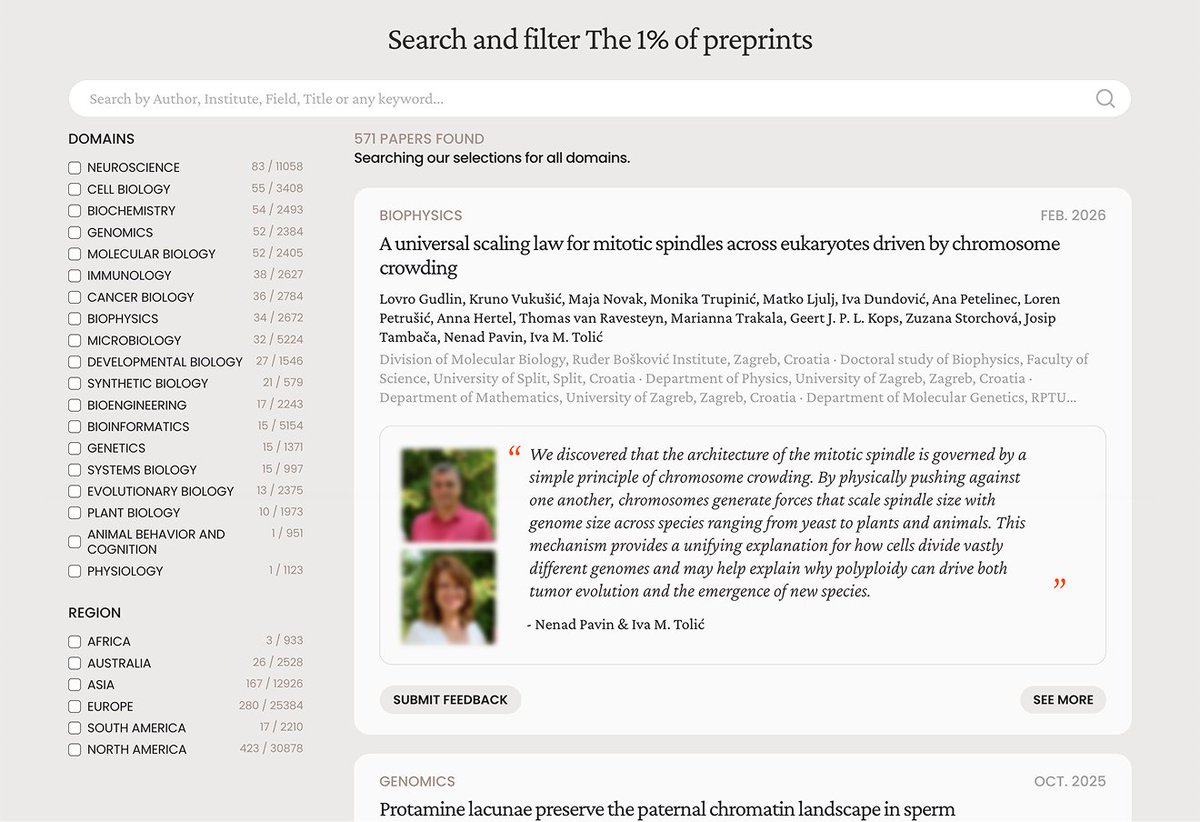
Pretty darn cool to find one our recent preprint manuscripts on this newly released 1% list from @qedScience. We're very proud of this work as well, which was led by an amazing Instructor in my lab, Dr. Min Chen @Minnn39851602. Way to go, Min!!
Gloves are off!
TODAY WE RELEASE THE 1%
A list of the year’s very best papers.
When we launched QED a little over half a year ago, I told you that our mission is to revolutionize scientific publishing. Revolutions don’t happen overnight… or maybe they do? When new technologies enable it? Time to put the power back in the scientists’ hands, not the journals’. Many scientists are depressed, and think journals will stay the same forever, no matter how dysfunctional, but no, it’s happening. Sooner than most people (or committees, or universities) can imagine. Check this out:
When we released our AI review platform, it started a whole debate (and social media storm) on what it is that human reviewers can do that AI review still can’t. There are such things (and I’m happy about it), but the list is getting shorter and shorter. Numerous scientists already use QED to find gaps in their manuscripts and grants and to get constructive feedback that improves their experiments. And now, with your help, we take it to the next level.
Today we release reviews and scores for all the experimental Life Science pre-prints that came out last year: 57,455 manuscripts!! If we are being conservative, and estimate that it takes a minimum of 8 hours to review a paper (it takes longer), and if we agree that 3 reviewers are typically required to review every submission, then reviewing this amount of manuscripts would take human experts >1 MILLION REVIEWER HOURS… Assuming you can find so many experts (not going to happen!), and assuming the experts who agree would have no conflict of interest (ha!!).
QED did it. Then, we chose the best papers in every field (you can browse and search for key words), based on the originality and validity of the claims being made. We benchmarked our reviews not only using eventual journal selections but also by comparing our evaluations to those of human experts. When there were disagreements between the QED score and journal rank, we asked domain experts to judge who’s right (blindly), and they overwhelmingly sided with QED. No need to rely on glam journals anymore. No need to wait for two years to get their stamp of approval. No need to beg the reviewers, or worse, to write less ambitious papers, so no one would be upset. Want to find the most interesting papers in your field? Want to see where your paper stands? (“What’s your QED SCORE?”) Just visit https://t.co/hLxNq9nDMc!
One last thing: We want good science to be seen (you can read the winners’ comments about their selection and the stories behind their discoveries on our website). We plan to organize a conference where the first authors (yes, the first authors, not the PIs) will present their work. We are not here to shame anyone (papers that got low scores). The reviews of the best papers that we selected explain why QED’s AI thought these papers are especially good - what’s unique about them, what their strengths are, which conceptual leaps were made, and what cutting-edge tools were developed. However, on the QED Science site you can analyze any paper in private, it’s fully transparent, and see if there are any gaps and what’s missing. Run your paper to see how it can improve, and maybe next time your paper will reach the top (if it’s not there already).
Whether you’re on the 1% list of just have a good score that you want to share, on our website you can download the report and share it, for example with your tenure, promotion, or hiring committee, or with your university PR department. Forget about journal embargoes and waiting for it to be “accepted”. Improve your work until it’s good enough for YOU. You decide.
Maternity induces lasting gene-expression changes in mouse brains https://t.co/xcUDhDnYwp
A very nice discussion of our manuscript (led by @chanjeneration) recently published @Nature, entitled "Dopamine drives persistent remodelling of the maternal brain."
dopaminylation in humans and mice. A huge step forward for understanding the biology of parenthood, and the broader role of monoaminylation in the brain.
Enormous congratulations to Jen and thanks to all our incredible collaborators and reviewers. Hope you all enjoy!
So excited to highlight our new work led by @chanjeneration, a postdoc in my lab recently awarded a K01 and BWF award (and on the job market!), out in @Nature!
This project identifies a novel role for dopamine in permanently remodeling the maternal brain through histone H3
Thrilled to share my main postdoctoral work out @Nature! This project tackles a fundamental question: how do pregnancy and postpartum experiences promote lifelong changes to the brain? https://t.co/BLnGSXzCHO
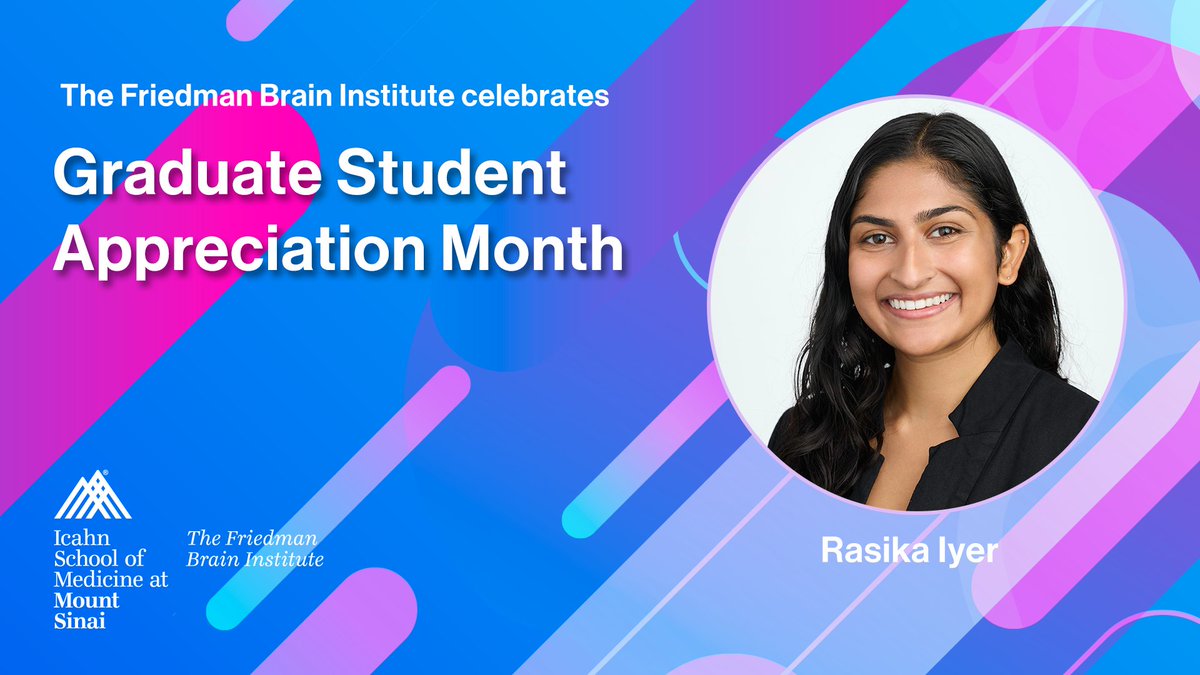
April is #GraduateStudentAwareness Month and we are proud to highlight Rasika Iyer, a PhD student @themazelab !👏Beyond the lab, as Co-President of @SinaiNeuro & a leader at Mount Sinai’s GEMS, Rasika is a dedicated advocate for science outreach & education in #NYC! WOW!💯
Scientific publishing needs to change. In a new preprint, HHMI President Erin O'Shea and Bodo Stern argue that the incentives are misaligned. Researchers should be evaluated on what they choose to share, not what journals select. I’m proud that @hhmi_science is leading the way. Read the preprint here: https://t.co/CV1iiwgIvY
an autonomous chromatin signaling axis whereby H3Q5ser is read by the Quinone reductase enzyme 2 (QR2) to support human neuronal gene expression and cellular maturation. Happy reading, everyone!
Interested in histone H3 serotonylation? Then check out our brand new preprint out today! This work was spearheaded by Instructor extraordinaire, Dr. Min Chen of the Maze Lab, and represents another great collaboration with the labs of Drs. Haitao Li, @MuirLab, David Li, Samuele
Marro, and many others! Since H3 serotonylation occurs at Gln5, we (and others) have previously focused much of our attention on the mark's interactions with adjacent H3K4me3 in guiding permissive gene expression in the brain and beyond. Here, however, we have identified
2nd- or 3rd-year PhD student? Applications for @hhmi_science's #GilliamFellows Program open 9/1!
Robust dissertation support, an incredible community of scientists, tailored professional development
(for you *and* your thesis advisor), & so much more. https://t.co/S4v2Zoirh5