In 2025, MSK researchers made some exciting scientific discoveries that are reshaping our understanding of cancer biology and treatment, from a new AI model that predicts immunotherapy response using routine blood tests to groundbreaking advances in CAR T cell therapies and more.
Learn more about the top research breakthroughs from MSK this year: https://t.co/YQT1djaSih
Single Gene Edit Transfers Behaviors Across Species
Researchers have genetically transferred a complex courtship behavior from one fruit fly species to another by altering a single gene.
By activating the fruitless (fru) gene in insulin-producing neurons of Drosophila melanogaster, scientists triggered the formation of new neural connections that enabled males to regurgitate food as a courtship gift—behavior previously seen only in D. subobscura.
This marks the first time a single-gene change has successfully created a new brain circuit and transplanted a species-specific social behavior.
The study shows that small-scale rewiring in a handful of existing neurons can produce dramatic behavioral shifts without adding new neurons.
This genetic change mimicked evolutionary processes that diversify mating strategies across species.
The findings highlight how evolution can repurpose existing neural frameworks to generate novel behaviors.
https://t.co/EqxM2tWSgW recently interviewed several Harvard FlyBase people and wrote this news article about the importance of FlyBase: https://t.co/x7pNLPKAUY
My lab at Brown University is hiring a postdoctoral fellow! We develop single-molecule imaging technologies to dissect the spatial regulation of gene expression. For more information about my lab, visit https://t.co/iBjwFlNjvd Please help spread the word! #RNA#imaging
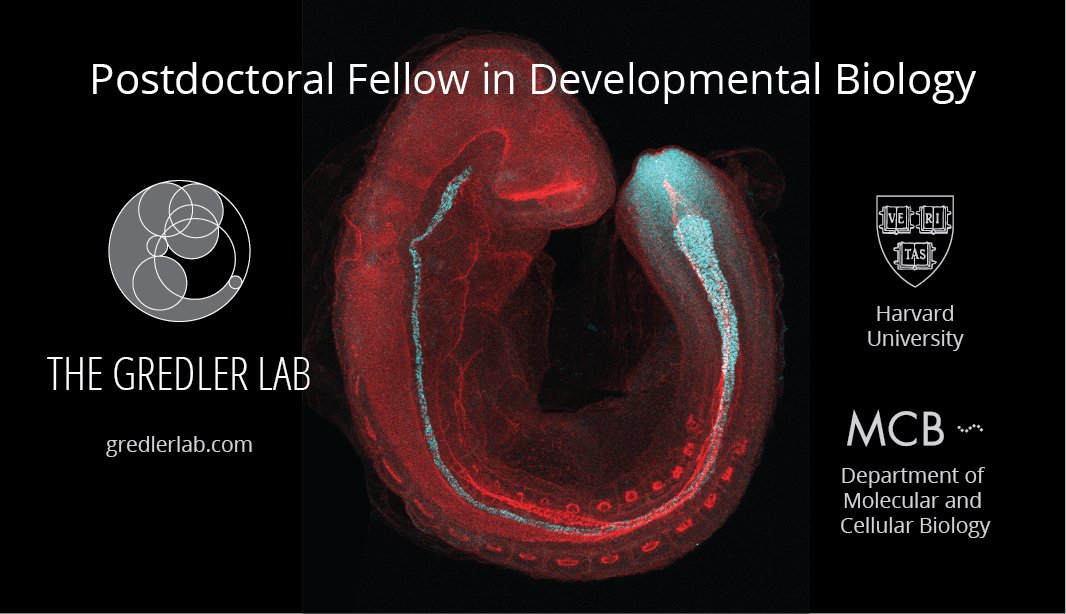
The Gredler Lab @Harvard@MCB_Harvard is hiring Postdoctoral Fellows! If you are interested in using high-resolution imaging of live embryos to ask how cells build tissues, please apply at the link below. #DevBio#sciencenews https://t.co/KlRwdAPN2y
Outstanding paper by @StephenXZhang and @andermann_mark, showing gradual promotion of satiation by accumulated cAMP downstream of MC4R and NPYR. Congratulations to whole team.
https://t.co/JzAkZhj9qJ
Big news! The fly connectome is featured on the cover of a special edition of Nature.
This is all possible thanks to the collaboration of 292 members of The FlyWire Consortium!
https://t.co/Mrz7Yrx1eU
Check out the thread for an overview of the 9 #flywire papers published today
Sex or survival—what’s more important? Excited to share our @Nature paper on how flies resolve this conflict.
We found a dopamine-based filter that reduces threat perception, helping flies focus on courtship when close to mating.
https://t.co/ZZ0UoKTqgn
We are seeking an enthusiastic postdoctoral candidate to join our team. If you are interested in studying DNA damage repair in prostate cancer, contact me. Hands-on experience in ChIP-sequencing and CRISPR is preferred.
https://t.co/bv0wKm9BaW @IcahnMountSinai@TischCancer
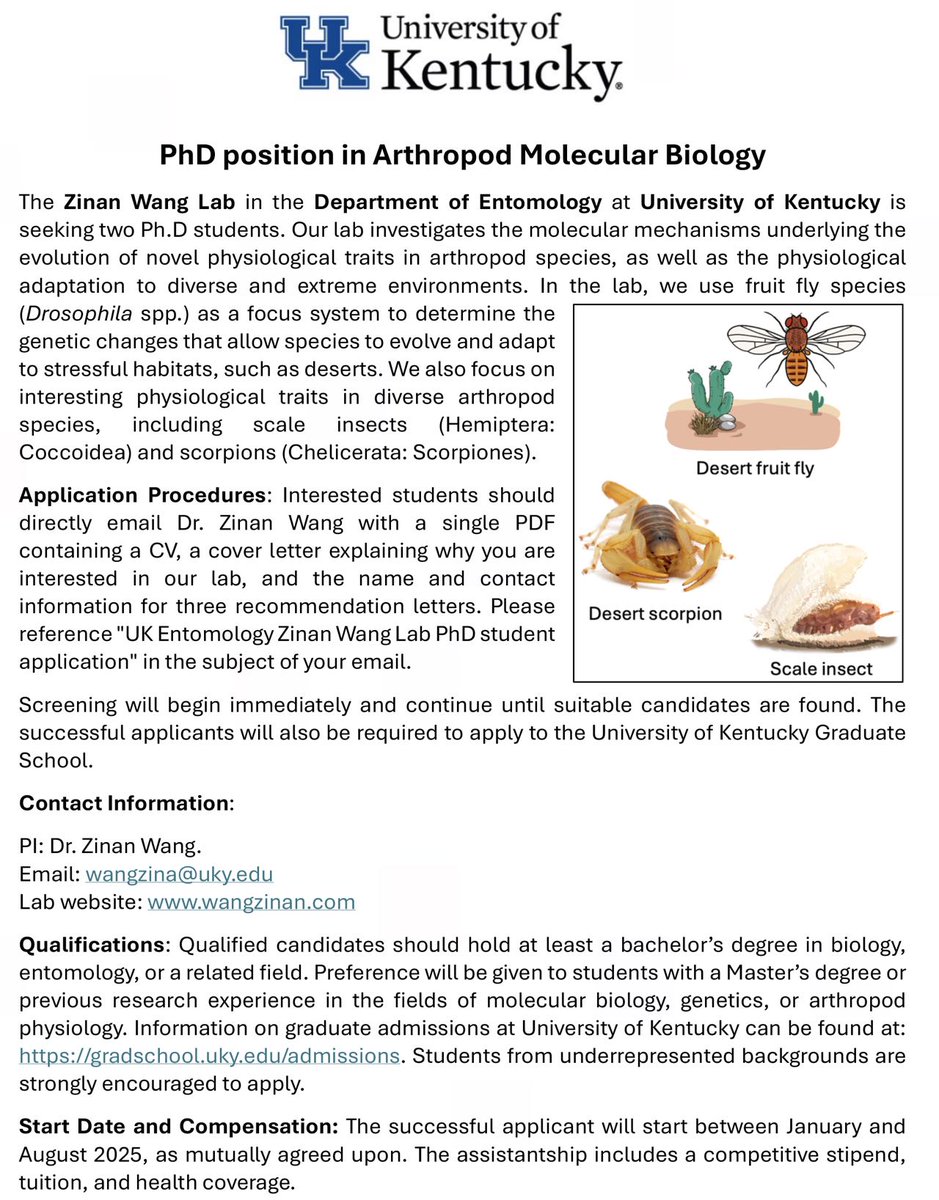
I plan to recruit two Ph.D. students to join my lab in the Dept of Entomology at the University of Kentucky. The research focus will be on molecular mechanisms underlying physiological adaptation. Specifics below. Please DM/email me if you have any questions.
The new class of HHMI investigators average 3.9 papers as corresponding author in Cell, Nature, or Science. 26 out of 26 members of this group previously trained with a PI who is in the National Academy of Sciences or who was an HHMI investigator themselves.