#DRI scientists take AP #EnvironmentalScience students to the #MountRose summit every spring to measure the water content of the #snowpack. Fun fact: DRI's own Blake Minor, who now leads these trips, was first introduced to snow hydrology as a student on this trip himself!
The moon's shadow passing over North America during #Eclipse2024. Imagery is from the @NOAA#GOES-16 satellite, processed with #EarthEngine 🌞🌑🌎🛰️
@GoogleColab notebook: https://t.co/loPyDaQYQi
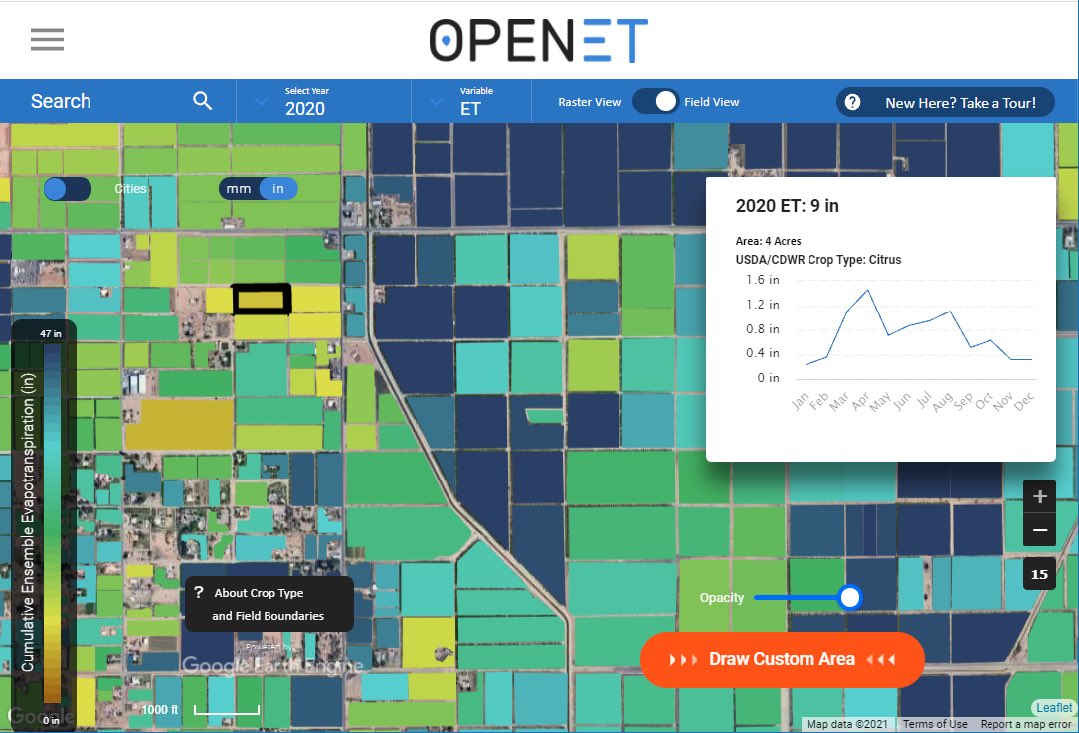
Today is #WorldWaterDay! Let’s shine a light on the unseen hero of our ecosystems- evapotranspiration (ET), crucial for sustainable agriculture and food security. #OpenET
Excited to share that our paper published in @WileyGlobal@HydroProcesses was one of the most downloaded articles between 2022 and 2023.
@hydromaj, @SubsidenceGuy, Brian Conway, & @VenkatLakshmi2 (2022). Advancing remote sensing and machine learning‐driven frameworks for groundwater withdrawal estimation in Arizona: Linking land subsidence to groundwater withdrawals. Hydrological Processes, 36(11), e14757. https://t.co/H4MQI7i0re
We are currently working toward improving this research. Thanks to @NASA and @azwater for supporting our efforts!
🌅 A huge win for South Lake Tahoe! 🌲 "By reconnecting the most important wetland that filters water flowing into the Lake, this investment protects the Lake’s precious water quality and also provides an important corridor for local wildlife." - @WadeCrowfoot
The #ClimateEngine Team is launching a new publicly accessible platform designed to produce reports that combine drought summaries and near real-time vegetation conditions to help inform planning and decision-making. Read more on our website: https://t.co/r4xuVoZR9D. #DiscoverDRI
Congratulations to President @KumudAcharya on the renewal of his contract by @NSHE. #DRI is proud of your leadership and dedication to faculty, staff, and science that matters now. Read the full news release on our website at https://t.co/CauTTARB91. #DiscoverDRI
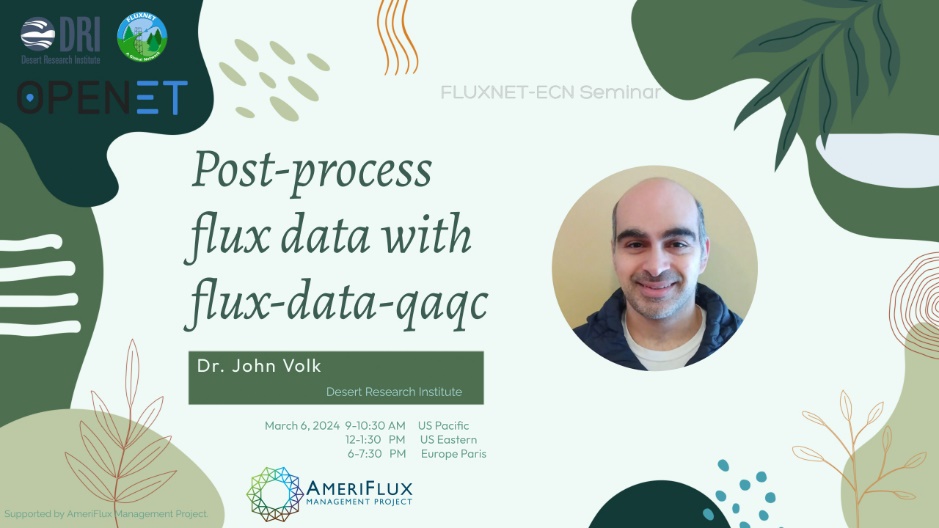
🌱 Workshop Invitation 🌍
Join us and dive into the Python flux-data-qaqc software for Energy Balance Closure Analysis with Dr. John Volk! Mark your calendars for March 6th, 12 PM EST. Co-sponsored by @AmeriFlux@FLUXNET_Coop. Registration is needed: https://t.co/zSHi4ZvmRw
Happening now! The first-ever OpenET Applications Conference. Hundreds of OpenET users are gathering to showcase water and land management successes, share learning, and continue building what is already a thriving community of practice.
OpenET director, Maurice Hall is... 1/
Congrats to the OpenET team! Looking forward to attending and presenting at the OpenET Applications Conference next week in Albuquerque, NM! @openetdata@DRIScience
#DRI scientists led a team of researchers in a comparison of OpenET data to #evapotranspiration data produced by ground-based stations and found that OpenET data has high accuracy for assessing evapotranspiration in #agricultural settings: https://t.co/aDst8BqnbE. #DiscoverDRI
I’ve developed a new #python tutorial that combines the power of Google Earth Engine and @xarray_dev for geospatial data analysis. The combo seems really powerful and convenient to use!
🔗 Here's an article I wrote to explain the details:
https://t.co/sM51K2BmJT
#DRI’s Thomas Ott and Sayantan Majumdar (@hydromaj) present their work looking at how #OpenET can provide improved estimates of groundwater withdrawals and support sustainable water management. https://t.co/PS2vS9FRun @openetdata#WideOpenScience#DiscoverDRI
#DRI is at #AGU23 this week! A few of our scientists, including Christine Albano, Mari Webb, and Anne Heggli, are sharing their research at the @theAGU conference. Stay tuned for more updates throughout the week! #WideOpenScience
Analyzing large vector datasets on @source_coop with #DuckDB 🦆Using the 75 GB National Wetlands Inventory as an example. It used to take me hours to get summary statistics of the dataset, now it takes seconds with DuckDB 🚀
Dataset: https://t.co/DuIzGH1ds4
Colab: https://t.co/62sNBKE96t
#geospatial #dataviz #opendata