@DonnySchatz Have I lost my mind or did a mishap happen on one or two of these hot lap sessions? This would have been before the incredible run that you went on from 2026 on. It serves to show perseverance. Thanks for the memories. -Brian
@DonnySchatz Have I lost my mind or did a mishap happen on one or two of these hot lap sessions? This would have been before the incredible run that you went on from 2026 on. It serves to show perseverance. Thanks for the memories. -Brian
@_EricArnold I was reflecting on Donny Schatz’s brilliance at Knoxville Nats. I have a memory of Donny crashing at least once during the championship night’s A main hot lap session. Moreover, I seem to recall it happening in back-to-back years. Do you have any memory of this? M
@_EricArnold I was reflecting on Donny Schatz’s brilliance at Knoxville Nats. I have a memory of Donny crashing at least once during the championship night’s A main hot lap session. Moreover, I seem to recall it happening in back-to-back years. Do you have any memory of this? M
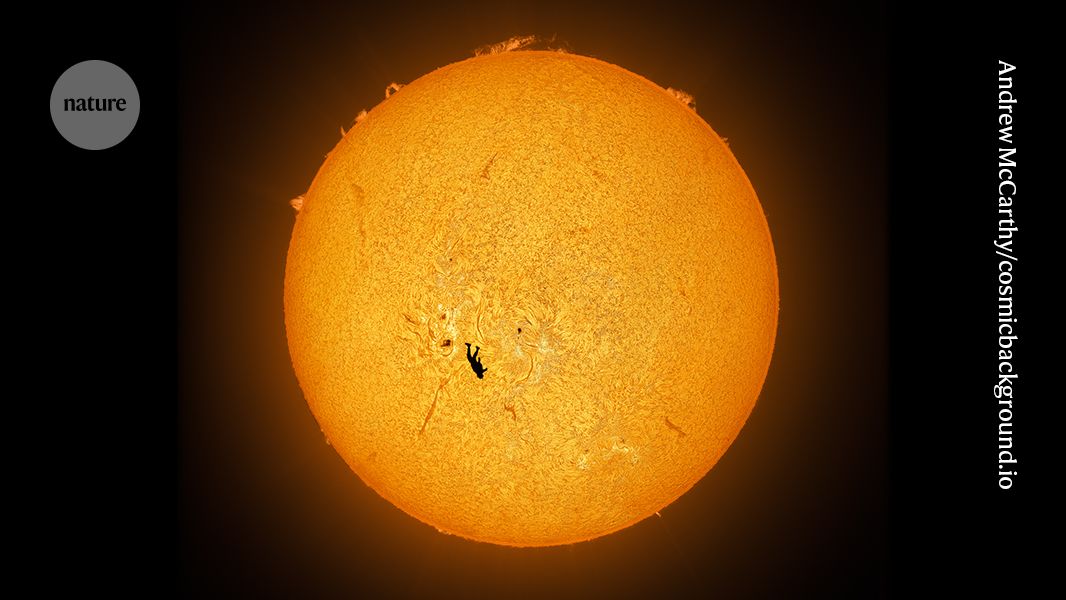
The best science images of 2025, as picked by Nature, include the Sun’s fiery surface, a tattooed tardigrade, and rare red lightning. See more. https://t.co/gUE6Wmgr4d
Everyone should read this story…
A monk goes out on a boat in a small lake to meditate.
After a few hours of uninterrupted silence, he suddenly feels the jarring impact of another boat bumping into his.
While he does not open his eyes, he feels the irritation and anger building within him.
“Why would someone do that? Can’t they see me here? How dare they disturb my meditation?”
He opens his eyes, ready to shout at the person in the other boat, only to realize that it is empty. It had come untied from the dock and was floating in the middle of the lake.
In that moment, his anger and frustration disappears.
After all, you can’t be angry at an empty boat.
The story offers a powerful lesson, which I call the Empty Boat Mindset:
In life, you’re going to experience countless collisions. With people. With environments. With chance circumstances outside your control.
Each of these collisions will threaten to derail you. To stoke the fire of anger, stress, and frustration. To knock you off your path.
The truth is that the negative emotions that grow inside you are rarely from the collision itself, but from your perception of the negative intent behind the collision.
If you convince yourself that every collision is a deliberate action by a bad actor, negative emotions will control your entire life.
In others words, your interpretation of the collision creates your own poison.
The Empty Boat Mindset is the reminder that most of these collisions you experience in life are with an empty boat.
There is no negative intent. There is no desire to harm. They are simply the random collisions of objects floating along on the lake of life.
Interestingly, when you embrace the Empty Boat Mindset, you reassume control over your own boat.
You’re no longer prone to the spiraling emotional effects of chance collisions. You are a seasoned explorer, ready to adapt to whatever the seas throw your way.
So, the next time you feel a collision and find your negative emotions growing, pause and ask yourself a simple question:
Am I just getting angry at an empty boat?
“Thanks for coming everybody, due to recent circumstances with our revolving door of coaches, Biff Pogo Rogo will be our interim head coach until he’s suspended or arrested. Questions? 🤣🤣
The clearest sign you’re working on the right thing: It gets you out of your own head. You stop overthinking. There’s no anxiety about the future. There’s just energy in the present. Flow. Lean into the things (and people) that get you out of your head.
Here's how I generally think about the short game versus the long game.
Beginner to intermediate players have a nice runway to get faster scoring gains through better wedge play and putting.
What does that look like?
• Less "double chips"
• Less three putts
• Having a wedge technique that can mostly get you inside a 10-20 foot circle around the hole
That alone will save a lot of shots. You won't necessarily make tons of pars, but you'll make a lot of bogeys that would have been doubles or worse.
It's absolutely worth your practice time and perhaps some professional advice. Everyone is capable of having a "functional" short game.
BUT, and there's a big but.
Getting to the next level, where you are making more 5-10 foot putts for par, and wedging it much closer, is very hard.
Extra time might not yield the same scoring gains anymore - you hit a wall.
That's why many golfers stall at certain handicap levels.
The bigger and longer-lasting scoring gains will come from tee shots and approach shots.
People can say "it's all about the short game" all they want, but they're wrong.
Most people giving that advice already can keep tee shots in play and hit a ton of GIR.
You cannot score well by hitting tee shots all over the place and duffing irons.
That's why I always say if you want to play your absolute BEST golf, you need to build your game around hitting more greens in regulation. That is the North Star of scoring.
Obviously, it's harder to hit your driver and irons well. However, your short game can only do so much if there are significant deficiencies in that area.
Everyone's game is different, and the amount of time they have to work on their games is different.
But that's the basic template.
Work on your short game to get some quick wins. But don't delude yourself into thinking your best golf will come from that alone.