Now accepting nominations for the 2027 Merkin Prize — a $400,000 international award recognizing advances that improved human health through diagnosis, treatment or prevention of disease. ➡️ Submit by Dec 4, 2026: https://t.co/4QacXAfyno
Join the @Schmidt_Center on Tuesday, November 3 at 4:00 pm (🍪 at 3:30 pm) for our colloquium with @eliasbareinboim, Associate Professor, Dept. of Computer Science and Director, CausalAI Lab @Columbia.
Learn more and register: https://t.co/YJMGu4nBGe @broadinstitute
Our latest analysis of microbiome-reactive T cells, which revealed a unique, pro-inflammatory TMIGD2-hi subset of Th17 cells that expands in IBD and enriches spatially at the epithelium, is now online @ImmunityCP!
https://t.co/LRiIIicfwr
1/7 🌾🐄 Our letter is out in @Science: AI biosecurity must include agriculture.
Recently biological AI has brought biosecurity to the center of public debate, but most attention is on human pathogens. Crops and livestock are a major blind spot. 🧵
Gift link: https://t.co/LxiPD5gKsk
@broadinstitute@sabeti_lab@JonxFeldman@talxfeldman
A cancer detection technology developed at Broad now powers a next-generation MRD test launched by Abbott. The Oncodetect® test is designed to find traces of cancer DNA in patients who have undergone treatment, and is the result of years of collaboration. https://t.co/WejAabVbP7
To mark our tenth Anniversary month, watch HCA Co-Founder Aviv Regev reveal her hopes for the Human Cell Atlas initiative, and how it is already helping to improve medicine.
#HumanCellAtlas#Healthcare
The integrated HCA v1 Human Gut Cell Atlas is now available on the HCA Data Portal! Integrating nearly 1 million single cells from 265 donors, the #Gut Atlas is a reference map to understand gut health and diseases like Crohn’s.
Explore here https://t.co/oCiO8sPlHO
#Genomics
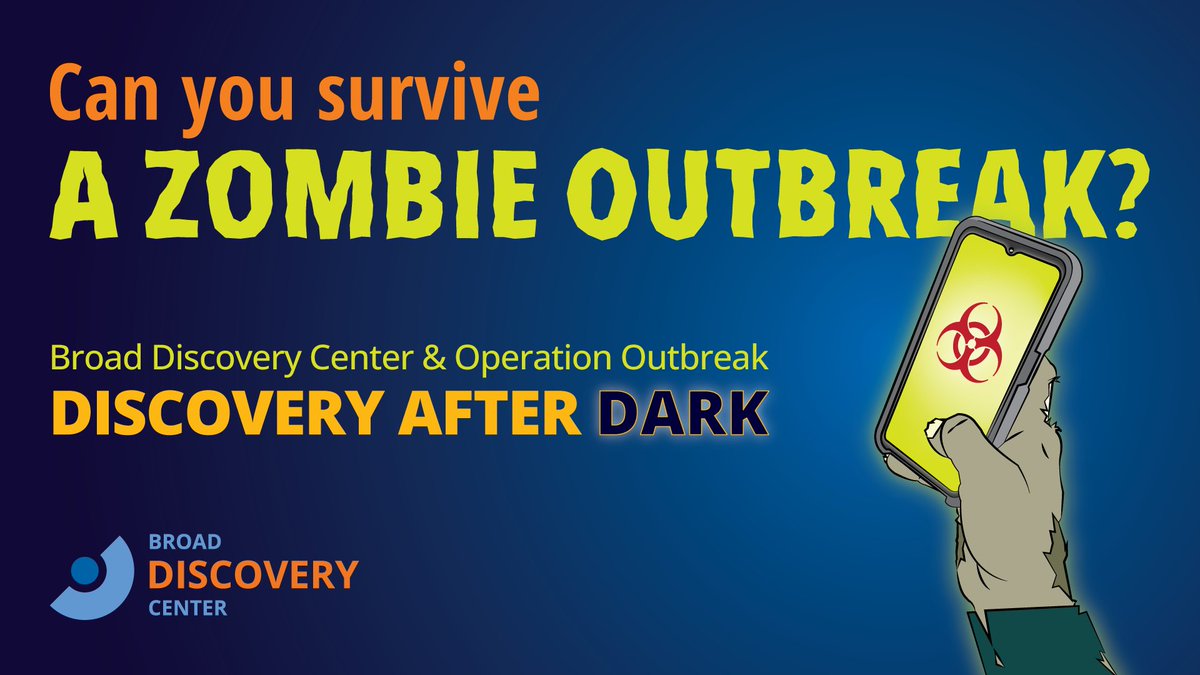
Join us on Thurs. October 29, from 6-8 pm for Discovery After Dark! Experience science firsthand through interactive activities, take on the challenge of an Operation Outbreak simulation, and meet Broad scientists! Advanced registration required. Register: https://t.co/Ut3QP1rzzj
Applications are open for the Klarman Fellowship at @broadinstitute! We are looking for postdoctoral researchers to join the GaMBiT Initiative to develop innovative technologies that translate human genetic discoveries into disease mechanisms, biomarkers, and therapeutic leads.
As we celebrate a decade of collaboration, HCA Co-Founder Sarah Teichmann shares why she and Aviv Regev joined forces to bring this international scientific consortium together. Hear Sarah tell the story.
@teichlab#HumanCellAtlas
Five Broad Institute members were elected to the National Academy of Medicine this year: @AnnaGreka, Kim Stegmaier, Kathleen Burns, @jorsmo, and @mbyaffe.
We’re thrilled to have so many NAM members engaged in our community. Congrats, all!
Congratulations and welcome to the 100 new members elected today to the National Academy of Medicine's class of 2026!
Read the full announcement: https://t.co/tSGncYKCe1
#NAMmtg#NAMedicine
Join us on October 29, from 6-8 pm for Discovery After Dark! Explore interactive exhibits, participate in hands-on activities, put your outbreak response skills to the test, and interact with Broad scientists! Advanced registration required. Register at: https://t.co/Ut3QP1s7oR
On the tenth Anniversary of the launch meeting, we celebrate the first decade of the #HumanCellAtlas and what’s to come, with reflections from HCA Co-Founders Sarah Teichmann and Aviv Regev, and new Co-Chairs Muzlifah Haniffa and Alexandra-Chloé Villani. https://t.co/RY8f4I34ZN
Fabulous to see this editorial from @NatureBiotech, highlighting HCA achievements and technologies over the past 10 years, and the ambitious plans for the future. Watch this space!
#HumanCellAtlas#Genomics
A new study led by @VamsiMootha shows that a newly optimized hypoxia-inducing drug combination greatly improved symptoms of neurodegeneration in mouse models of rare mitochondrial disease as well as a model of Parkinson’s disease. https://t.co/UvVkFSkDNM
Open AI released around 400 solved math problems challenging traditional scientific discovery pipeline and raising even more questions who owns scientific discovery now. we asked editors-in-chief of Nature, Science and Cell who owns the credit human or AI: https://t.co/T5TX8Mitzz
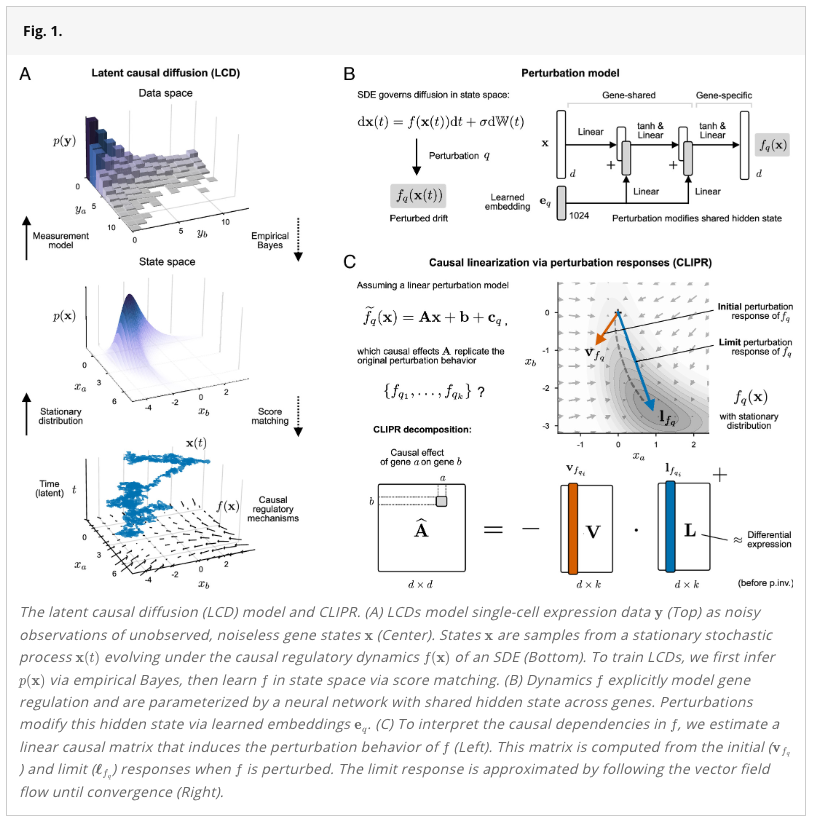
🧬New study by @Schmidt_Center former visiting fellow Lars Lorch & @arkrause, with @JiaqiZhangVic & Caroline Uhler, introduces latent causal diffusion (LCD) to predict transcriptional effects of unseen gene perturbation combinations and uncover direct gene-to-gene causal effects.