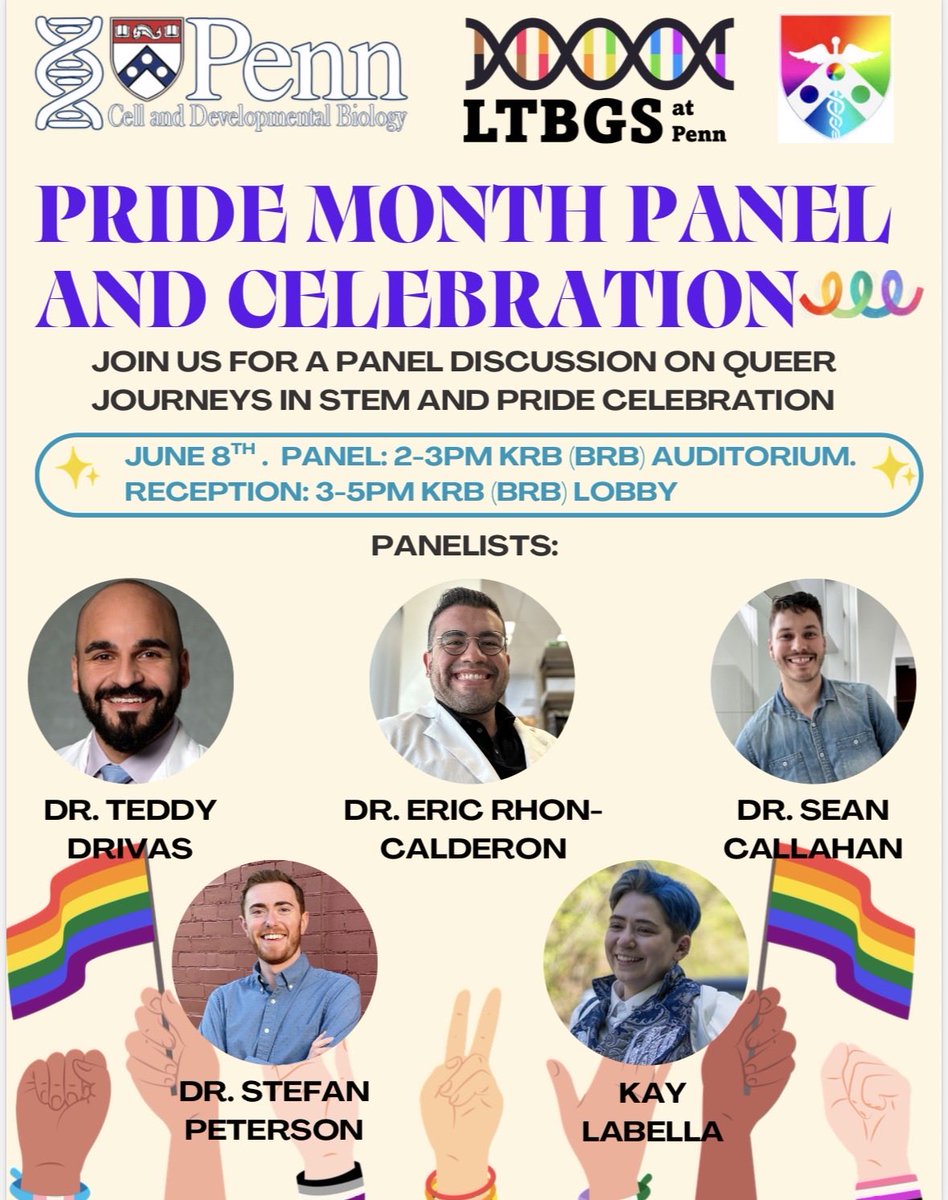
Join us for this year's Juneteenth Seminar with the one and only, Dr. Lydia Grmai @lydiagrmai from Yale School of Medicine. See details below. @PennMedicine
My lab is recruiting at the undergraduate volunteer and SRA level! Preference for candidates with protein purification experience. Please share, and see below for more details.
Still time to send an abstract and register for the FASEB Cell Signaling in Cancer meeting. There are many speaking slots available for proffered abstracts, along with a fantastic lineup of speakers. Join us in Kentucky!
https://t.co/WKkSiLSbmG
Excited to share our collaborative work with the @TonyMustoe and @SuperSciJew labs, led by the fearless @RitwikaBose15.
In this study, we developed RAID-MAP, an approach to map RNA structure within biomolecular condensates in living cells.
https://t.co/zUeJTnnEMV
Hi everyone!
The Schug Lab is searching for a Lab Manager. If you are interested, please have a look through the job description and apply through the link below. This position is funded through new grant support.
https://t.co/ajgJjuMwIQ
We have hundreds of PanINs in our pancreas, especially after age 40. They are a pre-cancerous lesion, but it is fortunately rare for one to progress to cancer (PDAC). Now we know a reason for that. The microenvironment. @umichmedicine@UMRogelCancer
https://t.co/Wl3Ys6kkzJ @CD_AACR
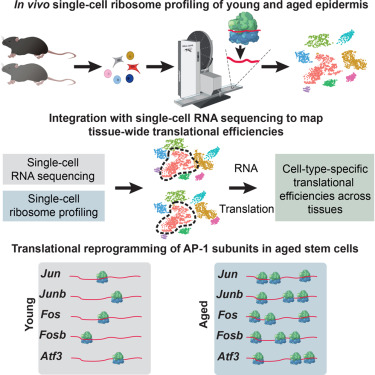
Very happy to see our study on the development of an in vivo single-cell ribosome profiling strategy for the epidermis now online at @MolecularCell.
Fantastic work by @clarasdure and all co-authors involved.
https://t.co/lBMANCabTS
We hope Ribo-Tweezer opens the door to dissecting how ribosome composition, ribosome-associated proteins, and specialized translation programs shape development, disease, and cell fate. Paper here: https://t.co/HlLpW9nHz2
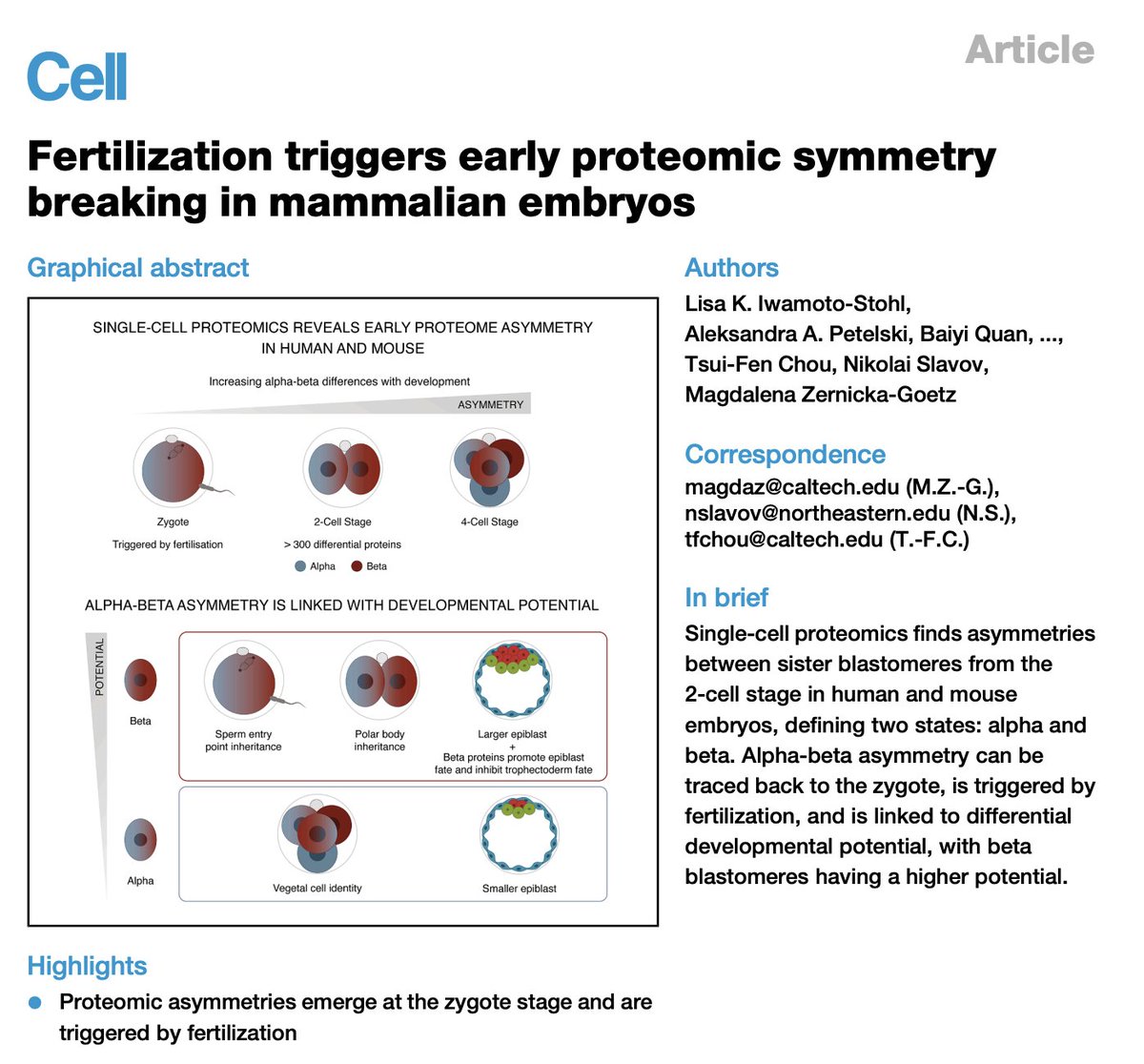
Single-cell proteomics illuminated new mechanisms of mammalian development.
We found that spatially polarized protein distributions and intracellular protein gradients emerge during the earliest stages of mammalian embryogenesis and help bias subsequent cell fate decisions. Critically, these developmental mechanisms are not reflected in mRNA abundance: the key biology resides in the spatial organization, abundance, and asymmetric localization of proteins within and between cells.
The results show that early developmental patterning is associated with polarized localization of specific proteins and coordinated proteomic asymmetries across blastomeres, linking protein organization directly to lineage specification. These findings support a model in which cell fate in the mammalian embryo is not determined solely by stochastic transcriptional programs, but is strongly shaped by inherited and dynamically regulated protein states that establish developmental competence before overt differentiation: https://t.co/lvpZ2TOaIC
Our results depended critically on single-cell proteomics analysis, on direct measurement of the molecular effectors that execute developmental decisions — capturing gradients, localization, stoichiometry, and post-transcriptional regulation. The future of developmental biology will depend increasingly on quantitative single-cell protein measurements capable of resolving the molecular architecture of cell fate determination: https://t.co/92S1z9WEBp
Channing J. Der, PhD, and Jen Jen Yeh, MD, describe the scientific foundations of a phase 1–2 study of daraxonrasib to treat metastatic pancreatic ductal adenocarcinomas.
Learn about the science behind the study in the editorial “Advances in RAS Therapeutics for Pancreatic Cancer,” from the University of North Carolina at Chapel Hill (@unc): https://t.co/rDDjGqRJtL
Daraxonrasib in PDAC now published in NEJM.
We have had press releases and presentations, but now a publication.
And yes, the data still look very real. 🧬
Pancreatic cancer is a RAS disease.
90% have activating RAS mutations.
G12D, G12V, G12R dominate.
And historically we have had essentially nothing direct to do about it (G12C inhibitors exist but they are a subpopulation).
Phase 1/2
Previously treated RAS-mutant PDAC
n=168
Oral RAS(ON) multi-selective inhibitor
Phase 3 dose: 300 mg daily
• ORR 35%
• mDoR 8.2 months
• mPFS 8.5 months
• mOS 13.1 months
As context; 2L chemo w/ PDAC has ORR <10% with OS ~5-7 months and significant side effects. So yes, this is huge.
Toxicity is real too:
• Any-grade TRAE 96%
• Grade ≥3 TRAE 30%
• Rash, diarrhea, nausea, mucositis, vomiting, fatigue
This is not a “write the script and see them in a month” drug.
Up-front oncoderm involvement is going to be critical. Rash needs to be anticipated, managed early, and dose modifications need to be normalized rather than viewed as failure.
BUT this is a absolute game-changer in pancreas cancer (and other KRAS driven diseases).
Importantly, this no longer exists in a phase 1/2 vacuum.
By press release, RASolute 302 met its primary and key secondary endpoints, with PFS and OS benefit versus standard chemotherapy. Full data still matter, but the confirmatory study appears to have confirmed the signal.
Terrible disease.
Great signal.
Real (but manageable) toxicity.
Practice-changing.
https://t.co/lJ8IbQydlP
@OncoAlert@TheGutOncLab@Onco_Nexus
Our lab is expanding and hiring both a postdoc and staff scientist! We study how metabolism and cell cycle states drive tumor progression, therapy response, and immune interactions. Philly is a great place to live and do research! See more at: https://t.co/Qptg5QHh66.