"Cross-species integration of single-cell data reveals conserved pathology-associated cell populations across animal models and human samples"
Read more in Cell Reports Methods: https://t.co/2ybXR8g1GP
Huimin Zhang, Sidong Xiong, &Hang Ruan
@cellrepmethods
Assembloids: The next dimension in #organoid research. 🧫
This review shines a light on a new step in organoid research: building “assembloids” by combining multiple organoids or specialized cells into one 3D system.
💡Learn more in @CellBiomat: https://t.co/m0TiV1bnDo
New insight into ovarian cancer: Tumor cells can recruit immune-suppressing cells through stress hormone signaling. Blocking that signal may help the immune system fight back. Discover how this finding could shape the future of ovarian cancer care. https://t.co/980AnvJK7j
Congratulations to #UTSW molecular biologist Benjamin Sabari, Ph.D., on receiving the prestigious Pershing Square Sohn Cancer Prize. The award will support innovative research aimed at targeting biomolecular condensates, opening new paths to treat cancer. https://t.co/tSskf5bRSb
Two new studies led by #UTSW researcher Maria Chahrour, Ph.D., help explain how the genes KDM5A and UBE3B may contribute to autism spectrum disorder — work that could support better genetic tests and future therapies. https://t.co/l2xr2ArqWc #Neuroscience#AutismResearch
In a new study, #UTSW researchers found that ovarian cancer cells may suppress the body’s immune response by activating glucocorticoid receptors, helping tumors grow and evade detection — revealing potential new avenues for treatment.
https://t.co/GQzCJnzztP
A @TAMESTX 2026 Mary Beth Maddox Award winner, @Sorrell_Lab is uncovering how cancer cells use nutrients to fuel growth, paving the way for targeted treatments against hard-to-treat cancers. Learn more: https://t.co/eZ4wJDElNc #UTSWMeetTheMinds
Science is SO COOL--DNA can transfer directly between human cells and change their function. Congrats to @PeterLyLab on this mindblowing study https://t.co/ywDv5N8tTT
Cryo-expansion microscopy reveals architecture of the immune synapse & lytic granules as T cells engage with their target
📹 Florent Lemaître et al @unige_en in @CellReports
➡️ https://t.co/RuSdFRL59O
Watch gynecologic oncologists Jayanthi Lea, M.D., and David Scott Miller, M.D., as they discuss the importance of recognizing symptoms, understanding risk factors, and advancing ovarian cancer care and research on @wfaagmt. @dsmgyo#WorldOvarianCancerDay https://t.co/yrWC2uNP9o
Today, we stand with every woman and family impacted by ovarian cancer.
The fighters. The survivors. The ones we carry with us.
Awareness matters. So does action.
#WorldOvarianCancerDay#BeTheDifference
What drives @MariaChahrour? Understanding the “why” behind neurodevelopmental conditions like autism. Her lab studies genes and brain development to advance understanding and inform more personalized approaches to care. Learn more: https://t.co/x3xg0pvDz0 #UTSWMeetTheMinds
Geneticist J. Craig Venter, best known for his role in sequencing the human genome, has died aged 79.
He spoke to Nature in 2023 about AI, sequencing the ocean – and why he had no plans to stop working.
https://t.co/FYq5jbMpxa
We are thrilled to announce the election of 120 members and 25 international members to the National Academy of Sciences in recognition of their distinguished and continued achievements in original research.
Congratulations to our new #NASmembers and welcome to the Academy! 🎊
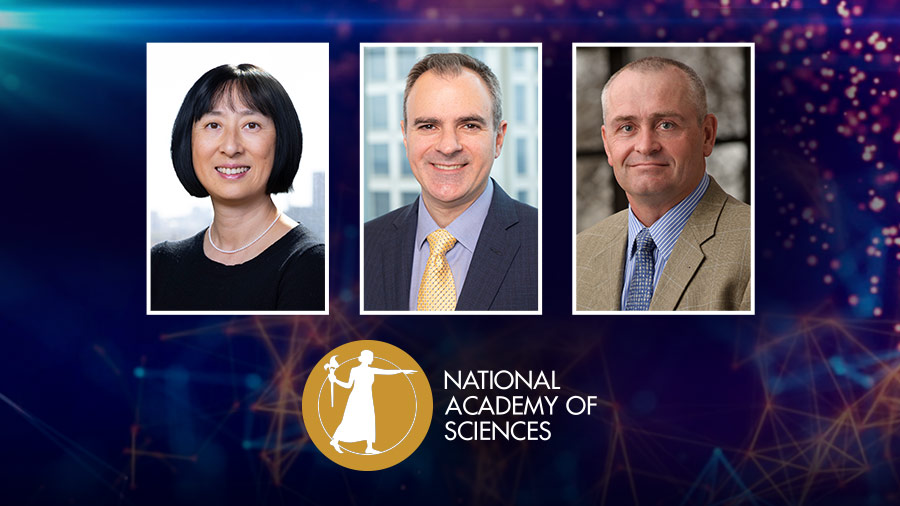
Congratulations to Elizabeth Chen, Ph.D., Ralph DeBerardinis, M.D., Ph.D., and Joel Elmquist, D.V.M., Ph.D., on their election to @theNASciences. UTSW now has 27 NAS members, more than all other institutions in Texas and the most in UT Southwestern history.
ADP-ribosylation is far more diverse than the usual mono vs poly view.
New sensitive tools from @Lab_Matic to resolve this complexity are a big step forward — expanding what more labs can now study.
https://t.co/wqH632mhkq