Excited to find out that our PARP review has been featured in @MolecularCell's Best of 2023 collection!
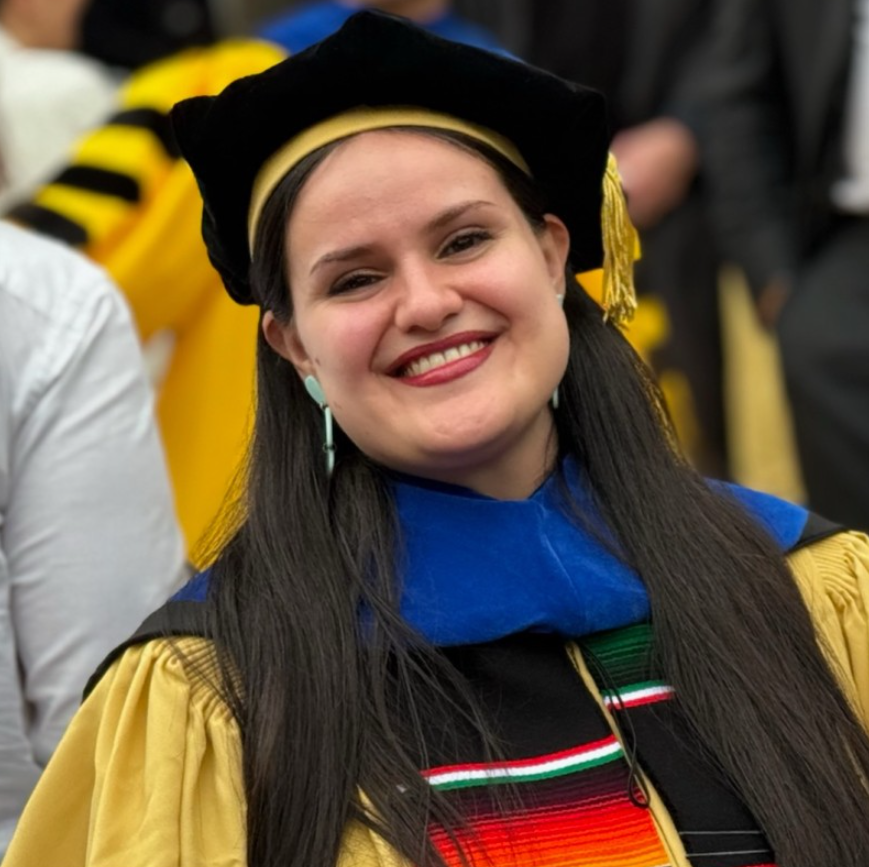
🌟 A BIG thank you for the recognition, and a shoutout to former @CbiJhu PhD student @DasovichMorgan!
Here's to celebrating the significant strides in our field! 🎉
#PARP Technology Update Thread 🎉
1/ Back in 2015, we published a review @MolecularCell! Since then, technology has advanced at lightning speed!🌩️ Time for an update, right?
With @DasovichMorgan from our lab, we've got you covered!
https://t.co/gk3XT6hnnr
Let's dive in! 🌊
A PAR spark lasting seconds. A FUS condensate that's still there long after.
How does a signal that fleeting leave a structure that stays?
Sharing this + new work on stress granules & antiviral defense next Tue Apr 28, 2:30pm at UW Pharmacology. Thanks to @shaoenong for hosting!
ADP-ribosylation doesn’t act alone.
Nice work from @IvanAhelLab showing how DTX2 generates a hybrid ADPr–ubiquitin mark at DNA damage sites — linking ADPr signaling directly to ubiquitin pathways.
https://t.co/SGHPjlwUt2
PARPs don’t just modify proteins — they shape how condensates form and behave.
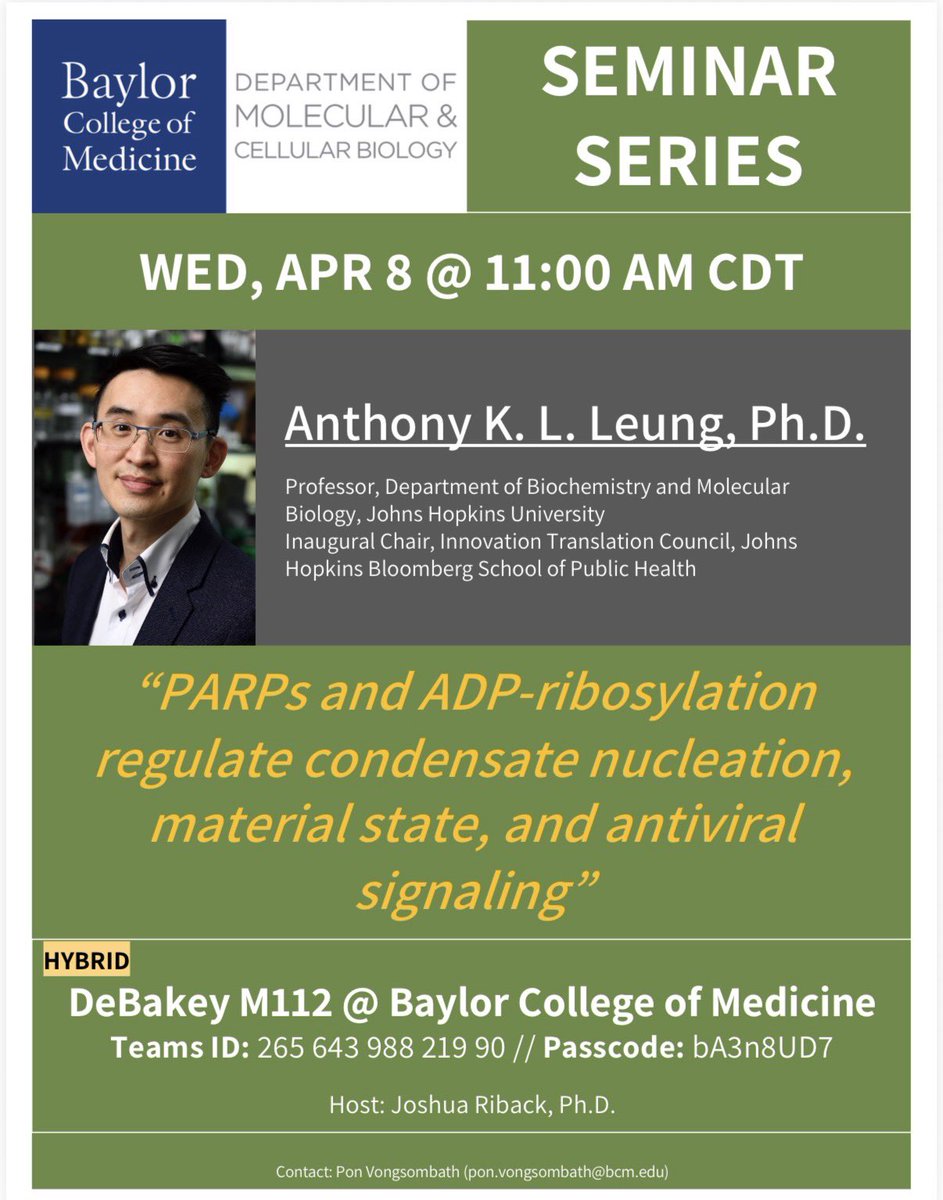
I’ll be speaking at Baylor College of Medicine on ADP-ribosylation in condensates and antiviral signaling.
Wed Apr 8, 11am CDT (hybrid)
If you’re nearby, come by — always better in person.
ADP-ribosylation is far more diverse than the usual mono vs poly view.
New sensitive tools from @Lab_Matic to resolve this complexity are a big step forward — expanding what more labs can now study.
https://t.co/wqH632mhkq
— with information carried in chain length and structure, not just chemistry.
That starts to look less like a simple modification, and more like a system shaping cellular organization.
The field is wide open.
Great to reconnect with old friends and meet new colleagues!
PARPs never fail to surprise.
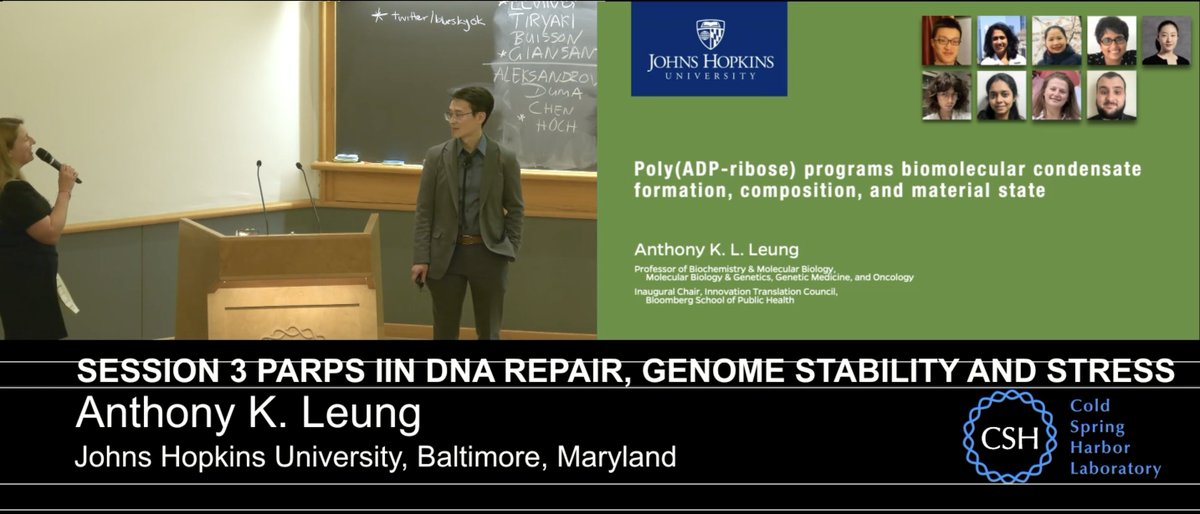
Back @CSHL — I kicked off a session on PARP stress responses, chaired a structural biology session, and joined a panel on PARP technologies.
What’s striking right now: ADP-ribosylation spans both proteins and nucleic acids
Flu infection flips a “PAR switch”:
instead of hitting new targets, cells lengthen poly(ADP-ribose) (PAR) chains on the same proteins to slow the virus.
Flu NS1 suppresses this; PARP1 drives it.
ELTA revealed both site & length changes.
https://t.co/4qoVyhPsQ7
We're influiastic about this research from the @LeungLab and Mehle lab!
Their @NatureComms paper shows that #InfluenzaA virus infection causes a dramatic upregulation of ADP-ribosylation that as part of the cellular antiviral response.
https://t.co/PvNZjK5nBe
What if RNA had a molecular twin?
Our new study w/ the Bedford Lab (MD Anderson) shows poly(ADP-ribose) (PAR) competes with RNA for the same proteins—creating RNA–PAR crosstalk.
Unlike RNA, PAR’s info isn’t in sequence but chain length.
🔗 https://t.co/0WIjbkiHb7
#PARcode
A whirlwind few days in Cancún for the 2nd Spatial Genome Conference 🌊
Great science, great people — and a reminder why we do this.
After 20 yrs in nuclear organization, ideas once “unorthodox” (like nuclear actin) are now gaining mainstream.
Science moves, and so should we.
Our Spatial Genome Organisation 2025 attendees! Some fantastic presentations, discussions and collaborations have taken place over the past 2 days, with plenty more to come. Its been a pleasure working with Karim, Irene and Matthias on this meeting, looking forward to what the future holds for this brilliant series 🇲🇽 @KarimMekhail@altmeyerlab
Thrilled our PAR-labeling tech supported new @Nature findings from the Gorbunova–Seluanov team! Characterizing CIRBP in bowhead whales reveals how PARP regulation may shape longevity. Kudos to Hongrui & Raymond!
🔗 https://t.co/eLkMW2k7Vg
Join us Oct 23 at 7 PM at @CharlesTheatre for Cracking the Code: Phil Sharp and the Biotech Revolution, narrated by Mark Ruffalo on RNA splicing & biotech’s rise.
JHTV Idea Board member Travis McCready is featured!
RSVP: https://t.co/qJZvVmPwZG
Trailer: https://t.co/6GDojPVqvf
This study identifies PARP10 as a key regulator of stress granule assembly by ADP-ribosylating G3BP1 and modulating eIF2α phosphorylation and translation factor recruitment @LeungLab@JohnsHopkinsSPH@JohnsHopkins@msg2aravinth https://t.co/fPRlVGiPTh
How do our cells build “emergency rooms” when under attack?
New paper from our lab out today in Life Science Alliance @LSAjournal : PARP10 acts as the starter pistol for stress granules—tiny hubs that help cells survive stress.
Read: https://t.co/SkNsxD4z3I
#PARP#StressGranules
Venturing beyond lab science at the Bloomberg American Health Summit 2025. Eye-opening conversations on social issues + how we can scale public health innovation to impact millions. Thanks @JOSHSHARFSTEIN for making this possible!
📢Deadline extended!
Our 2nd Spatial Genome Organisation Conference deadline has been extended to 25 Sep, dont miss out on joining our fantastic line up of speakers, alongside Karim, Matthias and Irene in what is set to be a fantastic meeting this October! #SGO25
Final slots ➡️https://t.co/kl9gBjkYvA
What a fantastic day of science at FCBIS! @fried_lab and I had a blast co-organizing this exciting dive into the chemistry-biology interface—great conversations, amazing energy, and a standout keynote by @edward_marcotte. Thanks to all who joined us!