This account posts cardiology clinical reasoning cases.
Five a week. Question in the evening, answer the next morning.
Every case is fictional. No real patient data, ever.
No consultations, no personal advice — please see your own doctor.
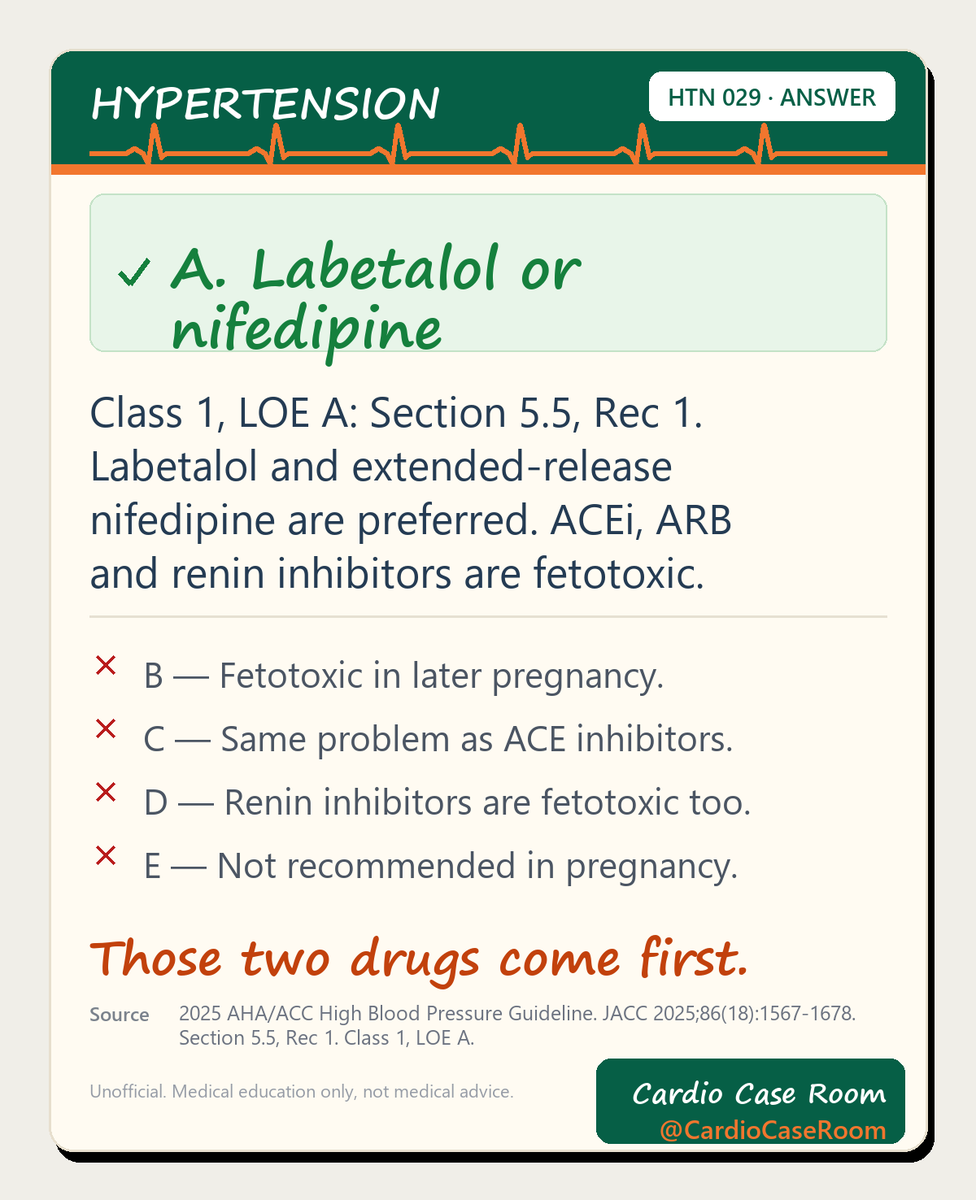
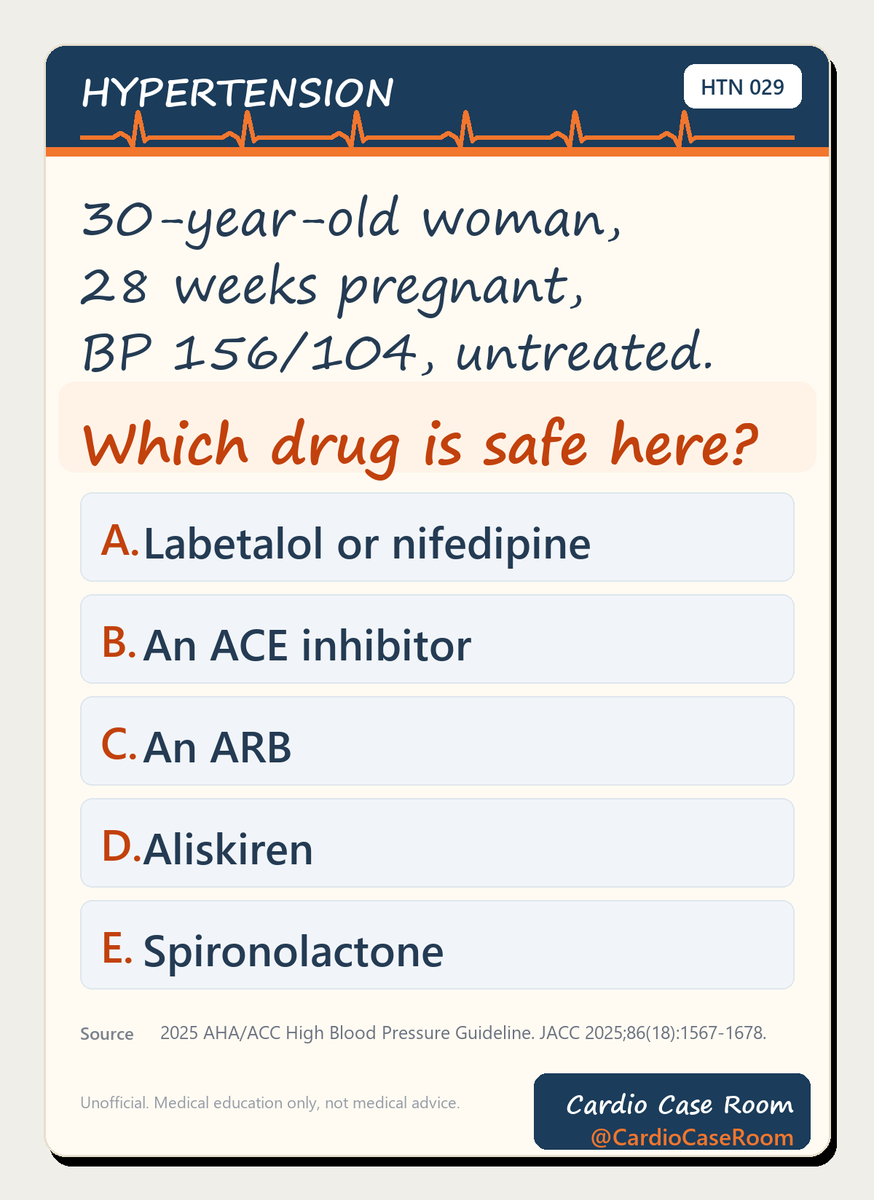
@franciscojlk For oral maintenance in pregnancy, I'd use labetalol or extended-release nifedipine. ACE inhibitors, ARBs and direct renin inhibitors are the ones I'd avoid because fetal kidney injury can cause oligohydramnios.
Why not the others:
B — Fetotoxic in the second half of pregnancy.
C — Same problem as the ACE inhibitors.
D — Renin inhibitors are fetotoxic too.
E — Not recommended in pregnancy.
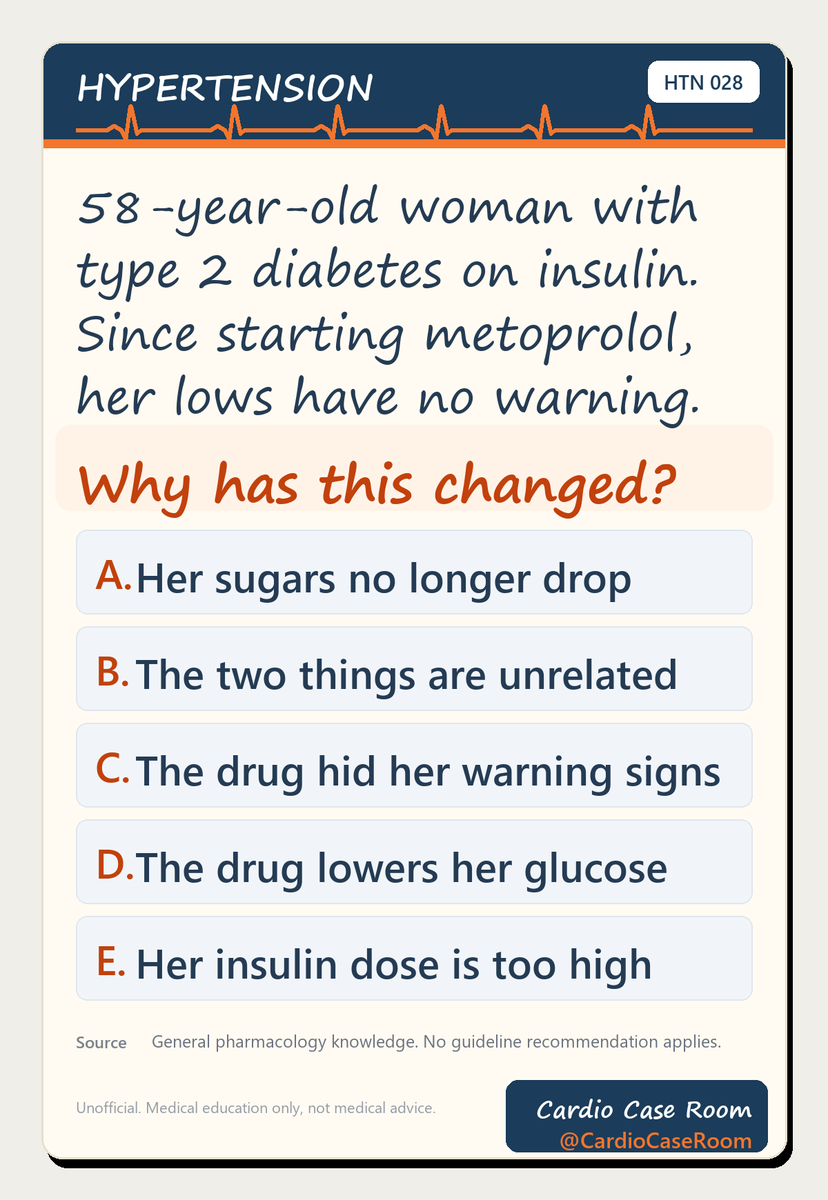
Why not the others:
A — The lows still happen; only the signal went.
B — The timing points straight at the new drug.
D — They do not lower glucose; they can worsen insulin lows.
E — Insulin is not the problem here.
@ManualOMedicine Light–near dissociation. That points to the dorsal midbrain: the pretectal light-reflex pathway is interrupted, while the near response still reaches the Edinger–Westphal nucleus through a separate cortical route.
Why not the others:
B — ACE inhibitors raise potassium, not lower it.
C — Ankle swelling is a calcium
channel blocker problem.
D — They lower pressure; that is the point of them.
E — Cough is real, but it is not why this is unsafe.
@HiraaliCardio Inspiration is the clue: it tests ventricular interdependence. In constriction, the fixed pericardium makes right-heart filling rise at the expense of left-heart filling; restrictive cardiomyopathy lacks that exaggerated coupling.
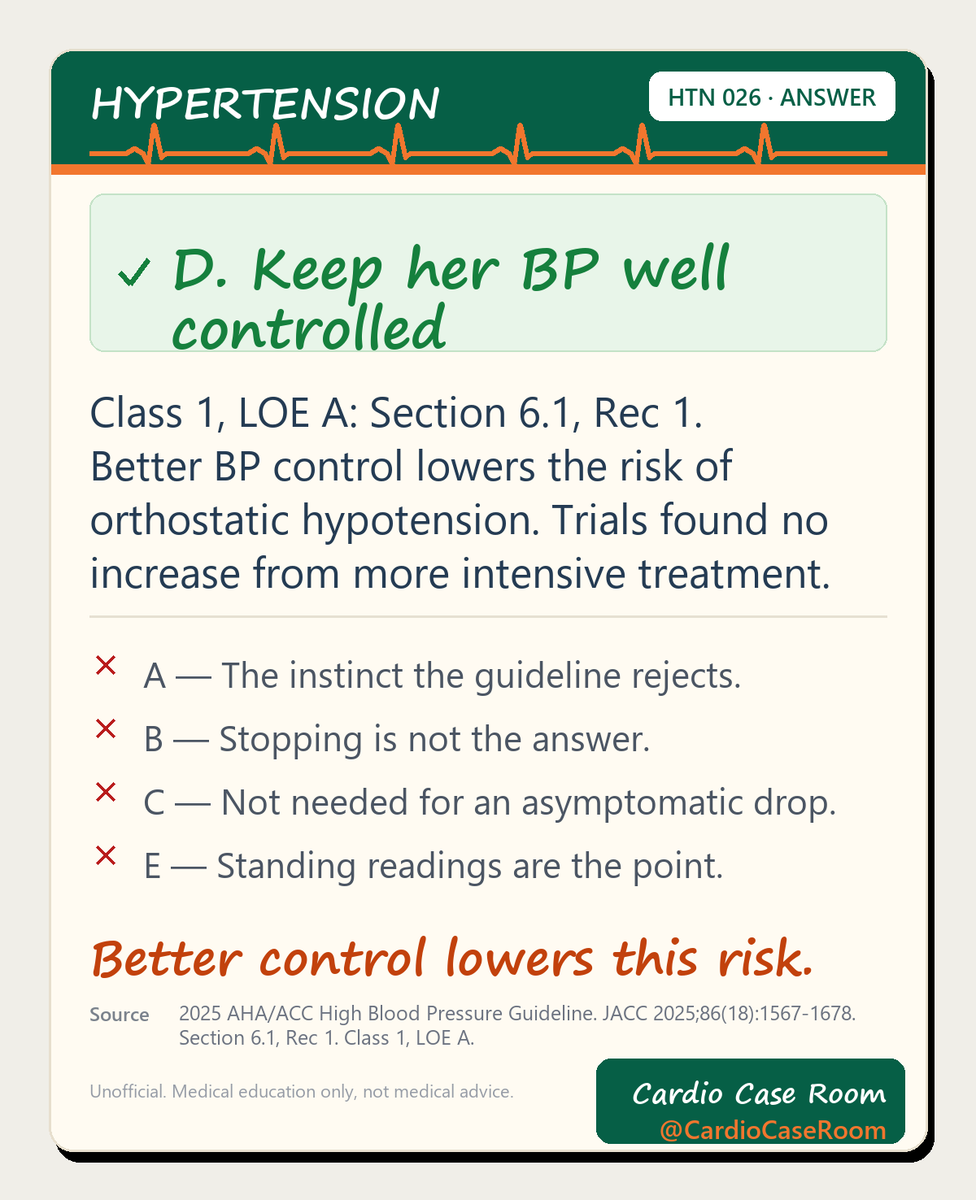
Why not the others:
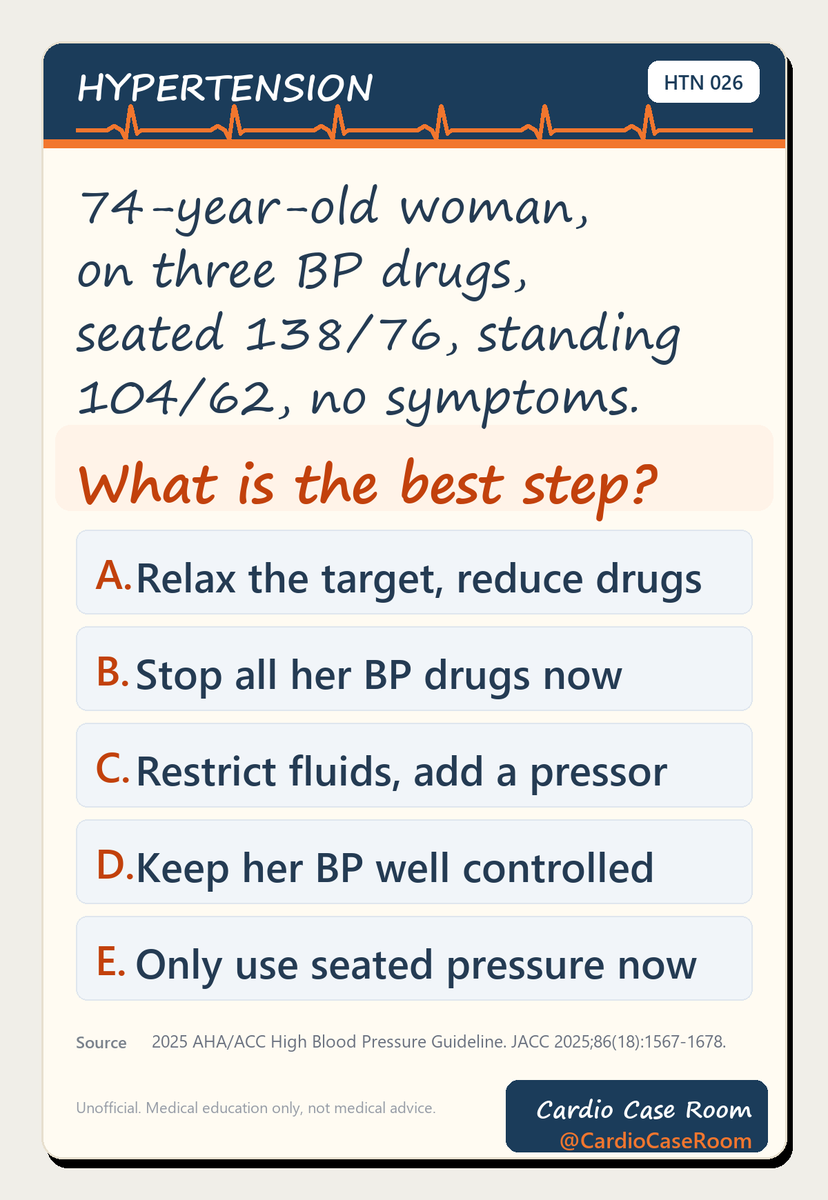
A — Backing off is the instinct the guideline rejects.
B — 138/76 is still above goal; stopping gives up real benefit.
C — Fluids and pressors are for symptomatic drops.
E — Seated-only readings hide the whole problem.
Why not the others:
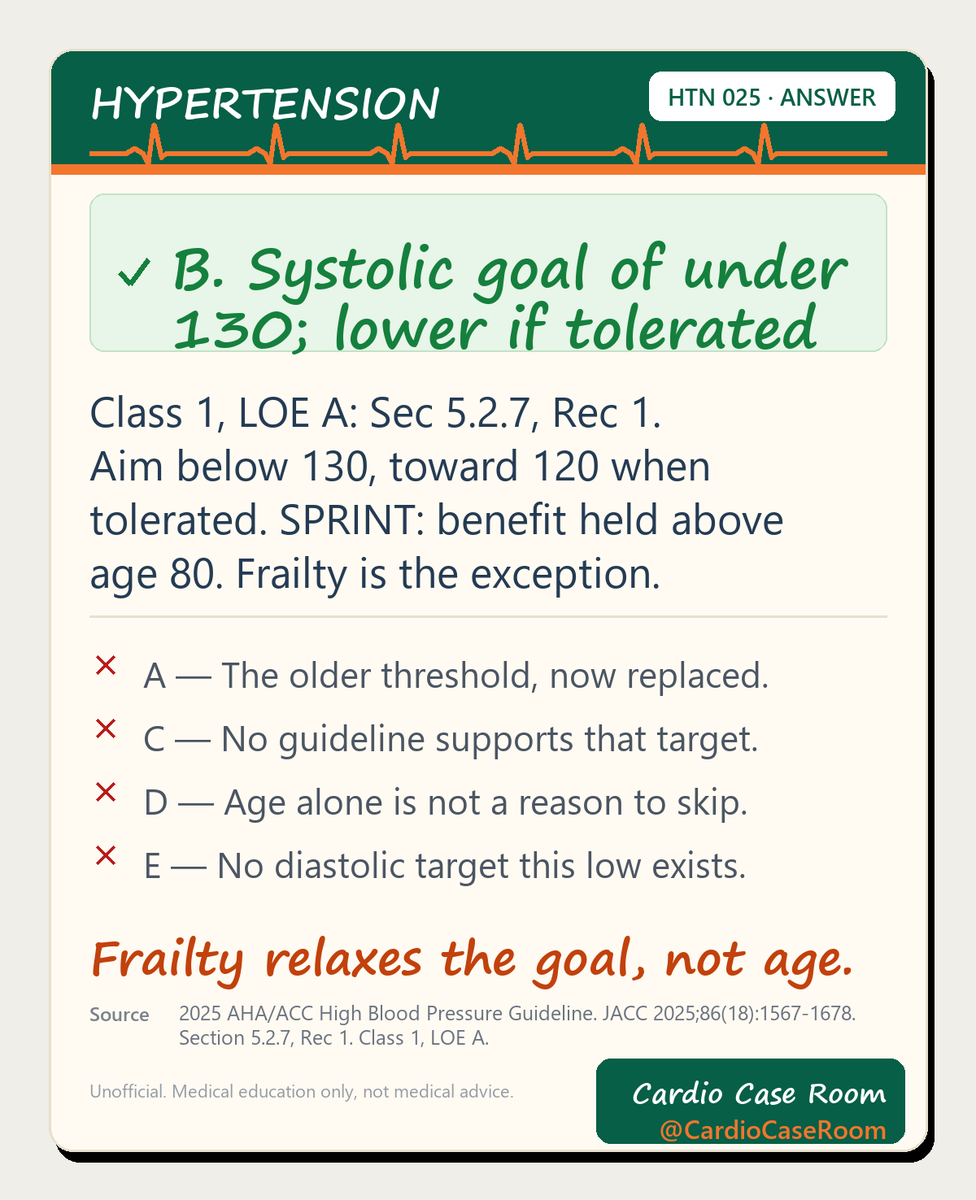
A — 150 was the old threshold for older adults.
C — No guideline sets a goal of 160.
D — Age alone is not a reason to skip treatment.
E — The diastolic goal is below 80, not 70.
@ManualOMedicine Cardiogenic pulmonary edema. Smooth septal thickening favors hydrostatic edema; nodular or ground-glass opacities would point instead to infection or hemorrhage.