@raffcolo@HartungIngo Do you have a model to test ADC efficacy in a highly fibrotic TME? PANC CDX models usually lack clinically relevant fibrosis, so it’s unclear whether the ADC can effectively reach tumor cells in this context.
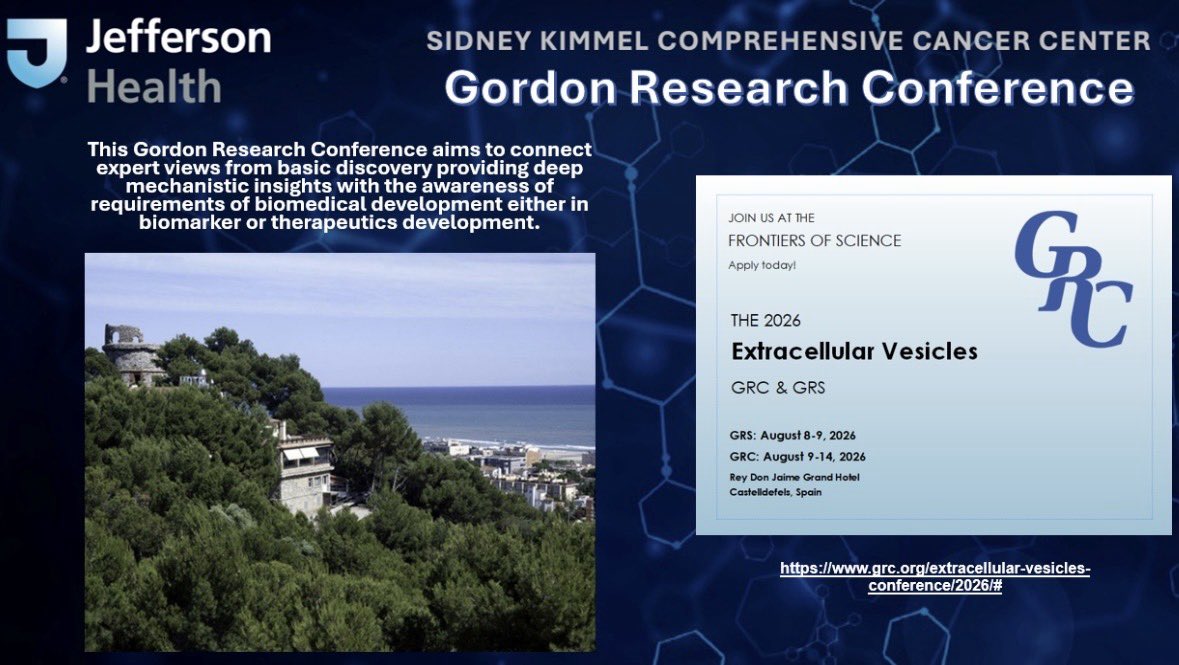
@LanguinoLu21124 Time to apply for the August 2026 Gordon Research Conference on Extracellular Vesicles: basic science discoveries, biomarker and therapeutic development.
Limited number: GRC allows only 200 participants.
Location: Barcelona, Spain 2026.
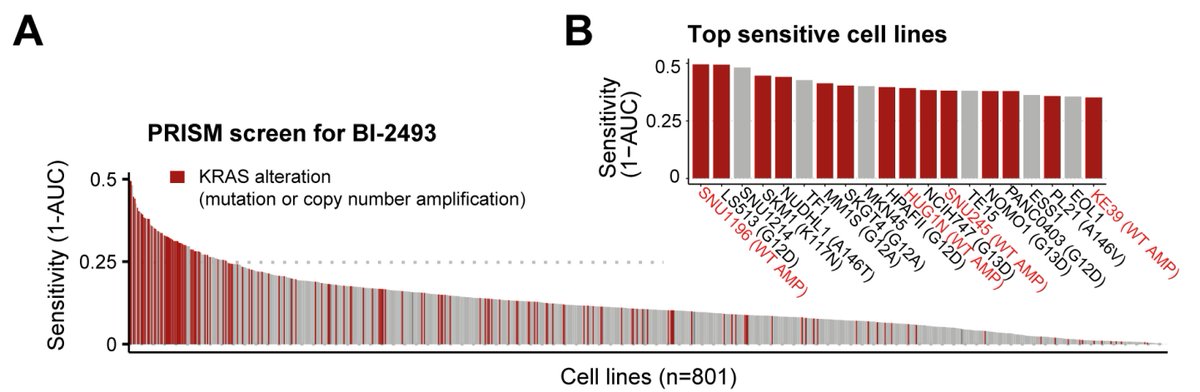
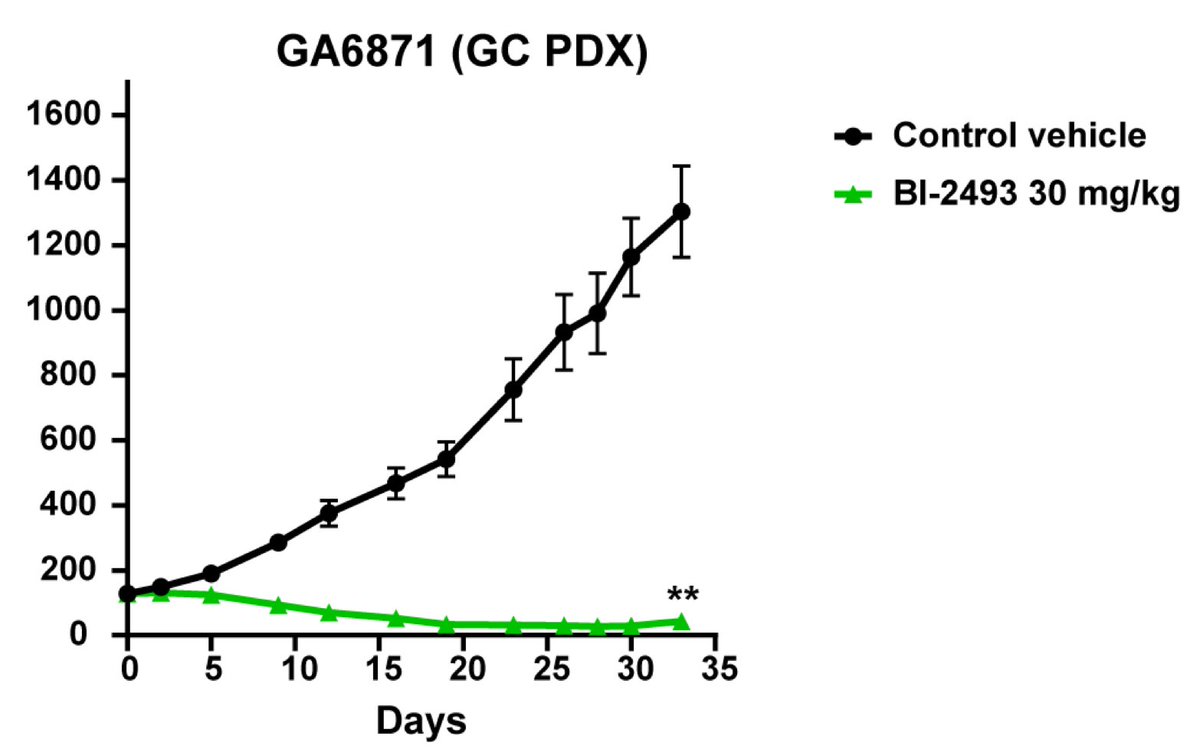
Excited to share our recent work on the pan-KRAS inhibitors BI-2493 and BI-2865, displaying potent anti-tumor activity in tumors with #KRAS wild-type allele amplification.
https://t.co/Da3W0Fkydy
Great team effort by team @Boehringer !
Could one envision a synthetic receptor technology that is fully programmable, able to detect diverse extracellular antigens – both soluble and cell-attached – and convert that recognition into a wide range of intracellular responses, from transgene expression and real-time fluorescence to modulation of innate cell behavior (excitation or inhibition of neurons, induction of cell migration, etc.)?
Today we report in Nature a new technology platform that provides a step in that direction: PAGERs, for Programmable Antigen-gated G protein-coupled Engineered Receptors, convert recognition of extracellular soluble or cell-attached antigens into diverse user-selected responses. PAGERs are based on G-protein coupled receptors (GPCRs), which themselves are not structurally modular, but we were able to build in modular antigen gating by fusing an antagonist peptide to the extracellular N-terminal end, and then gating the antagonist with a fused antigen-binding nanobody. When antigen binds, it sterically interferes with the antagonist, leading to relief of receptor inhibition. Drug or agonist can then turn on PAGER.
https://t.co/Clt8yjyk2y
I'm thrilled to share our new study of the spatial evolution of Kras;p53-driven mouse lung adenocarcinoma! It's been fantastic leading this with @dianyang1117 & @sundakao, and enjoying a long-standing collaboration with @JswLab@YosefLab & @insitubiology. https://t.co/8WfzZPFWTo
Open season on FOXA1! Our paper with the Cravatt group is out today in @MolecularCell. Please check out the updated data, including a new discovery that FOXA1 ligands mirror the effects of a nearby prostate cancer mutation. https://t.co/CiO6oRVx9N (1/2)
🚨🚨Now online @NatureCancer, my postdoc work in @SawyersLabMSKCC with @dana_peer 🚨🚨 we establish a powerful organoid transplantation model of prostate cancer neuroendocrine transformation. Open access for all! @HHMINEWS
https://t.co/FJc0WSBvDQ
A 🧵... /1
Delighted to share our research @Cancer_Cell@MSKCancerCenter ! We explore the mechanisms behind variable #BreastCancer responses to CDK4/6 inhibitors. TP53 mutation is linked to lack of long-term disease control.
https://t.co/VK4gRpkp70
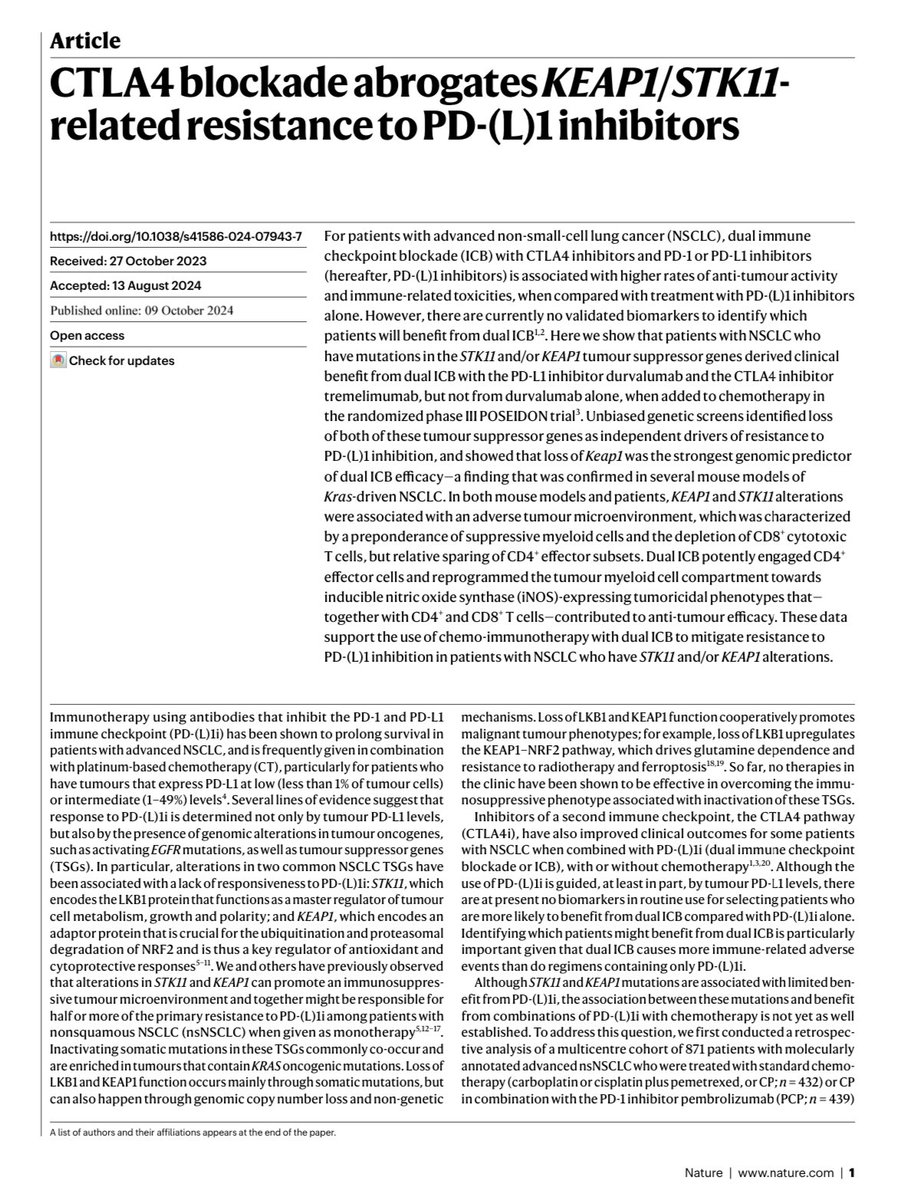
Excited to share our new study @Nature. Very grateful for the support of our collaborators, pharma and biotech partners and members of the Skoulidis and Heymach labs. Special thanks to star fellow @_hanielaraujo and @minhtruongdo. Thankful to our patients. @MDAndersonNews
Thrilled to share that, together with my colleagues @UoDCeTPD and collaborators @Boehringer, we report @ScienceMagazine the breakthrough discovery and characterization of a small-molecule that degrades most oncogenic mutant forms of KRAS. 1/8 https://t.co/PT8miaXUnR
Excited to share our study in @CellCellPress on expanding the druggability of GTPases beyond K-Ras and start putting the entire family (150+ proteins) on the map of drug discovery! @kevansf@UCSF@UCSFCancer @HHMINEWS (1/7)
https://t.co/1AO6hxYKUy
New print posted from the group @Amgen. We describe VIPER-TACs that leverage viral E3 ligases for disease-specific targeted protein degradation. This concept dramatically expands he druggable space to include pan-essential proteins. 🧵 #mycompany https://t.co/UwgRpIbeAL