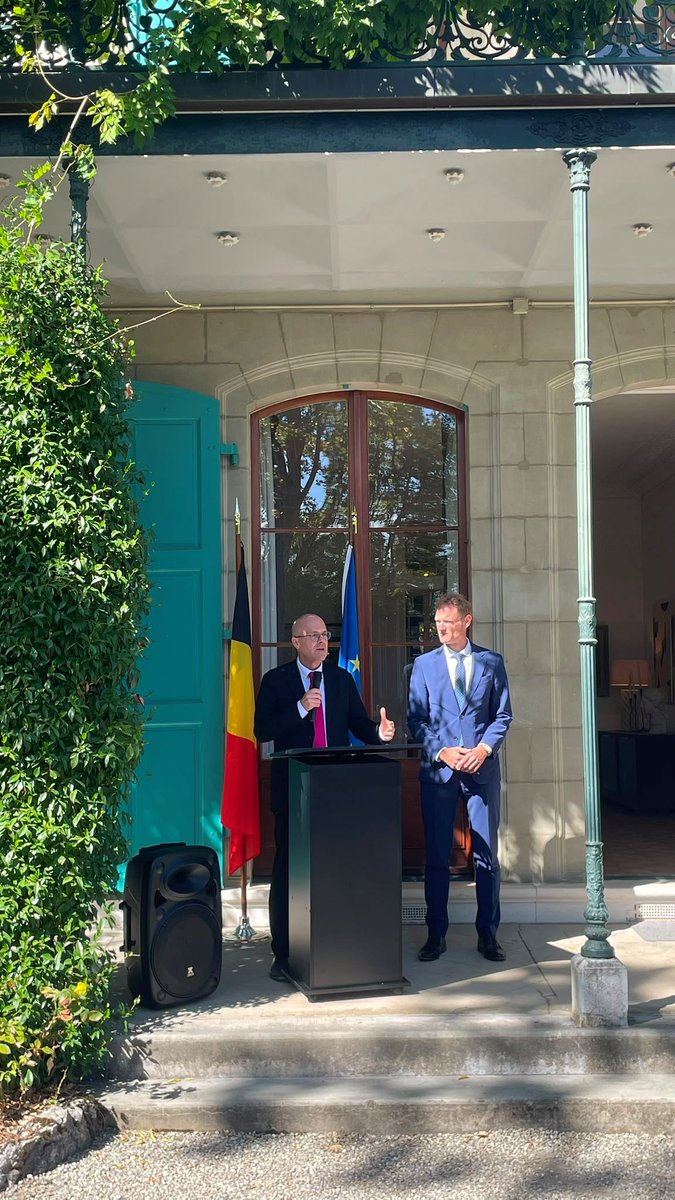
In 1995, I was a young doctor on a children’s ward in Kismayo, Somalia. Today, I stood before WHO’s Member States to set out my vision for the Organization’s future.
At the first Candidates’ Forum for WHO Director-General, I presented my manifesto, Rebuilding WHO Together, and answered questions from 16 Member States across all six WHO regions.
The principle that guided me in Kismayo still guides me today: every patient deserves equal dignity, and every country deserves a @WHO that listens and responds to its needs.
Thank you to Member States for their questions. I’m sharing the video of my presentation below, and you can read the manifesto in all six official languages on my website: https://t.co/pvkRMsQu5T
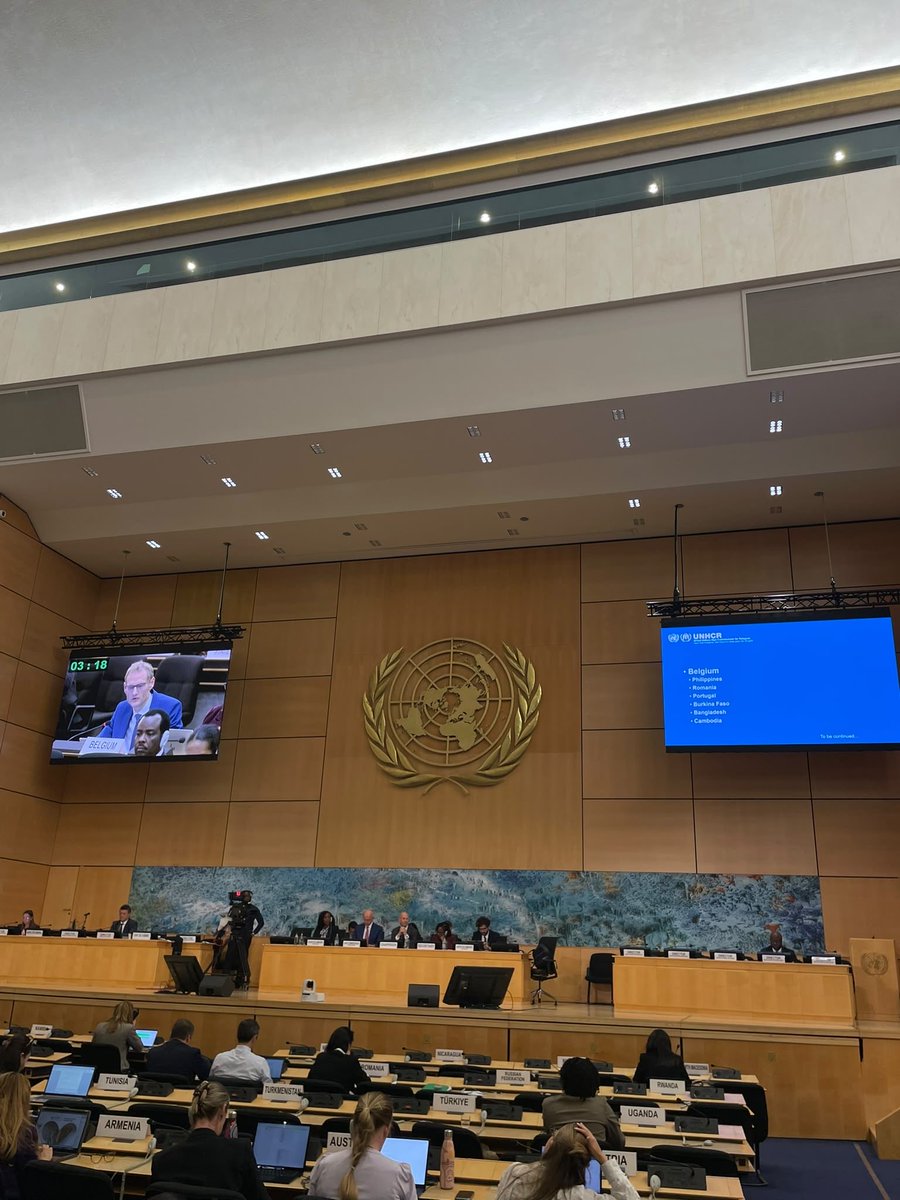
At today’s @WHO Director-General Candidate Forum, 🇧🇪Belgium’s nominee @hans_kluge outlined his vision for a stronger, more responsive WHO: driven by countries’ needs and building on the expertise and capacities they already possess.
#WHO#GlobalHealth 1/2
Ukraine is the most heavily mined country in the world. This week in Brussels, Belgium co-hosted #UMAC2026 with Ukraine and the EU. Opened by HRH Princess Astrid, Special Envoy of the Ottawa Convention, the conference closed today with a strengthened partnership for demining.
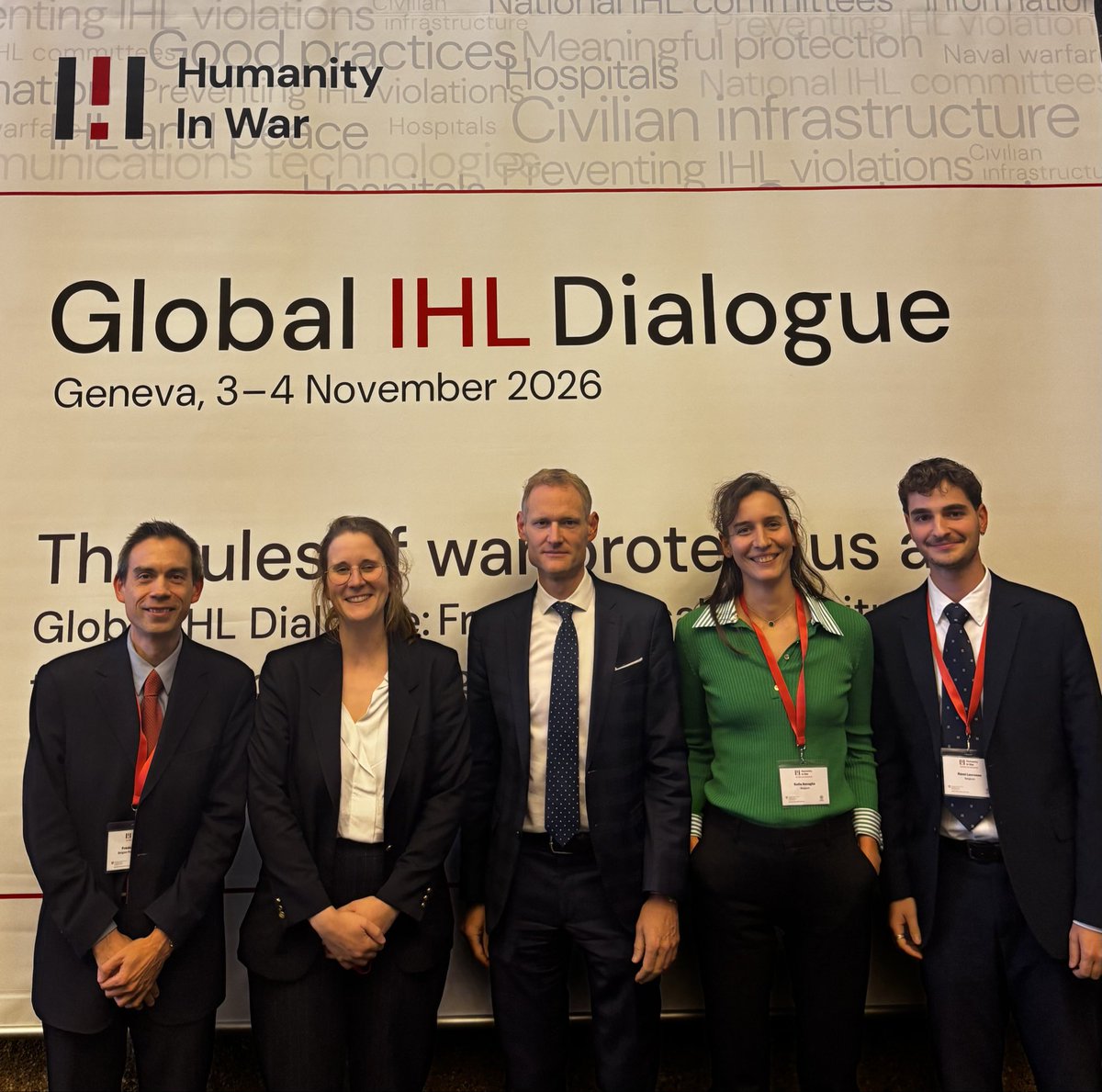
🇧🇪 has constructively contributed to the Global #IHL Dialogue led by @icrc and to the outcome documents from the Global Initiative, and is engaged in turning commitments into action. The next step is clear: States must now take ownership and deliver. #HumanityInWar
🇺🇳 On #UNDay, we celebrate Belgium’s commitment to the UN, from dialogue & international law to human rights, gender equality, humanitarian action, sustainability, and more.
🇧🇪🌍Our Permanent Representations to the United Nations work every day to advance these priorities.
Happy #UNday ! 🎉🇺🇳🤩
Peace, human rights, sustainable development, global health, support for refugees - the UN works on challenges that affect us all. 🌍
Let‘s celebrate the power of bringing the world together! 🤝
#MultilateralismMatters#EUintheUN
Mes remerciements à Sa Majesté la Reine Mathilde @MonarchieBe pour ce nouvel échange approfondi sur les défis à venir et pour son immense solidarité avec notre travail.
🕊️Protection cannot become a victim of the funding crisis.
@UNHCRExCom77: Belgium reaffirmed its strong support for refugee protection, durable solutions, and flexible funding for #UNHCR. In times of growing needs and shrinking resources, a strong UNHCR remains indispensable.🕊️🌍
Charleroi (Belgium), Liverpool (United Kingdom), and Shanghai (China) are the first WIPO City of Innovation award winners 🏆
They were recognized for their commitments to advancing innovation and creativity in their communities.
🔗 https://t.co/9FkGUoawY7
#WIPOCityofInnovation
✨We congratulate Navanethem “Navi” Pillay on receiving the 2026 Nobel Peace Prize.
This honours her life’s work and all those defending int. law and human rights, and advancing peace, justice & human dignity.
A reminder that the force of law must prevail over the law of force.
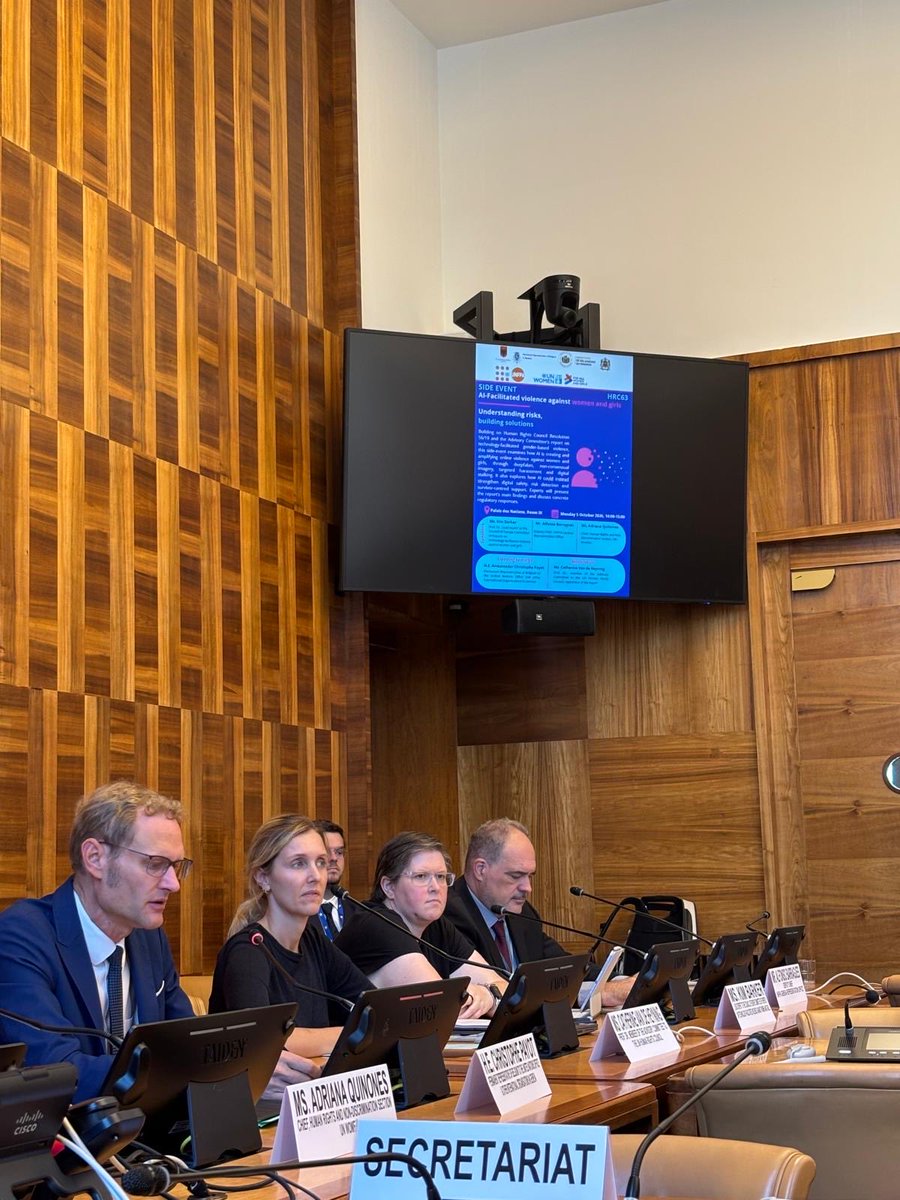
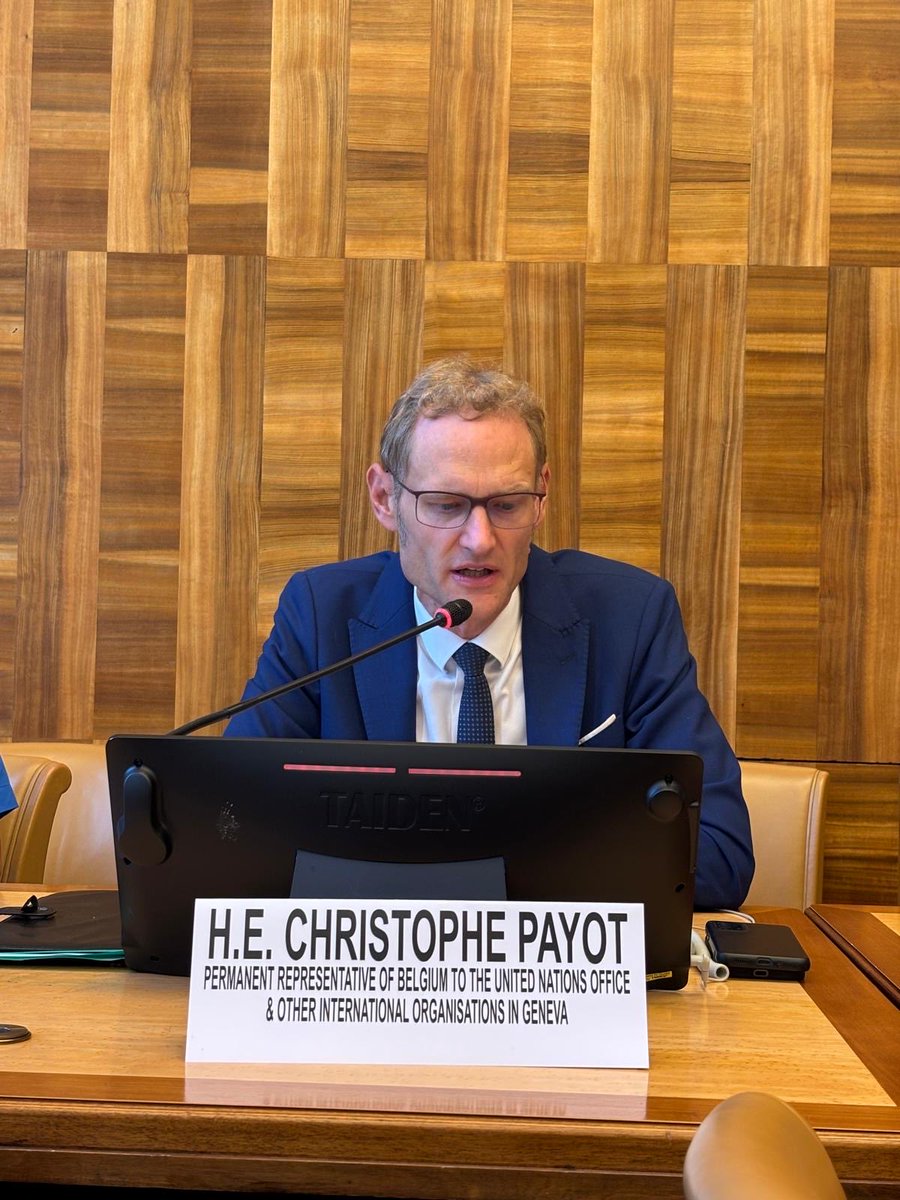
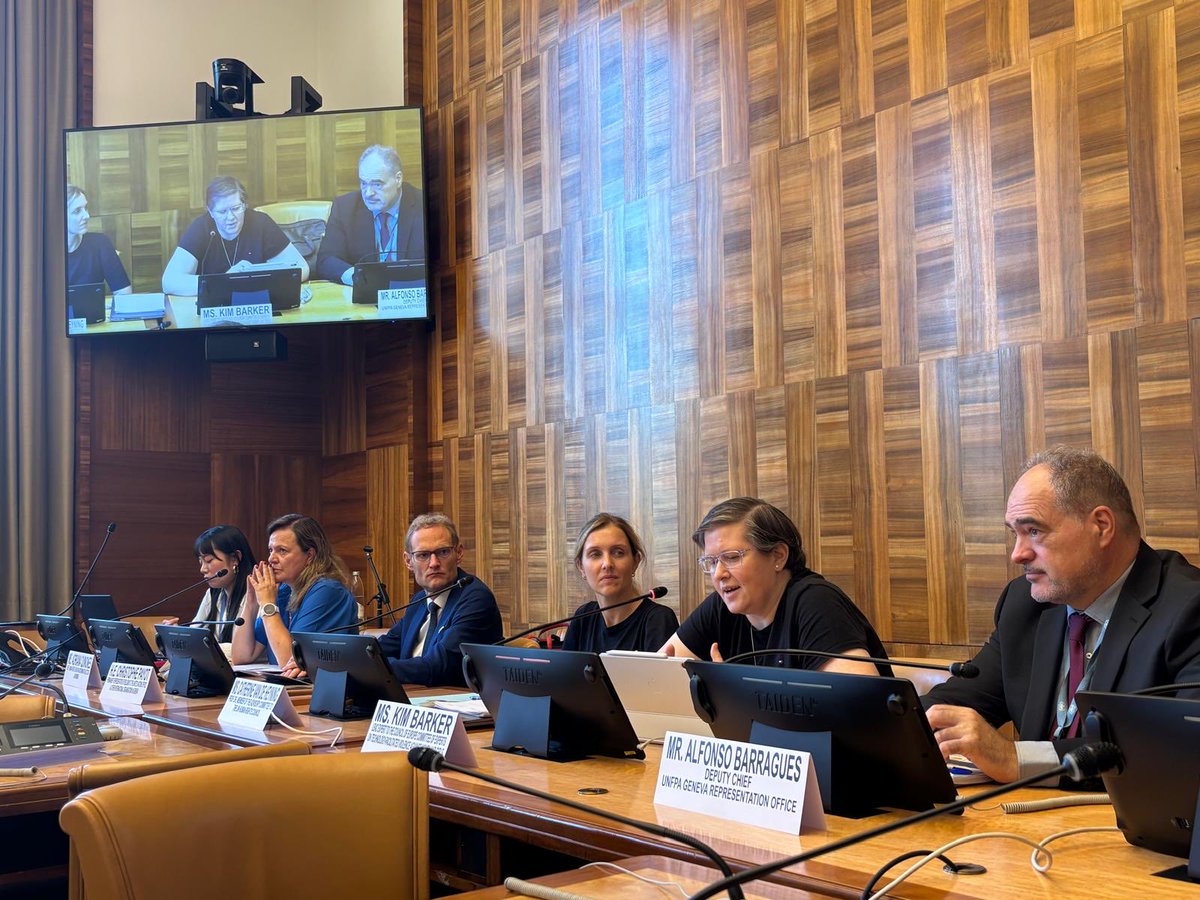
Belgium was pleased to co-organize a side event on #AI facilitated gender-based violence at #HRC63.
Discussions highlighted both the risks it poses, and AI’s potential for gender equality.
A key takeaway: human rights and gender equality must be at the heart of AI governance.
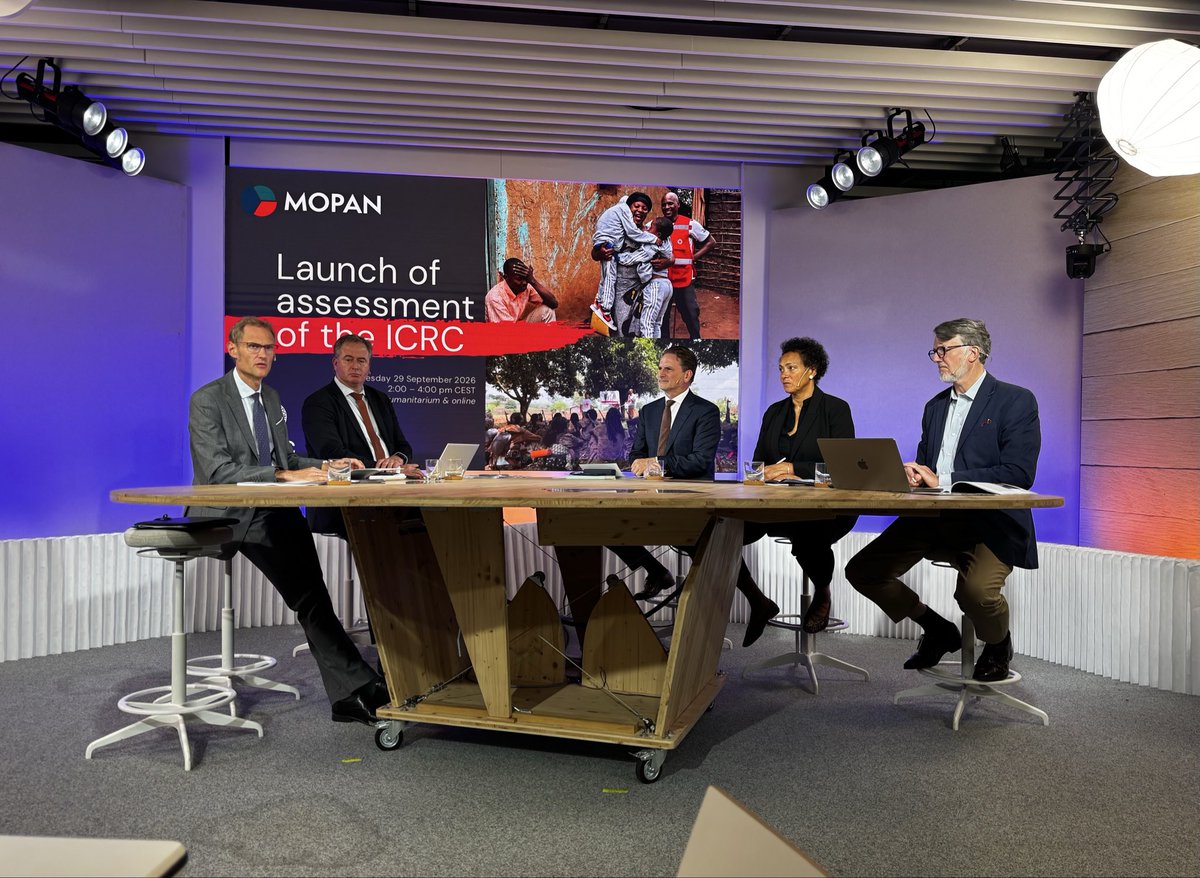
Congrats to @ICRC for its engagement throughout @MOPANetwork's assessment process. 🇧🇪+🇳🇱 proudly served as Institutional Lead, helping ensure a smooth and meaningful review. The assessment confirms ICRC's longstanding strengths and reinforces Belgium's trust in the organization.
🇧🇪 Yesterday, the HRC adopted Belgium’s 4th UPR report. Following this process through which Belgium engaged in a dialogue with other Member States and civil society on its human rights record, the work continues with the implementation of the 227 accepted recommendations.
WHO stands at a crossroads: its future depends on the strength of its science, the trust of Member States and its ability to support countries in very different circumstances.
This was a common thread in my meetings at @UNGeneva with representatives of France 🇫🇷, Germany 🇩🇪, Japan 🇯🇵, Lebanon 🇱🇧, Norway 🇳🇴, the Republic of Korea 🇰🇷and the United Kingdom 🇬🇧.
We discussed WHO’s convening role in a changing global health architecture and how the next Director-General can help Member States bridge differences, including in the remaining negotiations on pathogen access and benefit-sharing under the Pandemic Agreement, and ensure fair representation across the Organization.
The exchanges also brought the realities countries face into focus: from making advances in health data, medical AI and biomanufacturing work for the Global South to supporting health systems strained by conflict and displacement as mental health needs grow.
I take these concerns seriously because they speak to whether countries can rely on WHO in practice. Listening to them strengthens my commitment to the direction set out in my manifesto: a science-led, country-first WHO with stable and predictable financing, where headquarters, regional and country offices work together to serve Member States better.
My thanks to all seven delegations for their candid questions, generous feedback and commitment to a stronger WHO.
@FranceONUGeneve | @CelineJurgensen | @GermanyUNGeneva | @JapanMissionGE | @mofalebanon1 | @NorwayInGeneva | @geneva_korea | @UKMissionGeneva | @KumarIyerUK | @BelgiumUNGeneva | @ChPayot
For small countries and island states, the question is not which health challenge to tackle first, but how to address several at once – with limited data, stretched workforces and communities separated by vast distances.
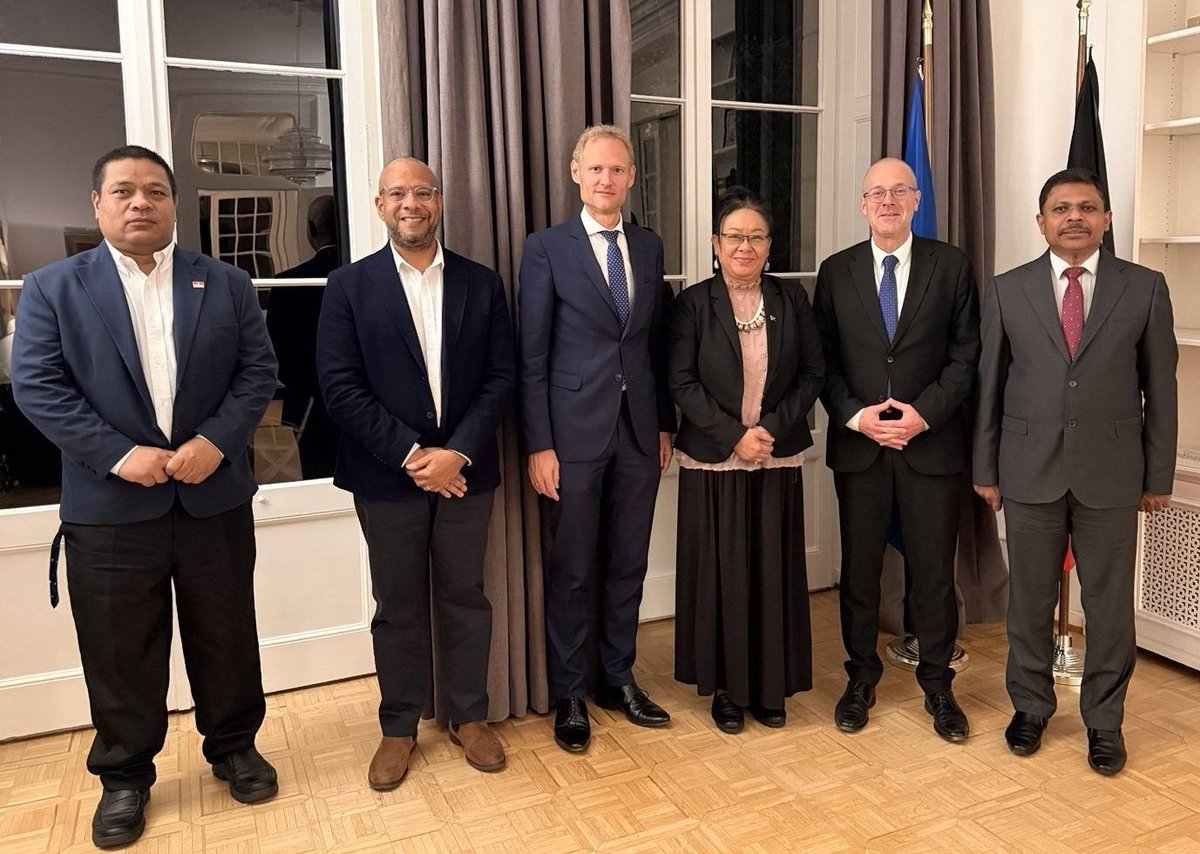
That came through clearly in my exchange at @UNGeneva with representatives of Barbados 🇧🇧, Kiribati 🇰🇮, the Marshall Islands 🇲🇭 and Sri Lanka 🇱🇰.
They raised concerns about equity in pandemic preparedness and access to vaccines and medicines; long-term health concerns linked to nuclear testing; TB and rheumatic fever; and climate shocks that damage facilities and disrupt supplies.
Noncommunicable diseases (NCDs) came up repeatedly. The scale of the burden explains why: in 2019, eight of the 15 countries worldwide where the risk of premature death from major NCDs exceeded 30% were Small Island Developing States (SIDS).
The Bridgetown Declaration, adopted in Barbados, captures this reality by linking #NCDs and mental health with the climate crisis. Prime Minister Mia Mottley’s leadership on antimicrobial resistance reinforces this call for joined-up action.
In my manifesto, I commit to equal treatment for small countries and island states across @WHO, including by appointing a Special Envoy. I am grateful for this candid and substantive exchange.
Le transfert de technologie n’est qu’un début. Sa valeur réside dans les capacités locales durables qu’il permet de créer.
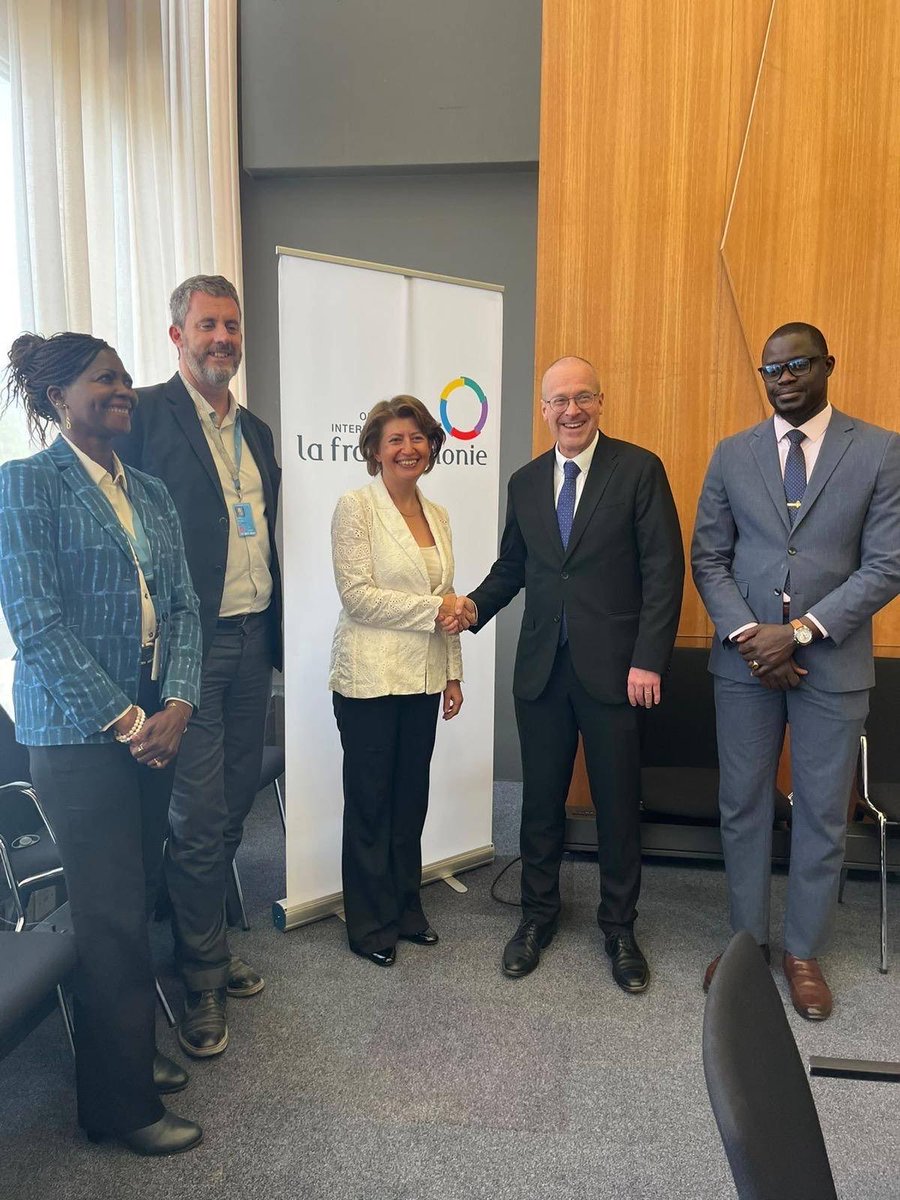
J’ai eu le plaisir de me joindre au deuxième échange francophone consacré aux progrès de la production de vaccins à ARN messager, organisé conjointement par l’OMS et l’Organisation internationale de la Francophonie (OIF).
Les échanges ont porté sur l’écosystème indispensable à la production locale : recherche, professionnels qualifiés, infrastructures, cadre réglementaire favorable et financement pérenne. Ces éléments réunis peuvent faire en sorte que le transfert de technologie se traduise par des vaccins produits au plus près des populations qui en ont besoin.
Cette ambition est également portée par mon manifeste : garantir un accès équitable aux vaccins, aux produits de diagnostic et aux traitements, et développer les capacités régionales et locales de production.
La Francophonie ne se résume pas à une langue partagée. Elle peut faire avancer cette ambition en rapprochant les pays, les expertises et les partenaires.
Merci à l’Ambassadrice Hasmik Tolmajian, Représentante permanente de l’Arménie, à Mme Nathalie Odounlami Beugger et M. Antoine Barbry de l’OIF, ainsi qu’à M. Édouard Ndiagne de la Mission permanente du Sénégal, pour leur accueil chaleureux.
WHO needs reform, but Member States are tired of reform processes that consume time without improving the support they receive.
These concerns shaped my exchange in @UNGeneva with representatives of @WHO Member States from the Region of the Americas: Brazil 🇧🇷, Canada 🇨🇦, Costa Rica 🇨🇷, the Dominican Republic 🇩🇴, Haiti 🇭🇹, Mexico 🇲🇽 and Peru 🇵🇪.
They raised fundamental questions ranging from preserving WHO’s universality when Member States step away and securing more sustainable financing to strengthening research, upholding multilingualism and advancing equity, including gender equality, disability inclusion and migrant health.
My response was that reform cannot become another restructuring exercise. It should make WHO more focused, accountable and responsive to countries; break down silos; protect public health from political divisions; and direct expertise and resources where they are most needed.
Equity should be visible in how WHO works - from whose voices shape decisions to whether documents are available on time in all official languages.
I look forward to continuing these conversations next week in Washington at PAHO’s 63rd Directing Council and the 78th Session of the Regional Committee of WHO for the Americas.
@pahowho | @DirOPSPAHO | @opsoms | @BrazilUNGeneva | @CanadaGeneva | @costarica_ungva | @RDenONUGinebra | @Haiti_UNOG | @MisionMexOI | @PeruEnGinebra | @BelgiumUNGeneva | @ChPayot
How can @WHO keep health above politics, secure sustainable financing, guide AI responsibly and serve countries with limited resources and capacity?
These questions were central to my meetings in Geneva with Ambassadors @AmbAlaaHegazy of Egypt 🇪🇬, @RPDSUBEDI of Nepal 🇳🇵, @KhadraDuale of Somalia 🇸🇴 and Zaheer Laher of South Africa 🇿🇦 - their countries’ Permanent Representatives to @UNGeneva.
Each brought a distinct perspective. We discussed access to specialized care in fragile settings; the needs of smaller countries with limited purchasing power and research capacity; local manufacturing and the role of traditional medicine; and the standards needed to ensure that AI and other technologies support safe and equitable care.
My manifesto speaks directly to these concerns. It calls for a country-first WHO that listens to countries, responds to their different realities and has the stable and predictable financing needed to support them. Such a WHO would set global norms and standards; be guided by science and preserve the independence of its technical work; and ensure that its senior leadership is diverse, regionally representative and selected on merit.
I am grateful to the four ambassadors for such frank exchanges, and to Ambassador @ChPayot, Belgium’s 🇧🇪Permanent Representative to the @UN in Geneva, for his support and for accompanying me throughout these engagements.
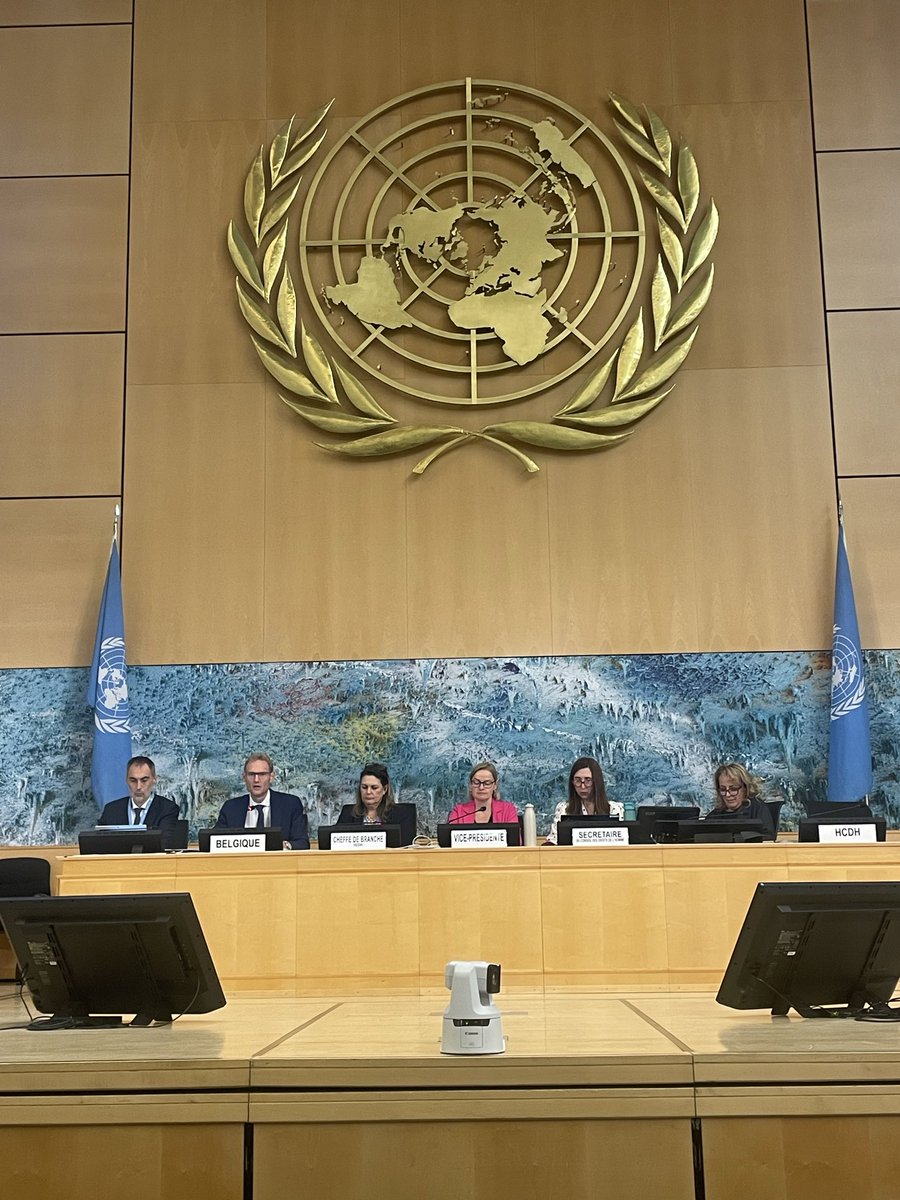
🇺🇳🇧🇪Today in Geneva, Dr. Hans Kluge, the Belgian nominee for @WHO Director-General, engaged in constructive dialogues with various Member State delegations. He presented his comprehensive vision for the future of the World Health Organization 🌎
1/4
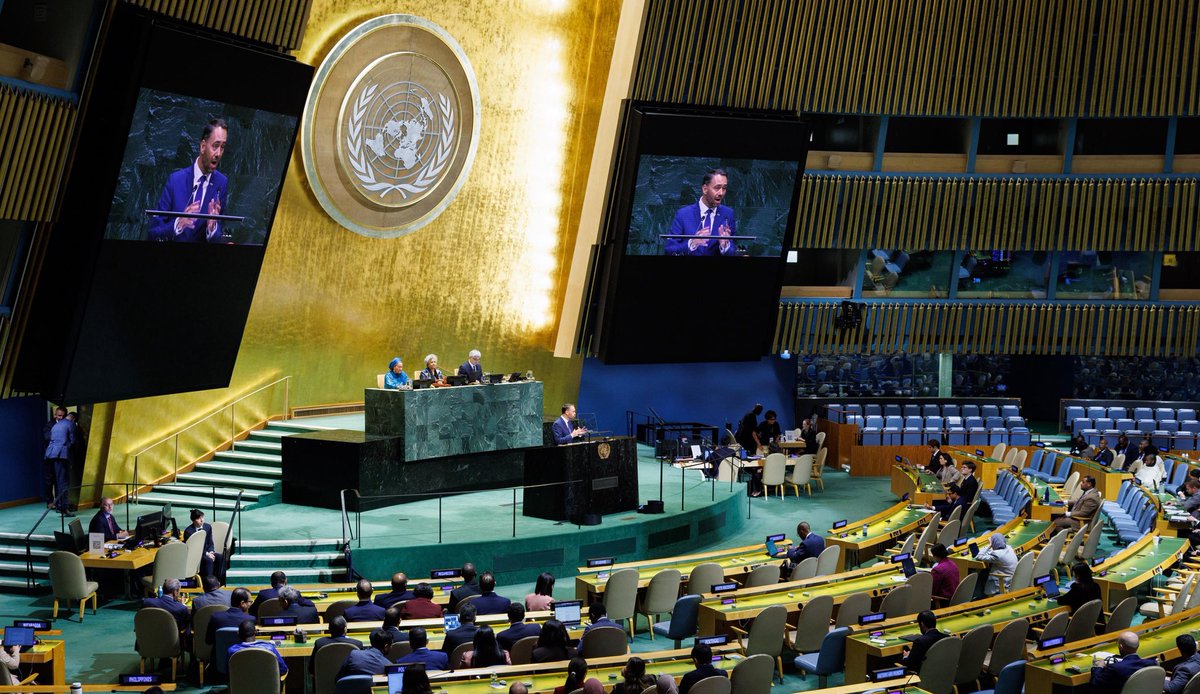
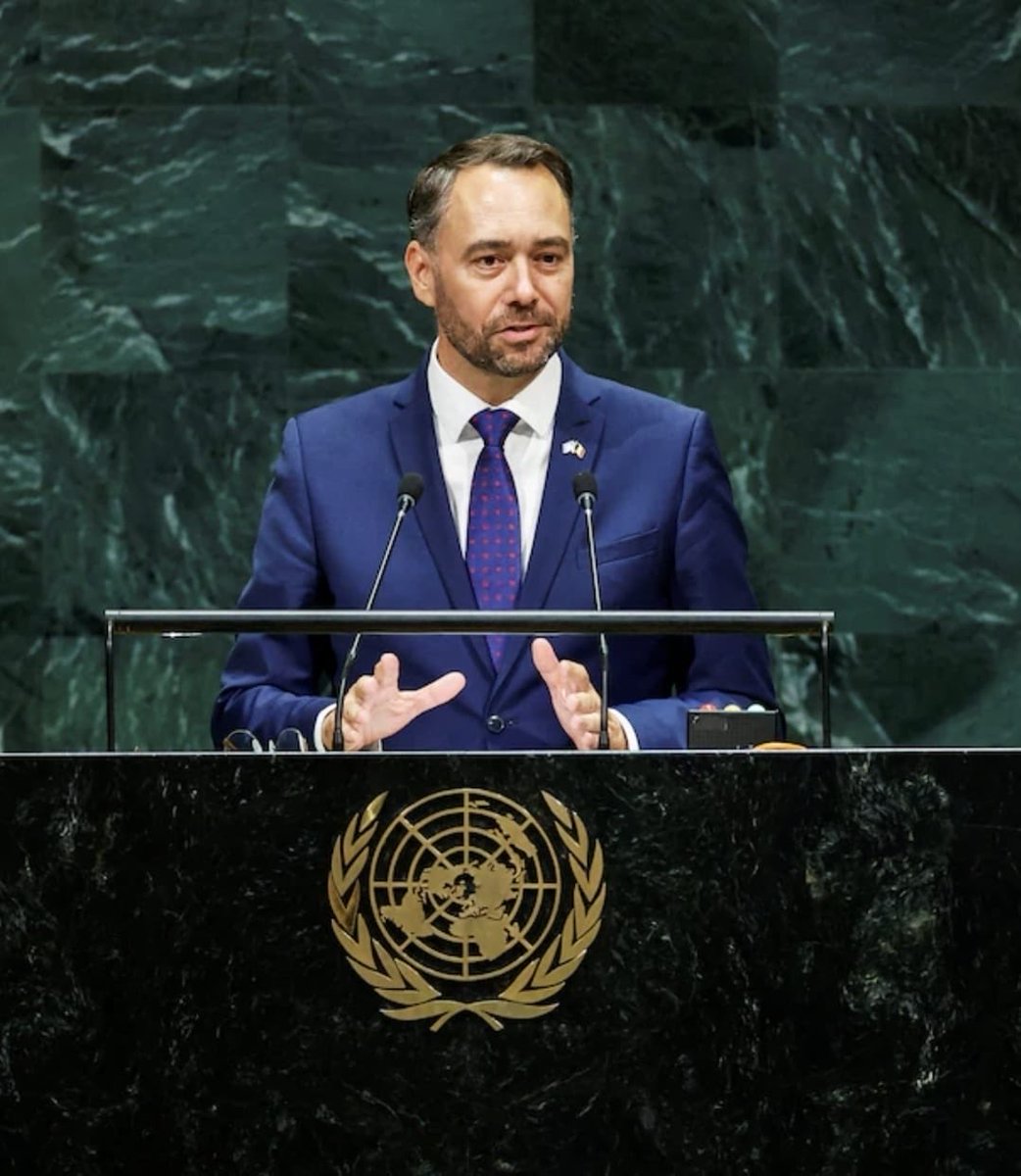
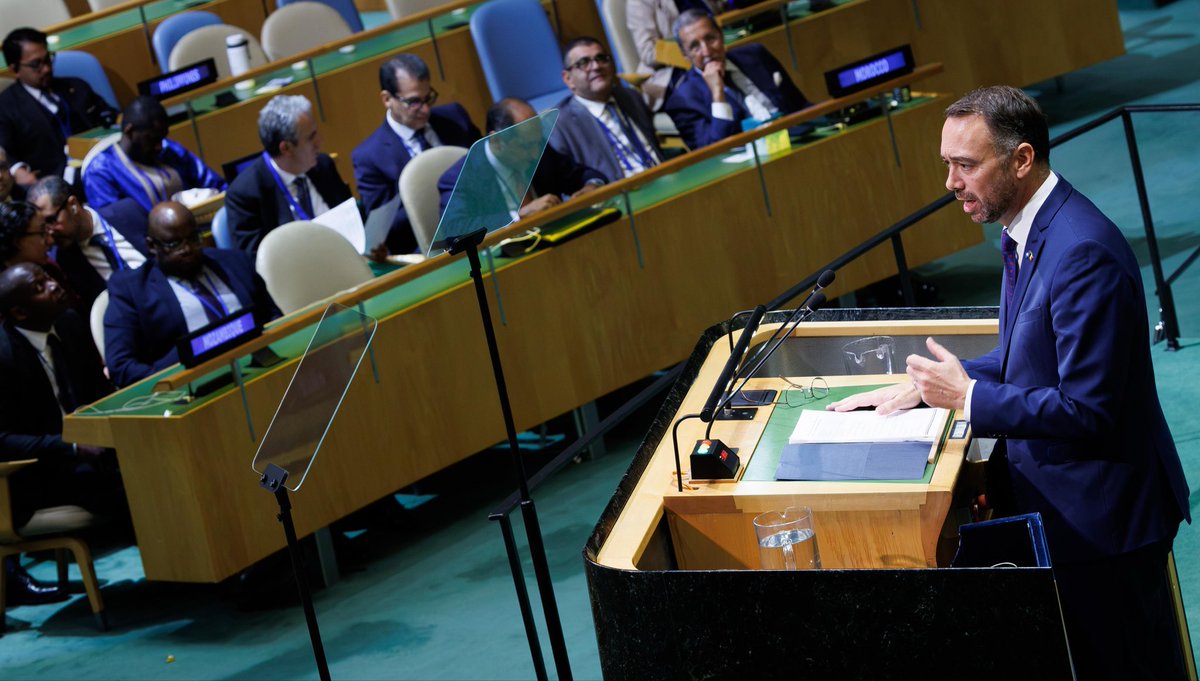
(EN/FR/NL) 🇺🇳 Last night, I had the honour of speaking on behalf of Belgium at the United Nations General Assembly.
I began with The Blind by Maurice Maeterlinck. A Belgian work, but also a striking image of our time: people standing close to one another, facing the same dangers, yet struggling to find their way forward together.
That is also what diplomacy is about: continuing to talk when we disagree, listening, seeking to understand and building bridges, without giving up on our principles.
And we do have a compass: the United Nations Charter and international law. They cannot be applied selectively. Borders cannot be redrawn by force. Civilians must be protected. Humanitarian aid must reach those who need it. And human rights cannot depend on a passport, a territory or the balance of power at a given moment.
These rules apply on land as well as at sea.
I also wanted to speak about the climate and the ocean, and our responsibility to preserve them for future generations.
And believing in the United Nations also means having the courage to change it. It must better reflect the world of today and regain its full capacity to act.
🔗 My full speech: https://t.co/sT28Hj3uHe
__________
🇺🇳 Cette nuit, j’ai eu l’honneur de porter la voix de la Belgique à l’Assemblée générale des Nations Unies.
J’ai commencé par Les Aveugles de Maurice Maeterlinck. Une œuvre belge, mais aussi une image saisissante de notre époque : des êtres humains proches les uns des autres, confrontés aux mêmes dangers, mais qui peinent à trouver leur chemin ensemble.
C’est aussi tout le sens de la diplomatie : continuer à se parler lorsqu’on n’est pas d’accord, écouter, chercher à comprendre et construire des ponts, sans renoncer à ses principes.
Et nous avons une boussole : la Charte des Nations Unies et le droit international. Ils ne peuvent pas s’appliquer à géométrie variable. Les frontières ne peuvent être redessinées par la force. Les civils doivent être protégés. L’aide humanitaire doit parvenir à ceux qui en ont besoin. Et les droits humains ne peuvent dépendre d’un passeport, d’un territoire ou du rapport de force du moment.
Ces règles valent sur terre comme en mer.
J’ai aussi voulu parler du climat et de l’océan, et notre responsabilité de les préserver pour les générations futures.
Et croire dans les Nations Unies, c’est aussi avoir le courage de les changer. Elles doivent mieux refléter le monde d’aujourd’hui et retrouver toute leur capacité à agir.
🔗 Mon discours complet : https://t.co/xUF7PDzoDN
__________
🇺🇳 Vannacht had ik de eer om namens België het woord te nemen op de Algemene Vergadering van de Verenigde Naties.
Ik begon met De blinden van Maurice Maeterlinck. Een Belgisch werk, maar ook een treffend beeld voor onze tijd: mensen die dicht bij elkaar staan en met dezelfde gevaren worden geconfronteerd, maar moeite hebben om samen hun weg te vinden.
Daar ligt ook de essentie van diplomatie: met elkaar blijven spreken wanneer we het oneens zijn, luisteren, proberen te begrijpen en bruggen bouwen, zonder onze principes los te laten.
En we hebben een kompas: het Handvest van de Verenigde Naties en het internationaal recht. Die mogen niet à la carte worden toegepast. Grenzen mogen niet met geweld worden hertekend. Burgers moeten worden beschermd. Humanitaire hulp moet mensen in nood kunnen bereiken. En mensenrechten mogen nooit afhangen van een paspoort, een grondgebied of de machtsverhoudingen van het moment.
Die regels gelden op het land én op zee.
Ik heb ook willen spreken over het klimaat en de oceaan, en over onze verantwoordelijkheid om die te beschermen voor de generaties na ons.
En wie in de Verenigde Naties gelooft, moet ze ook durven veranderen. Ze moeten de wereld van vandaag beter weerspiegelen en opnieuw ten volle in staat zijn om te handelen.
🔗 Mijn volledige toespraak: https://t.co/Retg0KZMNW
@BelgiumMFA@BelgiumUN