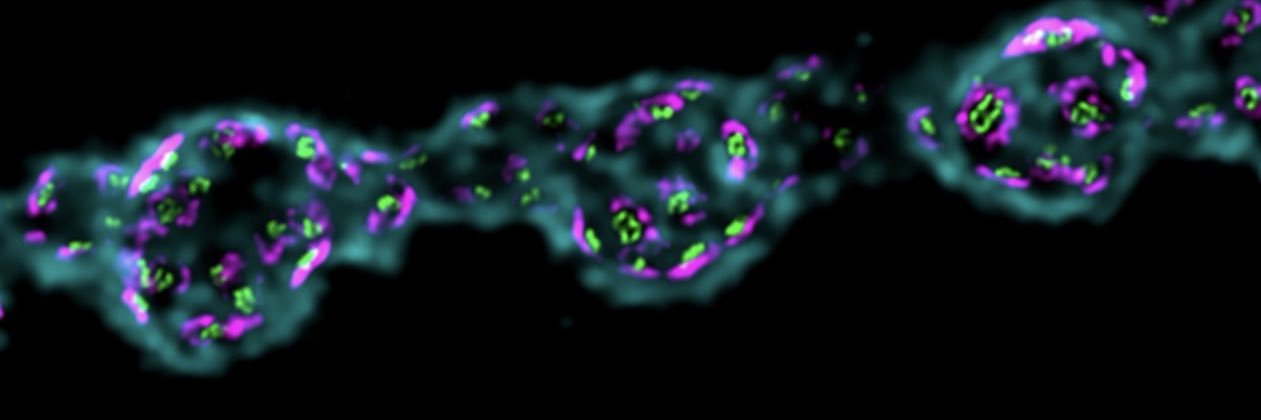
Beyond thrilled to share my new paper out now in @PNASNews ! We asked: how do excitatory synapses detect a sudden hit to GluRs and rapidly restore transmission? They don’t just sense “less current” – they monitor the structural changes of GluRs and react. https://t.co/164oNABLNu
Excited to share that our tissue-secretome work is now PUBLISHED in @NatureComms!
Original preprint tweetorial below 👇
Final paper expands bioinformatic analyses and details improved HDR donor plasmids for Gal4/GFP knock-ins (at @Addgene, @DrosDGRC).
https://t.co/C7xD1fUuzQ
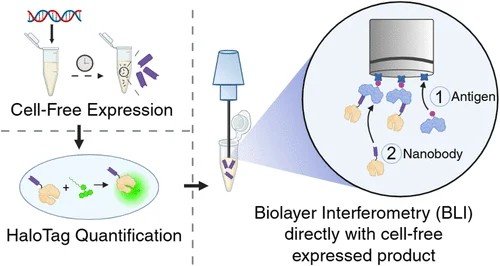
Rapid Affinity Characterization of Cell-Free Expressed Nanobodies Directly in Lysate with Biolayer Interferometry via Antigen-Immobilized Biosensors
https://t.co/NOQSEXfi2C
Today I’m excited to share our new study in Nature Biomedical Engineering @natBME, in which we used protein engineering to create a therapeutic able to completely eradicate metastatic ovarian cancer in mice. 🧵
https://t.co/ehvIp9EqEb
DON'T USE FABLE 5 TO BUILD PERSONAL PROJECTS
DON'T USE FABLE 5 TO BUILD PERSONAL PROJECTS
DON'T USE FABLE 5 TO BUILD PERSONAL PROJECTS
DON'T USE FABLE 5 TO BUILD PERSONAL PROJECTS
DON'T USE FABLE 5 TO BUILD PERSONAL PROJECTS
DON'T USE FABLE 5 TO BUILD PERSONAL PROJECTS
I repeat.
DON'T USE FABLE 5 TO BUILD PERSONAL PROJECTS
It’s estimated that the Protein Data Bank (PDB) cost around $13B to create. Alphafold was only possible because of it. If we want ML to solve biology, we should be funding the creation of databases and the development of new assay technologies. ML is nothing without data.
https://t.co/VcfWx4VutW
Why does Mg²⁺ block NMDARs while Ca²⁺ gets through? Using large #CryoEM datasets, we captured hydrated Mg²⁺ and partially dehydrated Ca²⁺, followed by extensive electrophysiology to probe this long-standing question. Pls take a look!
Nern, A., Loesche, F., Takemura, S. Y., Burnett, L. E., Dreher, M., ...., Romani, S., Saalfeld, S., Scheffer, L. K., Berg, S., Rubin, G. M., Reiser, M. B. (2025). Connectome-driven neural inventory of a complete visual system. Nature, 641(8065):1225-1237 https://t.co/vXwJVSjvJ5
Manoim-Wolkovitz, J. E., Camchy, T., Rozenfeld, E., Chang, H. H., Lerner, H., Chou, Y. H., Darshan, R., Parnas, M. (2025). Nonlinear high-activity neuronal excitation enhances odor discrimination. Curr Biol, 35(7):1521-1538. https://t.co/U22aLVBexD
Antigen-stabilizable fluorescent nanobodies that become fluorescent upon binding intracellular targets enable background-free multicolor imaging and biosensing in living systems. @EinsteinMed@salkinstitute@animmerj
https://t.co/SdODbQg5KT
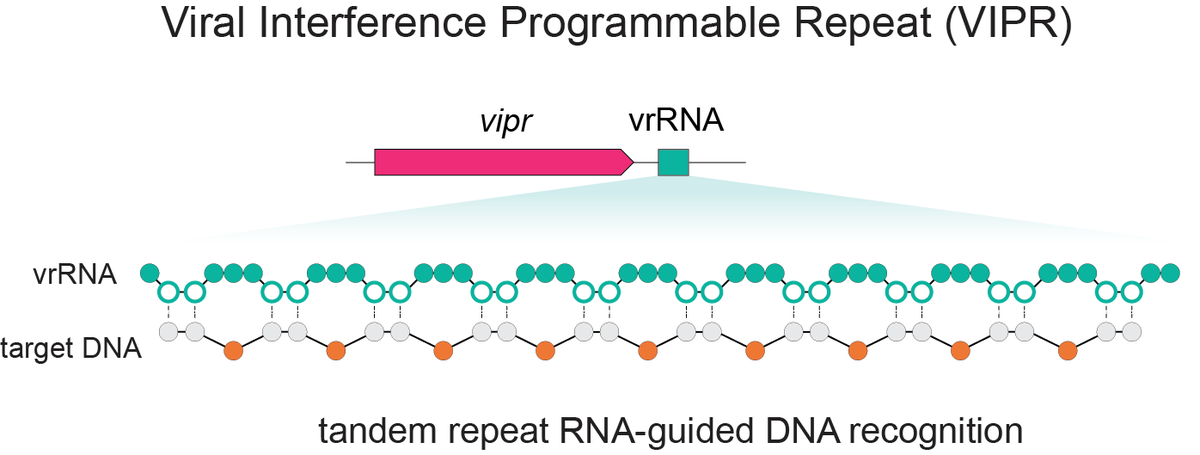
Excited to share our discovery of a new programmable RNA-guided DNA-targeting system hiding inside bacteriophages that predates CRISPR.
We call it VIPR (Viral Interference Programmable Repeat), and it uses an entirely new logic to find its targets.
Thread + link below.
A neuron that fires is not the same as a neuron that communicates. We tracked functional connectivity between neuron pairs near chronically implanted electrodes. They were alive. Spiking. But uncoupled from their neighbors. The local circuit was fragmented.
Rethinking about the concept of “virtual fly”: walking behavior can be produced in a simulated fly body with a worm brain as the commander.
Quoting John’s words: Virtual animals are powerful, but ONLY if brain-body interfaces are grounded in biology. A model that walks like a fly might just be a worm in disguise.
The digital sphinx: Can a worm brain control a fly body? https://t.co/xwEGXPRQgR