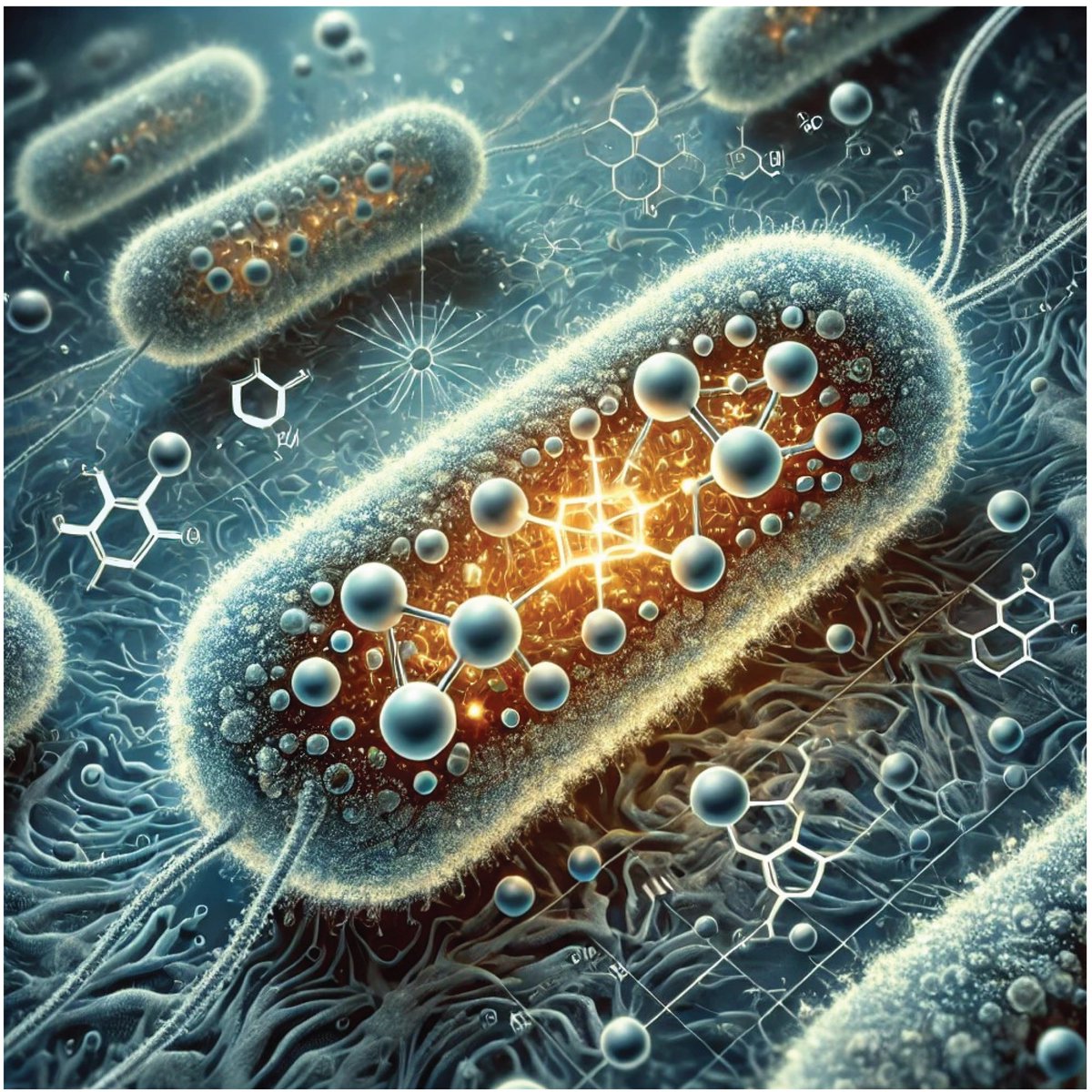
We apply biochemistry, synthetic biology, and chemical biology to study how phase separation organizes the bacterial cytoplasm and how bacteria make decisions.
Together with Michael Collins, @schraderlab, @DylanTomares, @iamvidyadhar we examined how the phase separation of BR-bodies is logically wired to the enzymatic functions of a key client - PNPase https://t.co/X7HexCKNf0
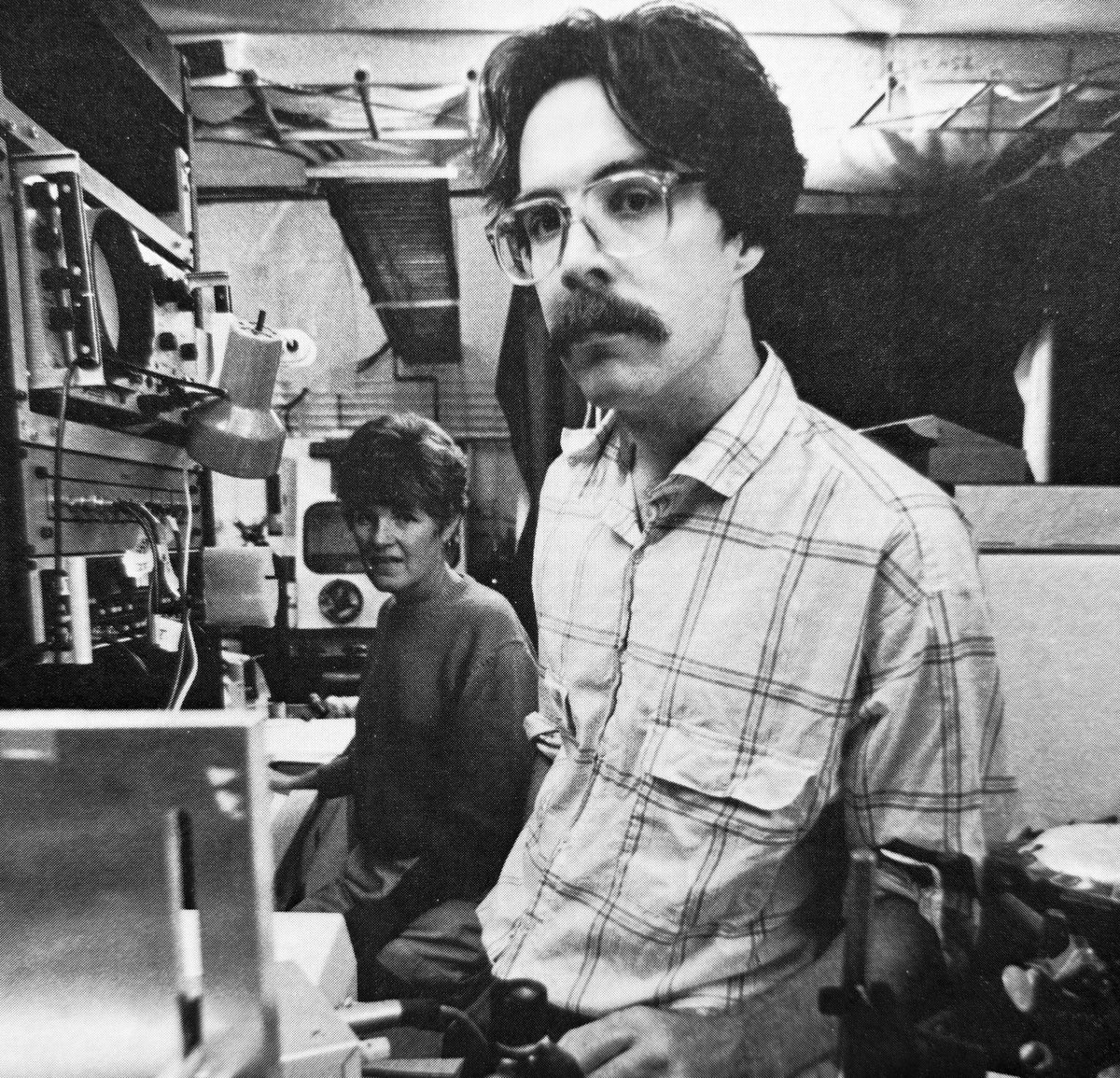
Distinguished Professor David H. Waldeck has sadly passed away.
We send our condolences to his family along with the Faculty, Students and staff that knew and worked with him. Read more about Prof. Waldeck's life and work using this link: https://t.co/BssuBWGTO3
A study by Harriet Ellis and @JoshMcquail revealing new roles for glutathione in the adaptive response to N starvation in E. coli. https://t.co/ATwcLYWSDc
As the planet gets hotter & drier, can we make proteins & organisms more resilient to desiccation stress? Together with @shaharsu@SyracuseU & @alexholehouse@washumedicine, we show in @CellSystemsCP a sequence grammar encoding tolerance to dehydration.
https://t.co/6irXPGyfh3
Just presented for the first time today by April @ProteinSociety who received their young investigator award! #ProudPI#FriedLabNews.
Is Anfinsen’s Thermodynamic Hypothesis of protein folding true? We think PGK challenges it in a truly striking way.
https://t.co/xoKzWsnCEx
I discuss the urgent crisis from the loss of federal support of science in the US and recent clinical gene editing breakthroughs with @WalterIsaacson & @amanpour on @AmanpourCoPBS, airing on @PBS tonight at 11 pm ET, and on @cnni earlier today. Pls share!
https://t.co/cyVZpAwJiq
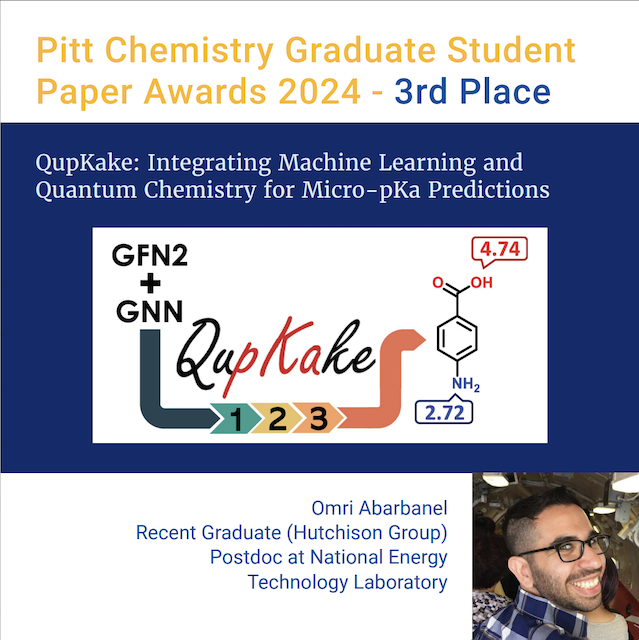
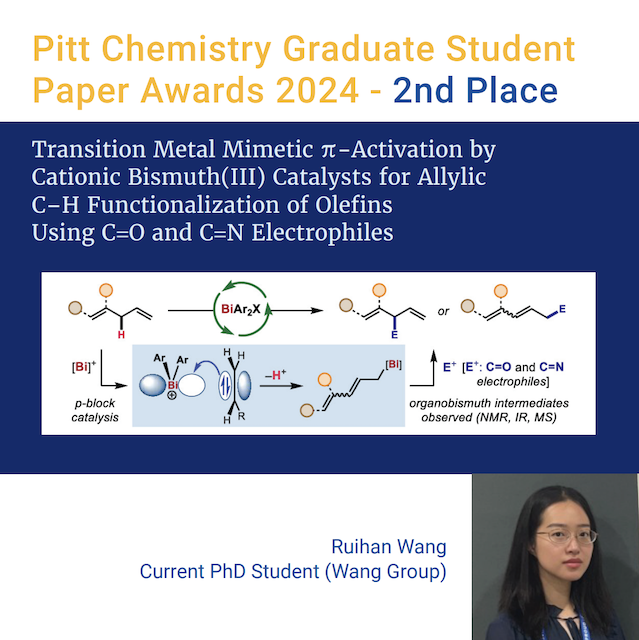
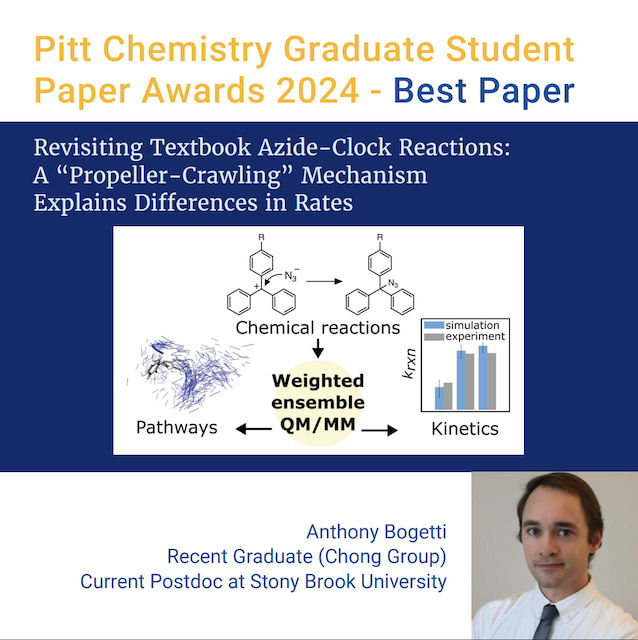
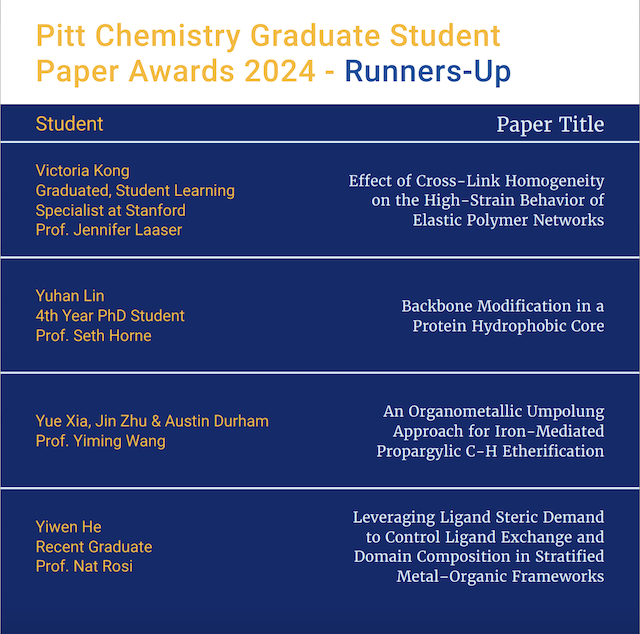
Congratulations to the recipients of our department's inaugural best paper awards! This round of awards recognizes outstanding papers published in Summer 2024. Read about their work at the links below: https://t.co/nLlv5oNDTE
Carnegie Mellon biologists have discovered the mechanism behind telomere elongation, which has implications for treating cancer.
https://t.co/sHtcmVG85D
Want to learn more? Register for an upcoming talk by lead researcher Professor Huaying Zhang.
https://t.co/vn1PVqcJb3
Many thanks to @APSPhysiology#TPhysMag for featuring us in this month's "Under the Microscope"... Was fun to do this interview! @pittkidneyctr
https://t.co/DbsFV6MZ0u
Controlled Protein-Membrane Interactions Modulate Self-Organization of Min Protein Patterns (Katja Zieske and co-workers) @ZieskeLab@MPI_Light#openaccess https://t.co/4TE1hAUdU9
🔬🦠 Read our latest review https://t.co/eXRQqPGPwF in @PLOSPathogens on bacterial condensates, their role in stress sensing and response, and potential for influencing host-pathogen interactions. Fun project with the @ChildersLab. Congrats to @moeka_sasazawa and @DylanTomares
Check out our latest paper in @nchembio, where we developed our CAGE split intein platform to study signaling events using proteomic profiling. This enables insights into the differential molecular connections of fusion oncogenes. Congrats to @GihoonLee1!
https://t.co/i3dmWWLIH4
So excited to announce our new method for multiplexed RNA imaging in bacterial cells: bacterial-MERFISH! A huge congratulations to the team of @AriSarfatis, Yuanyou Wang, and Nana Twumasi-Ankrah! Check out the following thread or our bioRxiv (https://t.co/qESwAKeWpO) 1/12
Membrane binding properties of the cytoskeletal protein bactofilin
We characterize the membrane-binding motif of bactofilin and investigate the interplay between membrane binding, polymerization and client-protein recruitment.
A great collaboration with the Schäfer lab (MD simulations) and Wieland Steinchen/@BangeBalcony (HDX analysis), led by former PhD student Ying Liu.
https://t.co/JOZBXB4JrH
@SYNMIKRO @mpi_marburg@Bio_UMR
Published in #OpenBiology: Bacterial division ring stabilizing ZapA versus destabilizing SlmA modulate FtsZ switching between biomolecular condensates and polymers https://t.co/4b3JJc8Qm0 | #Biochemistry#Biophysics#SyntheticBiology
Excited to share my lab’s first preprint! We found that increasing DNA binding by type IV pili in an Acinetobacter pathogen can boost its natural transformation rates by ~100-fold, demonstrating that DNA binding is rate-limiting for natural transformation. https://t.co/yagYpLeV0w
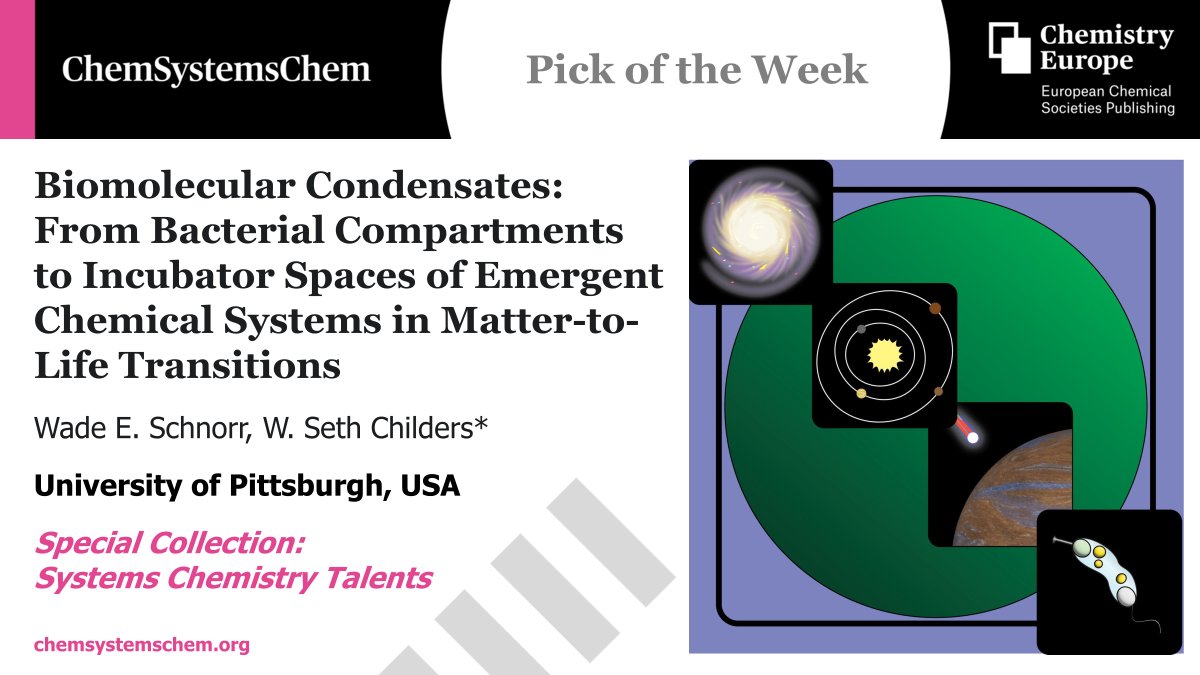
Pick of the Week, out #OpenAccess in @ChemSystemsChem by @ChildersLab:
Biomolecular Condensates: From Bacterial Compartments to Incubator Spaces of Emergent Chemical Systems in Matter-to-Life Transitions
https://t.co/y9FAClqplp
SystemsChem Talents: https://t.co/AYif5xnFk7
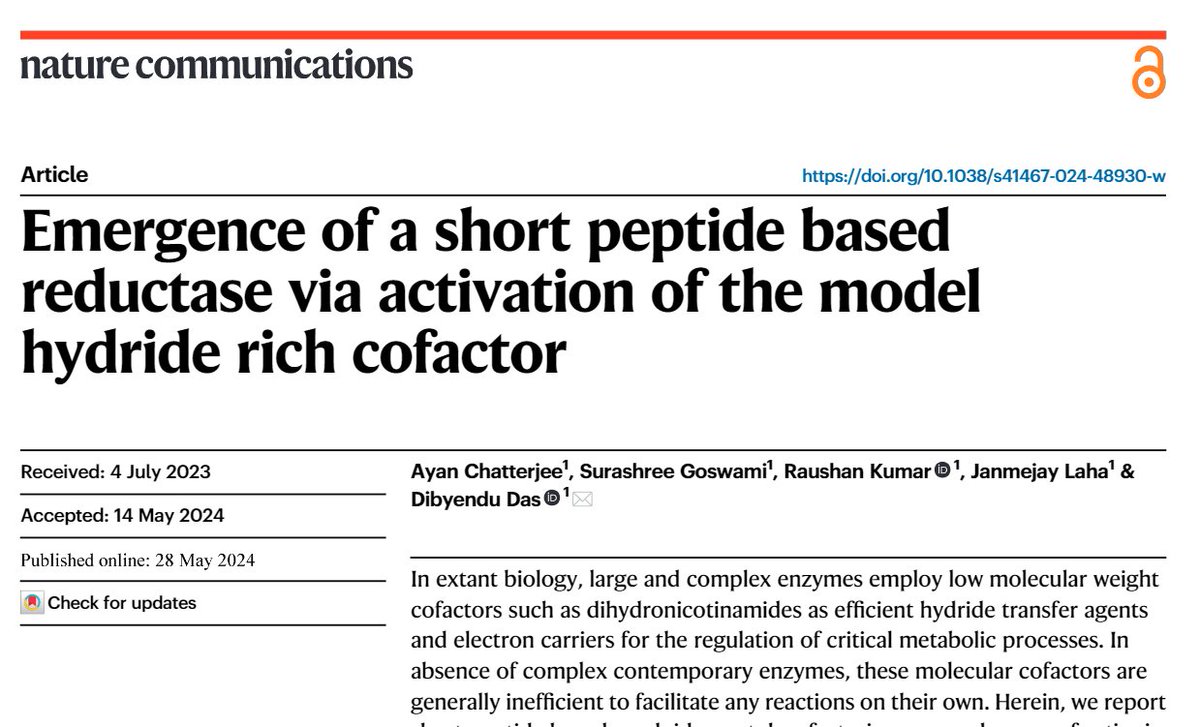
Just online @NatureComms cationic peptide nanotubes can bind weak hydride transfer agents to facilitate efficient reduction of esters in water! Grateful to Swarnajayanti Grant, @serbonline , CSIR & @iiserkol https://t.co/CzCQrYWZI5 #systemschem#enzymemimics
Biomolecular Condensates: From Bacterial Compartments to Incubator Spaces of Emergent Chemical Systems in Matter-to-Life Transitions by W. Seth Childers and co-workers @ChildersLab#OpenAccess https://t.co/eSfEfh6gOe