Supply chain disruptions ultimately hit consumers, as additional shipping costs are passed on through intermediary companies to end users. With key maritime routes disrupted, alternative routes remain available, but they take longer and cost more, putting further strain on economies and increasing the cost of goods: Dr. Aaron Studwell, Energy and Meteorological Analyst
@Chspkeanalytics@industrialinfo@OmarButtPK
#SupplyChain #Shipping #MaritimeSecurity #GlobalEconomy #PakistanTV
Tonight at 8:05 PM on Pakistan TV: Beyond Borders
Topics:
A- Mena:
Houthi Attacks on Saudi Arabia: Red Lines Tested
B- The West:
Panama canal traffic facing further cuts as drought from El Nino worsens
C- South Asia:
India’s Muslim Officers Face Rising Hindutva Pressure
Guests:
1/ Van Hipp
Chairman, American Defense International | Former Deputy Assistant Secretary For the US Army
2/ Wolfgang Pusztai
Security and Policy Analyst | Former Austrian Defense Attaché to Libya
3/ Dr. Aaron Studwell
Energy and Meteorological Analyst at IIR Energy
4/ Brig. (R) Raashid Wali Janjua
Defence Analyst
Repeat timings: Thursday at 7:05 am and 2:05 pm Pakistan Standard Time.
Stream on: https://t.co/r99kvgmBEs
@OmarButtPK@iqrahanif2610@Chspkeanalytics@VanHipp@WaliRaashid@RaceWeather@industrialinfo
Seabed mining raises questions that require science before assumptions. Chesapeake Analytics Contributing Editor Cynthia M. Erickson-Recinos explains why robust baseline environmental data must come first before offshore development moves forward.
https://t.co/ksIL1hOHSC
As ExoConsulting celebrates six years, Chesapeake Analytics continues to provide science-driven consulting in meteorology, cybersecurity, and energy weather.
Proud of how far we've come and excited for what's next.
5 years of Chesapeake Analytics!
From energy weather roots to global energy news & weather insight with @industrialinfo and @IIR_Energy.
Appreciate the clients, partners, and conversations along the way—more ahead.
Since 2020, ExoConsulting has grown in the energy & sports weather, & sponsorship development. On #SmallBusinessSaturday, we’re grateful for your support of local companies. Thanks for backing our services & let’s find ways to work together!
Visit https://t.co/82MOTaX3U3 for info
Wishing everyone a Happy Thanksgiving. I’m grateful for the people, opportunities, and collaborations that have shaped my year.
Thank you for the support and conversations that continue to inspire me. Enjoy the day with family, friends, and a well-deserved break. 🦃🍁
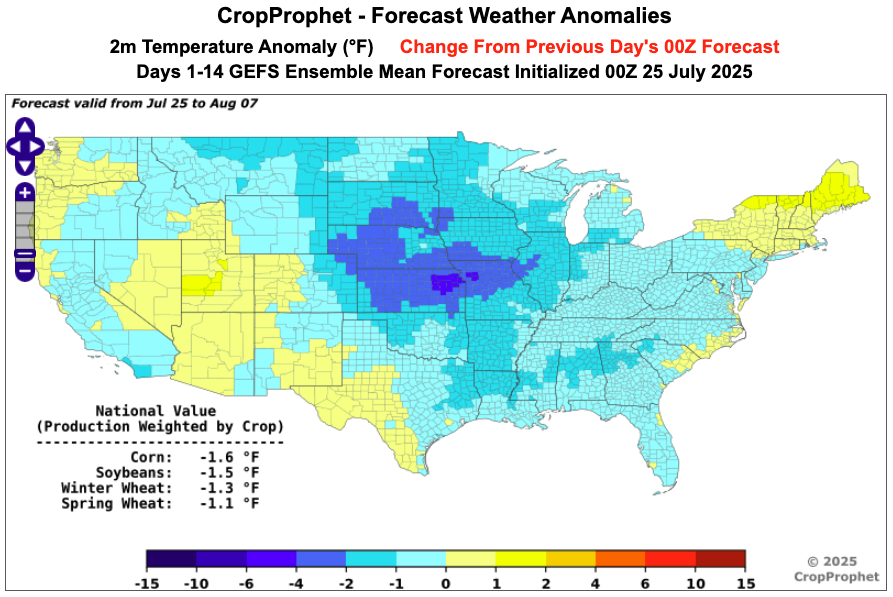
The 14-day 00Z GEFS US corn prod wghtd avg temp fcst has trended colder compared to yesterday’s 00Z GEFS run.
This shift is notable because, as we discussed yesterday, the GEFS had previously indicated a much warmer outlook for corn-growing regions across the US.
#oatt#AgWx
Coffee Issues in Brazil!☕
Over the past 60 days, Brazil’s #coffee regions received just 66% of nrml precip!
Fcsts signal continued dryness:
🔹 ECMWF: 44% of nrml
🔹 GEFS: 39% of nrml
Drought is tightening supply & pushing coffee prices higher!
#CoffeeCrisis#BrazilDrought
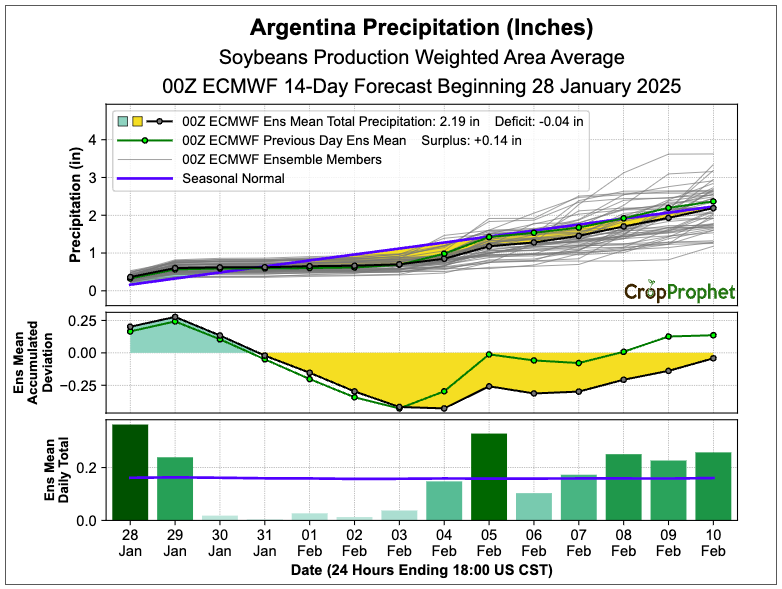
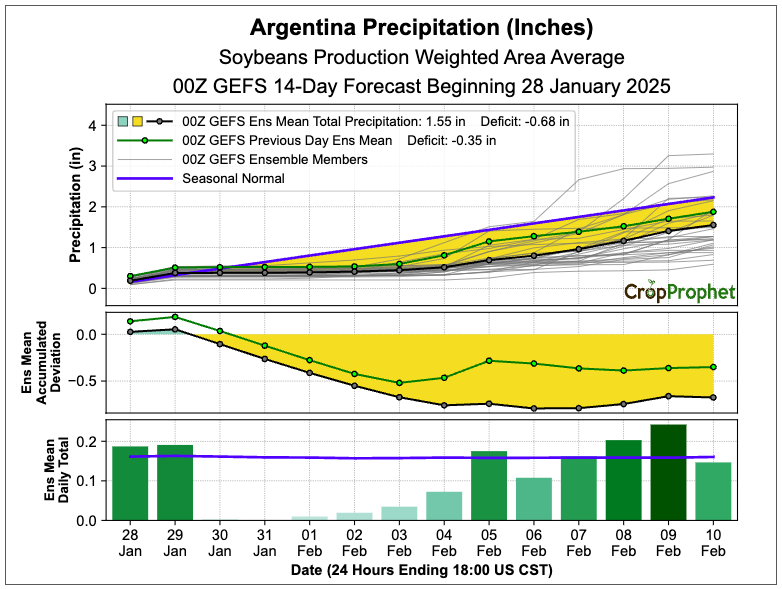
There is a substantial diff between the 14-day ECMWF and GEFS crop prod wghtd precip values, especially in the 8-14 day range. The 14-day ECMWF is fcsting the AR #soybeans prod wghtd precip to be 127% of nrml and the 14-day GEFS is fcsting a value of 94% of nrml.
#oatt#agwx
According to @NOAANCEI GHCN-Monthly data, there were zero climate observing sites worldwide with a record cool/cold June-August (min 30 years of data).
It's the first time this has happened in at least a couple of decades, although some other years came close (e.g. 2005, 2016).
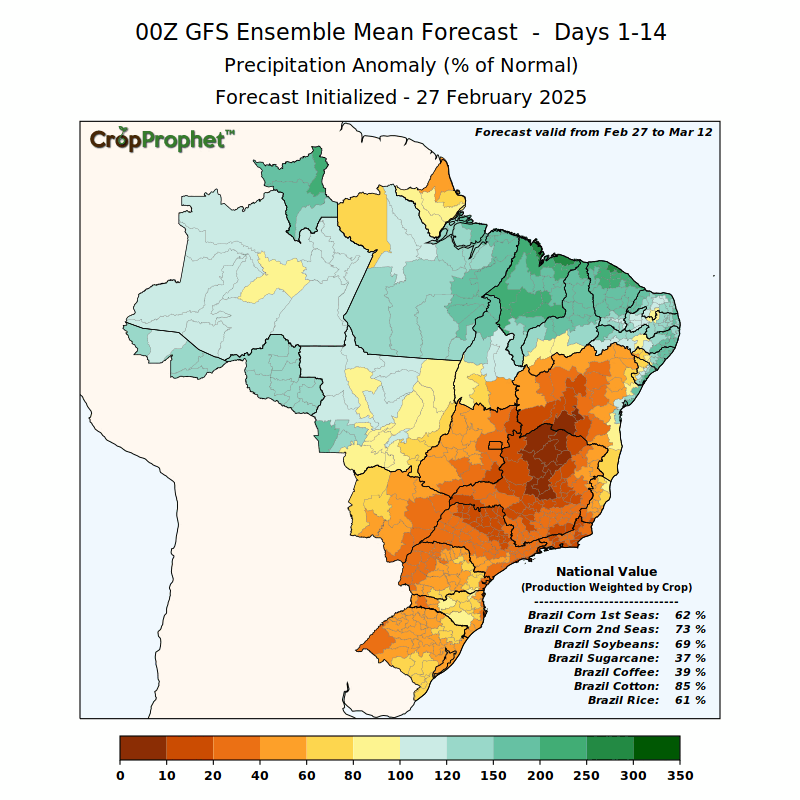
Brazil continues to be substantially dry as fcstd by the ECMWF and GEFS. Over the next 14 days, the ECMWF 1st szn corn prod wghtd precip is fcstd to be 63% of nrml whereas the GEFS is fcsting a value of 29% of nrml... another massive difference in fcstd values between the models.
The PDO phase remains negative, although now offset by significant warmth off the US West Coast.
NOAA/NCEI shows an extremely negative PDO index near -3, but apparently NCEI doesn't account for the global trend (unlike the original PDO method) - so their index is likely too low.
Wow - the August NAO (MSLP EOF) index was the most positive on record for any calendar month, and by far the most positive for August. (Data back to 1900 via reanalysis.)
This was very well predicted by the seasonal models, being linked (I believe) to the March SSW event.