Solid tumors are often considered "cold"-- meaning there is no inherent inflammation that attracts the "good" immune cells, or such tumors modify their environment to make it inhospitable to our immune cells (that would otherwise eradicate the cancer). We want our tumors "hot" if you please-- as that is correlated with positive outcomes for patients.
Natural killer (NK) cells are considered part of the innate immune system... originally thought of as being singularly targeted to certain foreign antigens from pathogens or cells running amok -- like cancer cells.
In this paper (Horowitz et al of the Sunwoo lab and many others here at Stanford) we show that NK cells can be re-educated in a manner that allows them to enter tumors, make them "hot" and thereby opening an entirely new avenue for cell therapies (as with CAR-T therapy). Let the race begin...
https://t.co/eQKT7TO14O
China has continued its steep rise in research output, according to Nature Index’s annual rankings, but there is growing evidence that other East Asian countries are also challenging major research nations in Europe and North America.
https://t.co/fZJHeqGILj
We’re excited to announce our acquisition of Proteintech Genomics, a division within Proteintech Group, expanding our capabilities in proteomics and supporting our vision for integrated multiomic analysis across single cell and spatial biology. Learn more: https://t.co/ILXCLMDiuM
Spotlight: Nicola Diny @UniklinikBonn previews a study from @petrovalab et al. (https://t.co/IibXY0JMPv) which reveals that #eosinophils drive a developmental program for postnatal intestinal remodeling and maturation. https://t.co/5mUcOiCKpz
#Development
OBS Immunology Seminar| Young Investigator Highlight
'Decoding T Cell Exhaustion:
An Epigenetic Roadmap to Enhance Cancer Immunotherapy'
Hazem E. Ghoneim, PhD
Assoc. Prof.
The Ohio State University
Thurs, June 11th, 2026
11am ET | 10am CT | 8am PT
Zoom below
A subset of tumor-associated #NaturalKiller cells show enhanced cytotoxicity and respond to inhibitory checkpoint blockades, showcasing their potential as #immunotherapeutic targets for lung cancers. @AlfredZippelius@EricVivier1
https://t.co/s5ZfjU48JJ
Tertiary lymphoid structures (TLSs) form local immune hubs inside tumors, but they are diverse and not all are equally functional.
In a new Science study, researchers built a pan-cancer atlas and developed an #AI–based framework to detect and characterize TLSs in human tumors.
The study provides insights into TLS biology and may offer a path toward integrating TLS features into future clinical trials. https://t.co/W6OOGFR34E
We are thrilled to share the newest publication from our lab! In this work, @RoiBalaban & @OriMoskowitz investigated the effect of #efferocytosis on #macrophage state and function in the #TME.
https://t.co/cYK5CblvHz
Exciting breakthrough technology from the lab, now live in @CellCellPress ! Instead of cutting the genome where proteins bind (e.g., Cut&Tag), D&D-seq scars the DNA with a deaminase, allowing single cell genome mapping of TFs and chromatin remodellers!
A holy grail for our lab has been tracking myeloid cells in human tumors in the same way that we track T and B cells with TCR/BCR.
@vincentzliu and @CalebLareau solved it!
We developed Mitotrek using scATAC-seq + mitochondrial DNA to do exactly this. Using Mitotrek, we find that new myeloid cells clones constantly infiltrate the tumor via circulating monocytes — and that their macrophage or dendritic cell fate is epigenetically programmed before tumor entry.
@10xGenomics@parkerici@CancerResearch@TheMarkFdn
https://t.co/Y37qbyw3F5
Tertiary lymphoid structures (TLSs) form local immune hubs inside tumors, but they are diverse and not all are equally functional.
In a new Science study, researchers built a pan-cancer atlas and developed an #AI–based framework to detect and characterize TLSs in human tumors.
The study provides insights into TLS biology and may offer a path toward integrating TLS features into future clinical trials. https://t.co/W6OOGFR34E
Better understanding of chromatin-based regulatory mechanisms in macrophages could guide future therapeutics to combat chronic diseases, suggests a new Review.
Learn more in @SciImmunology: https://t.co/pYNUB0v9hc
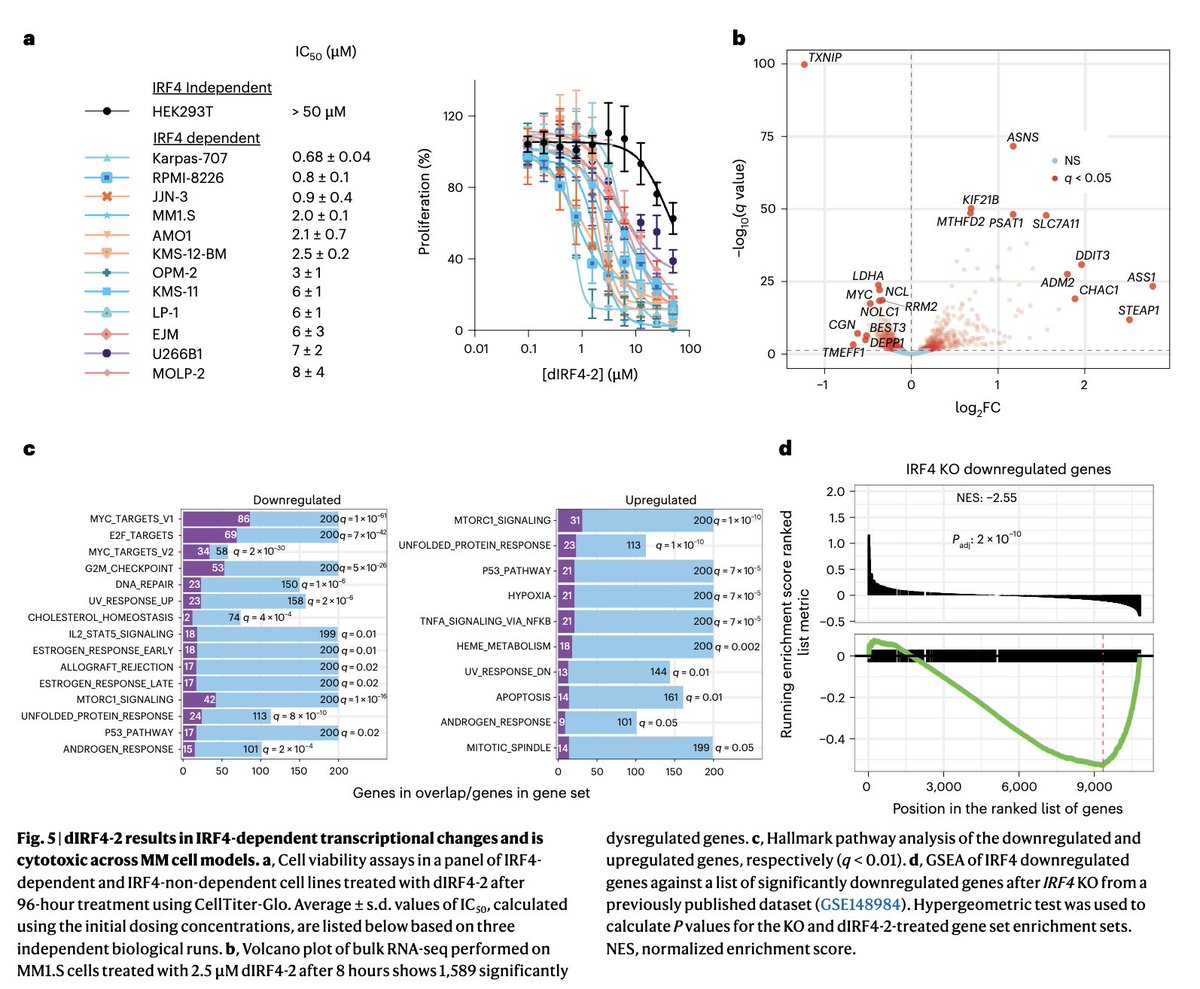
#Myeloma Paper of the Day: (S)-H1, an IRF4 binder that targets SPI1-IRF4 interaction on IRF4's interferon association domain, shows pre-clinial anti-myeloma activity when converted into proteolysis-targeting chimera w/ E3 sequence binding Cereblon: https://t.co/4cJjcX3v3r. #mmsm