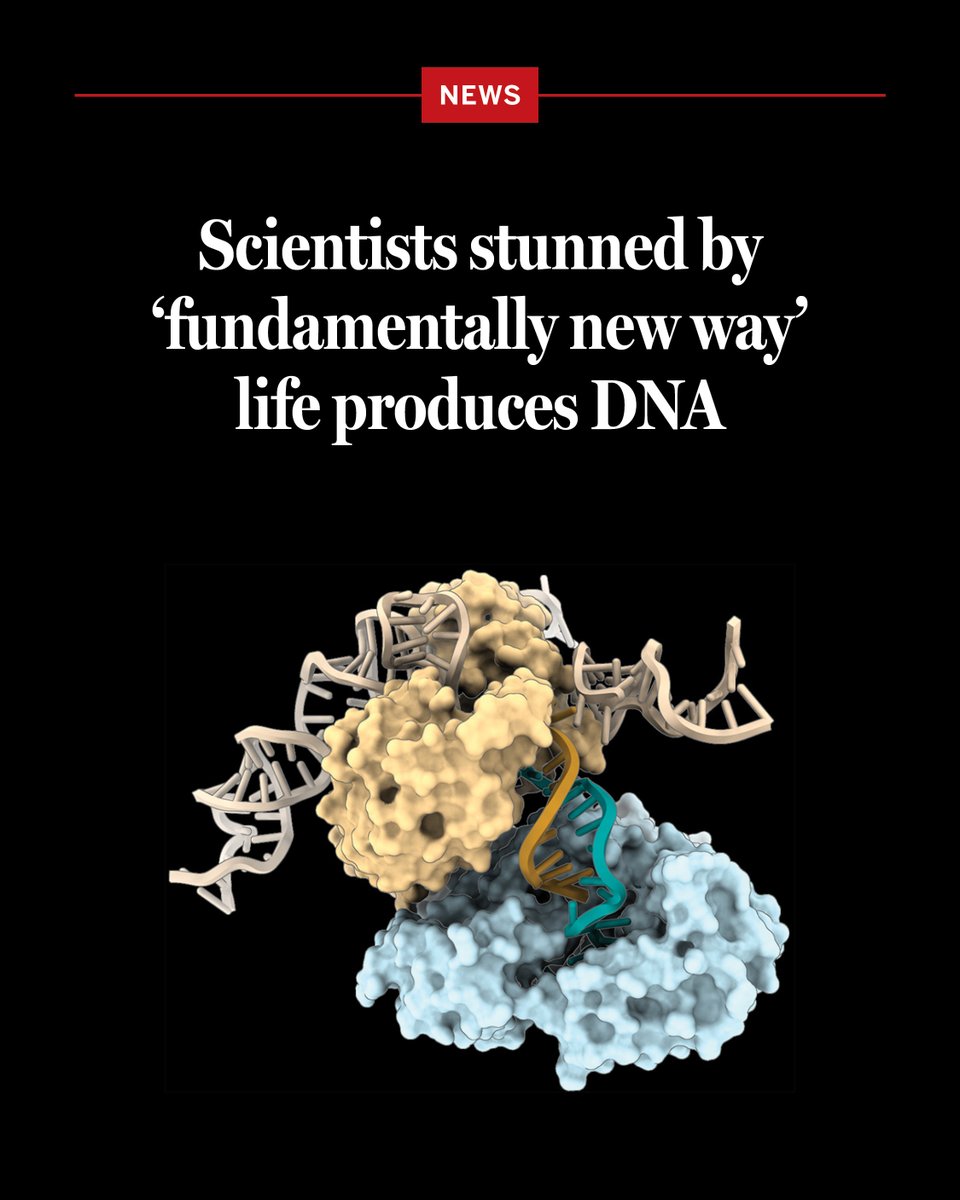
For decades, biology textbooks have enshrined a simple rule: DNA is made by copying a template. After one enzyme unzips a DNA double helix into separate strands, another called a polymerase builds a complementary sequence, base by base, for each strand. Presto: two copies of the original DNA.
But new research into how bacteria defend themselves from viruses now shows this synthesis rule isn’t absolute.
Now, a team describes a bacterial enzyme that synthesizes DNA without a nucleic acid template, using its own structure as a guide.
Learn more: https://t.co/bpVgr0KMdR
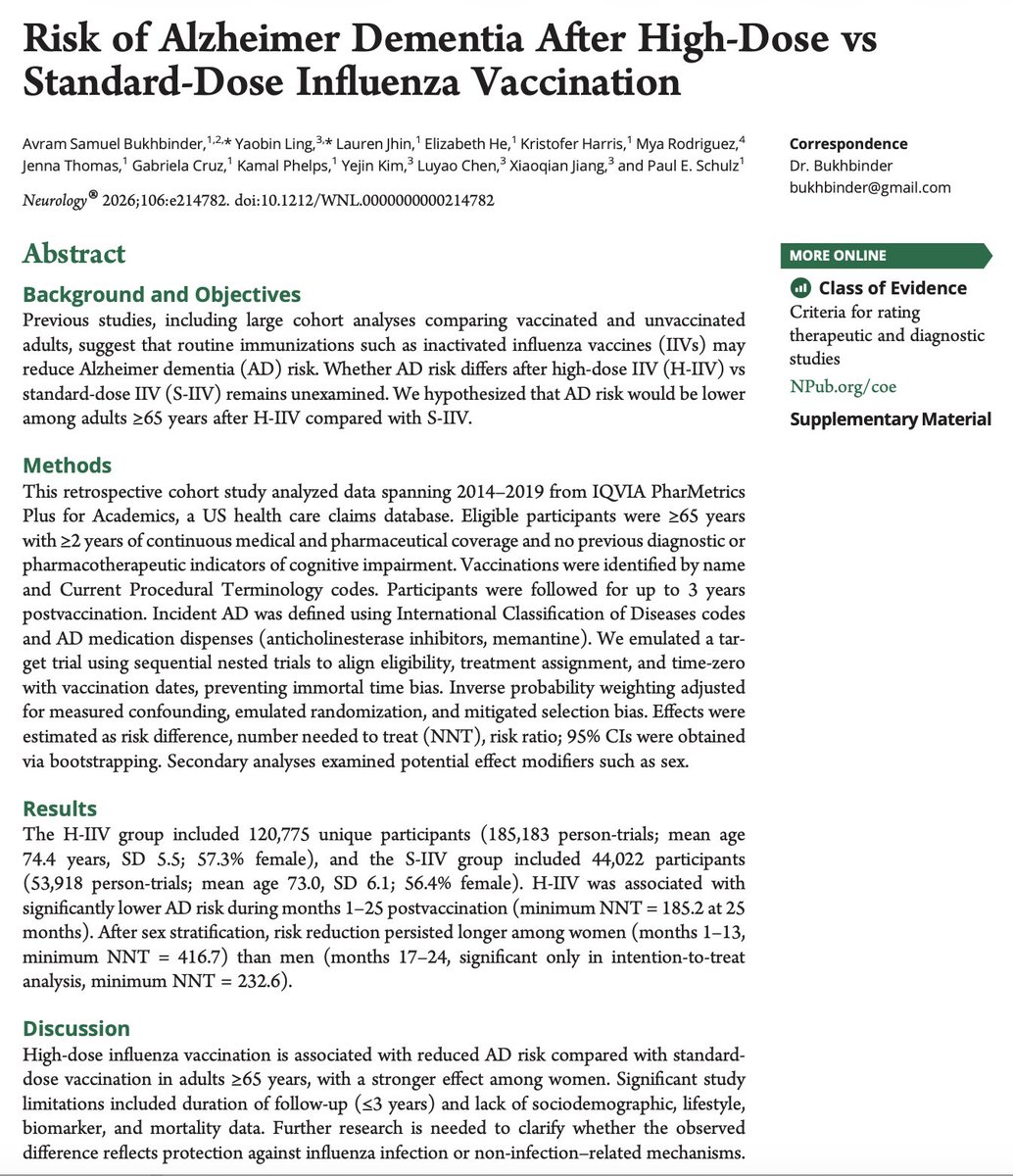
We've seen the Shingles vaccine is linked with reduced risk of Alzheimer's and dementias in 4 large natural experiments.
Today, the potential of high-dose flu vaccines vs standard dose for the same in a large retrospective age 65+ cohort [N>160,000). More pronounced in women (like Shingles vaccine)
https://t.co/dxYzURf7QH
New in @ScienceMagazine 📄Our review explores how protein homeostasis is maintained beyond cellular boundaries proposing #extracellular#proteostasis as a hierarchical network spanning pericellular, tissue, and systemic tiers 🇵🇹🇬🇧 with @mvendruscolo14
https://t.co/dPlnrixc3D
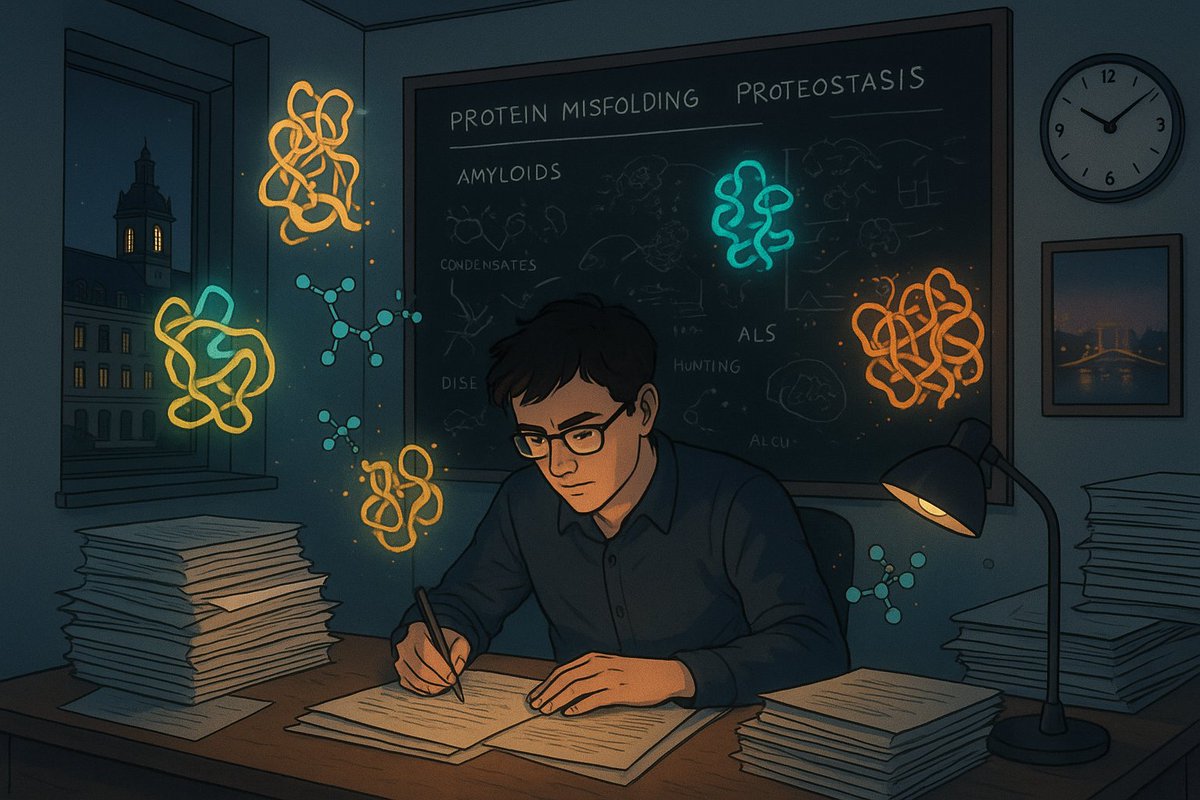
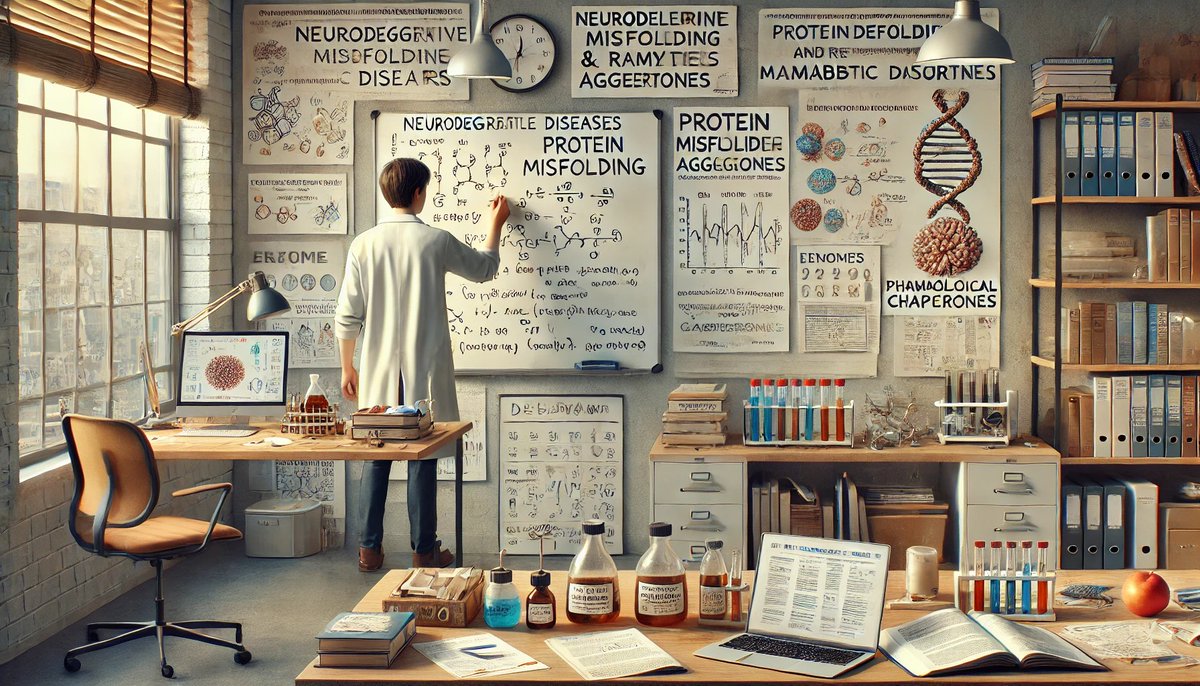
Revisiting the "draw a picture of what you think my current life looks like based on what you know about me" challenge on ChatGPT5, roughly one year after the original
Weekend vibes: Took the "...draw a picture of what you think my current life looks like" challenge 😃 Loving the loft-office setup and all the whiteboard galore…in a lab coat, no less 🥼😅 And 'protein defolding'? Might have to bring that term to life 😅 Yours?
Another great story from Jae Ho Lee in the lab: a new concept in cotranslational proteostasis-ribosome communication via chaperoneNAC. An exciting collaboration with Elke Deuerling's lab @DeuerlingLab and Marina Rodnina's lab https://t.co/XF7wlCrr5W
The brain is the master regulator of food intake and energy balance. A brilliant new @CellCellPress review, including the mechanism of GLP-1 drugs, by @ClemmensenC and colleagues, open-access
https://t.co/KbDf7ym288
📣 Neurons respond to toxic Aβ oligomers by boosting S100B — a Ca-binding chaperone that protects the cytoskeleton and synapses from damage🧠 Collaboration with the Cardoso Lab, spearheaded by our joint PhD student Joana Saavedra 👩🔬👏
https://t.co/WTm20Y0x8k
International Symposium on Protein Interactions and self assembly 🇵🇹
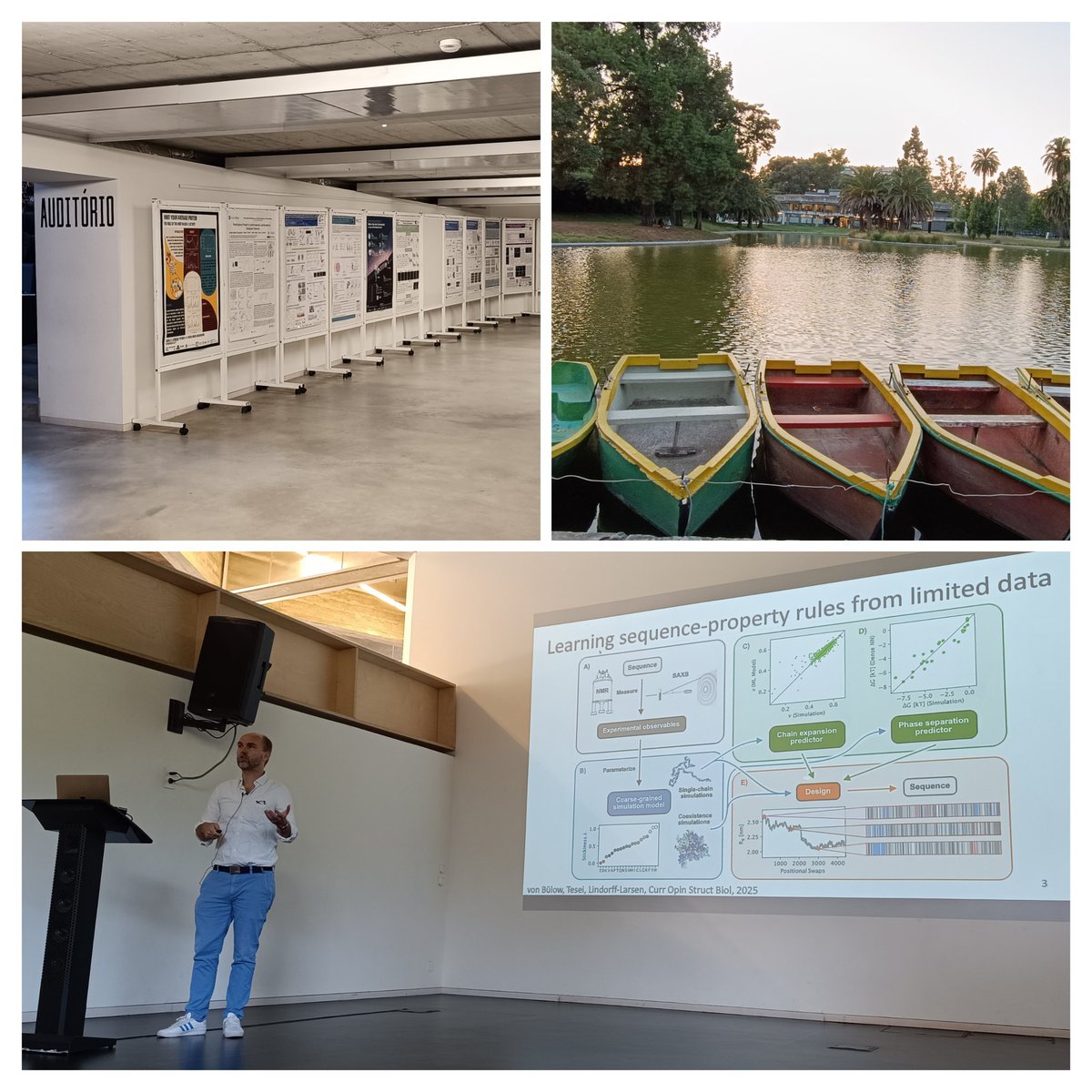
📣 Day 2 quick off with @LindorffLarsen talk on Predicting condensates of disordered proteins and many others to follow, poster pitches and session and lakeside lunch. #ISPIS2025@cienciasulisboa@ULisboa_
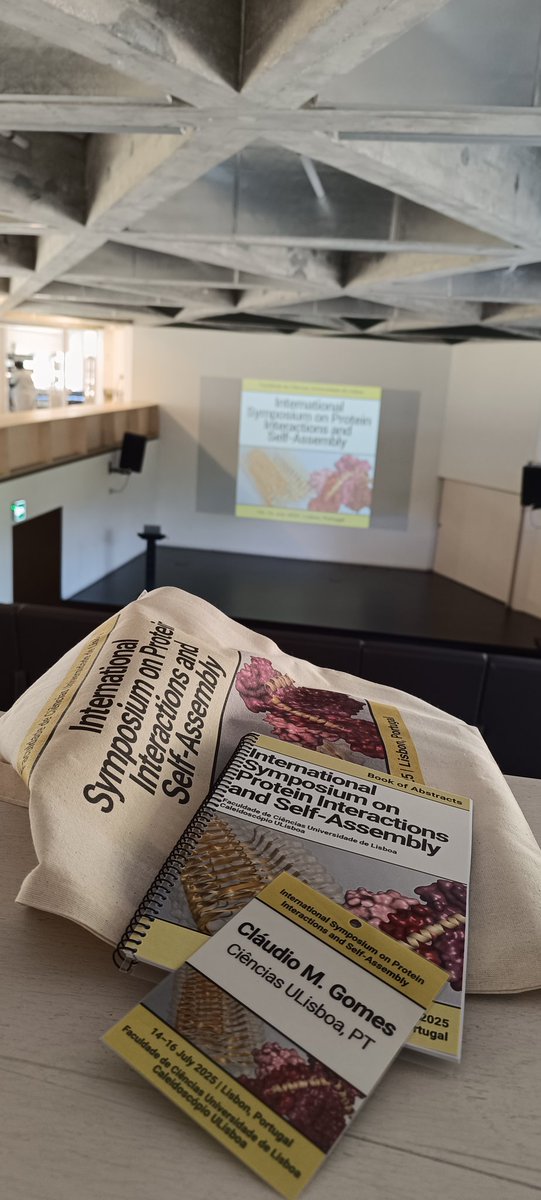
All set for the start of the 'International Symposium on Protein interactions and self assembly' in Lisbon 🇵🇹 later today. Excited to host an amazing lineup of speakers and 65 participants from all over during the next 3 days! #ISPIS2025@TWIN2PIPSA@cienciasulisboa@ULisboa_
Still time to submit an abstract for a short talk! Join us in Lisbon to discuss all things protein — interactions, aggregation, phase separation, and more! 🗓️ Deadline 30 June
Did you know that neuroscience played a key role in AI’s development?
Artificial Intelligence: From Mind to Machine explores how brain research led to artificial neural networks, machine learning, and modern AI.
Watch the full documentary: https://t.co/jj55CE1nbm
Still time to submit an abstract for a short talk! Join us in Lisbon to discuss all things protein — interactions, aggregation, phase separation, and more! 🗓️ Deadline 30 June
📢 International Symposium on Protein Interactions and Self-Assembly
Join us in ☀️ Lisbon 🇵🇹
🗓️ 14–16 July 2025
🗣️ A great programme + short talks selected from abstracts.
🔗 Check it here: https://t.co/tEEXseACHa
🔬 Powered by #TWIN2PIPSA at @cienciasulisboa
📢 International Symposium on Protein Interactions and Self-Assembly
Join us in ☀️ Lisbon 🇵🇹
🗓️ 14–16 July 2025
🗣️ A great programme + short talks selected from abstracts.
🔗 Check it here: https://t.co/tEEXseACHa
🔬 Powered by #TWIN2PIPSA at @cienciasulisboa
Just out! A collaboration with the Herrera lab shows that S100B acts as a #chaperone supporting intermediate filament organization, compensating for sacsin loss in a cell model of Autosomal Recessive Spastic Ataxia of Charlevoix–Saguenay (ARSACS) 📄https://t.co/iyX5UsIIGV
Instead of listing my publications, as the year draws to an end, I want to put pressure on the commonplace assumption that productivity must always increase. Good research is disruptive and thinking time is central to high quality scholarship and necessary for disruptive research
De novo design of high-affinity single-domain antibodies
1. The study introduces "EvolveX," a computational pipeline for de novo design of high-affinity single-domain antibodies (VHHs), capable of targeting predefined epitopes with remarkable precision and stability.
2. EvolveX excels in three critical challenges: optimizing VHH stability and affinity for original targets, designing VHHs for human orthologs, and targeting new epitopes like the human Interleukin-9 receptor alpha (IL-9Ra) with nanomolar affinity—all in a single design cycle.
3. Key innovation: By leveraging tools like FoldX for thermodynamic stability and TANGO for aggregation propensity, EvolveX combines molecular docking and sequence optimization to ensure highly specific antibody-antigen interactions.
4. Experimental results highlight that EvolveX achieves single-digit nanomolar affinity for novel targets, outperforming traditional antibody design approaches in both efficiency and reliability.
5. Structural and thermodynamic analysis of designed VHHs reveals significant improvements in stability and folding, enabling potential applications in drug discovery and precision medicine.
6. A major breakthrough includes targeting hIL-9Ra, a therapeutic target for asthma, achieving a best affinity of 1.3 nM, while maintaining specificity and avoiding cross-reactivity with unrelated proteins.
7. The pipeline also demonstrates flexibility in redesigning antibodies to enhance affinity for species-specific orthologs, paving the way for broad applications in diagnostics and therapy.
8. EvolveX's approach is validated through phage display, crystallography, and biophysical methods, confirming its robustness and scalability for future use cases.
@SavvidesLab@cifnik1@MarkovichIva
📜Paper: https://t.co/qGBeOKOilw
#AntibodyDesign #Biotechnology #ComputationalBiology
Mapping Targetable Sites on the Human Surfaceome for the Design of Novel Binders
1. A groundbreaking study maps the human surfaceome, identifying 4,500 targetable sites across 2,886 cell-surface proteins. This resource unlocks new therapeutic opportunities for precision medicine.
2. The study leverages MaSIF, a geometric deep-learning framework, to predict protein-protein interaction sites. Nearly 3 billion docking runs were performed to generate high-quality binder "seeds" for targeted design.
3. A novel web platform, SURFACE-Bind, is introduced. It provides open access to predicted binding sites, corresponding binder seeds, and data visualization tools. This resource aids drug discovery and protein design.
4. Experimental validation highlights three critical targets—FGFR2, IFNAR2, and HER3. De novo-designed binders showed high success rates, targeting key interfaces with nanomolar to micromolar affinities.
5. The team optimized protein design pipelines by integrating ProteinMPNN and AlphaFold2, improving biophysical properties like stability and binding affinity, achieving 11-fold higher success rates in subsequent rounds.
6. A peptide design pipeline was also developed. Interface motifs from mini-protein binders were stabilized as cyclized peptides, yielding 5 target-specific peptides with demonstrated binding activity.
7. This work underscores the power of integrating deep learning and physics-based methods to advance de novo protein and peptide design for therapeutic applications, targeting underexplored surfaceome regions.
8. By combining computational innovation with experimental validation, this research sets a new benchmark for precision protein engineering and opens the door to the next generation of biologics.
@befcorreia@hamed_khakzad@yangche7@SiFulle@J_Damjanovic_
💻Code: https://t.co/S8qD7CnRcg
📜Paper: https://t.co/FLmbHhA5qg
#ProteinDesign #DeepLearning #Surfaceome #ComputationalBiology #DrugDiscovery #MachineLearning
🚨 Excited to announce the release of the DL4Proteins notebook series! 🌟
Learn AI for protein design with hands-on Colab tutorials inspired by the groundbreaking work of 2024 Chemistry Nobel Laureates David Baker, Demis Hassabis, & John Jumper.
https://t.co/pi1tEwr0ij
Cláudio Gomes da @cienciasulisboa está a estudar os fatores que levam à deposição de agregados proteicos na doença de Alzheimer.
https://t.co/AGdtu9iozB
#90SegundosCiência