How a single tree affects an entire forest
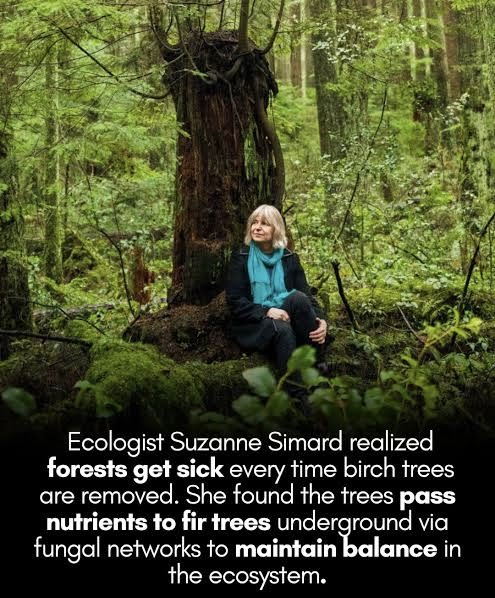
Suzanne Simard has fundamentally reshaped how we understand forests.
Through decades of field research, she demonstrated that trees are linked by vast underground networks of mycorrhizal fungi. These symbiotic partnerships allow trees to exchange carbon, nutrients, water, and chemical signals—sometimes over great distances and across species lines.
Her landmark 1997 paper in Nature provided the first clear evidence that paper birch and Douglas-fir seedlings transfer carbon to one another through fungal connections, with the flow shifting depending on which tree is shaded and needs resources most. This directly challenged the prevailing view of forests as arenas of relentless competition.
Instead, Simard’s work revealed cooperative dynamics: older, hub-like trees—what she calls “Mother Trees”—are the most highly connected nodes in the network. They recognize their genetic kin, allocate more resources to their own seedlings, and even bolster unrelated young trees, enhancing overall forest resilience.
The scientific community now widely refers to these fungal linkages as the “Wood Wide Web.”
Today, her work has inspired everything from Avatar to the Pulitzer Prize-winning novel "The Overstory." Her memoir,
"Finding the Mother Tree," became a global bestseller and is now being adapted into a film starring Amy Adams.
On the ground in British Columbia, Simard partners with Indigenous communities to design logging practices that spare Mother Trees and old-growth networks. Early results show these areas store more carbon, retain more biodiversity, and regenerate decades faster than conventionally clear-cut sites.
Some researchers caution against terms like “mother” or “communication,” preferring strictly neutral language. Simard maintains that the underlying phenomena—resource sharing, kin recognition, and chemical alarm signals—are rigorously documented, and evocative words help people care about forests they might otherwise see only as timber.
In her words: “These forests can recover their complexity and strength, but only if we start managing them as living, connected systems”
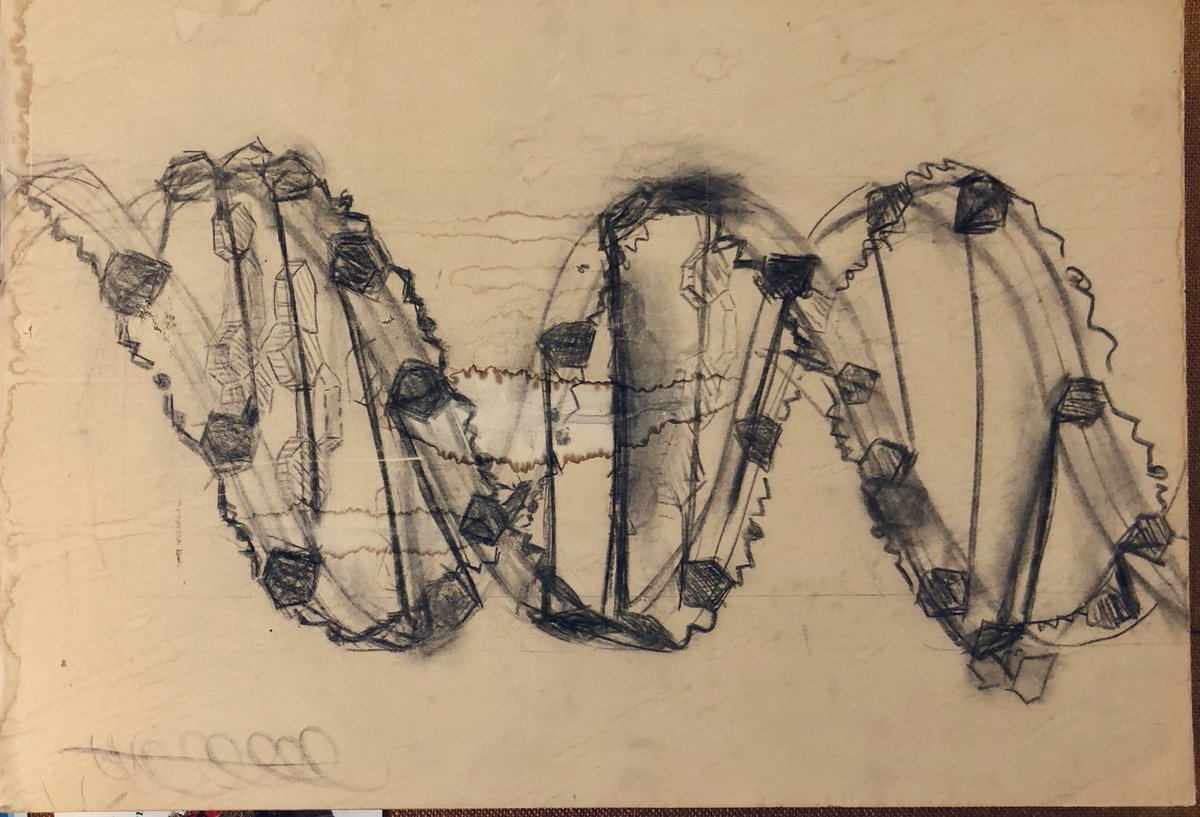
I have so many stories about James D. Watson that I will one day share, some heartwarming, some shocking, and some extremely funny. So sad to hear of Jim’s passing. Our thoughts are with Liz, who married Jim in 1968. Here’s a drawing from his office that I love
RIP James D. Watson, co-discoverer of DNAs double helix🥇Jim was a kind & generous mentor to me, who never hesitated to meet, give feedback, or share stories from the early days of molecular biology. His signed double helix hangs in my office as a reminder how one discovery can change the world 🙏