The human brain can bring rubber to life with one simple trick: Cover a person’s hand and place a rubber hand next to it, then stroke their hand and its facsimile, and suddenly the person will begin to “feel” the touch in the fake appendage. The rubber hand illusion helps demonstrate how our senses work together to create the feeling of ownership over our bodies, a fundamental part of self-awareness.
A 2025 study demonstrated that octopuses also fall for the rubber arm trick—the first documentation of the phenomenon outside of mammals: https://t.co/1V5KVb1y1F #ScienceMagArchives
In the cellular world, complex living machines endure physical forces and stresses, much like machines in a factory. How does the spindle, the fibrous “rib cage” driving cell division, manage the strain?
https://t.co/9X13Jv5wXL
Impressive integration work, but the hype outpaces the paper. This "synthetic cell with a complete cell cycle" (Gaut et al. https://t.co/Ug7qTwGzMA) has big caveats the headlines skip:
1) The 5-generation "cell cycle" used mechanical extrusion for division, not the genetically encoded division. Those were separate experiments. The full autonomous cycle was never run for 5 gens.
2) It's an extreme heterotroph: ribosomes, polymerases & the entire PURE system are fed in via feeder liposomes. The cell can't make its own machinery.
3) "All plasmids inherited"? Only 30% of cells retained the full 7-plasmid genome after 5 gens. No segregation mechanism.
4) It's selection among pre-made variants, NOT Darwinian evolution, mutations were introduced artificially. The authors say so themselves.
Great milestone. But "life created" framing is misleading.
Beauty should be a core pursuit of biotechnology. There should be companies and nonprofits that engineer organisms solely for the sake of crafting beautiful things.
A few reasons why:
1/ Biotechnology has historically worked in reductionist ways, but many useful functions only emerge at the systems level. By engineering a systems-level outcome, like beauty, we will get much better at engineering organisms in predictable ways.
When I say "reductionist," I mean that most useful things in biotechnology (drugs and tools) were discovered by stripping molecules from their natural contexts. Scientists collect organisms from soil or wherever and then study their molecules in isolation. This basic approach has yielded everything from rapamycin to antibiotics and CRISPR.
This reductionism, though, means that that we know disturbingly little about how life actually works at a systems-level. My core argument is that, by studying beauty, we can remedy this.
Beauty has persisted through tens of millions of years of evolution because it is functional; bright colors help attract pollinators to a plant, for example, which helps the plant breed. If evolution has created all of this beauty for functional reasons, then it stands to reason that by trying to create **new** forms of beauty, we'll be able to discover and understand how these systems-level functions work! Indeed, we may even be able to create entirely new functions that biology hasn't evolved yet. These functions will not possible to understand via isolated molecules or reductionism.
Therefore, a company pursuing engineered beauty for the sake of beauty will probably make many fundamental discoveries about how organisms develop, interact, adapt to their surroundings, and so on.
2/ Beauty is a way to grow the field and bring more people into biotechnology. Nick Desnoyer’s flower design work, for example, has probably reached hundreds of thousands of people. The glowing plants from Light Bio, too, were featured in the mainstream press. You may not think that these examples are “important” for the universe relative to, say, an incrementally better cancer therapeutic, but there’s no question that they are way more popular to mainstream audiences and good, overall, for the field.
3/ The market is huge! Breeding is already widely used to engineer beauty, or at least to select for aesthetic preferences. Pugs are evolutionarily suboptimal, but they've been bred precisely to satisfy a certain aesthetic desire are now a multi-billion dollar industry. The Juliet Rose, developed via breeding over a 15-year period, debuted at the 2006 Chelsea Flower Show and is enormously profitable today. Why should deliberately engineered forms of beauty be any different?
If you are building a biotech company or nonprofit that is pursuing beauty, please reach out! I’d love to help.
A newly discovered organelle, the hydrogenobody, found in protozoa living in cattle rumens, may hold the key to reducing methane emissions from cow burps.
https://t.co/qY2UJfhrzF
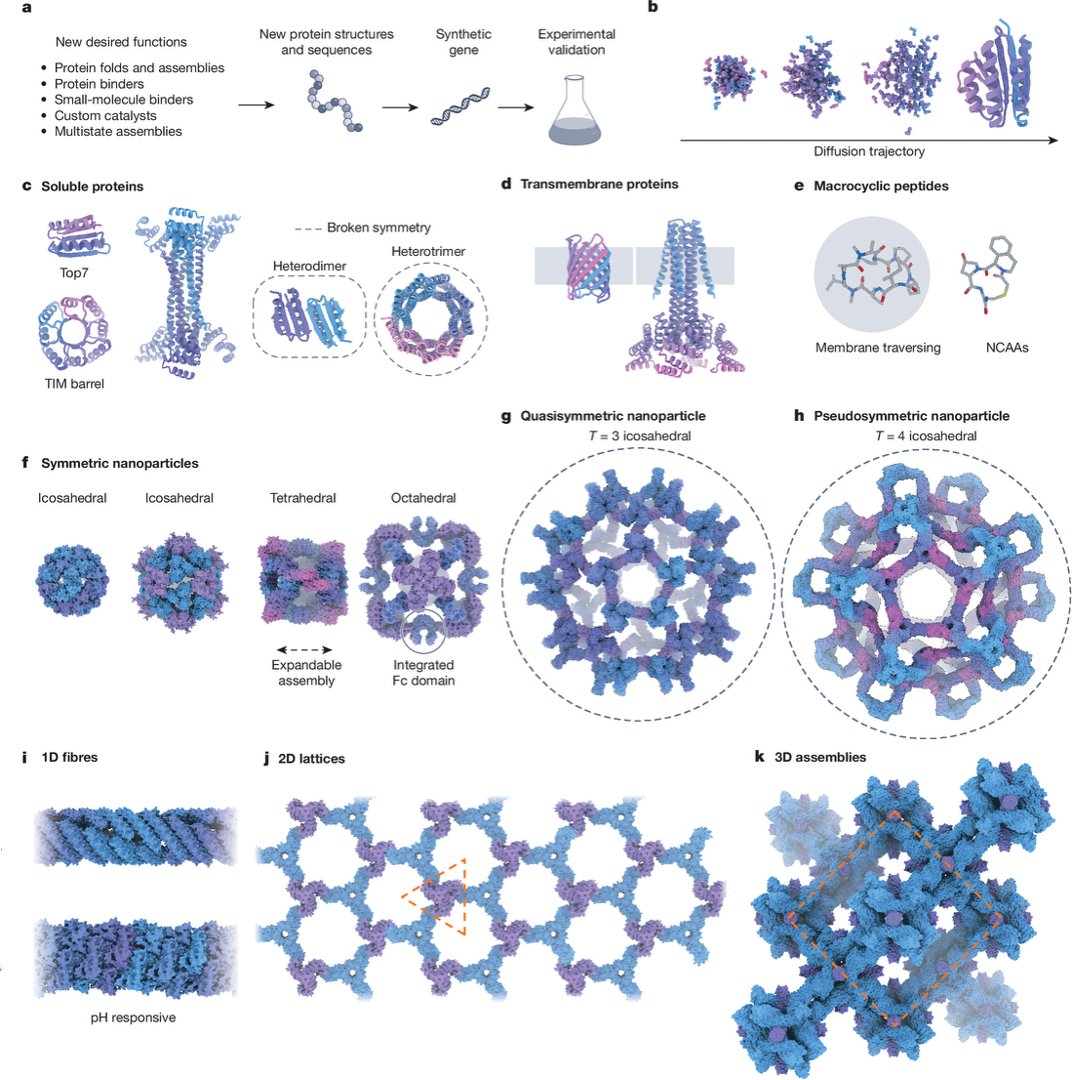
1/ Excited to share our new Review in @Nature:
“The past, present and future of de novo protein design.”
Here, we mainly focused on structure-guided protein design. The field is entering a new phase: now that we can design new proteins, what should we build next?
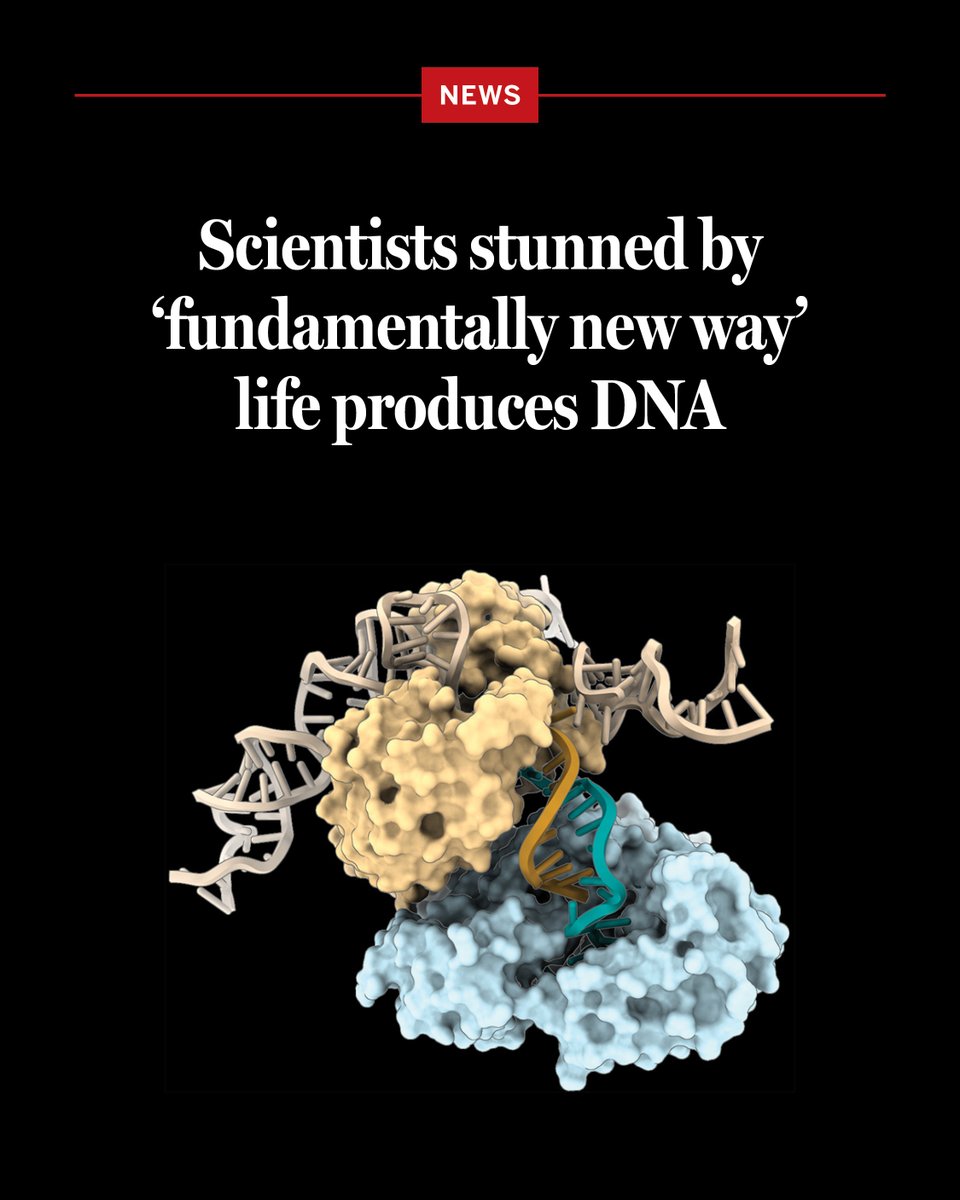
For decades, biology textbooks have enshrined a simple rule: DNA is made by copying a template. After one enzyme unzips a DNA double helix into separate strands, another called a polymerase builds a complementary sequence, base by base, for each strand. Presto: two copies of the original DNA.
But new research into how bacteria defend themselves from viruses now shows this synthesis rule isn’t absolute.
Now, a team describes a bacterial enzyme that synthesizes DNA without a nucleic acid template, using its own structure as a guide.
Learn more: https://t.co/bpVgr0KMdR